




Grease Monkey is an indica-dominant hybrid bred from GG4 and Cookies & Cream, combining strong THC potential with a mix of diesel, earth and sweeter dessert-like flavours. It is also a practical strain for growers, with useful side branching, an 8–10 week flowering period and good yield potential under stable conditions.
In this Grease Monkey strain review, I’ll cover the genetics, THC, terpenes, taste, aroma and commonly reported effects, along with how the plant grows indoors and outdoors. I’ll also look at phenotype variation, training, flowering stretch and the main points to watch if you plan to grow it yourself.
Key Takeaways
- Grease Monkey is an indica-dominant hybrid created from GG4 and Cookies & Cream genetics.
- THC can reach up to 28% in the current seed line, although actual levels vary by phenotype and growing conditions.
- The flavour profile mixes diesel and earth with sweeter notes, including cream, vanilla, pepper and citrus depending on the plant.
- Plants generally reach around 100–180 cm and respond well to topping, LST and SCROG because of their lateral branching.
- Flowering takes around 8–10 weeks, with indoor yield potential of roughly 500–600 g/m² under suitable conditions.
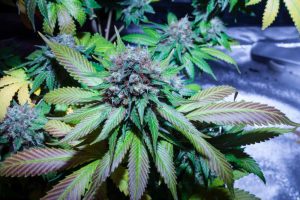

What is the Grease Monkey Strain?
Grease Monkey is an indica-dominant hybrid created from GG4 and Cookies & Cream genetics.
The current Grease Monkey Feminized Seeds line is listed at around 75% indica and 25% sativa. Plants generally reach 100–180 cm and develop useful side branching, which gives you plenty to work with if you plan to top or train them.
It sits naturally alongside other indica cannabis strains, although I would not rely too heavily on the indica label alone. Research published in Nature Plants found that commercial indica and sativa labels do not consistently reflect overall genetic differences between cannabis samples.[1]
For growers, structure, flowering behavior and the actual genetics matter more than the label on its own.
Grease Monkey Strain at a Glance
| Trait | Grease Monkey |
| Genetics | GG4 × Cookies & Cream |
| Type | Indica-dominant hybrid |
| THC | Up to 28% |
| CBD | Less than 1% |
| Main terpenes | Caryophyllene, limonene, myrcene |
| Flavor | Diesel, earthy and sweet |
| Reported effects | Relaxing, calming and uplifting |
| Flowering time | 8–10 weeks |
| Height | Around 100–180 cm |
| Indoor yield potential | Around 500–600 g/m² |
| Outdoor harvest | Around mid-October |
| Difficulty | Easy |
The THC and yield figures are useful for comparing strains, but they should be treated as potential rather than guaranteed results.


| THC % | Up to 28% |
|---|---|
| Flowering Time | 8–10 Weeks |
| Outdoor harvest | Mid October |
| Yield | 500–600 g/m² |
| Indica/Sativa | Indica Dominant |
| Height | Medium: 100–180 cm |
| Difficulty | Easy |
| CBD Content | Less than 1% |
| Climate | Mediterranean, Temperate, Warm |
| Seed Type | Feminized |
| Genetics | Gorilla Glue #4 x Cookies & Cream |
| Effects | Calming, Relaxing, Uplifting |
| Taste | Diesel, Earthy, Sweet |
| Terpene | Caryophyllene, Limonene, Myrcene |
Grease Monkey Genetics, Breeder and Origins
The Grease Monkey strain genetics come from a cross between GG4 and Cookies & Cream. This pairing combines the pungent, resin-heavy character associated with GG4 with the sweeter, creamier qualities of Cookies & Cream.
Grease Monkey was developed in the United States and later became available through different seed lines. Because those lines are not necessarily identical, figures for THC, height and flowering time can vary. When I am planning a grow, I use the specifications for the seeds I actually have rather than assuming every Grease Monkey plant will perform in exactly the same way.
What Are the Parent Strains of Grease Monkey?
GG4 Feminized contributes much of Grease Monkey's earthy, fuel-heavy character, along with strong resin production and high THC potential.
Cookies and Cream Feminized brings a sweeter side to the cross, with creamy, nutty and vanilla-like notes commonly associated with its terpene profile.
How strongly either parent shows through depends on the phenotype. A GG4-leaning plant may produce sharper diesel and earthy aromas, while a Cookies & Cream-leaning phenotype can smell noticeably sweeter.
This variation is not unusual in cannabis. Research into cannabis terpene genetics has found measurable differences in terpene expression between cultivars and even among plants carrying the same cultivar name.[2] That is why I treat the parentage as a guide to what you may see rather than a guarantee of one exact aroma, structure or chemical profile.
Who Created Grease Monkey?
The original Grease Monkey strain came from US breeding work that combined GG4 with Cookies & Cream.
Since then, different versions of Grease Monkey genetics have entered the market. That matters when comparing strain information online, because THC percentages, plant height, flowering time and yield figures may describe different selections rather than the exact same seed line.
For growers, the most reliable approach is to start with the specifications supplied for your particular Grease Monkey seeds, then adjust your expectations as the individual phenotype develops.
THC, Terpenes, Taste, Smell and Effects
Grease Monkey combines high THC potential with a strong fuel-led aroma and a sweeter finish. Diesel, earth, cream and light spice are the main themes, while the effects are commonly described as starting upbeat before becoming more physically relaxing.
How Strong is Grease Monkey?
The current Grease Monkey line is listed at up to 28% THC, with CBD below 1%, placing it in the high-THC range.
That figure represents potential rather than a guaranteed result. THC content can vary with phenotype, growing conditions and harvest timing.
Research following cannabis plants through flowering has shown that cannabinoid concentrations change as the plant matures.[3] For that reason, I would use the quoted THC figure as a guide rather than expecting every plant to test at the same level.
If your THC tolerance is low, Grease Monkey is better approached gradually.
What Does Grease Monkey Smell Like?
Grease Monkey usually has a strong diesel and earthy aroma with a sharper skunky edge.
Once the flower is broken apart, you may also notice:
- Sweet cream
- Vanilla
- Pepper
- Citrus
The exact balance depends on the phenotype. Some plants lean more toward fuel and earth, while others show a softer, sweeter character.
What Does Grease Monkey Taste Like?
The Grease Monkey taste broadly follows the aroma.
Diesel and earth tend to come through first, followed by a smoother mix of cream, sweetness and light spice. Some phenotypes may also leave a faint citrus or peppery finish.
It is a good fit for people who enjoy gas-heavy strains but still want some sweetness in the background.
What Terpenes Are Found in Grease Monkey?
The main terpenes listed for Grease Monkey are:
- Caryophyllene – peppery, woody and spicy
- Limonene – citrus-like and sharp
- Myrcene – earthy, herbal and musky
These terpenes help shape the strain’s aroma and flavour, although their concentrations can differ from one phenotype to another.
What Are the Effects of Grease Monkey?
Grease Monkey is commonly described as starting with a more uplifted or euphoric feeling before settling into a heavier, more relaxed state.
Reported effects often include:
- An upbeat start
- A calm, easy-going feeling
- Increasing physical heaviness
- A slower, more laid-back finish
Some people also report feeling sleepy or hungry, particularly at higher doses.
The experience will vary with THC content, dose, tolerance and individual sensitivity, so these should be treated as commonly reported effects rather than guaranteed outcomes.
How to Grow Grease Monkey Cannabis
Grease Monkey is relatively easy to grow and responds well to early canopy training. The main aim is to build a broad structure during vegetative growth, then maintain good airflow and support as the flowers develop.
Is Grease Monkey Easy to Grow?
Grease Monkey is rated as easy, making it suitable for newer growers who can manage watering, feeding and environmental control.
The main areas to watch are:
- Flowering stretch
- Dense interior growth
- Humidity
- Strong odor
- Branch weight late in bloom
These are manageable issues if you prepare the plant properly before flowering.
Step 1: Build the Plant During Vegetative Growth
Grease Monkey generally reaches around 100–180 cm, depending on phenotype, root space and vegetative time.
Use the cannabis vegetative stage to develop several strong branches rather than letting one central stem dominate.
Start spreading the main branches while they are still flexible and keep enough vertical space for the plant to gain height after flowering begins.
If height becomes difficult to control, the guide to cannabis stretching explains how genetics, light and environmental conditions affect internodal growth.
Step 2: Train Grease Monkey Before Flowering
Grease Monkey's lateral branching makes it well suited to canopy training.
I would:
- Top the plant once it is established and growing strongly.
- Use low-stress training to pull the main branches outward.
- Keep the strongest growing tips at a similar height.
- Remove weak lower shoots that receive very little light.
- Use a SCROG if you want to fill a wider indoor area.
Finish most of the structural work before flower development becomes established. After that, concentrate on maintaining the canopy rather than repeatedly reshaping it.
Step 3: Prepare for the Flowering Stretch
Before changing the light cycle, check how much headroom remains.
Grease Monkey is indica dominant, but that does not mean every phenotype stays short. Plants can still gain noticeable height during the transition into bloom.
If space is limited, complete your branch positioning before flowering starts. Aim for an open canopy with enough separation between the main tops for light and air to move through.
Step 4: Control the Indoor Environment
Indoors, focus on consistency.
Maintain:
- Even light coverage
- Fresh air exchange
- Air movement through the canopy
- Controlled humidity
- Enough spacing between dense branches
As flowers increase in size, trapped moisture becomes more of a concern. The guide to types of cannabis mold covers common warning signs and the conditions that encourage fungal problems.
Step 5: Choose the Right Outdoor Position
Outdoors, Grease Monkey is suited to temperate, warm and Mediterranean-style climates.
Choose a position with strong direct light and good natural airflow. Avoid sheltered areas where foliage stays damp after rain or heavy morning dew.
The current line generally finishes around mid-October, so growers in cooler regions should consider whether local fall weather gives the plant enough time to finish properly.
Step 6: Maintain the Canopy During Flowering
Once flowering is underway, reduce major training and focus on keeping the canopy healthy.
Watch for:
- Branches growing into each other
- Dense areas with poor airflow
- Weak lower growth
- Heavy branches beginning to bend
Support branches where necessary as flower weight increases.
Step 7: Control Flowering Odor
Grease Monkey develops a strong diesel, earthy and sweet aroma during bloom.
If odor control matters, have extraction and carbon filtration running before flowering gets advanced. Trying to contain the smell after the room is already saturated is much harder.
The guide to controlling cannabis grow-room odor covers practical ways to manage it.
Step 8: Allow 8–10 Weeks for Flowering
Grease Monkey flowers for approximately 8–10 weeks.
Indoor yield potential is around 500–600 g/m², while outdoor plants generally finish around mid-October.
Use those figures as a guide rather than a guarantee. Lighting, plant size, root space, environment and phenotype will all affect the final result.
Do not harvest solely because the calendar says eight or ten weeks have passed. Check flower maturity and plant development before making the final call.
Step 9: Adjust for Phenotype Differences
Grease Monkey plants can differ in structure and aroma.
Some phenotypes may grow taller and produce stronger fuel notes, while others stay bushier and show more sweetness from the Cookies & Cream side.
Watch how each plant develops during early growth and adjust your training to suit its natural shape rather than forcing every plant into the same structure.
Conclusion
Grease Monkey is well suited to growers looking for high THC potential, resin-heavy flowers and a flavour profile that combines pungent fuel with sweeter Cookies-style notes.
From a cultivation point of view, its side branching is one of its best traits. I would shape the plant during veg, spread the main branches outward and leave enough vertical space for the transition into bloom.
The main drawbacks are its strong flowering odor and the need to keep air moving through a filling canopy. Neither is particularly difficult to manage if you plan for them early.
For growers who want modern genetics without an overly demanding plant, Grease Monkey offers a good balance of manageable growth, strong yield potential and a distinctive terpene profile.
Frequently Asked Questions About Grease Monkey
Is Grease Monkey indica or sativa?
Grease Monkey is an indica-dominant hybrid. The current line is listed at around 75% indica and 25% sativa. These percentages are useful descriptions, but scientific research suggests commercial indica and sativa labels do not reliably describe genetic similarity.
How tall does Grease Monkey grow?
Grease Monkey generally reaches around 100–180 cm. Phenotype, root space, vegetative time, lighting and training all influence final height.
How long does Grease Monkey take to flower?
Grease Monkey has an approximate 8–10 week flowering period. I would still judge harvest readiness from flower maturity rather than relying on the calendar alone.
Is Grease Monkey easy to grow?
Yes. The current line is rated as easy. Its side branching responds well to training, although you still need to manage stretch, canopy density, humidity and flowering odor.
How much does Grease Monkey yield?
Indoor yield potential is approximately 500–600 g/m² under suitable conditions. This is a reference figure rather than a guaranteed harvest.
References
- Watts S, et al. Cannabis labelling is associated with genetic variation in terpene synthase genes. Nature Plants. 2021. This research supports the point that indica and sativa labels do not reliably represent overall genetic differences between cannabis samples.
Read the research on Nature - Booth JK, et al. Terpene Synthases and Terpene Variation in Cannabis sativa. This research examines the genetics behind cannabis terpene production and documents variation between cultivars and individual plants.
Read the study on PubMed - Aizpurua-Olaizola O, et al. Evolution of the Cannabinoid and Terpene Content during the Growth of Cannabis sativa Plants from Different Chemotypes. Journal of Natural Products. 2016. This study tracks changes in cannabinoids and terpenes as cannabis plants develop and supports treating THC and terpene figures as variable rather than fixed.
Read the study on PubMed


