




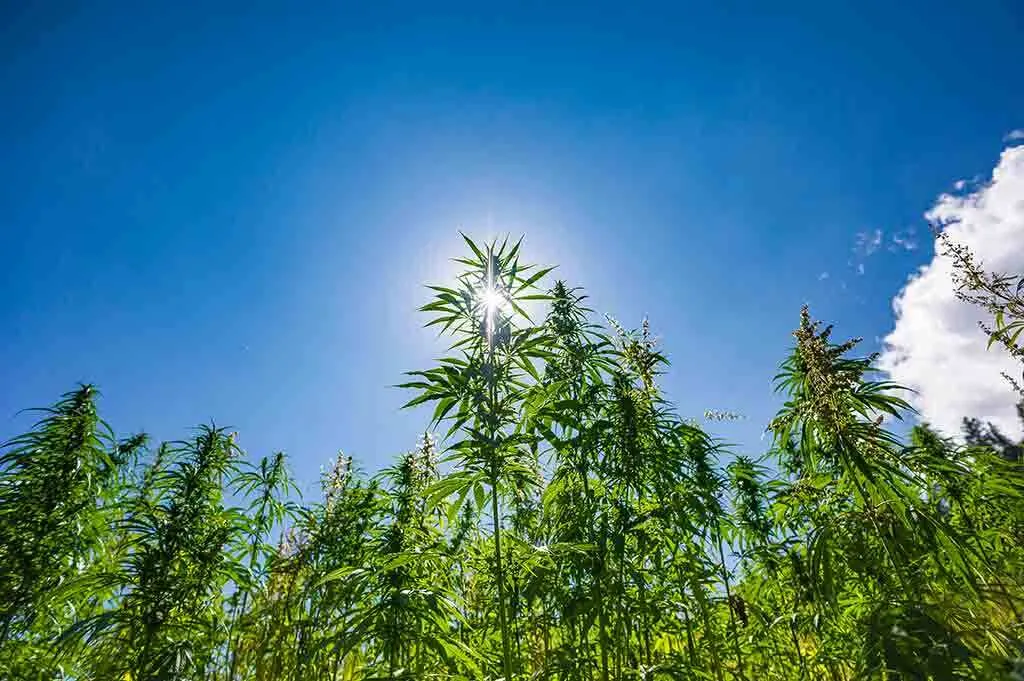
Growing cannabis outdoors is one of the easiest and most cost-effective ways to produce healthy, high-yielding plants. With plenty of sunlight, the right genetics, and a well-planned growing space, outdoor cannabis can thrive with fewer equipment costs than an indoor grow. Whether you're looking for the best outdoor grow setup for beginners or want to learn how to grow weed outside successfully, understanding the basics before the season begins will give you the best chance of a rewarding harvest.
Unlike indoor cultivation, growing marijuana outdoors means working with nature rather than controlling every environmental factor. Sunlight, weather, soil quality, and seasonal timing all play a role in how your plants develop throughout the growing season. In this guide, you'll learn how to choose the best outdoor grow setup, select the ideal growing location, prepare your plants for success, and avoid common mistakes so you can grow healthy, productive cannabis plants from seed to harvest.
- Getting Started with Growing Weed Outside
- Choosing the Right Location to Grow Cannabis Outdoors
- Photoperiod vs. Autoflower Cannabis: Which Should You Grow Outdoors?
- When to Grow Cannabis Outdoors
- Best Soil for Growing Cannabis Outdoors
- Choosing the Best Pots for Growing Cannabis Outdoors
- Watering Outdoor Cannabis
- How to Grow Weed Outside: Step-by-Step
- What to Look Out for When Growing Cannabis Outdoors
- Conclusion
- Frequently Asked Questions About Growing Cannabis Outdoors
Getting Started with Growing Weed Outside
Growing cannabis outdoors is one of the most rewarding and cost-effective ways to cultivate your own plants. Whether you're growing a single plant on a sunny patio or setting up a small garden in your backyard, outdoor cultivation allows you to take advantage of natural sunlight instead of relying on expensive indoor equipment. For beginners, choosing beginner cannabis seeds alongside a simple outdoor setup can make the growing process much easier. However, while it may seem simpler than indoor growing, success outdoors still depends on thoughtful planning before the season begins.
The best outdoor grow setup isn’t about spending the most money. It is about creating an environment that works with your local conditions. Climate, temperature, rainfall, and daylight hours all influence how cannabis plants grow throughout the season. Understanding these factors, choosing suitable genetics, and preparing your grow space properly will give your plants the best chance to thrive.
Unlike indoor cultivation, where growers control every variable, growing marijuana outdoors means working with nature. Plants rely on seasonal sunlight, soil quality, and weather patterns to develop. While this introduces challenges like pests, heavy rain, and temperature swings, it also allows cannabis to grow under full-spectrum sunlight with more space for roots and canopy expansion. This often leads to larger, more vigorous plants when conditions are right.
Planning ahead is one of the most important steps for beginners. Before you germinate seeds, consider where your plants will grow, how much sunlight the area receives, whether you’ll use containers or plant directly in the ground, and how easily you can access water. Taking time to prepare your grow site early can prevent many common issues later in the season.
Indoor vs. Outdoor Cannabis Growing
One of the first decisions growers face is whether to grow cannabis indoors or outdoors. Both methods can produce high-quality results, but they differ significantly in cost, control, and maintenance.
Indoor growing allows complete control over lighting, temperature, humidity, and airflow. This makes it possible to grow year-round and fine-tune conditions for consistent results. However, this level of control requires a higher upfront investment and ongoing electricity costs.
Outdoor growing, on the other hand, relies on natural sunlight and seasonal conditions. While growers have less control over the environment, plants often grow larger due to unrestricted root space and exposure to full-spectrum light. This can lead to impressive yields with much lower operating costs.
| Feature | Indoor Growing | Outdoor Growing |
| Lighting | Artificial grow lights | Natural sunlight |
| Startup Cost | Higher | Lower |
| Electricity Usage | High | Minimal |
| Environmental Control | Complete control | Dependent on weather |
| Plant Size | Limited by grow space | Can grow much larger |
| Growing Season | Year-round | Seasonal |
| Pest Pressure | Generally lower | Higher due to insects and wildlife |
| Maintenance | Daily adjustments | Regular care and monitoring |
| Yield Potential | Consistent harvests | Larger harvests with proper setup |
| Best For | Maximum control | Lower-cost, natural growing |
Neither method is inherently better. It depends on your space, budget, and goals. For beginners, outdoor growing is often the easiest way to start, as it requires less equipment while still teaching essential cultivation skills.
Choosing the Right Location to Grow Cannabis Outdoors
Choosing the right location is one of the most important decisions you'll make when growing cannabis outdoors. Even the healthiest plants and highest-quality genetics can struggle if they're planted in an unsuitable environment. The best outdoor grow setup is one that provides enough space for your plants to grow, receives consistent sunlight throughout the day, and allows you to easily care for your crop from seedling to harvest.
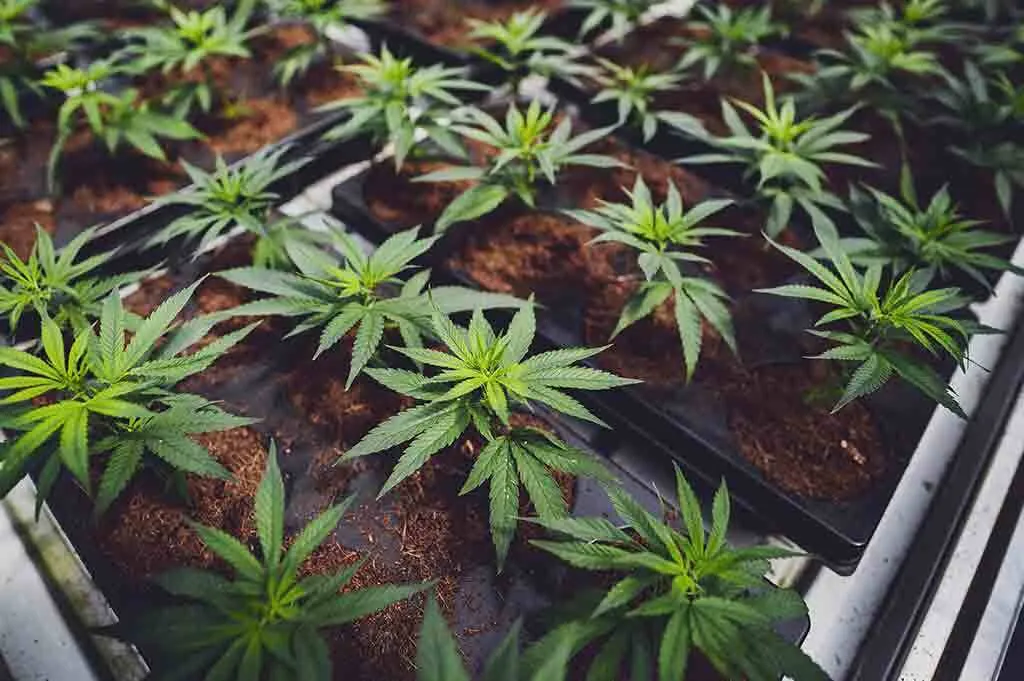
Fortunately, there are several ways to grow cannabis outdoors, and the right choice depends on your available space, privacy, budget, and local climate. Whether you're growing on a balcony, in a backyard, or inside a greenhouse, understanding the advantages and limitations of each setup will help you choose the best option for your needs.
| Growing Method | Best For | Advantages | Considerations |
| Balcony or Patio | Apartment or urban growers | Easy access, ideal for container growing, lower setup costs | Limited growing space, reduced privacy, exposure to stronger winds |
| Backyard or Garden | Homeowners with outdoor space | More room for larger plants, excellent sunlight, flexible growing options | Greater exposure to weather, insects, and wildlife |
| Greenhouse | Growers in unpredictable climates | Protection from rain, wind, and some pests while extending the growing season | Higher setup costs and requires proper ventilation |
Balcony or Patio
A balcony or patio is an excellent option for beginners or growers with limited outdoor space. Cannabis grows well in containers, making patios and balconies ideal for managing a small number of plants without needing a dedicated garden. Their close proximity to your home also makes watering, feeding, and regular inspections much more convenient.
Before choosing this setup, consider how much direct sunlight the area receives and whether neighboring buildings create shade during the day. High-rise balconies can also experience strong winds, so larger plants may require stakes or cages for additional support as they mature.
Backyard or Garden
For many growers, a backyard offers the most versatile outdoor growing environment. Gardens provide enough room for larger plants, whether they're grown directly in the ground, in raised beds, or inside large fabric pots. The additional space also improves airflow around plants and makes it easier to perform regular maintenance throughout the growing season.
A private garden also offers more flexibility when positioning plants for maximum sunlight while keeping them out of public view. If wildlife is common in your area, fencing or other protective barriers can help prevent damage from animals before harvest.
Greenhouse
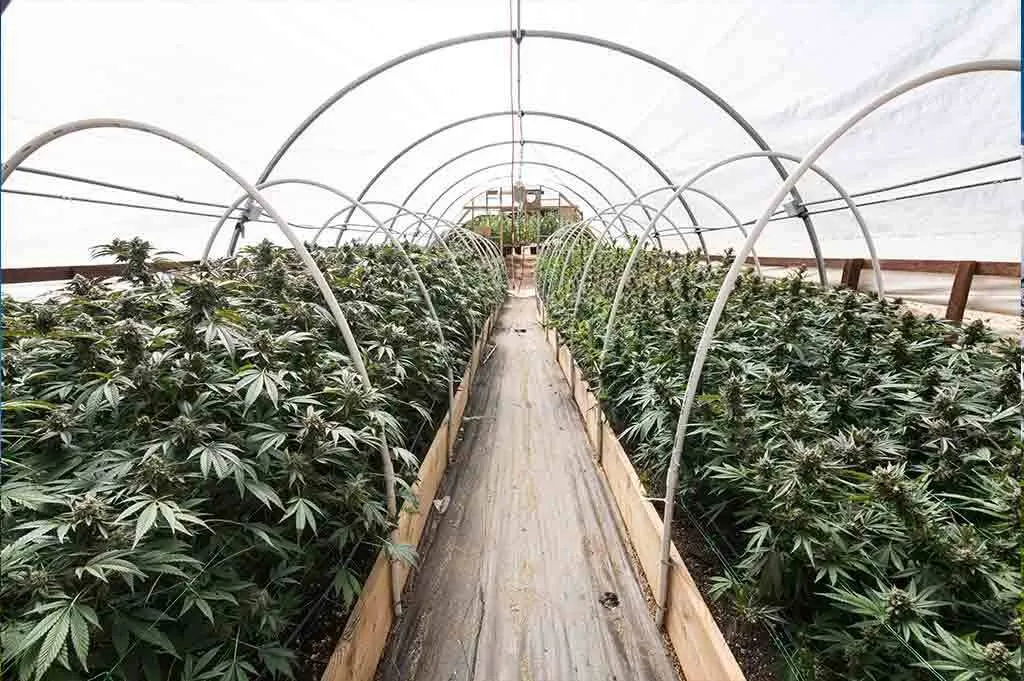
A greenhouse combines many of the benefits of indoor and outdoor cultivation by providing protection from unpredictable weather while still allowing plants to grow under natural sunlight. This can be especially beneficial in regions with frequent rainfall, cooler temperatures, or shorter growing seasons.
Although greenhouses reduce exposure to wind and heavy rain, they require good ventilation to prevent excessive heat and humidity. Proper airflow is particularly important during flowering, when dense buds become more susceptible to mold if moisture is allowed to build up.
Which Outdoor Growing Method Is Best?
There isn't a single outdoor growing method that's right for every grower. Instead, the best choice depends on your available space, climate, and growing goals.
| If You Have... | Recommended Outdoor Setup |
| A balcony or apartment | Large containers on a sunny balcony or patio |
| A small backyard | Fabric pots or raised beds |
| A large garden | Growing directly in the ground or raised beds |
| A wet or unpredictable climate | Greenhouse |
| Limited growing experience | Containers in an easily accessible location |
Whichever setup you choose, selecting a location that's easy to access and suited to your local environment will make maintaining your cannabis plants much easier throughout the season. A well-planned grow site provides the foundation for healthy plant development and sets you up for a more productive outdoor harvest.
Photoperiod vs. Autoflower Cannabis: Which Should You Grow Outdoors?
Before you start growing cannabis outdoors, you'll need to choose between photoperiod and autoflower seeds. While both can produce healthy, high-quality plants, they follow different growth cycles and are suited to different growing conditions. Understanding how each type grows will help you select the right genetics for your climate, available growing season, and experience level.
Photoperiod cannabis begins flowering naturally as daylight hours become shorter toward the end of summer. Autoflower cannabis, however, flowers automatically after a few weeks of growth, regardless of the amount of daylight it receives. This difference affects how long plants grow, how large they become, and when they'll be ready to harvest.
| Feature | Photoperiod Cannabis | Autoflower Cannabis |
| Flowering Trigger | Shorter daylight hours | Plant age |
| Average Grow Time | 5–8 months | 8–12 weeks |
| Plant Size | Large | Small to medium |
| Yield Potential | High | Moderate |
| Best Climate | Long, warm growing seasons | Short or unpredictable seasons |
| Training | Topping and LST | Light LST only |
| Best For | Maximum yields | Beginners and faster harvests |
Growing Photoperiod Cannabis Outdoors
Photoperiod strains are the traditional choice for outdoor cultivation and are ideal for growers looking to produce the largest possible plants. Because they remain in the vegetative stage until daylight hours begin to decrease, they have more time to develop extensive root systems and strong branch structures before flowering. This makes them well suited to training techniques such as topping and low-stress training (LST), helping maximize yield. They perform best in regions with long summers that allow plants to fully mature before the first autumn frost.
Growing Autoflower Cannabis Outdoors
Autoflower strains are popular with beginners because they have a shorter and more predictable life cycle. Their rapid growth makes them well suited to cooler climates or areas with shorter growing seasons, and many growers can achieve multiple harvests by planting successive crops throughout spring and summer. Since autoflowers have less time to recover from stress, it's generally best to avoid heavy pruning or topping and focus on gentle training techniques if needed.
Which Is the Best Choice?
Both plant types can produce excellent outdoor harvests, so the right choice depends on your goals.
Choose photoperiod cannabis if you want larger plants, higher yields, and have a long outdoor growing season.
Choose autoflower cannabis if you're growing for the first time, have a shorter season, or want a quicker harvest with a simpler growing schedule.
Grower's Tip: If you're new to growing cannabis outdoors, autoflower strains are often the easiest place to start because of their shorter life cycle and straightforward growing requirements. If your goal is to maximize plant size and yield, and your local climate provides a long growing season, photoperiod varieties are usually the better long-term choice.
When to Grow Cannabis Outdoors
Timing is one of the most important factors when growing cannabis outdoors. Planting too early can expose young plants to frost damage, while planting too late may shorten the vegetative growing period and reduce yields. Although every region has a different climate, most outdoor cannabis grows follow the same seasonal pattern. Planning around your local weather and average frost dates will help your plants develop into healthy, productive crops.
One of the best ways to plan your outdoor grow is by using your area's last expected spring frost and first expected fall frost as reference points. These dates provide a reliable growing window and help you determine when it's safe to transplant seedlings outdoors and when you'll likely need to harvest before colder weather arrives.
Tip: Outdoor growing calendars are general guidelines. Local climate, elevation, and seasonal weather patterns will have a much greater impact on planting dates than the calendar alone. Always check your local frost dates and weather forecast before moving cannabis plants outdoors.
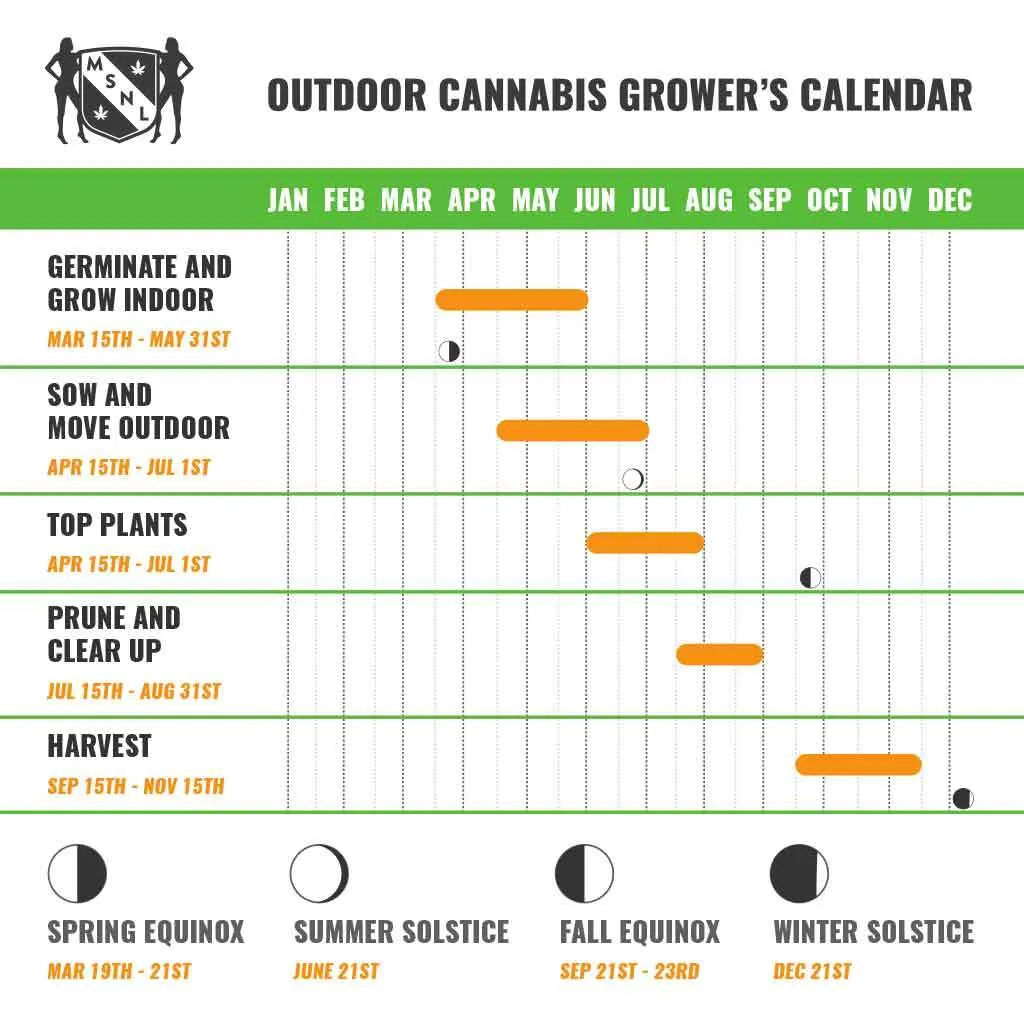
Outdoor Cannabis Growing Calendar
| Season | What to Do |
| Late Winter to Early Spring (February–April) | Plan your grow, choose your genetics, prepare your growing area, and germinate seeds indoors approximately 2–6 weeks before your area's last expected frost. |
| Spring (April–May) | Once the risk of frost has passed and nighttime temperatures consistently remain above 50°F (10°C), gradually harden off seedlings before transplanting them outdoors. |
| Summer (June–August) | Plants enter vigorous vegetative growth before naturally transitioning into flowering later in the season. Continue watering, feeding, training, and regularly inspecting plants for pests or disease. Support heavy branches as plants increase in size. |
| Late Summer to Fall (July–September) | Photoperiod cannabis begins flowering as daylight hours gradually shorten after the summer solstice. Continue monitoring plant health and adjust feeding as flowers develop. |
| Fall (September–November) | Harvest mature plants before prolonged periods of cold, wet weather or the first hard frost to help preserve flower quality and reduce the risk of mold. |
Matching Your Grow to Your Climate
Starting cannabis indoors a few weeks before transplanting gives seedlings time to establish healthy root systems before they're exposed to outdoor conditions. This head start often results in larger, more vigorous plants once they're moved outside.
Your local climate should also influence the genetics you choose. Growers in regions with long, warm summers can take full advantage of photoperiod varieties, which have more time to develop before flowering begins. If you live in an area with shorter growing seasons or early autumn frosts, fast-finishing photoperiod strains or autoflower varieties are often a better choice.
Rather than following fixed calendar dates alone, use your local frost dates and seasonal weather conditions to guide your planting schedule. If you're unsure how climate affects each stage of development, our guide on how long it takes to grow cannabis explains the complete growing timeline, and produce a healthy, high-quality outdoor harvest.
Best Soil for Growing Cannabis Outdoors
Healthy soil provides the foundation for a successful outdoor cannabis grow. While genetics, sunlight, and watering all influence plant development, the quality of your soil determines how effectively roots can absorb water, oxygen, and nutrients throughout the growing season. Preparing your soil before planting will encourage stronger root development, healthier vegetative growth, and more productive harvests.
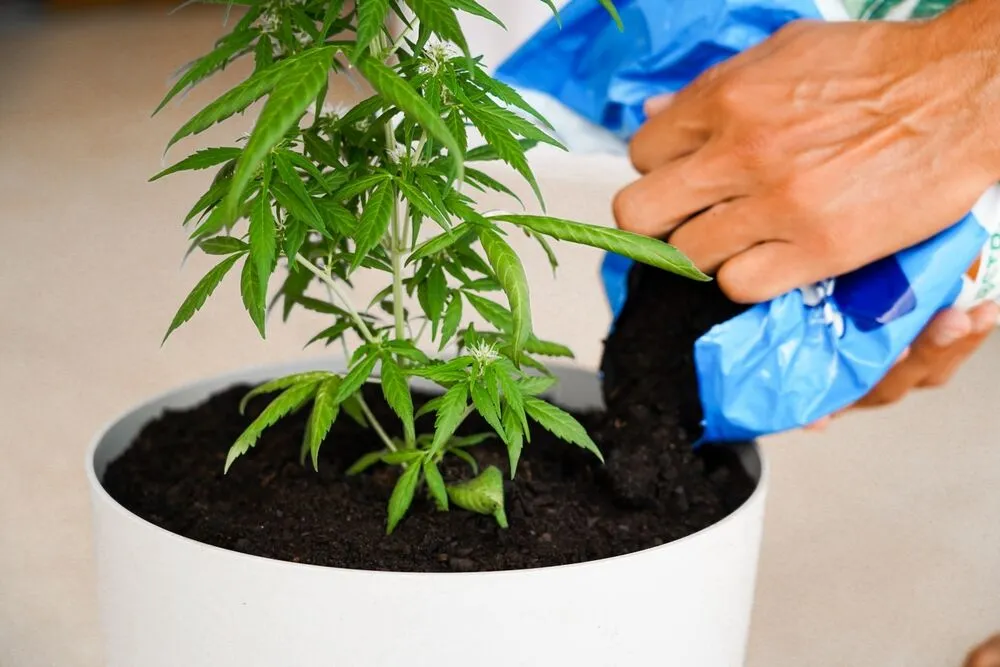
Cannabis performs best in loose, well-draining soil that retains enough moisture to support healthy roots without becoming waterlogged. Heavy clay soils can restrict root growth and hold excess water, while very sandy soils may drain too quickly and struggle to retain nutrients. Improving your soil with organic matter before planting helps create a healthier growing environment and supports beneficial microorganisms that contribute to long-term soil health.
For most outdoor growers, a high-quality organic soil blend containing compost, worm castings, and aeration materials such as perlite provides an excellent starting point. These ingredients improve soil structure while increasing moisture retention, drainage, and nutrient availability.
| Soil Component | Benefit |
| Compost | Adds organic matter and slow-release nutrients. |
| Worm Castings | Supports beneficial microbes and improves soil fertility. |
| Perlite | Improves drainage and increases root-zone aeration. |
| Coco Coir | Helps retain moisture while maintaining airflow. |
| Organic Mulch | Conserves soil moisture and helps regulate soil temperature. |
Cannabis generally grows best in soil with a pH between 6.0 and 7.0, allowing nutrients to remain readily available throughout the growing season. If you're planting directly into your garden, it's worth testing your soil before planting to identify any pH or nutrient imbalances that may need correcting.
Whether you're growing directly in the ground, in raised beds, or in large fabric pots, taking the time to prepare your soil before transplanting will give your plants the best possible start and reduce many common growing problems later in the season.
Choosing the Best Pots for Growing Cannabis Outdoors
Choosing the right pot is an important part of building a successful outdoor cannabis grow setup. While cannabis can be grown directly in the ground, containers offer greater flexibility and are often the preferred option for beginners. They allow you to move plants if weather conditions change, improve control over soil quality, and make watering and maintenance easier throughout the growing season.
The size of your container plays a significant role in plant development. Cannabis produces an extensive root system, and larger pots allow roots to expand naturally, supporting stronger vegetative growth and larger harvests. Containers that are too small can restrict root growth, limiting the plant's overall size and productivity.
| Pot Size | Recommended For | Notes |
| 3–5 Gallons | Autoflower varieties | Plant directly into the final container to minimize transplant stress. |
| 5–10 Gallons | Compact photoperiod plants | Ideal for patios, balconies, and smaller gardens. |
| 10–20 Gallons | Most outdoor photoperiod grows | Provides plenty of room for healthy root development. |
| 20+ Gallons | Large outdoor plants | Best suited to long growing seasons and experienced growers. |
Fabric pots and plastic containers are both popular choices, but they offer different benefits. Fabric pots provide excellent drainage and airflow around the root zone, encouraging healthier root development through natural air pruning. Plastic pots retain moisture for longer, making them a good option in hot, dry climates, although they require careful watering to avoid oversaturated soil.
| Pot Type | Advantages | Considerations |
| Fabric Pots | Excellent drainage, improved aeration, healthier root development | Dry out more quickly during hot weather. |
| Plastic Pots | Retain moisture longer and are widely available | Less airflow around roots and greater risk of overwatering. |
For most beginners, 10 to 15-gallon fabric pots filled with high-quality organic soil provide an excellent balance of drainage, root space, and ease of maintenance. Combined with regular watering and proper nutrition, they create one of the best outdoor grow setups for beginners and give cannabis plants the room they need to develop into healthy, productive outdoor crops.
If you're comparing different container materials, see our guide to the best types of pots for growing cannabis plants.
Watering Outdoor Cannabis
Proper watering is one of the most important aspects of growing cannabis outdoors. While cannabis plants require consistent moisture to support healthy growth, overwatering is one of the most common mistakes beginners make. Rather than watering on a fixed schedule, allow the soil to guide your decisions.
A good approach is to water deeply whenever the top few inches of soil begin to dry. Deep watering encourages roots to grow further into the soil in search of moisture, producing stronger, more resilient plants that are better equipped to cope with periods of hot or dry weather.
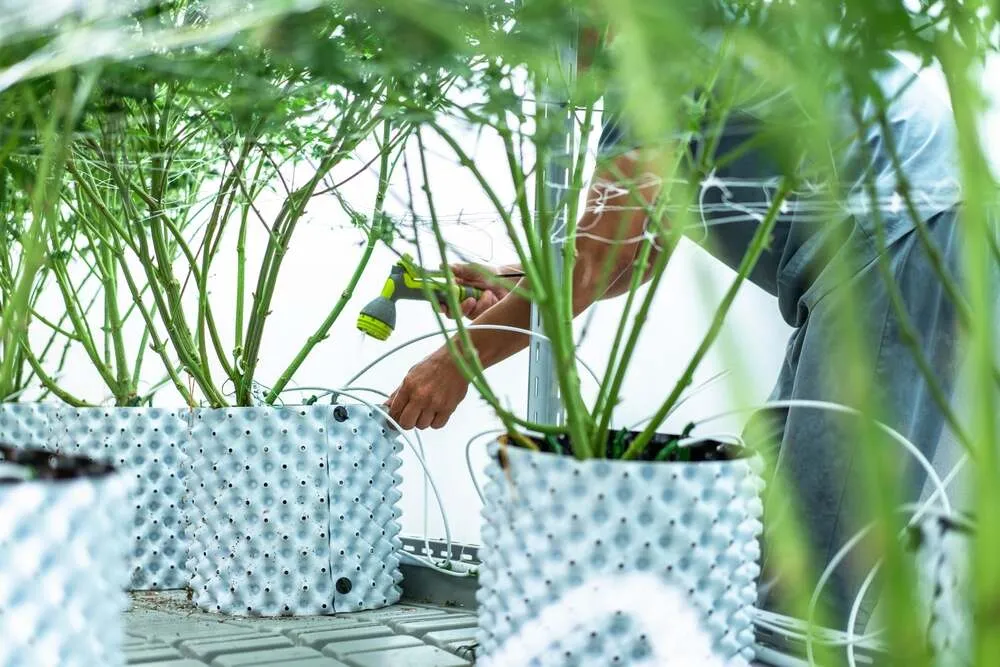
Plants growing in containers typically need watering more frequently than those planted directly in the ground, particularly during warm summer months. Fabric pots also dry out faster than plastic containers because their breathable sides allow more moisture to evaporate.
Watering early in the morning is generally recommended, as it gives plants access to moisture before temperatures rise and allows excess water on leaves or surrounding soil to evaporate throughout the day. Avoid watering late in the evening whenever possible, especially during flowering, as prolonged moisture combined with cooler overnight temperatures can increase humidity around plants.
Applying a layer of organic mulch around the base of each plant can also help conserve soil moisture, suppress weeds, and regulate soil temperatures during periods of extreme heat.
| Growing Method | Watering Guidance |
| In-ground plants | Water deeply when the soil begins to dry. Mature plants usually require less frequent watering than container-grown plants. |
| Fabric pots | Check moisture daily during warm weather, as fabric containers dry out more quickly. |
| Plastic containers | Retain moisture longer but should still be watered only when needed to avoid oversaturation. |
| Raised beds | Monitor soil moisture regularly, particularly during extended dry periods or heatwaves. |
As your cannabis plants mature, their water requirements will naturally increase. Regularly checking soil moisture instead of following a strict watering schedule will help prevent both overwatering and underwatering while encouraging healthy root development throughout the growing season.
How to Grow Weed Outside: Step-by-Step
Once you've selected the right location, chosen suitable genetics, and planned your growing season, it's time to start growing. While every outdoor grow is different, the same basic process applies whether you're growing in containers, raised beds, or directly in the ground. Following these steps will help you establish healthy plants and maximize your chances of a successful harvest.
Step 1: Germinate Your Seeds
Begin by germinating your cannabis seeds indoors using your preferred method, such as the paper towel method or by sowing them directly into a seed-starting medium. Under the right conditions, most cannabis seeds germinate within 1–7 days. Once they emerge, seedlings typically develop their first set of true leaves within the following 7–10 days.
Keep seedlings in a warm environment with plenty of light and maintain evenly moist, not saturated, growing media. If you're growing from clones instead of seeds, allow enough time for a healthy root system to develop before moving plants outdoors.
Step 2: Harden Off and Transplant
Before transplanting, gradually introduce young plants to outdoor conditions through a process known as hardening off. Place seedlings outside in a sheltered location for a few hours each day, increasing their exposure to direct sunlight and wind over 5–7 days. This helps reduce transplant shock and allows plants to adapt to changing temperatures.
Once the risk of frost has passed and nighttime temperatures consistently remain above 50°F (10°C), transplant your cannabis into its final growing location. Whether you're planting directly into the ground or using containers, disturb the roots as little as possible and water thoroughly after transplanting to help plants establish quickly.
Step 3: Encourage Strong Vegetative Growth
The vegetative stage is when cannabis plants focus on developing roots, stems, and foliage that will support cannabis flowering stage later in the season. During this period, water deeply whenever the soil begins to dry rather than following a fixed watering schedule. Applying a nutrient program with higher nitrogen levels will encourage healthy leaf and stem development while supporting vigorous growth.
Photoperiod plants generally respond well to training techniques such as topping and low-stress training (LST), helping create a broader canopy with multiple flowering sites. Autoflower varieties, however, have a much shorter vegetative stage and usually perform better with gentle LST, as heavy pruning or topping can reduce their final yield.
Step 4: Monitor and Maintain Your Plants
Healthy outdoor cannabis requires regular observation throughout the growing season. Spend a few minutes inspecting your plants every few days for signs of nutrient deficiencies, pest damage, disease, or environmental stress. Catching problems early makes them much easier to correct before they affect plant growth or flower production.
Continue watering and feeding as needed while providing support for larger branches as plants mature. Companion plants such as basil, dill, and marigolds can help attract beneficial insects and contribute to a healthier garden ecosystem, while predators like ladybugs may help reduce aphid populations naturally. If wildlife is common in your area, fencing or netting can provide effective protection against larger animals.
Step 5: Monitor Flowering and Harvest
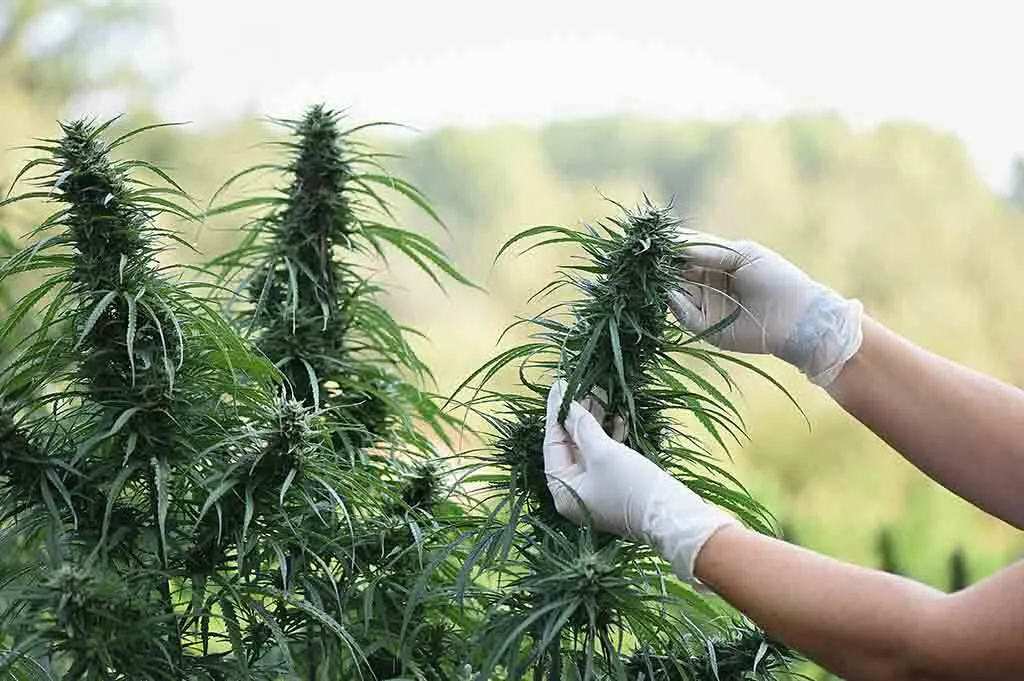
As plants transition into flowering, continue checking them regularly while avoiding unnecessary handling of developing buds. Knowing when to harvest cannabis is just as important as growing it successfully. Rather than harvesting on a specific calendar date, monitor the maturity of your flowers by examining their trichomes with a magnifying loupe or microscope. Most growers harvest when the majority of trichomes appear cloudy, with around 10–20% turning amber, although the ideal harvest window ultimately depends on your personal preference and desired effects.
If prolonged periods of cold, wet weather are forecast, particularly in humid climates, harvesting slightly earlier may help reduce the risk of bud rot and preserve flower quality.
Step 6: Dry and Cure Your Harvest
Harvesting is only the beginning of producing high-quality cannabis. After cutting your plants, follow a proper drying weed process before learning how to cure cannabis for long-term storage. Proper drying and curing improve flavor, aroma, and overall flower quality while helping preserve cannabinoids and terpenes for long-term storage.
Growing cannabis outdoors is a seasonal process that rewards patience, consistency, and regular observation. By giving your plants the right care at each stage of development, you'll be well positioned to enjoy a healthy, productive harvest at the end of the growing season.
What to Look Out for When Growing Cannabis Outdoors
Growing cannabis outdoors means your plants are exposed to changing weather, insects, wildlife, and other environmental factors that indoor growers rarely encounter. Regularly inspecting your plants allows you to identify potential issues early, making them much easier to correct before they affect growth or reduce your harvest.
The table below highlights some of the most common challenges outdoor growers face and how to manage them.
| Issue | Signs to Look For | How to Prevent It |
| Pests | Holes in leaves, discolored foliage, visible insects | Inspect plants regularly, encourage beneficial insects, and keep the growing area clean. |
| Nutrient Deficiencies | Yellowing leaves, brown spots, slow growth | Follow a balanced feeding schedule and adjust nutrients based on the plant's growth stage. |
| Overwatering | Drooping leaves with consistently wet soil | Water deeply only when the soil begins to dry and ensure adequate drainage. |
| Mold and Bud Rot | White powdery patches or brown, soft flowers | Improve airflow, avoid excessive moisture, and inspect plants after prolonged rain or high humidity. |
| Weather Damage | Broken branches, wilted leaves, storm damage | Support heavy branches with stakes or cages and provide protection during severe weather where possible. |
| Wildlife | Chewed leaves, broken stems, disturbed soil | Use fencing, netting, or other barriers to discourage animals from reaching your plants. |
Monitor Plants Regularly
One of the best habits any outdoor grower can develop is spending a few minutes inspecting plants every few days. Check both the upper and lower surfaces of leaves for insects, discoloration, or signs of disease, and examine stems and developing flowers as plants mature. Catching problems early often prevents minor issues from becoming serious ones.
Watch the Weather
Outdoor cannabis grows according to the seasons, so keeping an eye on the weather forecast is just as important as monitoring your plants. Heavy rain, prolonged humidity, heatwaves, strong winds, or an early frost can all affect plant health and flower quality. Preparing ahead of severe weather by supporting branches, improving drainage, or temporarily covering plants can help reduce unnecessary stress.
Keep the Growing Area Clean
Good garden hygiene helps reduce the risk of pests and disease throughout the growing season. Remove dead leaves, fallen plant material, and weeds from around your cannabis plants, as these can attract insects or create damp conditions where fungal diseases may develop. A tidy growing area also improves airflow and makes it easier to spot potential problems during routine inspections.
Growing cannabis outdoors doesn't require constant intervention, but it does benefit from consistent observation. By checking your plants regularly and responding quickly to changes in their health or environment, you'll give them the best opportunity to remain vigorous and productive throughout the growing season.
Conclusion
Growing cannabis outdoors doesn't require expensive equipment or years of experience. With the right genetics, a suitable growing location, healthy soil, and consistent care throughout the season, beginners can produce rewarding outdoor harvests. By understanding your local climate, preparing your grow space, and monitoring your plants regularly, you'll give them the best opportunity to thrive. Whether you're growing in containers, raised beds, or directly in the ground, following the guidance in this article will help you build the best outdoor grow setup and enjoy a successful harvest.
Frequently Asked Questions About Growing Cannabis Outdoors
Can you grow cannabis outdoors?
Yes, cannabis can grow very successfully outdoors when it's provided with plenty of direct sunlight, healthy soil, and the right environmental conditions. Outdoor cultivation allows plants to take advantage of natural sunlight and larger root systems, often producing larger plants than those grown indoors. Always check your local laws before growing cannabis at home.
What is the best outdoor grow setup for beginners?
The best outdoor grow setup for beginners is one that's simple, accessible, and easy to maintain. A sunny backyard or patio with large fabric pots, high-quality organic soil, and access to water provides an excellent starting point. Choosing beginner-friendly genetics and monitoring plants regularly will also improve your chances of success.
How much sunlight does outdoor cannabis need?
Cannabis grows best when it receives at least 6–8 hours of direct sunlight each day, although 8–10 hours is ideal for vigorous vegetative growth. More sunlight generally leads to healthier plants and better yields.
Should I grow cannabis in pots or directly in the ground?
Both methods work well, but they offer different advantages. Growing directly in the ground allows roots to spread naturally and often produces larger plants, while containers provide greater flexibility and make it easier to move plants if weather conditions change. Fabric pots are a popular choice because they improve drainage and root aeration.
When should I plant cannabis outdoors?
Most growers transplant cannabis outdoors after the last expected spring frost, once nighttime temperatures consistently remain above 50°F (10°C). The exact timing depends on your local climate, so it's always best to use your area's average frost dates rather than fixed calendar dates.
How often should I water outdoor cannabis?
There isn't a fixed watering schedule for outdoor cannabis. Instead, water deeply whenever the top few inches of soil begin to dry. Plants growing in containers usually require more frequent watering than those planted directly in the ground, particularly during hot summer weather.
Can autoflower cannabis grow outdoors?
Yes. Autoflower cannabis is well suited to outdoor cultivation, especially in regions with shorter growing seasons. Because autoflowers flower based on age rather than daylight hours, they typically finish much faster than photoperiod varieties and may even allow multiple harvests during one growing season.
How do I know when my outdoor cannabis is ready to harvest?
The most reliable way to determine harvest time is by examining the plant's trichomes using a magnifying loupe or microscope. Most growers harvest when the majority of trichomes appear cloudy, with around 10–20% turning amber. Pistil color and overall flower maturity can also help indicate when plants are ready.
What are the biggest challenges when growing cannabis outdoors?
Outdoor growers commonly face challenges such as pests, mold, heavy rain, strong winds, nutrient deficiencies, and changing weather conditions. Regularly inspecting your plants and responding quickly to problems will help minimize their impact and keep your plants healthy throughout the growing season.
How much cannabis can one outdoor plant produce?
Outdoor cannabis yields vary depending on the genetics, growing season, climate, sunlight, soil quality, container size, and overall plant care. Under favorable conditions, outdoor plants typically produce much larger harvests than indoor plants because they have access to natural sunlight and unrestricted root growth. Rather than focusing on a specific yield, aim to provide consistent care throughout the season to maximize your plant's potential.


