




Scrogging autoflowers is one of the most effective ways to increase yields from a limited grow space. By training branches beneath a mesh screen, you create a flat, even canopy where every flowering site receives more consistent light, improved airflow and room to develop into larger, higher-quality buds.
While the Screen of Green (SCROG) method is traditionally associated with photoperiod cannabis, it can work exceptionally well with autoflowers when applied at the right time. Because autos have a short vegetative stage, success isn't about filling the screen before flowering begins, it's about starting early, training gently and allowing the plant's natural stretch to complete the canopy.
In this guide, we'll show you exactly how to SCROG autoflowers step by step, from choosing the right screen height and beginning training to maintaining an even canopy throughout flowering. We'll also cover the most common mistakes growers make and how to avoid them for healthier plants and bigger harvests.

How to Grow Autoflowers Using the SCROG Method
Once your grow space is fully set up, the next step is to install your SCROG net and begin training your autoflowers. Unlike photoperiod plants, autoflowers have a limited vegetative period, so timing is essential. The goal isn't to completely fill the screen before flowering, but to create an even canopy that maximizes light exposure, improves airflow, and supports healthy flower development.
Step 1: Set Up Your SCROG Net
Install your SCROG net before your plants begin their rapid vegetative growth. Position the screen approximately 20–25 cm (8–10 inches) above the soil or top of the pots, allowing enough room to train the branches underneath.
A sturdy wooden frame fitted with coated wire or a fabric trellis net both work well. Secure the frame to your grow tent poles using cable ties or adjustable straps so the screen can be raised or lowered if necessary.
For autoflowers, install the screen when the plants are around 15–20 cm (6–8 inches) tall, typically between Days 12 and 18. This allows you to begin training before the plants enter their flowering stretch.
When setting up your screen:
- Ensure the openings are large enough for branches to pass through comfortably without being restricted.
- Avoid using bare metal wire, as it can damage or cut stems during training.
- Keep the screen adjustable so it can be repositioned if needed throughout the grow.
Goal: Aim to fill 60–80% of the screen before flowering begins. The natural stretch during early flowering will usually fill the remaining space.
Step 2: Train Your Plants to Create an Even Canopy
SCROG works best when combined with low-stress training (LST). Once your autoflowers have developed 4–6 nodes, gently bend the main stem and secure it using soft plant ties. This redirects growth hormones to the side branches, encouraging multiple flowering sites instead of one dominant cola.
As branches begin growing through the screen, gently tuck them back underneath and guide them into empty sections of the net. Continue spreading the branches horizontally to create a flat, even canopy.
Check your plants daily, but only adjust branches when necessary. Gentle training every day or two is usually enough to maintain an even canopy without causing unnecessary stress.
An even canopy provides several benefits:
- Supports stronger, more uniform flower development.
- Produces consistently sized buds across the entire plant.
- Maximizes light penetration and overall light efficiency.
- Improves airflow throughout the canopy.
Step 3: Maintain Your SCROG During the Vegetative Stage
Throughout the vegetative stage, continue guiding new shoots beneath the screen and into any open spaces. The objective is to spread growth evenly across the canopy rather than allowing individual branches to grow vertically above the rest.
Viewed from above, the screen should gradually become covered with healthy leaves and growing tips. Beneath the screen, there should primarily be stems and larger branches, helping to improve airflow around the base of the plants.
If the canopy becomes crowded, tuck large fan leaves out of the way whenever possible. Only remove leaves that significantly block multiple bud sites or reduce airflow, as autoflowers have limited time to recover from excessive defoliation.
Step 4: Maintain Your SCROG During Flowering
Most autoflowers begin flowering between Days 21 and 35, depending on the genetics and growing conditions. During the first 1–3 weeks of flowering, the plants will enter their stretch phase.
Continue gently tucking branches beneath the screen during this period to maintain an even canopy. Once the stretch slows and the flowering tops are approximately 5–10 cm (2–4 inches) above the screen, stop weaving the branches and allow each top to grow vertically into its own flowering cola.
As flowering progresses, remove weak growth beneath the screen that receives little or no light. Lightly prune leaves only when they restrict airflow or heavily shade multiple bud sites. Avoid heavy defoliation, as unnecessary stress can reduce the performance of autoflowering plants.
Maintaining the correct environment during flowering is essential for producing dense, healthy buds:
- Maintain a daytime temperature of approximately 24°C (75°F).
- Keep relative humidity between 45% and 50%.
- Use oscillating fans to promote consistent airflow through the canopy and reduce the risk of mould and mildew.
With regular maintenance and gentle training, a SCROG setup can help autoflowers develop an even canopy of well-lit flowering sites, improving both yield and flower quality while making the most of your available grow space.
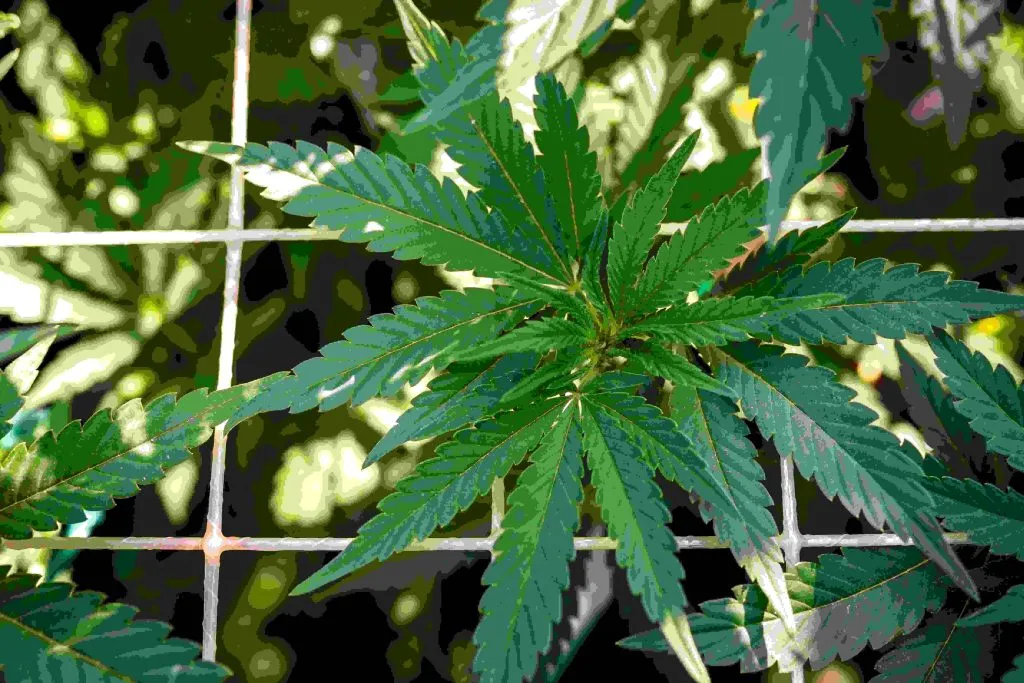
What is the scrog (screen of green) method?
The first time I ever saw a cannabis Scrog, I was blown away at how many colas were growing at once. The Scrog is one of the easiest ways to take your yield to a whole other level. When using photoperiods, growers will grow one massive plant that has been trained over a long vegetative phase. The following explains why the Scrog method works well for autos and highlights the potential disadvantages of using autos for a Screen of Green setup.
Why should you scrog autoflowers?
Autos are fast, resilient and easy to grow, but if you're cultivating autoflower seeds, Scrog is one of the best ways to maximize your grow space and encourage an even canopy. Well, if you want to make the most out of your grow space and produce an even and uniform canopy of big, frosty colas, then Scrog is the way forward!
- Autos will benefit from greater light spread and penetration
- The plant will produce many large primary and secondary colas
- Ideal for growers who only want 1-2 plants at home
- You increase your chances of a maximum yield
What are the disadvantages to scrog with autoflowers?
I am a big fan of the Screen of Green technique for growing photoperiods; however, there are some disadvantages with autos and the Scrog method.
- Plants may not grow tall enough to make it worth it
- The grow space may be efficiently used
- Some strains may not be suitable for Scrog
Preparing your grow space for a screen of green
Preparing your grow space properly to accommodate a Screen of Green set-up will make a huge impact on how well your plants grow and yield. This means selecting the right pot, determining the most suitable net type, and deciding how much space to keep between the net and the canopy, as covered below.
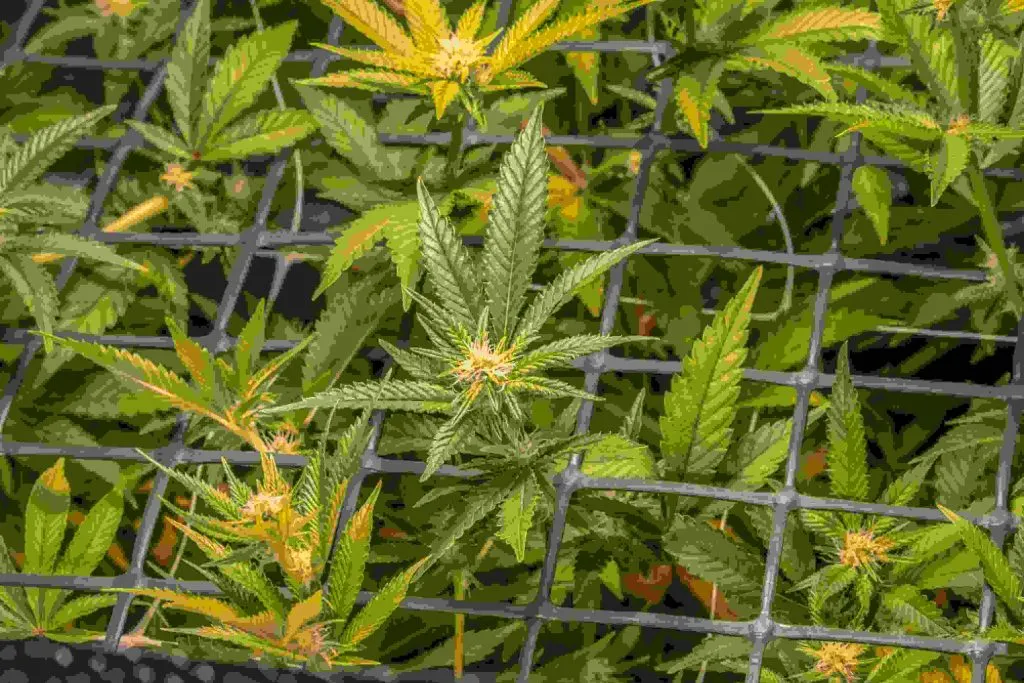
Selecting the right pots to scrog
The pot size should be large enough to support the desired size of the autoflowering plant. Growers who prefer growing only 1–2 large plants may choose the SCROG method to maximize canopy coverage. For most indoor autoflowers, 10–20 L pots are sufficient, while 20–30 L pots are better suited to larger plants or outdoor grows. It is generally recommended to avoid repotting autos.
What type of scrog net should you choose?
There are many different nets you can use for your Scrog grow. The most important thing is that the net can be easily removed in an emergency and raised as and when needed. Below are the different options you have:
- Metal chicken wire 3 inches in size with a wooden frame
- 20mm diameter bamboo cane tied into a grid formation
- Fabric trellis net with 4-inch squares
- Growth shoots will need to easily pass through the net
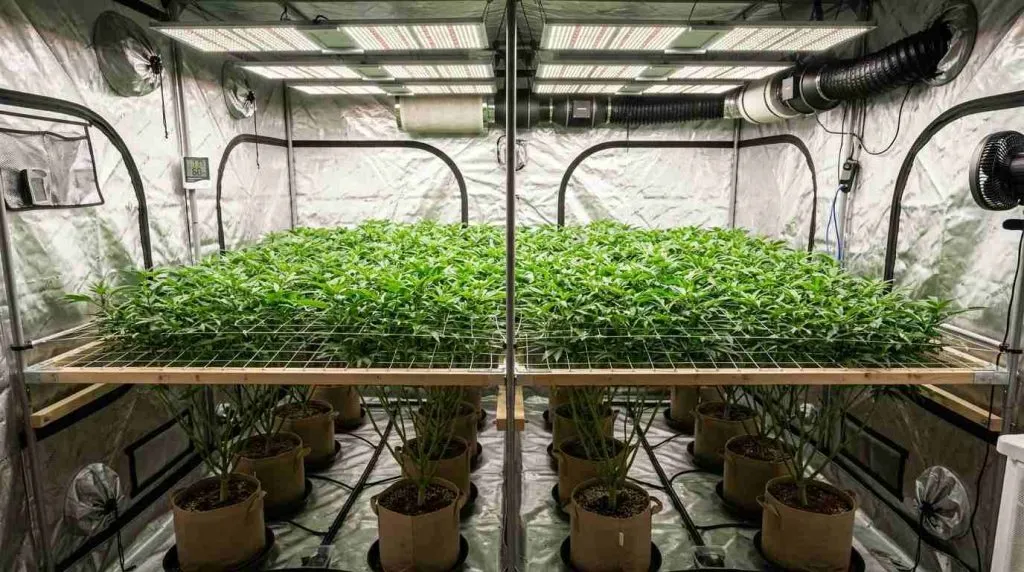
Appropriate spacing for the optimum scrog grow
The goal of a successful Scrog is to carefully manipulate the plant's structure and guide the branches through the screen. By the time your autoflowers begin flowering, most of the screen should be filled with developing primary and secondary bud sites.
- Make sure the gaps in the screen are at least 3 inches wide
- Avoid chicken wire with small-sized gaps
Autoflower scrog best practices & risk management
Using the Scrog method can pay off big time when done right; however, there are a few practices to keep in mind. This means low-stress training for enhanced light penetration, sustained airflow and ventilation, and, when the time to stop screen training and focus on flower production is near, to prevent overtraining.
What LST methods can I use to make scrog more effective?
The low-stress technique involves tying cannabis plants down to effectively open up their shape and produce a significantly higher number of colas. Tying your autos down early can improve light spread, strengthen side branches, and help create an even canopy. Some experienced growers may also use supercropping autoflowers, although this should only be done on healthy, vigorous plants.
Sustaining airflow, ventilation and light penetration
Whilst the upside of the Scrog method is producing a massive harvest in a small space, the downside is that the abundance of colas may be susceptible to mold if airflow and ventilation are not on point. As long as you have correctly trained your auto through the net, then you will not need to worry about light penetration.
- Poor ventilation will result in temperature fluctuations or hot grow rooms
- Oscillating fans will create air currents and produce fresh air around the buds
- Below the screen, there should be no signs of foliage or growth
- The screen should not have any empty spaces with light
When to stop using scrog to prevent overtraining
I recommend you have the plants spread open and growing through the Scrog net by day 30. Trying to manoeuvre and bend older plants through the net may result in a broken or snapped side branch. You should never remove the screen once your autoflowers are well established in flowering, do not disturb the plants, or continue to train them through the net.
Frequently asked questions
Can you Scrog any autoflower strain?
Yes, although some autoflower strains are better suited to Scrog than others. Medium to large-growing sativa-dominant and hybrid varieties typically produce longer branches that are easier to train through the screen, making it easier to create an even canopy.
When should I install a Scrog net for autoflowers?
Install the Scrog net before the branches reach the canopy, usually around weeks 2–3 of growth. Positioning the screen early allows you to begin guiding branches through the net as the plant develops without causing unnecessary stress.
Does Scrog increase the yield of autoflowers?
Scrog can help increase yields by creating a flat, even canopy that exposes more flowering sites to direct light. While results depend on genetics and growing conditions, properly trained autoflowers often produce more uniform buds and make better use of the available grow space.
When should I stop training autoflowers through the Scrog net?
Continue tucking and guiding branches through the screen during the early growth and stretching phase. Once the plant has finished stretching and flowering is well established, stop training and allow the colas to develop naturally.
What size Scrog net is best for autoflowers?
The ideal Scrog net size depends on your grow space and the number of plants you're growing. For a single large autoflower, an 80 × 80 cm (32 × 32 inch) screen works well, while larger grow tents may require a bigger screen or multiple sections to support additional plants.


