




Choosing the best pot size for autoflowers is an important part of creating healthy growing conditions. Your container affects root development, drainage and how long the growing medium retains moisture. For most soil-grown autoflowers, a 3–5 gallon pot (11–19 L) is a practical starting point, although smaller or larger containers can suit different varieties and growing conditions.
But size is only part of the decision. The best pots for autoflowers also depend on the container material, growing medium and whether you're growing indoors or outdoors.
In this guide, you'll discover how to choose the right autoflower pot size, compare fabric, plastic, air-pruning and terracotta pots, and avoid common container mistakes that can restrict plant development.
Key Takeaways
- Best pot size: A 3–5 gallon container (11–19 L) is a practical starting point for many soil-grown autoflowers, depending on plant size and growing conditions.
- Indoor autoflower pots: Three-gallon containers suit many compact indoor setups, while five-gallon pots provide additional root space for larger plants.
- Outdoor autoflower pots: Five- to seven-gallon containers can suit larger outdoor varieties, but compact plants may need less space.
- Best pot types: Fabric pots encourage air pruning, plastic pots retain moisture longer, and rigid air-pruning pots help limit root circling.
- Root health and drainage: Suitable pot volume, an appropriate growing medium and careful watering help maintain healthy roots. Bigger pots do not automatically produce higher yields.
- What is the Best Pot Size for Autoflowers?
- How Does Pot Size Affect Autoflower Growth?
- Best Pot Size for Autoflowers Indoors
- Best Pot Size for Autoflowers Outdoors
- 3-Gallon vs 5-Gallon Pots for Autoflowers
- What Are the Best Types of Pots for Autoflowers?
- Choosing a Pot for Your Growing Medium
- Should You Plant Autoflowers in Their Final Pot?
- Common Autoflower Pot Mistakes
- Conclusion
- Frequently Asked Questions
- References
What is the Best Pot Size for Autoflowers?
Start with the expected size of your variety, then consider your growing medium and watering routine. A compact autoflower with limited branching may use less substrate than a taller variety with a broad canopy. Review breeder descriptions, allowing for differences in growth. Our guide to how tall autoflowers grow can help you plan the available space.
More volume offers extra water and nutrient reserves only if roots can use them. Avoid treating any recommended capacity as a universal requirement.
Autoflower Pot Size Comparison Chart
| Pot capacity | Volume (L) | Suitable application | Main limitation |
| 1 US gallon | 3.8 L | Very small or experimental plants | Limited root volume |
| 2 US gallons | 7.6 L | Compact plants with regular checks | Smaller moisture reserve |
| 3 US gallons | 11.4 L | Many indoor soil setups | More frequent irrigation |
| 5 US gallons | 18.9 L | Larger plants and roomy setups | Greater footprint |
| 7 US gallons | 26.5 L | Some substantial outdoor plants | Extra substrate may go unused |
| 10 US gallons | 37.9 L | Large specialist containers | Weight and expense |
These are practical applications, not proven yield categories. Pot dimensions vary; compare stated capacities.

How Does Pot Size Affect Autoflower Growth?
Roots absorb water and dissolved nutrients while exchanging gases with spaces in the substrate. When roots encounter restricted volume, plant development can slow. A meta-analysis by Poorter and colleagues (2012) examined 65 studies and found that pot size affected plant biomass. Those experiments cannot establish ideal autoflower volumes.
Root restriction is only one constraint. Light, genetics and substrate conditions also influence growth. A plant that stops expanding its canopy may not be rootbound; inspect temperature, moisture and light before blaming the container. An oversized container can remain wet for longer when a young seedling uses little water.
Best Pot Size for Autoflowers Indoors
Measure your grow tent before choosing pots. Container diameter affects how many plants fit, but canopy spread and access for watering also require space. Three-gallon pots can suit compact setups; five-gallon containers make sense when larger plants have adequate room.
Allow space for drainage trays, inspection and airflow between plants. Fitting pots across the floor does not guarantee adequate canopy room. For planning examples, see how many autoflowers can grow in a tent.
Grower tip: Arrange empty containers and saucers in the tent before planting. Check that you can reach each pot, remove runoff and inspect lower leaves without moving nearby plants.
Best Pot Size for Autoflowers Outdoors
Outdoor pots face wind, rain and sun. Larger pots can hold more moisture between irrigation sessions, which may help during hot weather. However, a compact autoflower does not automatically need seven gallons simply because it grows outside.
Use a stable base, keep drainage outlets unobstructed and consider heat exposure. Dark plastic can become warmer in direct sunlight, particularly when standing on paving. For wider climate and placement advice, read how to grow autoflowers outdoors.
Grower tip: Place containers on suitable pot feet above solid paving. Check that water exits freely after rain rather than collecting beneath the base.
3-Gallon vs 5-Gallon Pots for Autoflowers
Capacity differs, not guaranteed yields. Three-gallon pots cost less to fill and are easier to lift. They can suit compact genetics or growers who check moisture regularly. Their smaller reserve requires closer checks as roots expand.
Five-gallon containers offer additional substrate for larger plants and may reduce the frequency of watering once roots occupy more of the medium. Early on, however, you must avoid saturating unused substrate repeatedly. Excess moisture can limit oxygen around developing roots.
I recommend three gallons when floor space is limited and five when plant size justifies it. For other influences on harvest weight, consult our guide to increasing autoflower yields.
What Are the Best Types of Pots for Autoflowers?
Choose autoflower pots for your substrate, irrigation and budget. Design affects water loss and root contact.
| Pot material or design | Best suited to | Main trade-off |
| Fabric | Regularly monitored soil grows | Sides dry quickly |
| Plastic | Budget grows or slower watering cycles | Potential root circling |
| Rigid air-pruning | Growers managing frequent irrigation | Higher cost |
| Terracotta | Fixed outdoor positions | Heavy and breakable |
| Reservoir container | Managed passive systems | Requires specific setup |
Fabric Pots (Smart Pots)
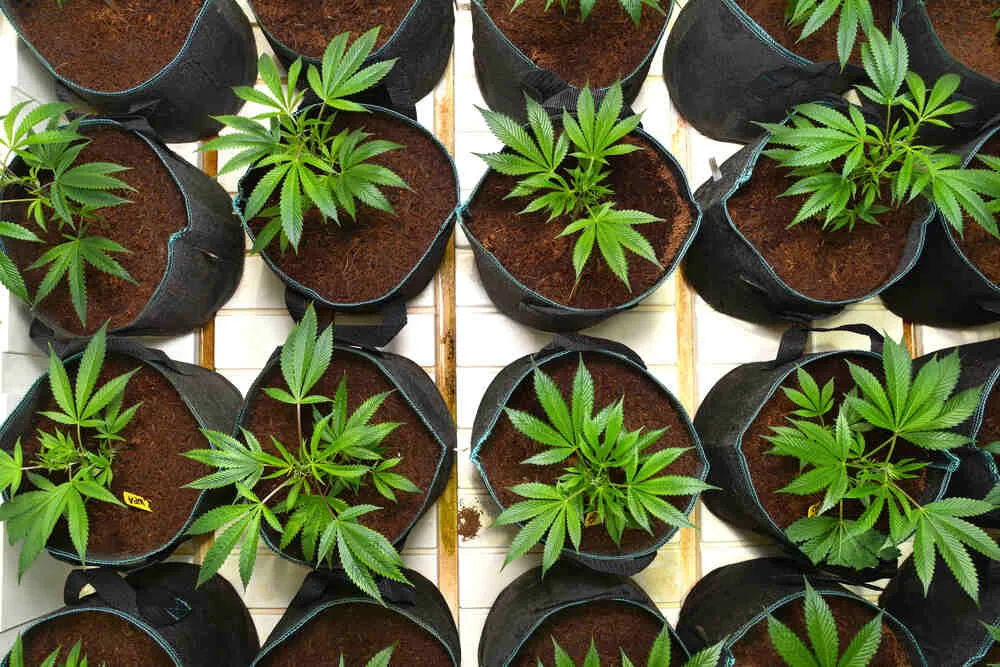
Fabric pots, including Smart Pots, have breathable walls that allow air to reach the outer root zone. When growing roots reach the fabric, exposed tips stop extending and additional roots can branch within the medium. This process, called air pruning, helps reduce root circling.
Their breathable design also allows excess moisture to escape through the sides. However, fabric pots can still become waterlogged if you apply too much water or use poorly draining soil.
I recommend fabric pots for growers who can check moisture regularly. Their lightweight construction makes them convenient indoors, although outdoor plants may need more frequent watering during hot weather.

Plastic Nursery Pots
Plastic pots are a practical, affordable option for growing autoflowers. Their solid walls reduce moisture loss through the sides, allowing the substrate to remain damp longer than it would in many breathable containers.
They are easy to clean, reusable and available in numerous sizes. However, roots may circle the interior when they reach the walls.
Choose containers with sufficient drainage holes and avoid leaving excess water in collection trays. Plastic pots suit beginners who want straightforward moisture management without purchasing specialist equipment.
Rigid Air-Pruning Pots (Air Pots)
Air Pots use perforated walls and shaped surfaces to direct roots towards openings. When root tips encounter air, they stop extending, encouraging additional branching within the substrate.
Research by Elsysy and Einhorn (2022) found that air-pruning containers increased fine-root development in young apple plants compared with field-grown plants. However, this does not establish higher yields in autoflowering cannabis.
Air Pots provide effective drainage but can dry quickly, particularly when placed near moving air. They cost more than standard plastic containers and suit growers prepared to monitor moisture carefully.

Terracotta Pots
Terracotta pots are made from porous clay, allowing moisture to escape through their walls. Their weight provides stability, making them useful for larger autoflowers grown in fixed positions.
However, terracotta can dry faster than plastic, increasing watering demands. The material is also fragile and can crack if dropped or exposed to freezing conditions while wet.
Terracotta is suitable when stability matters more than portability, provided you monitor substrate moisture.

Reservoir Containers (Hempy Buckets)
Reservoir containers store water or nutrient solution for plant roots to access. However, different designs require different approaches.
Self-watering pots commonly use capillary action to draw moisture from a lower reservoir into the substrate. Hempy buckets use a raised drainage outlet to maintain a small reservoir beneath the growing medium, commonly perlite or coco-based mixtures.
These systems can reduce the need for frequent manual watering, but they require suitable substrates and attention to nutrient concentration, reservoir conditions and root oxygen.
Reservoir containers are worth considering if you prefer a managed irrigation system rather than conventional soil pots.
Choosing a Pot for Your Growing Medium
A container performs differently depending on what fills it. Fine soil mixtures hold more moisture; coarser mixes often drain faster. For selection advice, read the best soil for autoflowers.
Coco coir requires irrigation matched to its structure and nutrient supply. Hydroponic containers use different approaches to root support and oxygen delivery; our autoflower hydroponics guide covers those systems.
Burgel and colleagues (2020) compared substrate blends in two cannabis genotypes and recorded differences in root measurements and plant growth. They did not study autoflowers.
Grower tip: Learn how much your container weighs after watering and as the substrate becomes lighter. Combine this with checking moisture below the surface instead of following a fixed calendar.
Should You Plant Autoflowers in Their Final Pot?
Starting in the final pot avoids disturbing the root ball during early development. Autoflowers have limited time to recover from early setbacks. Water the immediate seedling area carefully; there is no need to saturate the entire volume with every small application.
Transplanting is still possible. Move seedlings before roots become tangled, prepare the receiving pot and keep the root ball intact. For beginners, I prefer preparing the final container before following an autoflower germination method.
Common Autoflower Pot Mistakes
Avoid placing gravel at the bottom of a pot to improve drainage: it can create a poorly draining boundary rather than solve poor substrate structure. Check that saucers do not block outlets, and do not confuse pot height with total volume. Do not pack potting mix too tightly around developing new roots.
Watch for standing water, persistent wilting or slowed new growth. These symptoms have several possible causes, so inspect the substrate before changing nutrients. Our stunted autoflower guide explains broader causes of slow development.
Conclusion
The best pot size for autoflowers depends on your plant's expected growth, available space and watering routine. For many soil-grown varieties, 3–5 US gallons (11–19 L) is a practical starting range. Choose a container that provides sufficient root space, effective drainage and manageable moisture levels. Healthy roots depend on suitable growing conditions, not simply larger pots.
Frequently Asked Questions
Can Two Autoflowers Grow in the Same Pot?
Yes, but separate containers are generally easier to manage. Sharing a pot means roots compete for water, nutrients and space. Individual containers allow you to adjust watering according to each plant's needs.
Are Square or Round Pots Better for Autoflowers?
Both work well. Square pots can use tent floor space more efficiently, while round pots are widely available. Root space, drainage and substrate quality matter more than container shape alone.
Can You Reuse Fabric Pots for Autoflowers?
Yes. Remove old roots and substrate, wash the fabric thoroughly and allow it to dry. Inspect seams and drainage before reuse. If previous plants suffered from root disease, disinfect appropriately or replace the container.
Can You Grow Autoflowers in Biodegradable Pots?
Yes, although some biodegradable containers break down slowly and may restrict roots after planting. Check the material and follow the manufacturer's instructions. Planting directly into a suitable final container avoids this potential problem.
Can Autoflowers Grow in Pots Without Drainage Holes?
Conventional soil pots need drainage outlets to prevent excess water collecting around roots. Specially designed reservoir and hydroponic systems operate differently, using controlled water levels and suitable media to maintain root oxygen.
References
- Poorter, H., et al. (2012). Pot size matters: a meta-analysis of the effects of rooting volume on plant growth. Functional Plant Biology, 39(11), 839–850.
- Elsysy, M., & Einhorn, T. C. (2022). Air-Pruning Containers Modify Root and Scion Growth and Alter Resource Allocation of Bench-Grafted Apple Plants. Horticulturae, 8(9), 797.
- Burgel, L., Hartung, J., & Graeff-Hönninger, S. (2020). Impact of Different Growing Substrates on Growth, Yield and Cannabinoid Content of Two Cannabis sativa L. Genotypes in a Pot Culture. Horticulturae, 6(4), 62.
