




Adding CO2 to a cannabis grow room can improve plant growth and yield by allowing plants to photosynthesize more efficiently under strong lighting. However, it is not a necessary or cost-effective upgrade for every grow setup.
For most beginner growers, focusing on the fundamentals will deliver far greater results. This includes maintaining stable temperatures, providing proper watering, ensuring healthy plant development, and achieving even light coverage. Supplemental CO2 only becomes beneficial when environmental conditions are already optimized and high light intensity is in place.
In this guide, you will learn whether CO2 supplementation is suitable for your grow room or tent, how CO2 levels interact with temperature, humidity, and lighting, and which delivery methods offer the most precision and control. We also explain how to set up a compressed CO2 system, estimate gas requirements, position equipment for even distribution, and avoid common safety risks.
Key Takeaways
- Supplemental CO2 can improve cannabis growth and yields, but only when plants receive strong light and the rest of the grow-room environment is already stable.
- Most beginner growers will see better results by improving lighting, watering, temperature, humidity and plant health before investing in CO2.
- Ambient CO2 is usually sufficient under low or moderate light, while controlled enrichment is more useful in sealed or tightly managed high-light rooms.
- Compressed CO2 tanks offer beginners the greatest control because they can be connected to a regulator, solenoid and ppm controller.
- Grow-room volume, starting ppm, target ppm, flow rate, air leakage and exhaust operation all affect how much CO2 is required.
- Always use an independent CO2 safety alarm, secure cylinders upright and ventilate the room before entering if elevated levels are detected.
Does Adding CO2 Increase Cannabis Yields?
How CO2 Can Affect Cannabis Growth
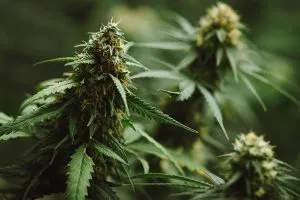
Adding CO2 to a cannabis grow room can increase yields, but only when the plants have enough light and the rest of the environment is properly controlled. Cannabis uses carbon dioxide during photosynthesis, so raising CO2 levels may allow plants to process more light and produce more energy for growth.
However, CO2 for cannabis should be treated as a final optimization rather than a shortcut. If light intensity is too low, the roots are unhealthy or temperature and humidity regularly fluctuate, additional CO2 is unlikely to make a noticeable difference. The plant will still be limited by whichever part of the grow is underperforming.
Under strong cannabis grow lights, with healthy plants and stable environmental conditions, controlled CO2 enrichment may support more productive growth and heavier harvests. Results still depend on the strain, light intensity, plant health and how consistently the room is managed, so growers should avoid assuming that more CO2 will automatically produce a larger yield.
Genetics still determine the plant’s underlying production potential, so growers focused on output should begin with high-yield cannabis seeds before treating CO2 as a way to optimize an already efficient grow room.
Is CO2 Worth Using in a Grow Tent?
For most beginner growers, adding CO2 to a grow tent is unnecessary. Tents normally rely on extraction fans to remove heat and humidity, but the same airflow also removes the added CO2 before plants can make full use of it.
Growers cultivating indoor cannabis seeds in a sealed or tightly controlled room are more likely to benefit from CO2 when the setup also has powerful lighting, reliable climate control and an accurate CO2 monitor. Before investing, focus on improving canopy light coverage, watering your cannabis plants, nutrition, airflow and temperature management. These changes usually offer better value in a small home grow. Airflow and grow-room humidity control remain essential because they help distribute CO2 across the canopy while preventing humid pockets from developing around dense foliage.
If you are wondering, “Should I use CO2 in my grow room?”, the answer is usually only after every other major part of the setup is already working well.
CO2 Levels, Lighting and Grow-Room Conditions
Recommended CO2 PPM for Cannabis
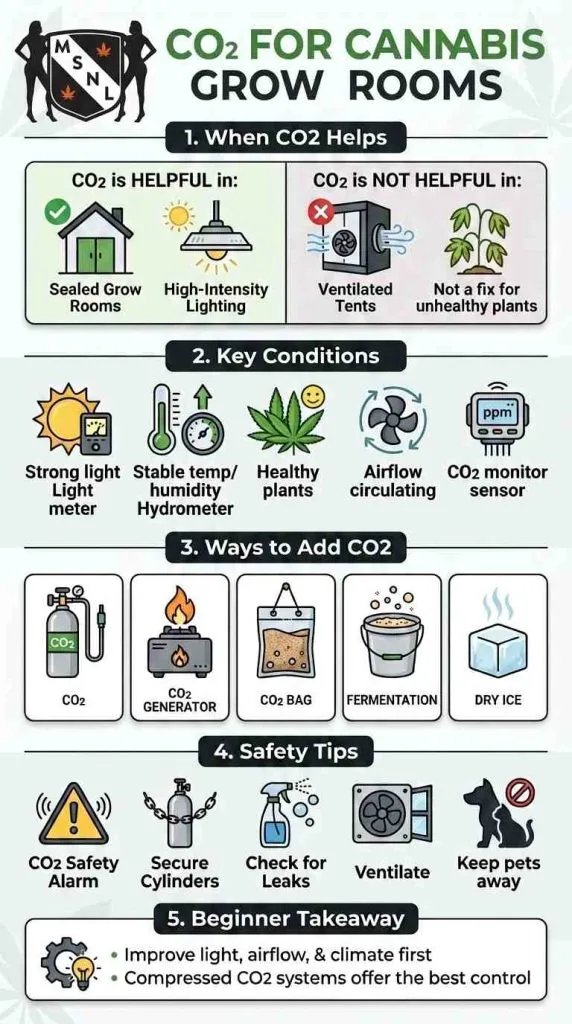
There is no single ideal CO2 level for every cannabis grow room. The correct concentration depends on light intensity, plant health and how well the temperature and humidity are controlled. Ambient air is normally around 420–430 ppm, which is usually sufficient for plants grown under low or moderate light.
Published cannabis research has found that raising CO2 to around 700–750 ppm can increase photosynthesis compared with ambient conditions. However, this does not mean that every grower should immediately aim for higher concentrations. The benefit becomes smaller when light, water, nutrients or root health are limiting plant growth.
| Situation | CO2 guidance |
| Low or moderate light | Measure and maintain normal ambient conditions |
| First controlled enrichment test | Start conservatively and monitor plant response |
| High-light controlled room | Adjust gradually using a controller rather than selecting the highest setting |
| Dark period | Disable CO2 injection |
| Stressed plants | Return to ambient conditions and correct the underlying problem |
In a well-controlled, high-light grow room, beginners should start cautiously and use a controller to maintain a stable concentration rather than chasing the highest possible reading. More CO2 does not automatically mean faster growth or a larger harvest.
Matching CO2 With Light, Temperature and Humidity
Cannabis plants need enough light to make use of additional CO2. If canopy light intensity is modest, CO2 is unlikely to be the factor holding growth back. Research has shown that cannabis can respond strongly to higher PPFD, although excessive light combined with excessive heat can reduce photosynthetic efficiency.
A CO2-enriched grow room may operate slightly warmer than a room using ambient air, but temperature should never be raised simply because CO2 is present. Use the recommended ranges in our guide to the best temperature for growing cannabis as a starting point, then watch leaf temperature and plant response before making adjustments.
Airflow and grow-room humidity control remain essential because they help distribute CO2 across the canopy while preventing humid pockets from developing around dense foliage. The most reliable approach is to balance CO2 with light, temperature, humidity and airflow, then adjust gradually according to plant response rather than relying on one fixed number.
Ways to Add CO2 to a Cannabis Grow Room
There are several ways to add CO2 to a cannabis grow room, but they vary considerably in cost, control and suitability. For beginners, the most important difference is whether the method allows you to measure and regulate the amount being released.
| Method | Control | Best suited to | Main drawback |
| Compressed CO2 tank | High | Small and medium controlled rooms | Tank refilling and setup cost |
| CO2 generator | High | Larger sealed rooms | Adds heat and moisture |
| CO2 bag | Low | Minor supplementation | Difficult to measure or control |
| Fermentation | Low | Small experiments | Inconsistent output and odor |
| Dry ice | Very low | Temporary use only | Short-lived and difficult to regulate |
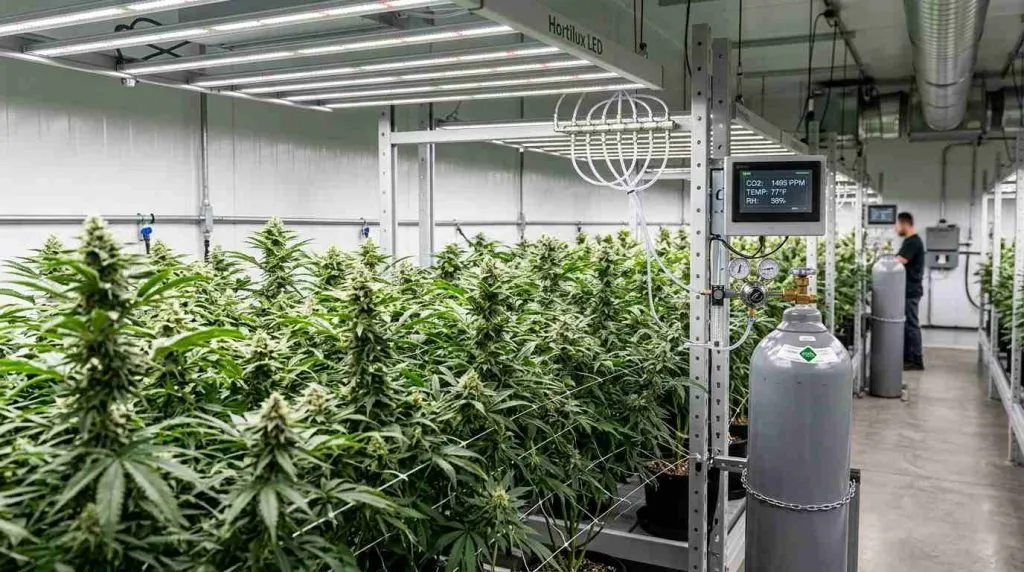
Compressed CO2 tanks are usually the most practical option for growers who want consistent results. A tank can be connected to a regulator, solenoid valve and controller, allowing CO2 to be released only when levels fall below the chosen target. Tanks do not add heat or humidity, although they must be secured upright and refilled when empty.
CO2 generators burn propane or natural gas and can supply larger rooms, but they also produce heat and moisture. The additional heat and moisture can make CO2 generators difficult to manage in small grow spaces, particularly when temperature and humidity are already near their upper limits.
CO2 bags and fermentation methods are cheaper, but their output is difficult to predict. They may slightly raise CO2 in a small space, although growers cannot assume they are providing an effective concentration without measuring it.
Dry ice releases CO2 as it warms, but the effect is brief and difficult to control. It is therefore unsuitable as a reliable long-term method.
For most beginners considering CO2 for cannabis, a properly monitored compressed tank system offers the best balance of control, safety and consistency.
How to Set Up a Compressed CO2 System
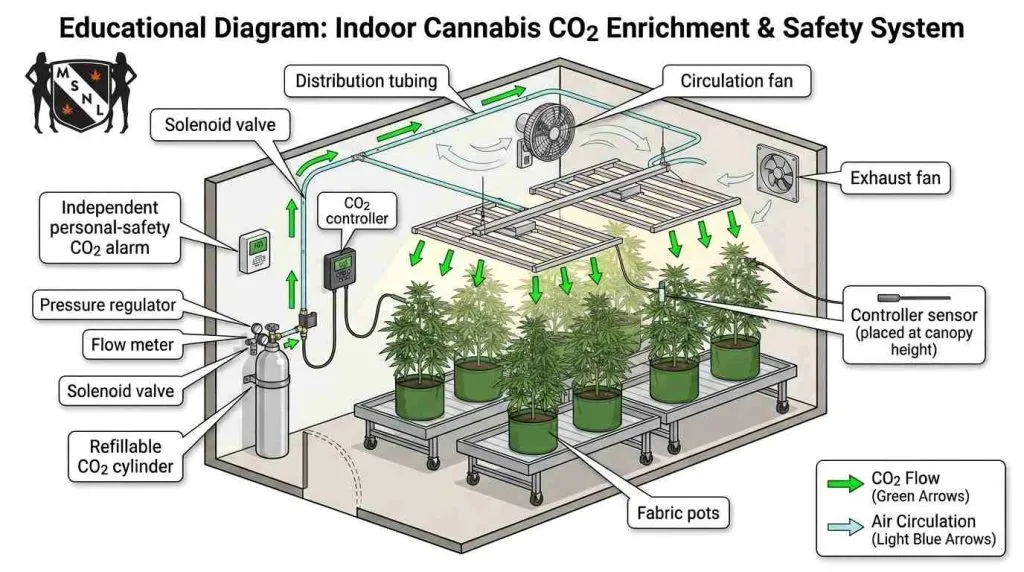
A compressed CO2 system is easier to regulate than bags or fermentation because a controller can release gas only when the measured concentration falls below the selected target. A compressed CO2 system gives growers more control than bags or fermentation because a controller can release gas according to measured ppm levels. Before installation, check that the room can retain enriched air without continuous extraction removing it immediately.
Equipment You Will Need
| Equipment | What it does | How to use it |
| Refillable CO2 cylinder | Stores compressed carbon dioxide | Keep it upright on a firm surface and secure it with a chain, bracket or cylinder stand. |
| Pressure regulator | Reduces the high cylinder pressure | Attach a regulator designed for the cylinder and gas type before opening the valve. |
| Flow meter | Controls the release rate | Set the flow according to the regulator instructions and room calculation. |
| Solenoid valve | Starts and stops the gas supply | Connect it to the controller so gas flows only when CO2 falls below the selected level. |
| CO2 controller or timer | Controls when the solenoid releases gas | Use a ppm controller wherever possible because it reacts to live CO2 readings. A timer is a less precise alternative that releases gas at fixed intervals without measuring the room concentration. |
| CO2-resistant tubing | Carries gas into the room | Check that the tubing fits the regulator and solenoid securely without kinks or loose joints. |
| Distribution line | Spreads CO2 across the canopy | Suspend perforated tubing above the plants rather than releasing everything from one outlet. |
| Circulation fan | Mixes CO2 through the room | Run it gently across the growing space without blowing directly at the controller sensor. |
| Independent personal-safety CO2 alarm | Warns people about unsafe accumulation | Install and test it according to the manufacturer’s placement instructions. Do not use the grow controller as the only safety device. |

Step-by-Step CO2 Setup
Step 1. Measure and assess the room
If you are still planning the space, start with our guide to setting up a cannabis grow room before installing a compressed CO2 system.
Record the room’s length, width and height so its volume can be calculated. Check doors, ducting and other likely leakage points.
Record the room’s length, width and height so its volume can be calculated. Check doors, ducting and other likely leakage points. A tent with an extractor running continuously may lose CO2 too quickly for enrichment to be worthwhile.
Before releasing any gas, record the normal background CO2 reading. This gives you a baseline against which to compare the enriched level.
Step 2. Secure the CO2 cylinder
Place the cylinder upright in a protected, well-ventilated position where it cannot be knocked over. Use a chain, bracket or purpose-built stand. OSHA guidance requires compressed gas cylinders to be secured upright while in use.
Keep the cylinder valve closed while attaching the regulator.
Step 3. Connect the regulator and gas line
Attach the regulator and flow meter, followed by the solenoid valve and tubing. Use only compatible fittings and follow the equipment manufacturer’s instructions. Open the cylinder valve slowly, then test each connection with an approved leak-detection solution. Never search for a leak using a flame.
Step 4. Install the distribution tubing
Run the distribution line above the canopy and space its outlets across the growing area. A small circulation fan should mix the air gently so one part of the room does not receive a concentrated stream while another remains near ambient levels.
Step 5. Position the controller sensor
Place the controller sensor at or just above canopy height, then raise it as the plants grow. Keep it away from the CO2 outlet, open doors, extractor fans and direct fan airflow. Placing it next to the distribution line can produce an artificially high reading and stop the system before the gas has mixed through the room.
The controller sensor measures conditions around the plants. The independent safety alarm protects people entering the grow room. Install the alarm separately and follow its manufacturer’s height, calibration and testing instructions.
Step 6. Program and test the system
Set the controller to the CO2 target chosen for your light intensity and growing conditions. Do not simply select the highest available setting. Program the system around the correct cannabis light schedule so CO2 is released only during the light period.
Run the first test while the room is unoccupied and record:
- Starting CO2 ppm
- Selected target ppm
- Time taken to reach the target
- Highest reading after the solenoid closes
- Time taken to return toward the baseline
A room that loses CO2 almost immediately may have excessive leakage or extraction. A reading that continues rising well beyond the target may indicate poor sensor placement, excessive flow or an incorrectly configured controller.
How to Calculate How Much CO2 You Need
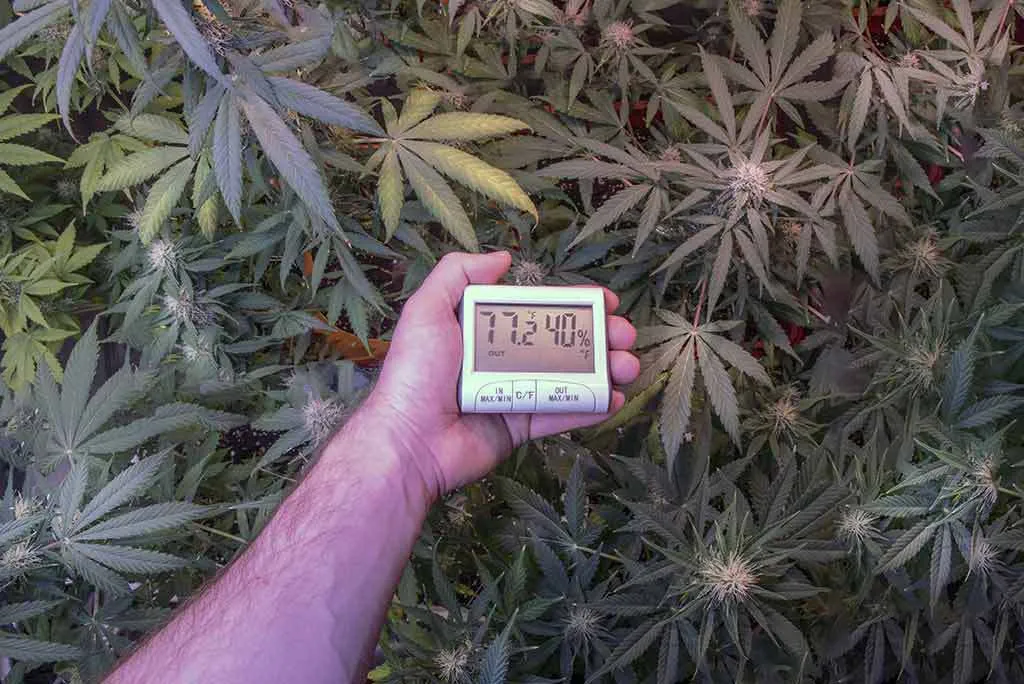
Before adding CO2, calculate the cannabis grow-room volume and measure its normal background concentration. This gives you a sensible starting point for setting the flow meter and controller. A CO2 grow-room calculator can simplify the maths, but the result should always be confirmed with live monitor readings.
Calculate Grow-Room Volume
Use the internal dimensions of the grow room:
Length × width × height = room volume
For an 8 × 8 × 7-foot grow room:
| Measurement | Example |
| Room dimensions | 8 × 8 × 7 ft |
| Room volume | 448 cubic feet |
| Starting CO2 | 425 ppm |
| Target CO2 | 1,000 ppm |
| Required increase | 575 ppm |
| CO2 required | 0.258 cubic feet |
| Regulator flow rate | 5 cubic feet per hour |
| Theoretical injection time | Approximately 3.1 minutes |
To calculate the required gas volume:
Room volume × required ppm increase ÷ 1,000,000
448 × 575 ÷ 1,000,000 = 0.258 cubic feet of CO2
To estimate the injection time:
CO2 required ÷ flow rate × 60
0.258 ÷ 5 × 60 = approximately 3.1 minutes
This calculation shows how much gas is needed to raise the concentration once in a perfectly sealed, empty room. It does not show how much CO2 the grow will use throughout the day. Standard CO2 calculations use room volume and the difference between current and target ppm, then divide the required gas volume by the regulator’s flow rate.
The actual amount needed also depends on air leakage, plant uptake, door openings and exhaust operation. Ventilation can remove enriched air almost as quickly as it is added. Temperature, humidity, lighting and water availability also affect how efficiently plants use CO2.
Treat the calculation as a starting point. Use a controller and monitor to verify the actual ppm under real grow-room conditions, then adjust the flow according to how quickly the concentration rises, overshoots and falls.
CO2 Safety and Common Mistakes
Supplemental CO2 can accumulate without any visible or noticeable warning because carbon dioxide is colorless and odorless. Good CO2 grow-room safety therefore depends on reliable monitoring, controlled ventilation and correctly installed equipment rather than smell or guesswork.
Important: A plant-level CO2 target is not the same as a safe human exposure level. The grow-room controller manages conditions around the canopy, while an independent safety alarm protects anyone entering the space. Follow the alarm manufacturer’s thresholds and local safety requirements.
Essential CO2 Safety Measures
Use an independent CO2 safety alarm in addition to the controller that manages conditions around the plants. A grow-room controller turns the gas supply on and off, while the safety alarm warns people when the room may be unsafe to enter. Install, calibrate and test both devices according to their manufacturers’ instructions.
Inspect the cylinder restraint, regulator, tubing and fittings regularly. Close the cylinder valve before moving or servicing the system, and use an approved leak-detection solution if a connection is suspected of leaking. Never test for leaks with a flame.
Never enter the grow room while the safety alarm is active. Provide a way to stop the CO2 supply and ventilate the space before anyone goes inside. Keep children, visitors and pets away from enriched rooms, and place a warning notice near the entrance.
CO2 generators require additional care because they burn fuel and produce heat, moisture and combustion gases. Treat them as combustion equipment, provide the ventilation required by the manufacturer and use suitable carbon monoxide detection. Fuel-burning equipment can allow dangerous carbon monoxide concentrations to build inside enclosed areas.
Mistakes to Avoid
Common CO2 grow-room mistakes include:
- Adding CO2 when light intensity is too low for plants to use it effectively
- Enriching a grow tent while the extractor runs continuously
- Releasing CO2 during the dark period
- Using CO2 bags without measuring the actual ppm
- Placing the controller sensor beside the gas outlet
- Raising the temperature without checking leaf temperature and plant response
- Treating CO2 as a solution for watering, nutrient or root problems
- Entering the room without checking the independent safety alarm
Conclusion
Adding CO2 can improve cannabis growth and yield, but only when strong lighting, stable environmental conditions and healthy plants are already in place. For most small or continuously ventilated grow tents, upgrading light coverage, airflow and climate control will provide better value.
Growers who decide to use supplemental CO2 should calculate the room volume, control the release using live ppm readings and monitor how quickly the concentration rises and falls. A properly installed system must also include secure cylinder storage, reliable ventilation and an independent safety alarm. CO2 should always be treated as a final optimization, not a substitute for good growing practices.
Frequently Asked Questions
Does CO2 increase cannabis yields?
Supplemental CO2 may increase cannabis growth and yield when plants receive strong light and the rest of the grow-room environment is properly controlled. It is less likely to provide noticeable benefits when lighting is limited or plants are affected by watering, nutrient, temperature or root problems.
What is the recommended CO2 level for cannabis?
There is no single ideal CO2 level for every cannabis grow room. Ambient air is normally sufficient under low or moderate lighting. Controlled enrichment may be beneficial in high-light rooms, but growers should begin cautiously and use a controller to maintain a stable concentration rather than aiming for the highest possible ppm.
Is it worth using CO2 in a grow tent?
CO2 is usually unnecessary in a grow tent with an extractor fan running continuously because the enriched air is quickly removed. It is better suited to sealed or tightly controlled grow rooms that can retain CO2 while independently managing heat and humidity.
Should CO2 run when the grow lights are off?
No. Supplemental CO2 should be turned off during the dark period because plants are not photosynthesising and cannot make productive use of the additional gas. A controller or timer should be programmed to release CO2 only while the grow lights are operating.
Do CO2 bags work in grow rooms?
CO2 bags release small amounts of carbon dioxide, but their output can be inconsistent and difficult to regulate. They may slightly raise the concentration in an enclosed space, although growers should not assume they are effective without checking the actual ppm with a reliable CO2 monitor.


