




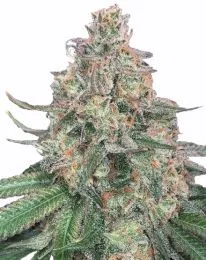
Ice Cream Cake is an indica-dominant cannabis strain bred from Gelato #33 and Wedding Cake, combining sweet dessert-like aromas with high THC potential and dense, resinous flowers. It has become a popular choice with growers looking for a manageable photoperiod strain that can perform well indoors without needing an overly complicated setup.
The Ice Cream Cake strain typically develops creamy vanilla, earthy, peppery, and slightly gassy notes, while its effects are commonly described as deeply relaxing with an initial lift in mood. For growers, flowering usually takes around 8–10 weeks, with indoor yields potentially reaching 500–600 g/m² under good conditions. In this Ice Cream Cake strain review, I’ll cover its genetics, taste, smell, effects, potency, growing traits, and what new growers should know before planting it.
Key Takeaways
- Ice Cream Cake is an indica-dominant hybrid created from Gelato #33 and Wedding Cake genetics.
- THC levels can reach around 24%, making it a relatively potent strain that may be better approached cautiously by inexperienced consumers.
- The aroma and taste lean towards sweet cream, vanilla, earth, spice, and light gas, although individual plants can vary.
- Flowering normally takes around 8–10 weeks, with indoor plants typically reaching roughly 100–180 cm depending on training and vegetative time.
- Good airflow is particularly important late in flowering, as the dense flowers and compact canopy can hold moisture if growth becomes overcrowded.

What is the Ice Cream Cake Strain?
Ice Cream Cake is an indica-dominant hybrid bred from Gelato #33 and Wedding Cake.
That heritage explains much of what growers see in the plant. Wedding Cake is known for dense flowers and a sweet, earthy profile, while Gelato genetics tend to bring creamy dessert notes, resin production, and strong potency.
If you want more background on the parent lines, our guides to Wedding Cake and the different Gelato strains cover them in more detail.
Ice Cream Cake sits comfortably among modern indica cannabis strains, but I would not read too much into the indica label alone. Modern cannabis strains are genetically complex, and the experience of a plant cannot be predicted from an indica or sativa tag by itself.
What Does Ice Cream Cake Taste Like?
The name is fairly accurate here.
A well-grown and properly cured Ice Cream Cake crop tends to have a sweet, creamy taste with vanilla, dough, earth, and light peppery notes. Some plants lean further towards sweet pastry, while others bring more gas or spice into the finish.
The cure matters. Freshly dried flowers can smell impressive but still taste green or sharp. Giving them time to cure allows the sweeter and heavier notes to become clearer.
Individual plants can also vary, so I would treat any exact taste description as typical rather than guaranteed.
What Does Ice Cream Cake Smell Like?
Ice Cream Cake usually develops a rich aroma built around sweet cream, vanilla, earth, spice, and a slight gassy edge.
During flowering, the scent becomes much stronger as resin production increases. Indoor growers should plan for this rather than discovering halfway through bloom that the room smells considerably stronger than expected.
Terpenes such as beta-caryophyllene, limonene, and linalool are commonly associated with cannabis displaying spicy, citrus, floral, and sweet aromatic characteristics. However, terpene profiles can vary between plants and growing conditions.
Research into Cannabis sativa has found considerable terpene variation even among plants sold under the same cultivar name, which is why I would avoid claiming that every Ice Cream Cake plant contains a fixed terpene percentage.[1]
How Strong is Ice Cream Cake?
Ice Cream Cake is a high-THC strain. Our current line can reach up to 24% THC under suitable growing and testing conditions.
That figure should be viewed as potential rather than a promise. Final cannabinoid content can be affected by genetics, phenotype, light, environment, plant health, harvest timing, and post-harvest handling.
The main psychoactive effects of cannabis are largely driven by THC. Controlled research has found that higher THC exposure can produce stronger intoxication but can also increase unwanted effects such as anxiety, confusion, and reduced alertness in some people.[2]
For that reason, inexperienced consumers should treat high-THC cannabis with some respect.
What Are the Effects of Ice Cream Cake?
Ice Cream Cake is usually associated with a strong combination of mental and physical relaxation.
The experience can begin with a more noticeable sense of euphoria or mental change before settling into a heavier, calmer state. At higher amounts, the relaxing side can become much more pronounced.
Commonly reported effects include:
- Euphoria
- Physical relaxation
- A calm or slowed-down feeling
- Increased appetite
- Sleepiness at stronger amounts
Effects vary from person to person, and I would avoid presenting Ice Cream Cake as a treatment for anxiety, pain, insomnia, or any other medical condition.
There is some interesting research around individual cannabis compounds. For example, a 2024 controlled human study found that vaporised D-limonene reduced some anxiety caused by THC when the two were administered together.[3] That does not mean an Ice Cream Cake plant containing limonene will treat anxiety. The study looked at controlled doses of isolated compounds, which is very different from smoking or vaporising a particular strain.

How to Grow Ice Cream Cake
Ice Cream Cake is a photoperiod cannabis strain, meaning flowering indoors is triggered by changing the light schedule.
Plants typically reach around 100–180 cm, depending on vegetative time, container size, environment, and training.
1. Build the Plant Before Heavy Training
Give young plants time to establish roots and several healthy nodes before shaping them.
During the vegetative stage, I prefer to concentrate on healthy branching rather than pushing the plant hard with repeated training.
2. Spread the Canopy Out
Ice Cream Cake responds well to low-stress training and topping when the plant is healthy.
Pulling taller branches outward creates a wider canopy and helps several flowering sites receive direct light rather than allowing one central stem to dominate.
3. Leave Space for Flowering Growth
Do not fill every inch of vertical space before switching the light cycle.
Some additional stretch can occur during the first few weeks of flowering, so leaving room early makes canopy management much easier later.
4. Keep Air Moving Through the Plant
This is one of the more important points with Ice Cream Cake.
Dense flowers and closely packed branches can trap moisture. Keep the interior reasonably open and maintain steady air movement around the canopy, particularly later in bloom.
A SCROG setup can work well if you want to spread several branches across one level.
5. Allow the Flowers to Finish Properly
Ice Cream Cake generally needs around 8–10 weeks of flowering.
Do not harvest simply because the calendar says week eight. Plant development, resin maturity, and flower condition give you a much better picture of readiness.
Under good indoor conditions, yields can reach around 500–600 g/m², although lighting, plant count, training, root space, and grower experience all play a major part.
Is Ice Cream Cake Good for Beginners?
I would put Ice Cream Cake somewhere between beginner-friendly and intermediate.
It is not especially difficult to manage, and its medium height makes it practical indoors. The main challenge comes later in flowering, when dense growth means airflow and humidity management become more important.
A new grower who can maintain a stable environment and avoid overcrowding should be able to get good results. Someone struggling with high humidity or limited ventilation may find a more open-flowering strain easier for a first crop.
Conclusion
Ice Cream Cake is easy to understand why growers keep coming back to it. Gelato #33 and Wedding Cake give it an indica-dominant character, a sweet and creamy aroma, dense resinous flowers, and THC levels that can reach around 24%.
From a growing point of view, the main thing I would watch is canopy density. Give the branches room, keep air moving through the plant, and avoid letting humidity build around the flowers late in bloom. With around 8–10 weeks of flowering and good yield potential, Ice Cream Cake is a solid choice for growers who want modern genetics without an overly complicated growing routine.
Frequently Asked Questions
Is Ice Cream Cake an Indica or Sativa?
Ice Cream Cake is an indica-dominant hybrid created from Gelato #33 and Wedding Cake. Its effects are commonly described as relaxing and physically calming, although individual experiences can vary depending on THC content, tolerance, amount consumed, and the individual plant.
How Long Does Ice Cream Cake Take to Flower?
Ice Cream Cake normally takes around 8–10 weeks of flowering indoors. I would use that as a guide rather than a fixed harvest date. Check flower development and trichome maturity before deciding when the plant is ready to cut.
Is Ice Cream Cake Easy to Grow?
Ice Cream Cake is reasonably manageable, but I would place it around the beginner-to-intermediate level. New growers need to pay particular attention to airflow and humidity because the flowers can become dense later in bloom. Early training also helps keep the canopy open and easier to manage.
What Does Ice Cream Cake Smell and Taste Like?
Ice Cream Cake is known for a sweet, creamy, vanilla-like profile backed by earthy, peppery, and slightly gassy notes. The exact balance varies between plants, while drying and curing can also make a noticeable difference to the final aroma and taste.
How Much Does Ice Cream Cake Yield?
Under good indoor conditions, Ice Cream Cake can produce around 500–600 g/m². That figure represents potential rather than a guaranteed harvest. Lighting, plant health, root space, training, environment, and the length of vegetative growth can all influence the final yield.
References
- Booth JK, Yuen MMS, Jancsik S, et al. (2020). Terpene Synthases and Terpene Variation in Cannabis sativa. Plant Physiology, 184(1), 130–147. DOI: 10.1104/pp.20.00593. The study found substantial variation in terpene profiles within and between cannabis cultivars.
- Leen NA, Kowal MA, Batalla A, Bossong MG. (2024). The effects of standardized cannabis products in healthy volunteers and patients: a systematic literature review. Frontiers in Pharmacology, 15:1411631. DOI: 10.3389/fphar.2024.1411631. The review found that acute effects of THC-containing cannabis can be dose-dependent and may include intoxication, sedation, anxiety, and impaired attention.
- Spindle TR, Zamarripa CA, Russo E, et al. (2024). Vaporized D-limonene selectively mitigates the acute anxiogenic effects of Δ9-tetrahydrocannabinol in healthy adults who intermittently use cannabis. Drug and Alcohol Dependence, 257:111267. DOI: 10.1016/j.drugalcdep.2024.111267.


