




Fusarium in cannabis is a highly destructive fungal disease that attacks the root system and can quickly kill plants if left untreated. Common forms include fusarium wilt in cannabis, fusarium root rot, crown rot, and damping-off. Symptoms often start with wilting, yellowing leaves, and stunted growth, but they are frequently mistaken for overwatering or nutrient issues. Correctly identifying cannabis fusarium early is critical to protecting your crop.
In early stages, infections may be managed by improving growing conditions and introducing beneficial microbes to slow fungal spread. However, once Fusarium invades the plant’s vascular system and blocks water and nutrient flow, recovery becomes unlikely. At that point, removing the infected plant is usually the safest way to prevent contamination.
This guide explains how to identify fusarium in cannabis, assess plant recovery chances, apply a simple fusarium treatment for cannabis, and prevent future outbreaks to protect your grow.
Key Takeaways
- Early detection gives you the best chance of saving a plant. Inspect the roots and stem as soon as you notice wilting, yellowing leaves, or stunted growth to confirm whether fusarium in cannabis is the cause.
- Not every infected plant can be saved. If the infection is limited to the roots, improving growing conditions and applying beneficial microbes may help. Once brown streaks appear inside the stem, recovery is unlikely.
- Good sanitation is essential for stopping Fusarium from spreading. Always disinfect tools, pots, trays, and growing equipment, and never reuse contaminated growing media.
- Different types of Fusarium have different recovery rates. Fusarium root rot offers the best chance of recovery when caught early, while Fusarium wilt, crown rot, and damping-off are much harder to treat once symptoms become severe.
- Prevention is more effective than treatment. Avoid overwatering, maintain good drainage and airflow, support healthy root development, and inspect plants regularly to reduce the risk of future Fusarium outbreaks.

What is fusarium in cannabis?
Fusarium in cannabis is a destructive group of soil-borne fungal pathogens that attack the plant's roots and vascular system, restricting the movement of water and nutrients. The most common species affecting cannabis is Fusarium oxysporum, which causes fusarium wilt in cannabis, although several other Fusarium species can also infect roots, stems, and seedlings. Once the fungus enters through damaged or healthy roots, it colonizes the xylem (the tissue responsible for transporting water), making recovery extremely difficult once symptoms become obvious.
In my experience, Fusarium is one of the most frustrating diseases a grower can encounter because early symptoms often resemble overwatering, nutrient deficiencies, or heat stress. Many growers continue adjusting their feeding or watering schedule while the fungus quietly spreads through the plant. By the time severe wilting or brown vascular streaking appears inside the stem, the infection is usually well established, and saving the plant becomes unlikely.
Unlike many fungal diseases that only affect leaves or flowers, cannabis fusarium survives in soil, contaminated growing media, plant debris, irrigation water, and unsterilized tools. Under warm, humid conditions it can remain viable for years, making prevention just as important as fusarium treatment in cannabis.
Common Fusarium species affecting cannabis
| Fusarium species | Primary symptoms | Typical damage |
| Fusarium oxysporum | Wilting despite moist soil, yellow leaves, brown vascular streaking | Vascular wilt, reduced growth, plant death |
| Fusarium solani | Brown roots, root decay, poor vigor | Root rot, reduced nutrient uptake |
| Fusarium proliferatum | Stem lesions, weak growth, occasional crown rot | Stem infections and reduced plant vigor |
| Fusarium culmorum (less common) | Seedling collapse, crown infections | Poor establishment and early plant loss |
Symptoms of fusarium wilt in cannabis
Early detection gives you the best chance of limiting losses. Watch for these common signs of fusarium wilt cannabis:
- Wilting even though the growing medium remains moist
- Yellowing leaves, usually beginning on older foliage. Like many causes of drooping cannabis leaves, Fusarium can initially look like a watering problem before more distinctive symptoms develop.
- Slow or stunted growth
- Brown or black, unhealthy-looking roots
- Brown streaks inside the stem when cut open
- Soft or discolored stem bases
- Seedlings collapsing shortly after emergence
- Progressive dieback that does not improve after watering
Fusarium vs other cannabis diseases
Because symptoms can overlap, fusarium in cannabis is frequently mistaken for other common plant diseases.
| Disease | Key difference from Fusarium |
| Pythium (root rot) | Roots become slimy and water-soaked, while Fusarium often produces vascular browning inside the stem. |
| Powdery mildew | Appears as a white powder on leaves rather than causing root and vascular infections. |
| Botrytis (bud rot) | Primarily attacks flowers and dense buds instead of the root system. |
| Nutrient deficiencies | Can cause yellow leaves but will not produce brown vascular streaking or infected roots. |
| Overwatering | Causes temporary wilting, but plants generally recover once the root zone dries, unlike Fusarium infections. |
Correct diagnosis is essential because treatments differ significantly. If multiple plants begin wilting despite proper watering and you discover brown vascular tissue inside the stem, fusarium cannabis should be one of the first diseases you investigate.
How to identify fusarium in cannabis
Correctly identifying fusarium in cannabis as early as possible gives you the best chance of protecting the rest of your crop. One of the biggest challenges with fusarium wilt cannabis is that the early symptoms closely resemble overwatering, nutrient deficiencies, root stress, or heat damage. Many growers spend days adjusting their watering schedule or feeding routine while the fungus continues spreading through the plant's vascular system.
Unlike foliar diseases such as powdery mildew or Botrytis, cannabis fusarium begins below the soil surface before moving into the plant's xylem, where it blocks the movement of water and nutrients. By the time severe wilting develops, the infection is often well established, making fusarium treatment in cannabis much more difficult. Learning to recognize each type of Fusarium infection can help you act before it spreads throughout your grow.
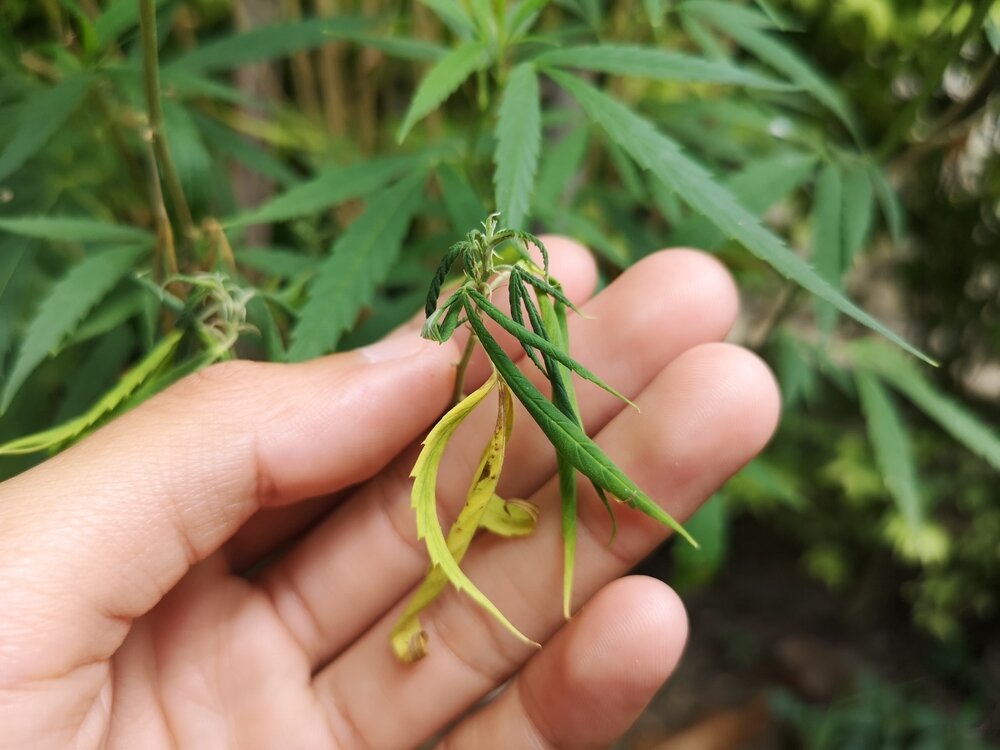
Fusarium wilt
Fusarium wilt is the most common form of fusarium cannabis. It occurs when Fusarium oxysporum infects the roots before spreading into the vascular tissue, preventing water from moving through the plant. Although the soil may still be moist, infected plants continue to wilt because the fungus has blocked the internal transport system.
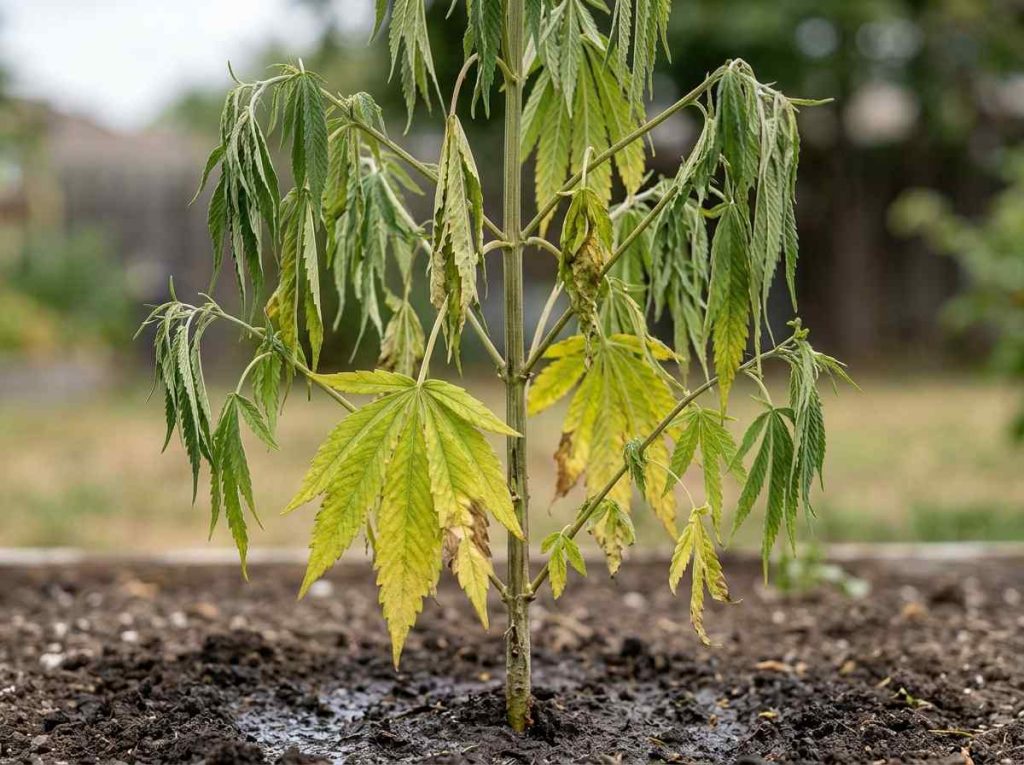
Symptoms
| Symptom | What you'll see |
| Leaf color | Older leaves gradually turn yellow before the entire plant declines. |
| Wilting | Leaves droop despite adequately watered soil. |
| Stem discoloration | Brown or reddish streaks inside the stem when cut lengthwise. |
| Plant growth | Slowed growth and reduced vigor. |
| Advanced infection | Entire branches or the whole plant suddenly collapse. |
How to identify it
One of the most reliable ways to diagnose fusarium wilt in cannabis is by cutting the main stem near the base using a sterile blade. Healthy vascular tissue should appear cream or pale green. Brown or reddish streaks running through the center of the stem are a strong indicator of Fusarium infection. This internal discoloration is one of the clearest differences between Fusarium and common nutrient deficiencies.
Quick treatment
- Remove the infected plant immediately.
- Bag and dispose of infected material away from the grow area.
- Sterilize all tools, pots, and surfaces using isopropyl alcohol.
- Inspect neighboring plants for early symptoms.
- Apply beneficial microbes such as Trichoderma or Bacillus subtilis to healthy plants.
Fusarium root rot
Fusarium root rot develops when Fusarium fungi attack the root system before spreading upward. Damaged roots lose their ability to absorb water and nutrients, causing above-ground symptoms long before growers realize the root system is failing.
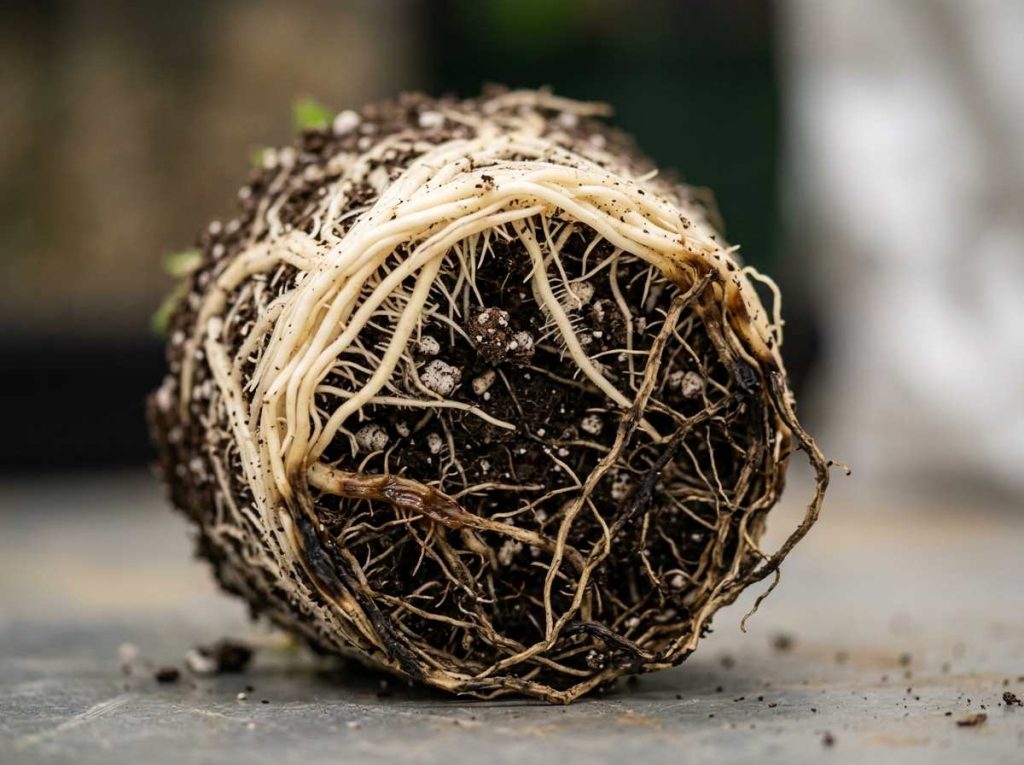
Symptoms
| Symptom | What you'll see |
| Root color | Roots become brown, black, or dark orange. |
| Root texture | Brittle, soft, or beginning to decay. |
| Plant growth | Slow growth despite proper nutrition. |
| Leaves | Yellowing and drooping throughout the canopy. |
| Root health | Reduced fine feeder roots. |
How to identify it
Carefully remove the root ball from its container and inspect the roots. Healthy cannabis roots should be firm and white. If the roots are dark, brittle, or breaking apart easily, Fusarium root rot is a likely cause. Unlike Pythium, which often produces slimy, water-soaked roots, Fusarium typically causes dry, discolored roots alongside vascular browning inside the stem.
Quick treatment
- Remove severely infected plants.
- Discard contaminated growing media.
- Improve drainage and avoid saturated root zones.
- Sanitize containers before reuse.
- Reintroduce beneficial microbes into fresh media.
Fusarium crown rot
Crown rot affects the area where the stem meets the growing medium. Because this section supports the entire plant, infections here often progress rapidly and cause severe wilting.
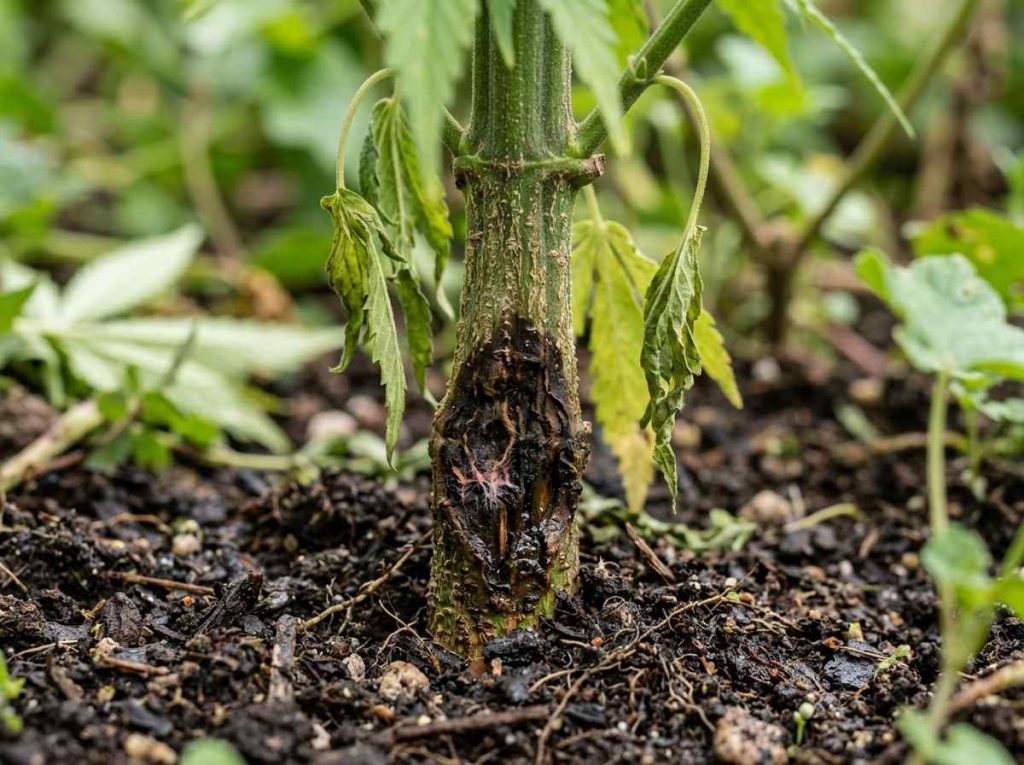
Symptoms
| Symptom | What you'll see |
| Stem base | Brown or black sunken lesions. |
| Crown tissue | Soft, dark, and beginning to rot. |
| Plant posture | Sudden wilting despite moist soil. |
| Progression | Lower stem weakens and may collapse. |
How to identify it
Inspect the crown of the plant just above the soil surface. Healthy stems remain firm and green. Fusarium crown rot usually produces dark, sunken lesions that gradually spread around the stem, restricting water movement into the rest of the plant.
Quick treatment
- Remove infected plants immediately.
- Reduce excess moisture around the crown.
- Improve airflow between plants.
- Sterilize nearby equipment and containers.
- Monitor neighboring plants for early symptoms.
Fusarium damping-off (seedlings)
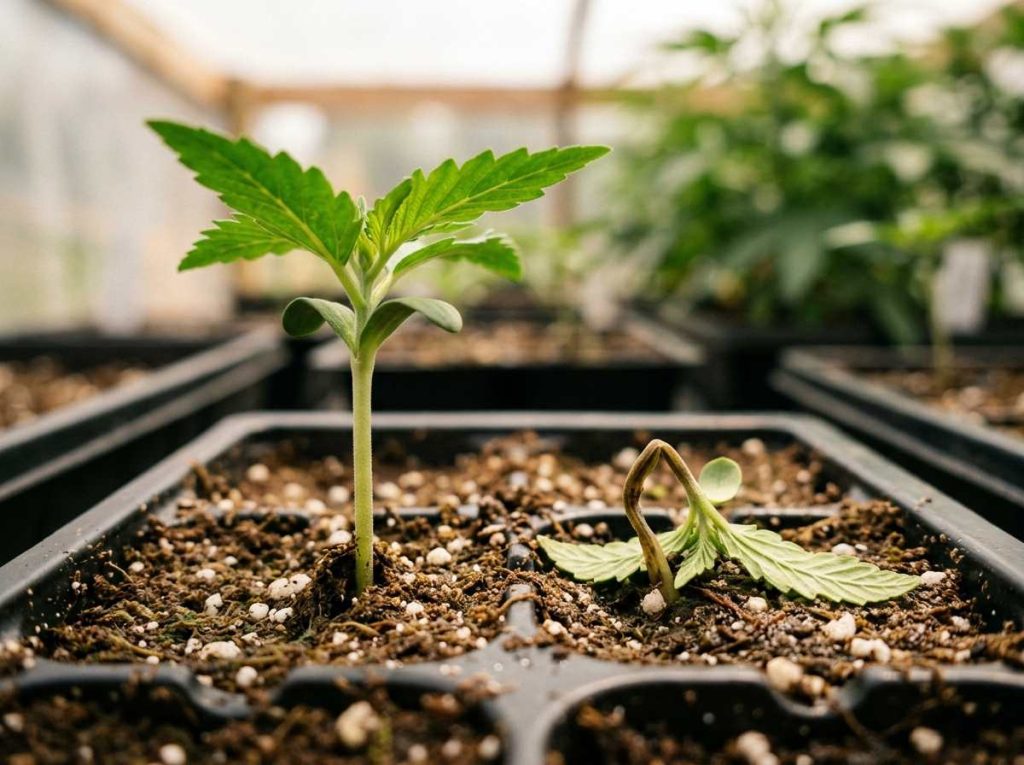
Seedlings are extremely susceptible to Fusarium because their stems and root systems have not fully developed. Once damping-off begins, recovery is extremely uncommon.
Symptoms
| Symptom | What you'll see |
| Stem | Thin, weak stem at the soil line. |
| Seedlings | Sudden collapse after emergence. |
| Growth | Failure to establish healthy roots. |
| Survival | Rapid death within days. |
How to identify it
Inspect seedlings at the soil line. If the stem appears pinched, water-soaked, or discolored before the seedling falls over, Fusarium damping-off should be considered alongside Pythium. Healthy seedlings maintain firm stems and remain upright throughout early growth.
Quick treatment
- Remove infected seedlings immediately.
- Dispose of contaminated growing media.
- Sterilize propagation trays and humidity domes.
- Improve airflow and avoid excessive humidity.
- Sow replacements in fresh, sterile media.
How fusarium symptoms change throughout the cannabis life cycle
The appearance of fusarium in cannabis changes as plants mature, making it important to recognize symptoms at every stage of growth.
| Growth stage | Typical symptoms |
| Seedling | Damping-off, weak stems, poor root development, sudden collapse shortly after germination. |
| Vegetative | Slow growth, yellowing leaves, daytime wilting despite moist soil, brown roots, early vascular discoloration inside stems. |
| Flowering | Severe wilting, branch dieback, poor bud development, rapid yellowing, brown vascular streaking, and eventual plant death. |
Early diagnosis remains the most effective form of fusarium treatment in cannabis. Once the fungus has extensively colonized the vascular tissue, recovery is rare. For most growers, removing infected plants quickly, disinfecting the grow area, and protecting healthy plants with good sanitation and beneficial microbes provides the best chance of preventing further losses.
How to prevent fusarium in cannabis
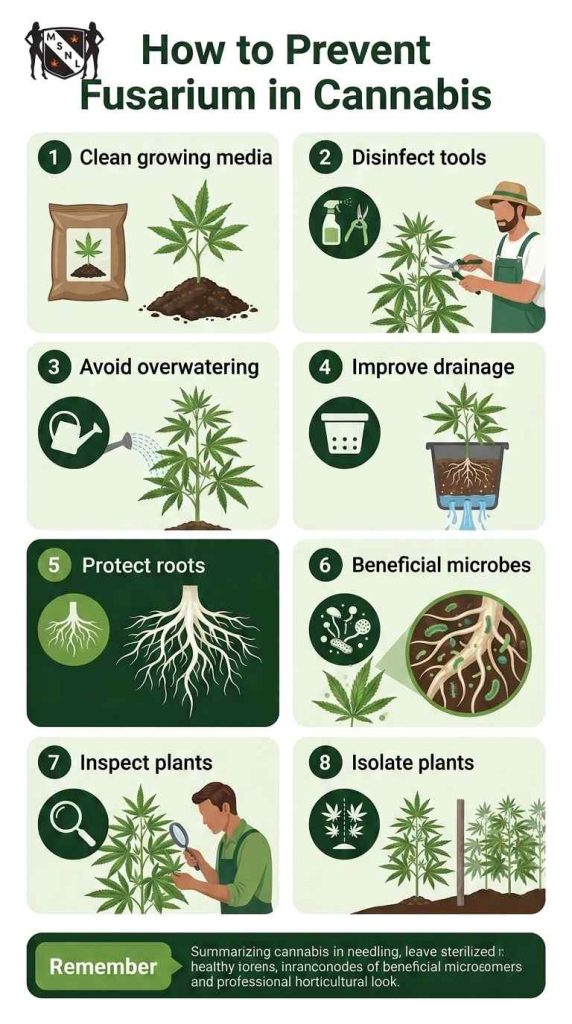
The best fusarium treatment in cannabis is prevention. Once fusarium colonizes the roots and vascular tissue, there is no reliable cure, and infected plants often need to be removed to protect the rest of the crop.
Fusarium outbreaks rarely come from a single mistake. They usually result from multiple issues such as overwatering, poor drainage, contaminated tools, stressed roots, and weak sanitation practices. Understanding how each type of cannabis fusarium develops helps you reduce these risks before symptoms appear.
Preventing fusarium wilt
What causes it?
Fusarium wilt cannabis develops when Fusarium oxysporum enters through the roots and spreads into the xylem, blocking water and nutrient flow. Root damage, contaminated growing media, and unclean tools are common entry points.
Who is most at risk?
Plants are more vulnerable when:
- Roots are damaged during transplanting
- Soil or coco is reused
- Tools are shared without cleaning
- Plants are stressed by poor watering or nutrition
Early warning signs
| Symptom | What it means |
| Leaves wilt despite moist soil | Water transport inside the stem is restricted |
| Older leaves yellow first | The vascular system is failing |
| Uneven or stunted growth | Root function is declining |
| Brown streaks inside the stem | The fungus has spread through vascular tissue |
Step-by-step prevention
Step 1: Handle roots gently during transplanting.
Step 2: Sterilize tools with isopropyl alcohol between plants.
Step 3: Avoid reusing contaminated growing media.
Step 4: Introduce beneficial microbes like Trichoderma.
Step 5: Inspect plants weekly for early symptoms.
What happens if ignored?
Water movement becomes restricted, branches wilt, and growth stops. Infected plants often cannot recover and may need removal.
Preventing fusarium root rot
What causes it?
Fusarium root rot occurs when spores infect stressed or oxygen-starved roots. Constant moisture, compacted soil, and poor drainage weaken root systems.
Who is most at risk?
Root rot is common in:
- Overwatered plants
- Poorly drained soil
- Low-oxygen hydro or coco systems
- Plants with root damage or pests
Early warning signs
| Symptom | What it means |
| Brown or black roots | Root tissue is dying |
| Brittle feeder roots | Water and nutrient uptake is reduced |
| Yellowing foliage | Roots cannot support healthy growth |
| Stunted plants | Overall vigor is declining |
Step-by-step prevention
Step 1: Water based on plant needs, not a fixed schedule.
Step 2: Use containers with proper drainage.
Step 3: Inspect roots during transplanting.
Step 4: Maintain good aeration in the root zone.
Step 5: Apply beneficial microbes during vegetative growth.
What happens if ignored?
Plants absorb less water and nutrients, growth slows, and leaves yellow. Severe cases may spread into the stem.
Preventing fusarium crown rot
What causes it?
Crown rot develops at the base of the stem where it meets the growing medium. Excess moisture, buried stems, poor airflow, and contaminated media increase risk.
Who is most at risk?
Higher risk occurs in:
- Dense canopies with poor airflow
- Plants watered directly at the stem
- Constantly damp containers
- Crowded, humid grow spaces
Early warning signs
| Symptom | What it means |
| Dark lesions around the stem base | Infection is developing at the crown |
| Soft or weakened stem tissue | Structural damage has begun |
| Sudden wilting | Water movement is restricted |
Step-by-step prevention
Step 1: Keep the stem base above the medium.
Step 2: Water around the outer edge of the container.
Step 3: Remove debris near the stem.
Step 4: Improve airflow with fans and spacing.
Step 5: Monitor the crown regularly.
What happens if ignored?
The plant loses its ability to transport water, leading to severe wilting and possible stem collapse.
Preventing fusarium damping-off
What causes it?
Fusarium damping-off affects seedlings before roots fully develop. Excess moisture, contaminated media, and poor hygiene allow infection at soil level.
Who is most at risk?
Seedlings are vulnerable when:
- Trays are reused without cleaning
- Media stays saturated
- Humidity is high with little airflow
- Old media is reused
Early warning signs
| Symptom | What it means |
| Thin stem at soil level | The fungus is attacking the stem |
| Seedlings suddenly collapse | Stem tissue has failed |
| Poor root development | Root growth has stopped |
Step-by-step prevention
Step 1: Use fresh, sterile propagation media.
Step 2: Clean trays and tools before use.
Step 3: Keep the medium moist, not saturated.
Step 4: Provide gentle airflow after emergence.
Step 5: Remove infected seedlings immediately.
What happens if ignored?
The disease spreads quickly, causing multiple seedlings to collapse within days.
Best practices to prevent fusarium in cannabis
The same core principles apply across all types:
- Start with clean growing media
- Sterilize tools and equipment regularly
- Quarantine new plants for two weeks
- Avoid overwatering and ensure aeration
- Use beneficial microbes to support roots
- Remove dead plant material promptly
- Inspect plants regularly
- Isolate suspicious plants immediately
Grower's Tips: Successful growers rely on consistent practices. Clean equipment, healthy roots, careful watering, and routine inspections create conditions where fusarium struggles to establish.
How to treat fusarium in cannabis: a beginner's step-by-step guide
Treating fusarium in cannabis starts with confirming that Fusarium is actually the cause. Symptoms like wilting, yellowing, and slow growth can also result from overwatering, nutrient issues, heat stress, or other root diseases. Always inspect your plant carefully before taking action.
It’s also important to set realistic expectations. If Fusarium is caught early and limited to the roots, recovery is possible. However, once it spreads into the plant’s vascular system (the tissue that moves water), there is no reliable cure. At that point, removing the plant is usually the best way to protect the rest of your grow.
Quick action checklist
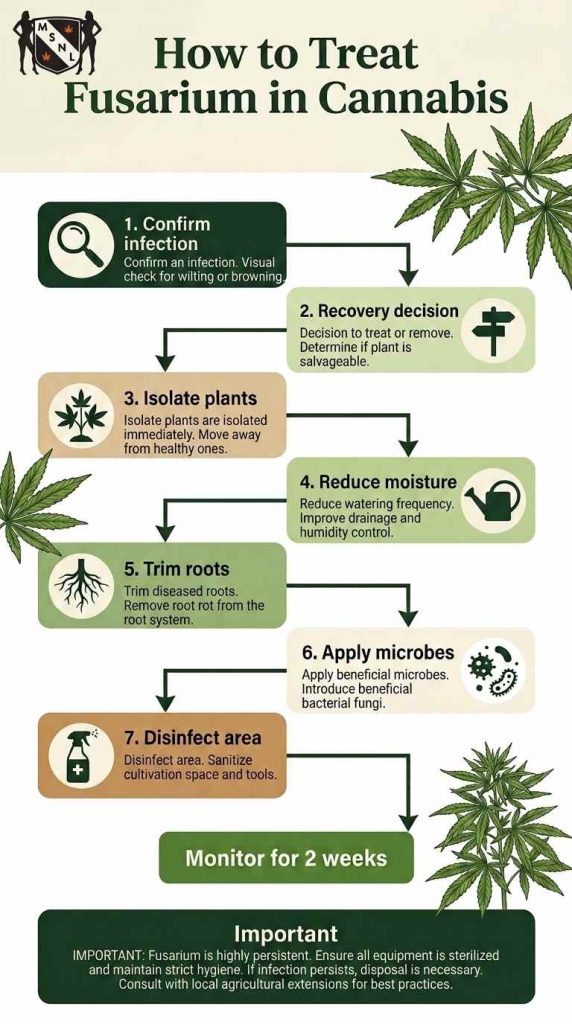
If you suspect Fusarium:
- Isolate the plant.
- Inspect roots for rot.
- Check the stem for brown streaks.
- Decide if recovery is realistic.
- Begin treatment if possible.
- Remove plants that cannot recover.
- Disinfect your grow area.
- Monitor nearby plants for two weeks.
Step 1: Confirm the infection is fusarium
Before treating, inspect both roots and stem.
Check the roots
Carefully remove the plant from its container if possible.
Healthy roots are:
- White or cream colored
- Firm and flexible
- Covered with fine feeder roots
- Fresh smelling
Fusarium-infected roots are often:
- Brown or black
- Soft, brittle, or slimy
- Missing fine roots
- Easy to break apart
- Sour or rotten smelling
If most roots are still healthy, recovery is possible. If most are damaged, chances are low.
Check the stem
Use a sterilized blade to make a small cut near the base.
Healthy tissue appears pale green or cream.
Brown or reddish streaks inside the stem indicate the fungus has spread internally. Plants at this stage rarely recover.
Step 2: Decide whether the plant can be saved
| What you find | Can it recover? | What to do |
| Healthy roots, clean stem | Good chance | Begin treatment |
| Brown roots, clean stem | Possible | Treat roots and improve conditions |
| Brown streaks in stem | Unlikely | Remove plant |
| Severe wilting or collapse | Very unlikely | Dispose of plant and soil |
Trying to save severely infected plants often spreads the disease. Removing them early protects the rest of your crop.
Step 3: Treat the infected plant
If recovery is possible, follow these steps:
1. Isolate the plant
Move it away from healthy plants. Avoid sharing trays, tools, or runoff water.
2. Reduce excess moisture
Fusarium thrives in wet conditions. Let the growing medium dry slightly between watering, but don’t let it fully dry out. Ensure proper drainage and remove standing water.
3. Inspect and clean roots
Remove the plant and examine the roots.
- Trim away dead or damaged roots using sterilized scissors.
- If most roots are rotting, discard the plant.
4. Replace the growing medium
Never reuse contaminated soil or coco.
Clean and disinfect the container, then repot using fresh, well-draining media.
5. Apply beneficial microbes
Use products containing Trichoderma or Bacillus subtilis. These beneficial microbes help protect healthy roots by competing with harmful fungi. They are most effective in early stages.
6. Remove plants that cannot recover
If you see stem streaking, crown rot, or major dieback, remove the entire plant and growing medium. Seal it in a bag and dispose of it—do not compost.
7. Disinfect your grow area
Clean and disinfect:
- Tools
- Pots and trays
- Surfaces
- Irrigation systems
- Floors
Always remove debris before disinfecting, as dirt reduces effectiveness.
Step 4: Adjust treatment by fusarium type
Fusarium wilt
Affects the vascular system and blocks water movement.
Recovery chance: Low. Remove infected plants.
Fusarium root rot
Best chance of recovery if healthy roots remain.
Improve drainage and encourage new root growth.
Recovery chance: Moderate to good.
Fusarium crown rot
Affects the base of the stem. Keep the area dry and improve airflow.
If damage circles the stem, remove the plant.
Recovery chance: Poor.
Fusarium damping-off
Kills seedlings quickly.
Remove infected seedlings and disinfect equipment.
Recovery chance: Extremely low.
Step 5: Recovery by growth stage
| Stage | Recovery chance | Best approach |
| Seedling | Very low | Remove and disinfect |
| Vegetative | Good if early | Treat and monitor closely |
| Early flowering | Limited | Remove infected plants |
| Late flowering | Very low | Remove severely affected plants |
Vegetative plants recover best because they can regrow roots. Flowering plants have less time and energy to recover.
Step 6: Monitor the rest of your grow
Check nearby plants daily for at least two weeks.
Watch for:
- Wilting despite moist soil
- Yellowing leaves
- Brown or black roots
- Stem lesions
- Internal stem streaking
- Slow or uneven growth
Early detection is key. Quick action, proper sanitation, and removing infected plants are the most effective ways to stop fusarium in cannabis from spreading.
Conclusion
Fusarium is a serious disease for cannabis growers, but it doesn’t have to destroy your entire crop. The key is early detection, accurate diagnosis, and knowing when a plant can be saved. Mild root infections may improve with better growing conditions and beneficial microbes, but plants with advanced stem damage rarely recover and should be removed to stop the spread.
Prevention is the most effective defense against fusarium in cannabis. Maintaining clean tools and grow spaces, avoiding overwatering, supporting strong root systems, and inspecting plants regularly all reduce infection risk. Acting quickly at the first sign of trouble can prevent a single case from becoming a widespread issue.
By understanding how to identify, treat, and prevent Fusarium, growers can protect plant health and improve overall harvest success.
Frequently Asked Questions
What causes fusarium in cannabis?
Fusarium is caused by a group of soil-borne fungi that infect cannabis through the roots. The disease is most common in warm, moist growing conditions and can spread through contaminated soil, water, tools, pots, or infected plant material. Overwatering, poor drainage, and root damage increase the risk of infection.
Can a cannabis plant recover from fusarium?
It depends on how advanced the infection is. If Fusarium is caught early and limited to the roots, improving growing conditions and applying beneficial microbes may help the plant recover. Once the fungus spreads into the stem and blocks the plant's vascular system, recovery is very unlikely and removing the plant is usually the best option.
How do you tell if fusarium is killing your cannabis plant?
Common signs of fusarium in cannabis include wilting despite moist growing media, yellowing lower leaves, stunted growth, brown or black roots, and brown streaks inside the stem. Cutting the base of the stem with a sterilized blade is one of the most reliable ways to confirm whether the fungus has spread into the plant's vascular tissue.
What is the best treatment for fusarium in cannabis?
The best fusarium treatment for cannabis depends on how early the disease is detected. Early infections may be managed by improving drainage, replacing contaminated growing media, and applying beneficial microbes such as Trichoderma or Bacillus subtilis. Plants with advanced stem infections rarely recover and should be removed to protect the rest of the crop.
How can you prevent fusarium in future cannabis grows?
Good hygiene is the best defense against Fusarium. Always use clean growing media, disinfect pots and tools, avoid overwatering, provide good drainage and airflow, and inspect new clones before introducing them into your grow. Healthy roots and a clean growing environment significantly reduce the risk of future outbreaks.


