




Does weed expire? Yes, cannabis gradually loses freshness, potency, and aroma as it ages, but old weed isn't necessarily unsafe. Poor storage can also lead to mold growth, making it important to know the difference between stale and contaminated flower.
So, what does bad weed look like, and how can you tell if your buds have gone bad? This guide explains how long weed lasts, the warning signs to check for, and when cannabis should be discarded. You'll also learn how to protect your harvest from premature deterioration.
Key Takeaways
- Storage affects freshness: Limiting exposure to light, oxygen, heat, and excess moisture helps preserve harvested flower.
- Weed does expire: Dried cannabis gradually loses potency, aroma, and overall quality without having a fixed expiration date.
- Shelf life varies: Properly dried, cured, and stored cannabis generally maintains good freshness for 6–12 months.
- Bad weed has warning signs: Faded buds, unusual textures, and changes in smell can indicate deterioration, although they cannot confirm contamination.
- Mold is a safety concern: Fungal growth may resemble trichomes, but suspected moldy cannabis should never be consumed.
- Does Weed Expire?
- How Long Does Weed Last?
- What Happens to Weed as It Ages?
- Mold vs Trichomes: How to Tell the Difference
- What Mold Can Look Like Under Magnification
- How to Check Whether Weed Has Gone Bad
- When Should You Throw Away Weed?
- What Makes Weed Go Bad and How to Prevent It
- Conclusion
- Frequently Asked Questions
- References
Does Weed Expire?
Yes, weed expires, but it doesn't have a fixed expiration date like perishable food. Instead, dried cannabis gradually loses quality as its chemical compounds change over time.
There are two important differences to understand:
- Cannabis degradation: Natural changes in cannabinoids and terpenes that can reduce potency, aroma, and overall freshness.
- Cannabis contamination: The presence of mold or other harmful microorganisms, which may make flower unsafe regardless of its age.
Grower tip: I recommend treating freshness and safety separately. Older cannabis isn't automatically unsafe, while recently harvested buds can still develop mold if drying or handling conditions are poor.
How Long Does Weed Last?
Properly dried, cured, and stored cannabis generally maintains good quality for 6–12 months, although some batches remain in good condition for longer.
The original condition of the flower, along with how it was handled after harvest, influences how well it retains its characteristics.
| Time After Drying | Expected Condition |
| 0–3 months | Typically retains much of its original freshness and aroma |
| 3–6 months | Often maintains good quality with limited noticeable changes |
| 6–12 months | May begin showing a more noticeable decline in aroma and potency |
| Over 12 months | Greater likelihood of reduced freshness and changes in cannabinoid content |
These timeframes are estimates rather than strict expiration dates. Individual batches can deteriorate at different rates.
Grower tip: Label each container with its harvest and packaging dates. This makes it easier to track how long your cannabis has been stored without relying on its appearance to estimate its age.
What Happens to Weed as It Ages?
Cannabis can undergo chemical changes during storage, even when the buds look almost identical to freshly cured flower. These changes mainly affect the compounds responsible for potency and aroma.
THC and Cannabinoid Changes
THC is the main intoxicating cannabinoid in cannabis. As it degrades, some converts into cannabinol (CBN), a compound with much weaker intoxicating effects.
A four-year study published in Forensic Science International found that THC levels decreased while CBN increased, particularly in samples stored at room temperature. Light exposure also influenced the rate of degradation.
However, higher CBN levels do not necessarily mean older cannabis will produce stronger sedative effects. Its effects depend on the remaining chemical profile, which cannot be determined by age alone.
Terpene Loss and Changes in Aroma
Terpenes give cannabis its distinctive citrus, pine, earthy, and floral scents. Unlike cannabinoids, many terpenes are highly volatile, meaning they can evaporate during storage.
A 2020 study published in Frontiers in Plant Science documented changes in cannabis terpene concentrations under different storage conditions.
This explains why an older harvest may lose the distinctive scent associated with its original strain.
You can learn more about these aromatic compounds in our guide to terpenes in weed.
What Does Bad Weed Look Like?
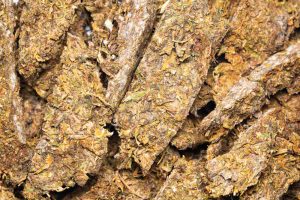
Bad weed can appear faded, discoloured, or unusually dry, while potentially contaminated buds may show irregular patches or fungal growth.
The following table highlights the differences between stale weed and cannabis showing possible signs of mold.
| Characteristic | Stale Weed | Potentially Moldy Weed |
| Appearance | Dull, faded, or brownish buds | White, gray, or dark patches with possible fuzzy growth |
| Smell | Faint or less distinctive aroma | May have a musty, damp, or mildewed smell |
| Texture | Dry, brittle, or crumbly | May feel unusually damp, soft, or clumped |
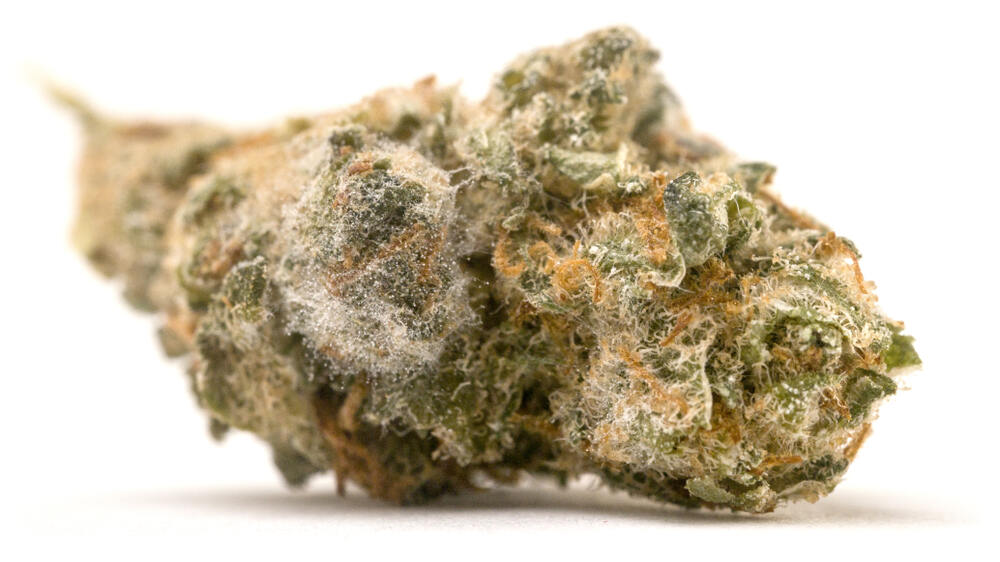
Not every change in appearance indicates a problem. Some cannabis strains naturally produce purple or brownish flowers, while others develop dense layers of pale trichomes. Dryness alone is not evidence of mold.
However, fungal contamination can also occur without obvious visible signs, so appearance and smell cannot confirm that cannabis is safe.
Grower tip: I recommend photographing your buds after curing, using consistent lighting. This gives you a useful visual reference when comparing their appearance later, particularly with strains that naturally develop darker flowers.
Mold vs Trichomes: How to Tell the Difference
Mold and trichomes can both give cannabis buds a white, frosty appearance, but their structures are different. A magnifying loupe with 20–30× magnification can help you examine these differences more closely.
What Healthy Trichomes Look Like
Healthy glandular trichomes appear as tiny resin glands covering the flower and surrounding sugar leaves. Under magnification, many have a mushroom-like shape, with a thin stalk and rounded head.
To identify them, look for:
- Defined structures: Individual resin glands with recognizable shapes.
- Consistent distribution: Trichomes covering the bud and sugar leaves rather than forming irregular patches.
- Clear, cloudy, or amber heads: Natural variations associated with trichome development and maturity.
What Mold Can Look Like Under Magnification
Unlike trichomes, mold may form tangled, thread-like structures called hyphae. These can spread across plant tissue and develop into fuzzy or powdery patches.
Look for irregular growth that lacks the distinct glandular heads associated with trichomes. However, some fungal contamination is invisible without laboratory testing.
For more examples, read our guide to identifying moldy weed.
Grower tip: I recommend using a magnifying loupe and bright, indirect lighting when examining unfamiliar structures. If you already suspect mold, avoid disturbing the flower to get a closer look. Magnification can help identify visible growth, but it cannot confirm that cannabis is safe.
How to Check Whether Weed Has Gone Bad
When checking old cannabis, follow a consistent process rather than relying on appearance alone. The aim is to identify possible problems without unnecessarily disturbing contaminated material.
Step 1: Inspect the storage container
Before opening it, check for condensation, water damage, or unusual moisture inside the packaging. If you notice visible fungal growth, leave the container closed and do not handle the buds further.
Step 2: Examine the buds in good lighting
If there are no obvious contamination concerns, examine the flower through the container or on a clean surface. Check the outer buds and any naturally exposed interior areas for unexpected changes. Do not pull apart suspicious material.
Step 3: Check unfamiliar surface structures
Use a magnifying loupe to examine areas that look unusual. Refer to the trichome and mold characteristics described above. If you cannot identify a suspicious patch, do not assume it is harmless.
Step 4: Review the findings
Consider the inspection results alongside the flower's age and storage history. If you suspect contamination, do not consume the cannabis.
Grower tip: I recommend keeping different harvest batches in separate, clearly labeled containers. This makes it easier to identify which batch may have been exposed to unsuitable conditions and prevents unnecessary handling of other stored flower.
Never smoke, vaporize, or taste questionable cannabis to test its condition. A visual inspection cannot replace laboratory testing for microbial contamination.
When Should You Throw Away Weed?
You should discard cannabis if you suspect mold, pest contamination, chemical contamination, or other conditions that could make it unsafe.
Removing a visibly affected section is not a reliable solution. Fungal growth may extend beyond what you can see, and contamination can affect other buds stored in the same container.
If you discover mold in a batch:
- Stop handling the affected material.
- Avoid shaking, breaking apart, or smelling the buds directly.
- Keep the container closed to limit the spread of spores.
- Discard the suspected contaminated batch in a sealed bag, following local disposal requirements.
- Clean the storage area and any reusable equipment that may have been exposed.
A study published in Frontiers in Microbiology found that yeast and mold levels in cannabis flower can be influenced by cultivation conditions and postharvest handling.
People with respiratory conditions or weakened immune systems face particular risks from fungal exposure.
My recommendation: If you cannot establish whether a suspicious batch is safe, I would choose disposal over attempting to salvage it. Losing part of a harvest is disappointing, but consuming potentially contaminated cannabis is not worth the risk.
What Makes Weed Go Bad and How to Prevent It
Light, oxygen, heat, and excess moisture are the main environmental factors responsible for cannabis deterioration. Each affects stored flower differently, so prevention involves controlling several conditions rather than focusing on one.
| Factor | Effect on Cannabis | How to Prevent It |
| Light | Accelerates certain cannabinoid degradation reactions | Keep containers away from direct sunlight |
| Oxygen | Promotes oxidation of cannabinoids and other compounds | Use appropriately sized, airtight containers |
| Heat | Accelerates chemical changes and the loss of volatile compounds | Choose a cool location with a stable temperature |
| Excess moisture | Creates conditions that support microbial growth | Store only properly dried and cured flower |
The foundation of good storage begins after harvest. Flower that retains excess moisture inside dense buds can develop problems even when the outside feels dry.
Once drying and curing are complete, transfer the flower into clean, food-safe containers and keep them away from direct sunlight and temperature fluctuations.
Avoid repeatedly opening containers unnecessarily, as this introduces fresh air and exposes the contents to changing environmental conditions.
Grower tip: I recommend checking containers for trapped moisture during the initial storage period, particularly with dense, freshly cured flowers. A humidity pack can help regulate moisture in properly prepared cannabis, but it cannot correct inadequate drying or make contaminated buds safe.
For detailed advice on containers, humidity management, and long-term storage, read our guide on how to keep weed fresh for longer.
Conclusion
Weed doesn't have a fixed expiration date, but its quality changes over time. Knowing how to identify signs of deterioration helps you make better decisions about your stored harvest.
For growers, good postharvest handling is just as important as producing healthy flowers. If you suspect mold or contamination, the safest choice is to discard the affected batch.
Frequently Asked Questions
Does Ground Weed Go Bad Faster Than Whole Buds?
Ground cannabis can lose its aroma more quickly because breaking apart the flower exposes more surface area to air. Keeping buds whole until needed can help preserve their original characteristics.
Why Does Old Weed Smell Like Hay?
A hay-like smell may result from poor drying, incomplete curing, or the loss of aromatic terpenes. It does not automatically indicate mold, although an unusual smell cannot establish that cannabis is safe.
Does Freezing Weed Kill Mold?
No. Freezing may temporarily stop fungal growth, but some mold spores can survive and become active again under suitable conditions. Freezing is not a reliable method of making contaminated cannabis safe.
Does CBD Weed Expire Like THC Weed?
Yes. CBD-rich cannabis flower undergoes chemical changes during storage. Its cannabinoids and aromatic compounds can deteriorate, and it remains susceptible to microbial contamination.
Are Expiration Dates on Cannabis Packaging Reliable?
Expiration and best-before dates provide useful guidance, but they cannot guarantee freshness or safety. Their meaning depends on the manufacturer's testing, packaging methods, and storage assumptions. Always follow the manufacturer's instructions and applicable product guidance.
References
- Zamengo, L., et al. (2019). The role of time and storage conditions on the composition of hashish and marijuana samples: A four-year study. Forensic Science International, 298, 131–137. https://doi.org/10.1016/j.forsciint.2019.02.058
- Milay, L., et al. (2020). Metabolic Profiling of Cannabis Secondary Metabolites for Evaluation of Optimal Postharvest Storage Conditions. Frontiers in Plant Science, 11, 583605. https://doi.org/10.3389/fpls.2020.583605
- Punja, Z. K., et al. (2023). Total yeast and mold levels in high THC-containing cannabis (Cannabis sativa L.) inflorescences are influenced by genotype, environment, and pre- and post-harvest handling practices. Frontiers in Microbiology, 14, 1192035. https://doi.org/10.3389/fmicb.2023.1192035


