




Cannabis plants need the right balance of macro- and micronutrients to grow properly, and boron is one trace element that plays an important role in new growth, root development and healthy plant tissue. Although plants only require small amounts, a boron deficiency in cannabis can quickly cause distorted growth and other problems if uptake becomes restricted.
In this article, I’ll explain how to identify boron deficiency during vegetative growth and flowering, what commonly causes it, how to correct the underlying problem, and how to prevent it from returning. I’ll also cover the difference between boron deficiency and toxicity, so you can avoid adding more boron when the real issue is pH, watering or root health.
Key Takeaways
- Boron is essential in small amounts: It supports new growth, root development, cell formation and healthy flower production.
- Deficiency usually appears in new growth first: Look for twisted, curled or brittle leaves, spotting, weak stems and slowed development.
- The cause is often uptake, not a lack of boron: Incorrect pH, inconsistent watering, poor root health and incomplete nutrition can all restrict boron availability.
- Fix the root-zone problem before adding more boron: Check pH, moisture, drainage, roots and nutrient composition first, as excess boron can cause toxicity.
- Prevention comes down to consistency: Maintain suitable pH, balanced nutrition, healthy roots and steady watering, and monitor new growth for early warning signs.
What is Boron Deficiency?
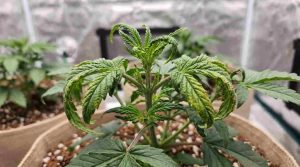
As growers, we commonly face nutrient deficiencies, and some are easier to recognize than others. Yellowing fan leaves can point toward a nitrogen deficiency, while rusty spots or discoloured leaf edges may suggest problems with calcium or magnesium. A boron deficiency in cannabis, however, tends to show itself differently, particularly in the newest growth.
Boron is an essential micronutrient that cannabis plants only need in small amounts, but it plays an important role in healthy cell development, root growth, and the formation of new plant tissue. Because boron has limited mobility within the plant, it cannot easily be moved from older leaves to developing growth when supplies become restricted. This is why the first signs of a deficiency commonly appear around new leaves, shoots, and growing tips.
When boron uptake is disrupted, new growth can become slow, brittle, curled, or distorted. Root development may also suffer, and a prolonged deficiency can eventually affect overall plant growth and flower production.
How to Identify Boron Deficiency in Cannabis
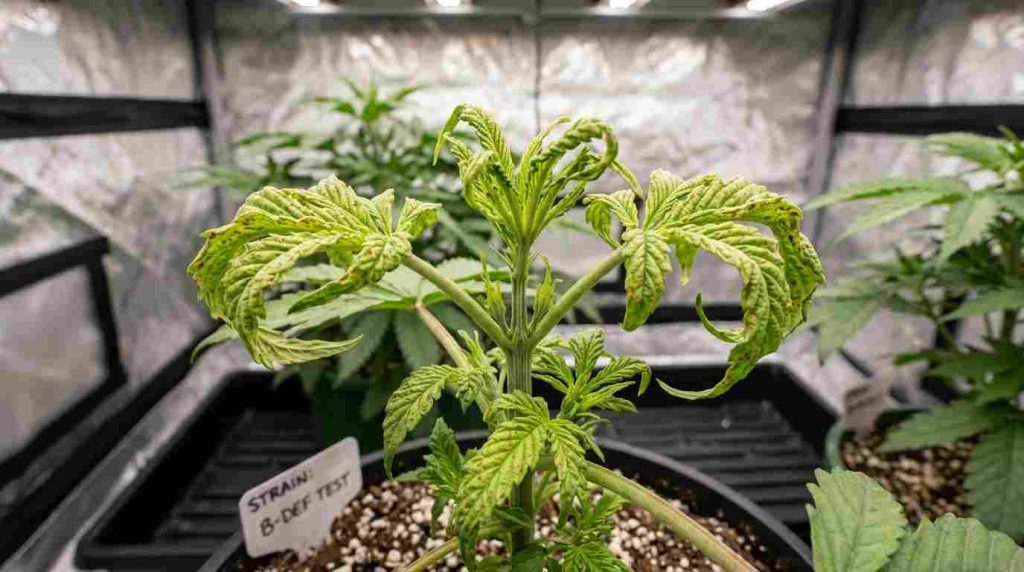
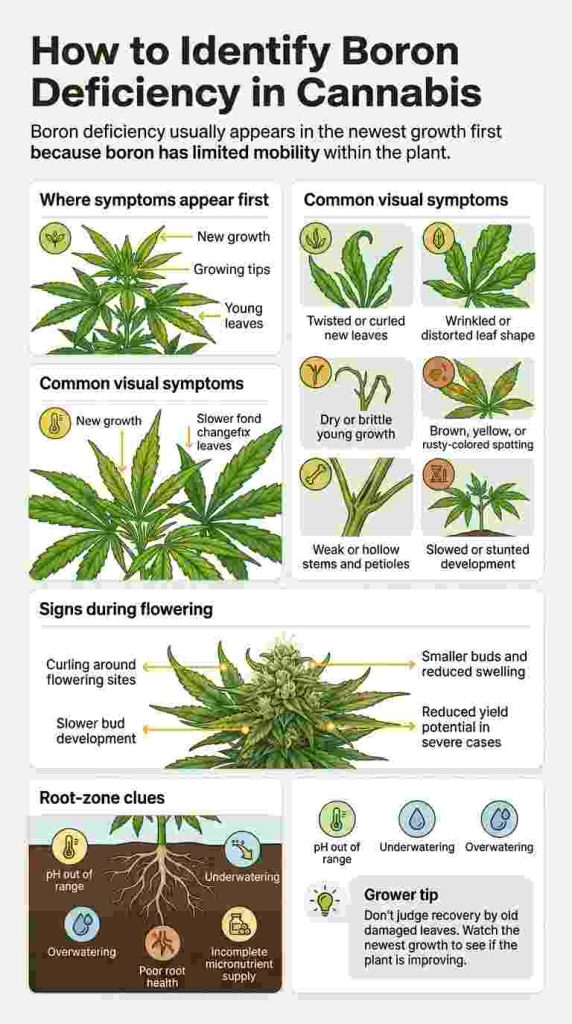
A boron deficiency in cannabis usually shows first in the newest growth. Young leaves may emerge twisted, curled or wrinkled, with a dry or brittle texture. Brown, yellow or rusty-coloured spots can also develop as the problem progresses.
Stems and petioles may become weak, soft or hollow, while root development can slow. In hydro, damaged root tips may appear swollen or discoloured. Soil and coco growers should avoid removing the root ball just to inspect it; instead, check drainage, moisture levels and any visible roots around the drainage holes.
Grower tip: Don't diagnose boron deficiency from one symptom alone. Look at where the damage appears, how the newest growth is developing, and whether root-zone conditions could be restricting nutrient uptake.
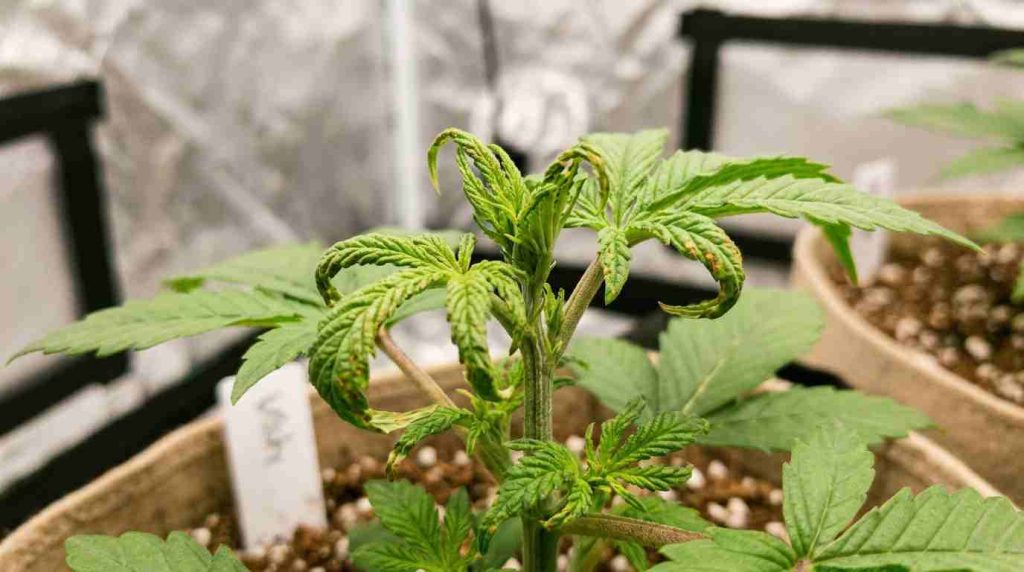
What It Can Look Like During the Vegetative Stage
During active cannabis vegetative growth, boron problems become more noticeable as the plant produces new leaves, branches and roots.
Common signs include:
- Twisted, curled or distorted new leaves
- Dry or brittle young growth
- Brown, yellow or rusty-coloured spotting
- Weak or hollow stems and petioles
- Slowed or stunted growth
- Damaged growing tips in severe cases
How It Can Look During the Flowering Stage
During the cannabis flowering stage, a boron deficiency can continue affecting new foliage while also slowing flower development. Indoor photoperiod plants typically enter flowering after switching to a 12/12 light cycle, while autoflowers begin flowering according to age.
| Growth stage | Signs to watch for |
| Vegetative | Distorted new leaves, brittle growth, spotting and slow development |
| Early flowering | Curling around new growth and flowering sites |
| Established flowering | Smaller, slower-developing buds and colas that fail to fill out |
| Severe deficiency | Dying growing tips, damaged foliage and reduced yield potential |
In my experience, prolonged boron deficiency can leave foliage dry and distorted while buds develop more slowly than expected.
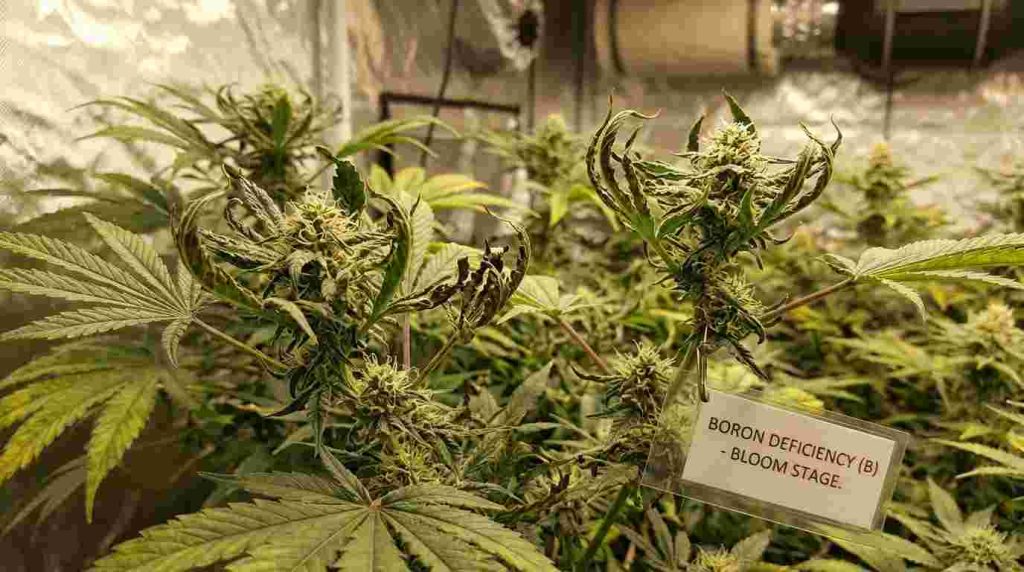
Grower tip: Damaged leaves are unlikely to recover. Watch the newest growth instead. If fresh leaves and flower sites begin developing normally and the damage stops spreading, the plant is moving in the right direction.
Boron Deficiency vs Boron Toxicity
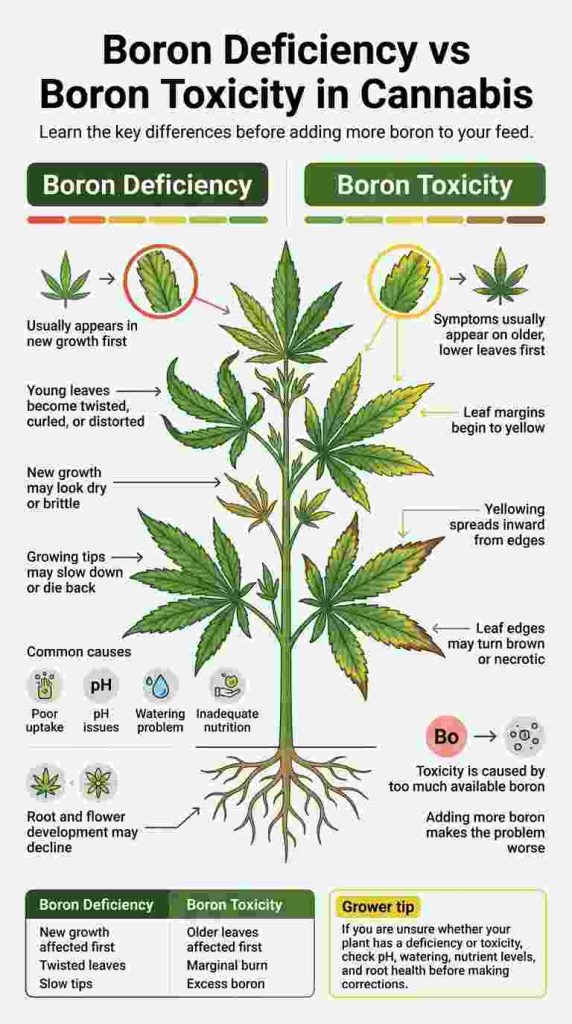
Boron deficiency and boron toxicity in cannabis can both damage plant growth, but they tend to appear in different parts of the plant. This distinction is important because adding more boron to a plant already experiencing toxicity will only make the problem worse.
A boron deficiency usually affects new growth first. Young leaves can become twisted, curled or brittle, while growing tips may slow down or become damaged.
Boron toxicity generally begins on older, lower leaves. Early signs include yellowing around the leaf margins, which can gradually spread inward. In more severe cases, the edges can turn brown and become necrotic.
| Boron deficiency | Boron toxicity |
| Usually appears in new growth first | Usually appears on older, lower leaves first |
| Young leaves become twisted or distorted | Leaf margins begin to yellow |
| Growing tips may slow or die back | Yellowing can spread toward the center of the leaf |
| Root and flower development may decline | Leaf edges may become brown or necrotic |
| Often linked to poor uptake or inadequate supply | Caused by excessive available boron |
Grower tip: Never assume distorted growth means your plants need additional boron. Check your pH, nutrient program and root-zone conditions first. If you are unsure whether you are dealing with deficiency or toxicity, avoid adding extra boron until the cause is confirmed.
What Causes Boron Deficiency in Cannabis?
A boron deficiency in cannabis does not always mean there is too little boron in the growing medium. Problems with pH, watering, root health or nutrient availability can prevent the plant from absorbing what is already there.
In my experience, finding and correcting the underlying cause is more effective than simply adding more nutrients.
Nutrient Lockout
Nutrient lockout occurs when root-zone conditions interfere with nutrient uptake. In my early grows, incorrect pH was sometimes the cause. Boron becomes less available when root-zone pH moves outside a suitable range, particularly when it becomes too high.
For boron uptake, aim for approximately:
- Soil: 6.0–6.5
- Hydro: 5.5–6.2
Use a calibrated pH meter to check your water or nutrient solution and make gradual adjustments when necessary.
Overwatering
I think most growers have overwatered a cannabis plant at some point. A constantly saturated growing medium contains less oxygen, which can affect root function and nutrient uptake.
Allow the medium to dry appropriately between waterings and make sure containers drain freely. Measuring how much water you provide can also help maintain a more consistent routine.
Underwatering
Boron uptake relies on adequate moisture, making prolonged underwatering an important risk factor. As plants become larger and transpire more, their water requirements can increase quickly.
Wilting, very light pots and excessively dry media are signs that plants may need watering. Lifting containers before watering is one method I use to judge how much moisture remains.
Poor Root Health
Healthy roots are essential for absorbing water and micronutrients. Waterlogging, poor drainage or root disease can reduce nutrient uptake and cause several deficiencies at the same time.
Watch for:
- Slow or stalled plant growth
- Poor drainage
- Soft or damaged roots
- Brown, slimy roots in severe cases
Rather than assuming boron itself is lacking, correct the root-zone problem first.
Heat and Dry Conditions
High temperatures, very low humidity and poor airflow can increase plant stress and dry the growing medium faster. Extremely dry conditions are particularly relevant because boron becomes harder for roots to absorb when insufficient moisture is available.
Use a digital thermometer and hygrometer to monitor your environment and maintain adequate airflow around the canopy.
Incomplete Nutrient Supply
Cannabis only needs small amounts of boron, but it still requires a complete supply of micronutrients. Problems can occur when growing in depleted soil or using a fertilizer that does not provide an appropriate range of macro- and micronutrients.
Check the nutrient label rather than assuming more fertilizer is needed. Reused soil should also be properly re-amended before starting another grow.
| Possible cause | How it affects Boron uptake | What to check |
| Incorrect pH | Reduces nutrient availability | Root-zone or nutrient-solution pH |
| Underwatering | Limits Boron movement and uptake | Moisture level and pot weight |
| Overwatering | Reduces oxygen around the roots | Drainage and watering frequency |
| Poor root health | Restricts nutrient absorption | Root condition and drainage |
| Hot, dry conditions | Increases water loss and plant stress | Temperature and humidity |
| Incomplete nutrition | May provide insufficient micronutrients | Fertilizer composition |
Grower tip: Don't immediately add extra boron when symptoms appear. The margin between boron deficiency and excess can be narrow, so check pH, watering, roots and your existing nutrient supply first.
What Happens When Boron Deficiency Is Left Untreated?
If a boron deficiency in cannabis is left untreated, the damage can progress from distorted new growth to problems with roots, stems and flower development. The longer the underlying cause remains unresolved, the greater the risk of stunted growth and reduced yield.
Because boron is important for developing plant tissue, prolonged deficiency can slow root growth and reduce the plant's ability to absorb water and nutrients efficiently. Growing tips may also become damaged, with shorter internodal spacing and new growth eventually turning brown or dying back in severe cases.
During flowering, the effects can become more noticeable. In my experience, affected buds may develop slowly, fail to swell properly and produce less overall mass. Continued plant stress can also reduce flower quality and leave weakened plants more vulnerable to other environmental or health problems.
| Severity | What you may notice |
| Early | Distorted new growth and slower development |
| Moderate | Stunted growth, weak stems and reduced root development |
| Severe | Dying growing tips, poor flower development and lower yield potential |
Grower tip: Don't wait for damaged leaves to worsen before taking action. Once you suspect boron deficiency, check pH, watering, root health and nutrient availability. Correcting the underlying problem early gives new growth the best chance of developing normally.
How to Prevent Boron Deficiency in Cannabis
Preventing a boron deficiency in cannabis is mainly about keeping the root zone stable. In my experience, consistent pH, watering and nutrition are much easier to manage than trying to correct a deficiency once symptoms appear.
Step 1: Check Your pH Regularly
Use a calibrated pH meter to test your water or nutrient solution before feeding. Keeping pH within a suitable range helps ensure boron and other micronutrients remain available to the roots.
For boron uptake, aim for approximately:
- Soil: 6.0–6.5
- Hydro: 5.5–6.2
Avoid making large adjustments at once. Consistency is more important than chasing an exact number every time you water.
Step 2: Use a Complete Nutrient Source
Make sure your plants receive a balanced supply of macro- and micronutrients. I recommend starting with nutrient-rich soil, a properly prepared living or super soil, or a fertilizer that includes essential trace elements such as boron.
If you reuse soil, re-amend it before starting another grow so depleted nutrients are replaced.
Step 3: Keep Watering Consistent
Boron needs moisture to move through the root zone and into the plant. Don't allow the growing medium to remain extremely dry, but avoid keeping it permanently saturated.
One method I use is lifting the pot before watering. Over time, you will learn how a well-watered container feels compared with one that is ready for more water.
Step 4: Protect Root Health
Healthy roots are essential for nutrient uptake. Use containers with good drainage, avoid prolonged waterlogging and make sure the growing medium allows enough oxygen around the roots.
Slow growth, poor drainage or persistently wet media can indicate that root conditions need attention.
Step 5: Monitor New Growth
Check the newest leaves and growing tips regularly. Because boron problems usually affect developing tissue first, changes in new growth can provide an early warning before the deficiency becomes severe.
| Prevention step | What to check |
| 1. Check pH | Keep the root zone within a suitable range |
| 2. Check nutrients | Use a complete source of macro- and micronutrients |
| 3. Check watering | Avoid extreme drying or constant saturation |
| 4. Check roots | Maintain good drainage and root-zone oxygen |
| 5. Check new growth | Look for curling, distortion or slowed development |
Grower tip: Don't add extra boron as a preventative measure. Cannabis only needs it in trace amounts, and too much can cause toxicity. Stable pH, healthy roots, consistent watering and complete nutrition are the best ways to prevent a deficiency.
Conclusion
Boron may only be needed in trace amounts, but a boron deficiency in cannabis can affect new growth, root development and, if left untreated, flower production and yield potential. The key is to recognize the early signs and work out why boron uptake has been disrupted before the problem progresses.
In my experience, prevention is always easier than correction. Start with a balanced growing medium or complete nutrient source, maintain the correct pH range, keep watering consistent and pay close attention to root health. Most importantly, don't automatically add more boron at the first sign of a problem. Check the growing conditions first and correct the underlying cause so your plants can return to healthy development.
Frequently Asked Questions
What are the first signs of Boron deficiency in cannabis?
The first signs of boron deficiency in cannabis usually appear in new growth. Young leaves may become twisted, curled, wrinkled or brittle, while growing tips can slow down or develop brown and yellow spotting. Because boron has limited mobility within the plant, newer tissue is generally affected before older fan leaves.
What causes Boron deficiency in cannabis plants?
Boron deficiency can be caused by incorrect root-zone pH, underwatering, overwatering, poor root health or an incomplete nutrient supply. In many cases, boron may already be present in the growing medium but unavailable to the roots because conditions are restricting nutrient uptake.
How do you fix Boron deficiency in cannabis?
Start by checking the root-zone conditions rather than immediately adding more boron. Test the pH, check the moisture level and drainage, inspect root health where possible, and confirm your fertilizer contains a complete range of micronutrients. Once the underlying problem is corrected, monitor new growth for signs of recovery.
What pH is best for Boron uptake in cannabis?
For good boron availability, aim for approximately 6.0–6.5 in soil and 5.5–6.2 in hydroponic systems. Keeping the root-zone pH stable is important because boron can become less available when conditions move outside a suitable range.
Can too much Boron damage cannabis plants?
Yes. Cannabis only requires boron in trace amounts, and excessive levels can cause boron toxicity. This is why you should avoid adding extra boron unless you have first checked pH, watering, root health and your existing nutrient supply. Correcting an uptake problem is often more appropriate than increasing the amount of boron being fed.


