




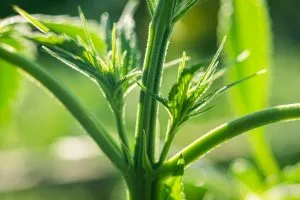
As a grower, it is vital to be familiar with the parts of a cannabis plant. This means understanding roots, branches, leaves, nodes, internodes and buds. The more you know about the structure of a cannabis plant, the more advantageous it is.
In this article, I will explain everything you need to know about nodes and internodes, the differences between the two, why nodes matter for healthy cannabis growth, how to identify nodes and internodes, how they are associated with plant training, as well as potential problems.
Understanding Cannabis Plant Structure: Nodes vs Internodes
Once you germinate a cannabis seed, the seedling will grow and develop into a bushy plant that contains leaves and side branches that develop from the stem. These junction points are known as nodes and internodes, which form the structure of cannabis plants. Below is an explanation of the differences between the two and why they are essential.
What nodes are and why they form
The node on a cannabis plant is the point where leaves and side branches grow, which are responsible for producing buds during the flowering period. As cannabis plants develop during the vegetative stage, using light energy and nutrients, they will focus their energy on creating new nodes, fan leaves and growth sites known as axillary shoots.
The more nodes a cannabis plant has, the larger and faster it can grow and photosynthesise, resulting in a bushy, dense structure capable of producing numerous cannabis colas.
- The first node develops during the seedling stage, containing the first set of true leaves
- Node development is based on factors such as light, nutrients, and genetic makeup
- Cannabis plants will have between 10 and 12 nodes when fully mature
- Most growers will transition their plants into flowering after the 4th to 5th nodes develop
- Side branches will develop at the node, and are where cuttings are taken from
What internodes are and how they differ from nodes
Internodes are the segments between nodes, where the leaf petioles develop. If you were to count the number of internodes on your plants, then you would locate where each leaf junction joins the stem and count the space in between.
Internodes determine a plant's height and transport water and nutrients from the roots to the rest of the plant. Internodes elongate when flowering is induced in cannabis plants, allowing them to grow as tall as possible to get closer to the light source.
- Genetics can affect how short or long internodes become
- Short internodal spacing produces bushy and compact plants
- Long internodal length can cause plants to become tall and lanky
- Light distance can affect how short or long the internodal length becomes
- Each internode is separated by the leaf petiole, which is connected to the leaf
Why Nodes and Internodes Matter for Healthy Cannabis Growth
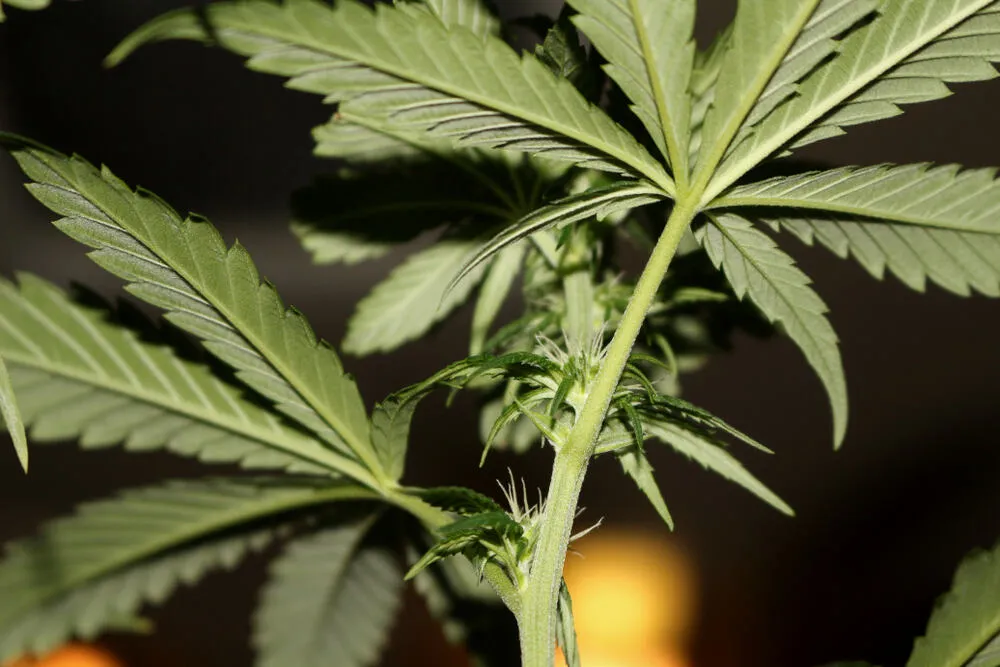
Node development and internodes will determine the shape, height and overall structure of your cannabis plant. You do not want your plants to become too short, dense, and compact, and you do not want them to become tall and lanky. Genetics, environmental factors, and plant training play significant roles in healthy cannabis plant growth, as covered below.
How node spacing affects plant height, structure, and airflow
During the vegetative stage, cannabis plants will develop as many nodes, fan leaves, and side branches as possible while the lighting regime remains 18/6. They will begin to stretch significantly after 12 hours of darkness.
How short or tall a cannabis plant’s stem grows until maturity depends on internodal spacing, which also determines the structure and shape. The spacing between the nodes will also determine how easily light can penetrate the foliage and canopy, as well as how much airflow can pass through and around the plants.
- Short internodal characteristics will cause fan leaves to shade lower growth sites
- Poor air flow around the leaves and foliage can increase humidity levels
- Long internodal spacing will cause plants to become lanky and too tall
- Short internodal spacing can increase the chances of mold during flowering
How genetics, environment, and training influence node development
Not all cannabis plants will grow the same way, and one of the main reasons why you may notice that some plants have larger internodes than others is down to genetics. Indica cannabis plants typically produce short internodes with thick, fingered fan leaves, whilst sativas tend to develop much larger internodes with long, thin and narrow leaves.
Another main factor determining internodal length is the growing environment. The distance from the grow light to the top of the plant plays a significant role, as does light intensity. If the light is too far away, the plants will produce long, thin stems to compensate for the amount of PPFD they receive.
When the temperatures are too hot and above 28 degrees Celsius, cannabis plants will react by growing taller, resulting in larger internodes. The same rule applies when the temperature during the lights-off period is too cold; plants will also stretch, increasing internodal length.
Training cannabis plants using techniques such as topping, fimming and low stress training can help reduce plant height, due to restricting internodal height. Topping and LST are two of the easiest ways to produce shorter and compact internodes and enhance the size and structure of the canopy.
Pruning away the lower growth sites beneath the top half of a cannabis plant is also an excellent way to prevent a bushy, shaded canopy and allow the plants to focus their energy on the top colas.
- Indica cannabis plants will grow the shortest internodes
- Sativa plants will produce the longest internodal spacing
- Plants will grow taller when the light is too far away
- Low levels of light intensity will encourage long internodal spacing
- Cold nighttime temperatures significantly affect internodal length
- Topping cannabis plants during vegetative growth reduces internodal spacing
- LST promotes a laterally dominant growth structure and reduces height
- Pruning and defoliation will improve air flow and prevent shaded areas
Identifying Nodes, Internodes, and Growth Sites on Your Plants
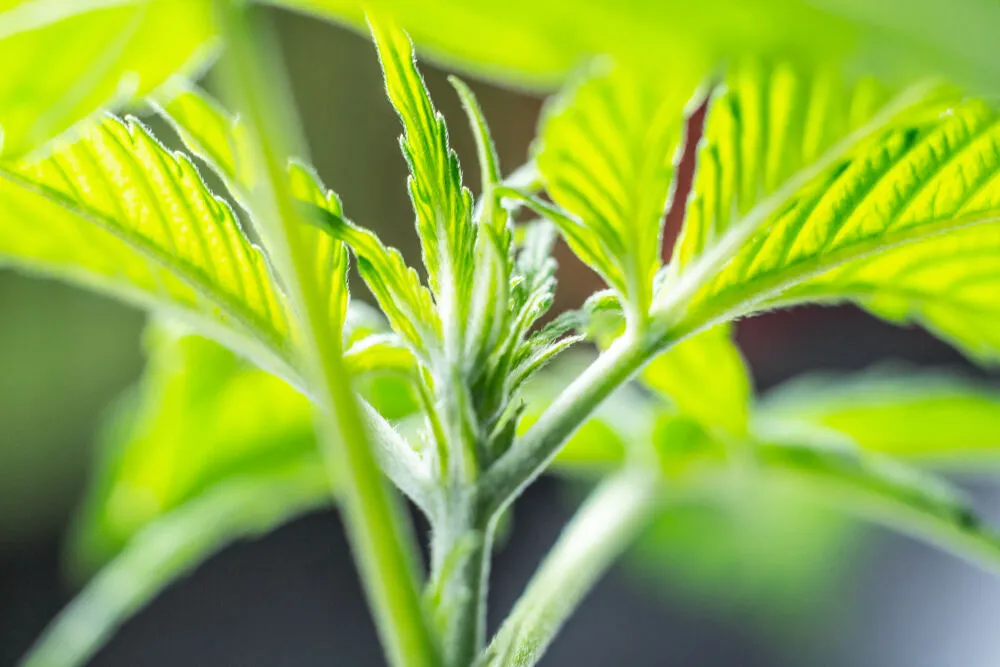
As your cannabis plants mature, they will produce new growth sites and pre-flowers. Many growers base interndoal development on when their plants will flower and determine whether they are male or female when growing with regular sexed seeds.
Differences between male and female node development
Whilst you may not be able to tell whether your plants are male or female during the vegetative stage, once they begin to show pre-flowers, you will see different growth sites. Between the stem and the leaf petiole, male plants will produce a cluster of small balls that will later turn into pollen sacs ready to pollinate female plants.
On the other hand, when female preflowers begin to appear, there will be what looks like a tiny single blade of grass growing between the stem and the leaf stipule. It can take several grows before a beginner grower can identify the differences between male and female node development.
How to read node growth in seedlings, vegging plants, and mature plants
Seedling stage
From the day you germinate your cannabis seeds, you will notice that in the first stage of initial growth, your plants will produce the small, round leaves known as cotyledons. After the cotyledons, the first set of serrated leaves, known as true leaves, will appear, which is classed as the first node. The seedling stage will require 2 weeks before the plant is ready to vegetate.
Vegetation stage
After the 14-day mark, your plants will begin forming new nodes every 4-5 days. This means new leaves will form in pairs on either side of the stem. Most growers will allow their plants to develop 4-5 nodes (40-50cm tall) before flowering, resulting in medium-sized plants.
Mature plants
Mature cannabis plants will have 10-12 nodes and will be fully developed, with fan leaves, axillary shoots, and pre-flowers. Plants have surpassed the vegetative stage and are well into flower development; they will also experience internodal stretching.
Using Nodes and Internodes for Plant Training Techniques
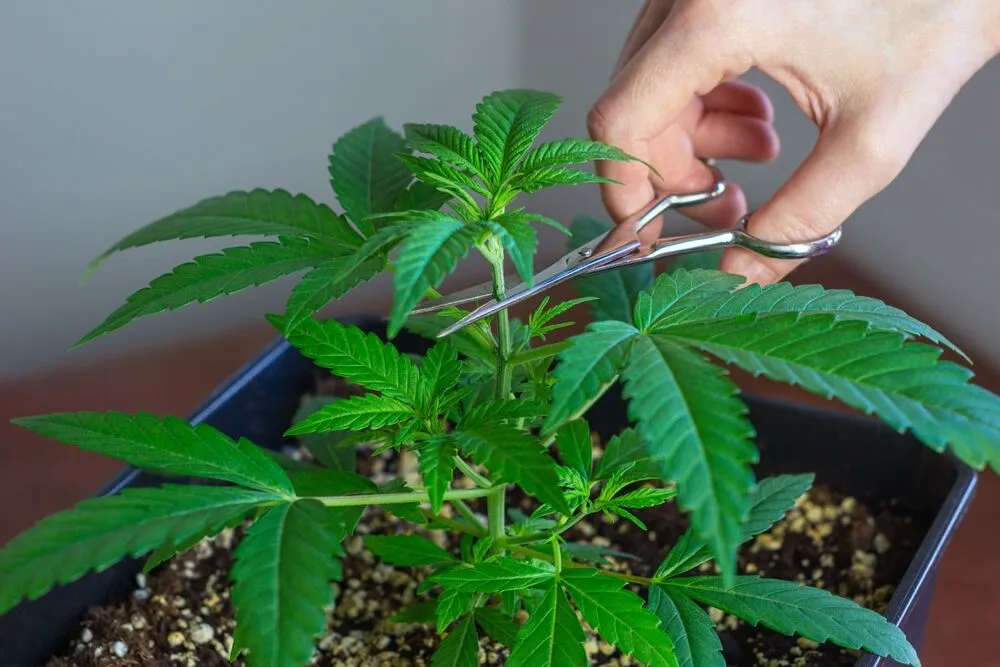
Training cannabis plants during the vegetative stage can give a grower a significant advantage in manipulating their growth structure, final height, and yield potential. Whilst plant training requires no expense and can be done by hand, knowing exactly where to apply the techniques on your plants is often easier said than done.
Below is a breakdown of what to consider the next time you plan to benefit from topping, the FIM technique, and the low-stress training technique, to help you achieve the best results possible.
How to top and FIM at the correct node
Topping is a form of plant training that allows a cannabis plant to grow two crown shoots and increase the number of primary colas. How to top cannabis plants - step-by-step guide
Step 1: Locate the top node, which is the highest point of the plant.
Step 2: Using sharp scissors, cut off the top node and the fan leaves.
Step 3: Leave behind the two smaller axillary shoots on either side of the stem.
Step 4: Allow the two shoots to grow until they produce two crown shoots.
How to FIM cannabis plants - step-by-step guide
Fimming is very similar; however, instead of removing the top shoot, you cut away 75% of the top leaves, which promotes the lower parts beneath the top node to become bushier and temporarily slows auxin production, which is responsible for vertical growth.
Step 1: Locate the top node, which is the highest point of the plant.
Step 2: Using sharp scissors, cut away 75% of the top nodal growth.
Step 3: Leave 25% of the cut node to regrow, which may take 5-7 days.
Step 4: The foliage underneath the cut node will become bushy over the 5-7 days.
Using internode length to guide LST and canopy shaping
There are many benefits to using the low-stress technique, including higher yields, more flowering sites, reduced height, and a bushy, laterally dominant growth structure. LST not only encourages the axillary shoots to grow much taller, but it is also an excellent way to lower the top node, regardless of the size of your plant.
All you need to do is use gardening wire and attach a loop around the stem closest to the top node. Then carefully lower the tied part until the top of the plant is at a 90-degree angle and the top node is facing downwards.
Next, attach the wire to a hole in the side of the pot to create tension and secure the plant in place. After 72 hours, the tied-down node will resume vertical growth. By this point, the canopy shape will be bushy and compact, with a laterally dominant growth structure featuring multiple crown shoots rather than a single one.
- LST is ideal for growers with limited height indoors
- A simple and highly effective technique for increasing yields
- LST increases the number of secondary colas during flowering
- LST works well for tall plants and sativa genetics
- LST can be performed on the top node as well as long side branches
Troubleshooting Common Node and Internode Problems
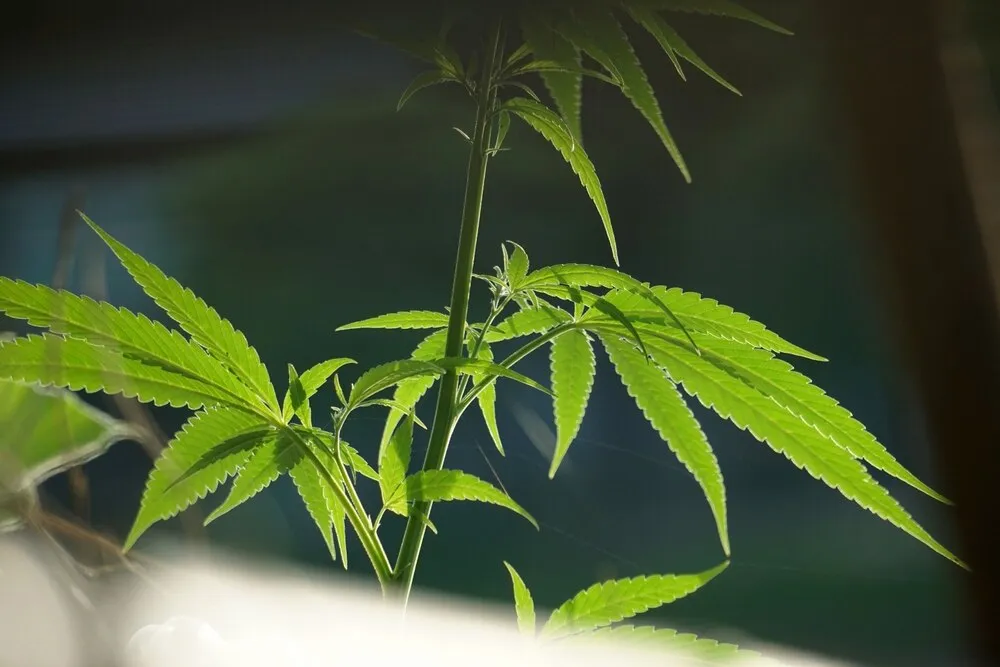
If you have ever grown plants that were too tall or short, then there is a very high chance that internodal growth was responsible. Whilst genetics can influence internodal development, environmental factors will also play a significant role, as explained below.
Causes of long internodes (stretching) and how to fix them
If your grow light is too far from the top of the plant, internodal spacing may increase to reach the light. Using a measuring tape, aim to keep the light between 45 and 60cm away and adjust it as the plants grow taller.
When a grow light provides insufficient intensity for the plant, internodal stretching can occur, resulting in tall, thin, lanky plants during the vegetative or flowering stage. Use a light meter to check the PPFD of your grow space, and be prepared to increase the grow light intensity.
Hot grow rooms that exceed 28 degrees are a major contributor to long internodes.
Cannabis plants will begin to stretch due to the heat, and the best way to resolve this issue is to maintain a consistent temperature of 24-26 degrees Celsius. Use a digital hygrometer to help monitor the temperature.
A lack of plant training can also contribute to elongated internodes. To correct tall, thin plants, use plant-training techniques such as topping, fimming, and adding canes and wire as supports.
When the grow room light is off, the temperature can drop significantly, and in some cases, fall below 18 degrees Celsius. When this occurs, plants will grow tall during the vegetative period. They can become challenging to maintain, especially if the grow space is too small.
You can resolve this issue by installing a small heater in the grow room during the lights-off period. Cannabis plants that are exposed to wind and plenty of air currents will become stronger and produce sturdy stems and branches. When the air inside a grow space is minimal or absent, plants do not have the opportunity to adapt and become stronger. The way to resolve this issue is to use one or two oscillating fans inside the grow room until you can see the plants gently blowing around.
What tight node spacing means and potential issues it can signal
If your plants have become short and stocky due to short internodal spacing, you may not have to worry about them becoming tall and lanky; a series of issues may arise. Short internodal spacing can be caused by a lack of a dark period during the vegetative stage, typically when a grower uses a 24-hour light cycle. Indica plants tend to exhibit short internodal spacing, which can result in lower-canopy regions becoming shaded by fan leaves and in airflow and humidity pockets.
When flowering a plant that has very short internodal spacing, you will need to be vigilant of buds becoming moldy due to poor air circulation. Another problem is that the buds beneath the top nodes receive much less light intensity, which can affect bud development and reduce yields.
Environmental and nutrient factors that disrupt node development
- Heat stress will promote long internodal spacing
- Cold temperatures will also cause internodes to stretch
- Overcrowding can cause plants to fight for light and stretch
- Too much nitrogen during the vegetation stage causes taller plants
- Poor air flow causes stems to become thin, elongated and weak


