




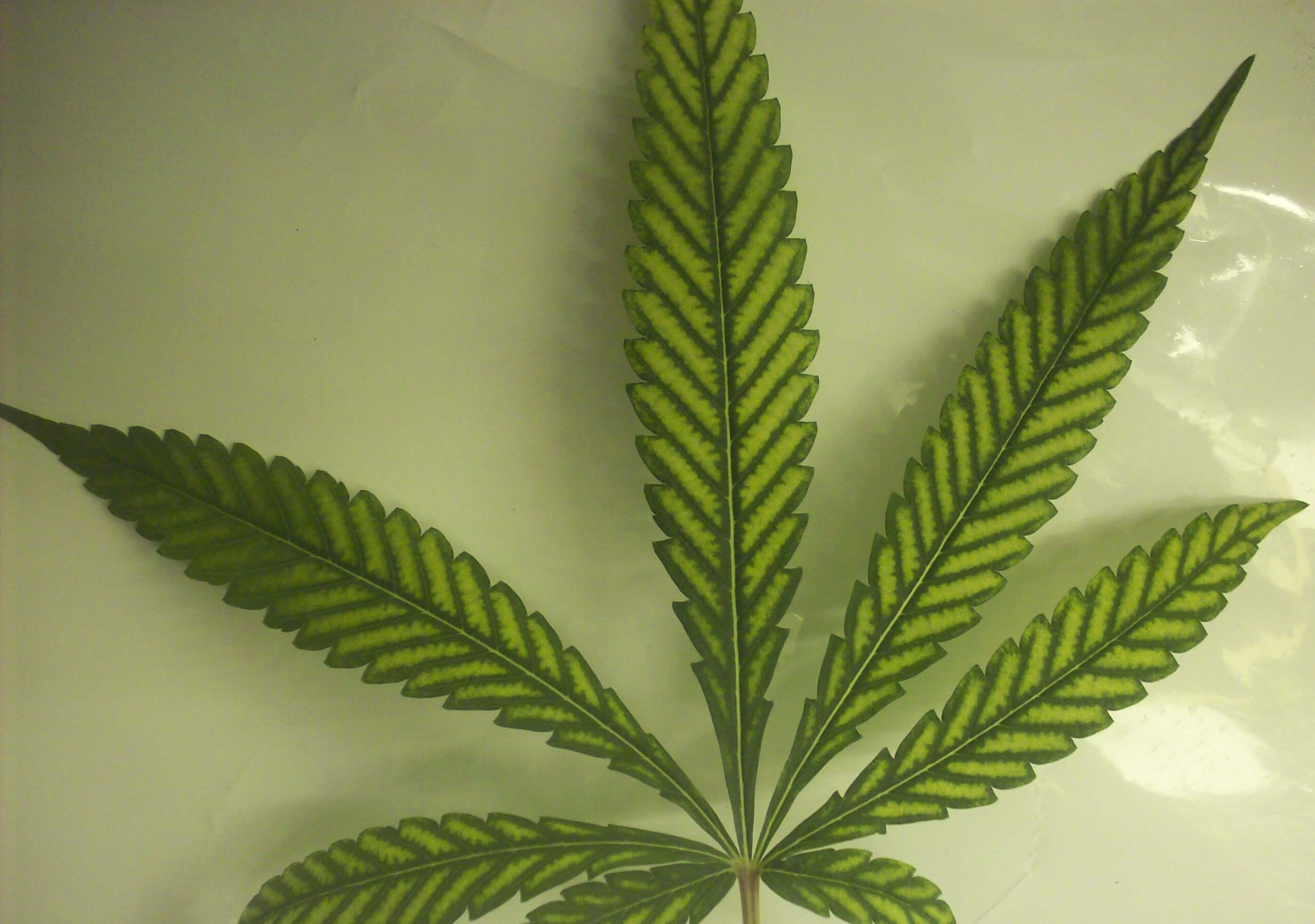
A magnesium deficiency in a marijuana plant can be a serious problem. When a plant is suffering from it, the veins of the leaves will start to look light green or yellow in colour, while the areas between the veins may turn pale or develop rust-coloured spots. This creates a clear contrast from the healthy, vibrant green leaves cannabis plants should have.
If not treated early, the plant may lose a significant number of leaves, which can reduce growth and negatively impact yields. Fortunately, magnesium deficiency in cannabis is relatively easy to fix once correctly identified.
- Quick Diagnosis: Is This Magnesium Deficiency?
- Why Do Marijuana Plants Need Magnesium?
- Magnesium Deficiency in Coco Coir
- What Are the Signs of Magnesium Deficiency?
- What Causes Magnesium Deficiency?
- Magnesium vs Calcium vs Nitrogen Deficiency
- How to Fix Magnesium Deficiency in Cannabis
- Growing in Hydroponics
- Magnesium When Growing Autoflowers
- Preventing Magnesium Deficiency
- Cal-Mag: Should You Use It?
- FAQs
Quick Diagnosis: Is This Magnesium Deficiency?
Use this checklist to quickly confirm whether your cannabis plant is suffering from a magnesium deficiency:
- Use this checklist to quickly confirm whether your cannabis plant is suffering from a magnesium deficiency:
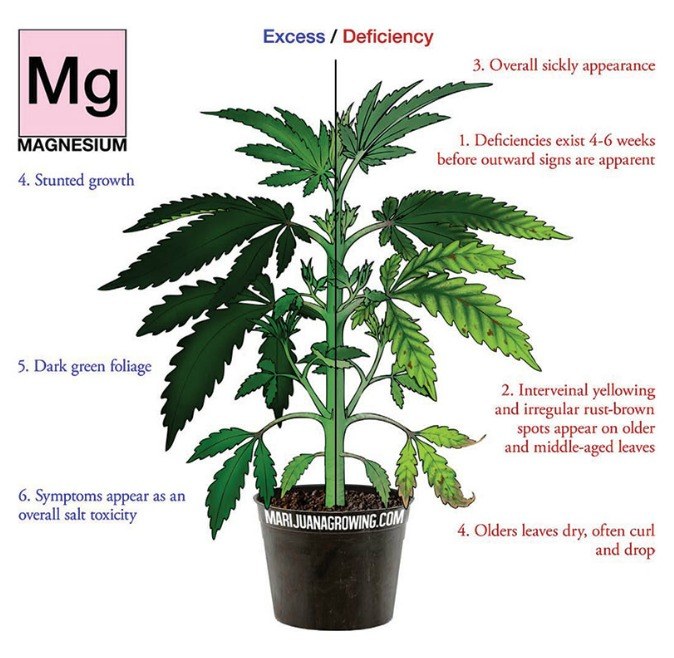
- Symptoms start on older, lower leaves first
- Yellowing appears between leaf veins (not uniform yellowing)
- Leaf veins remain green while surrounding areas turn yellow
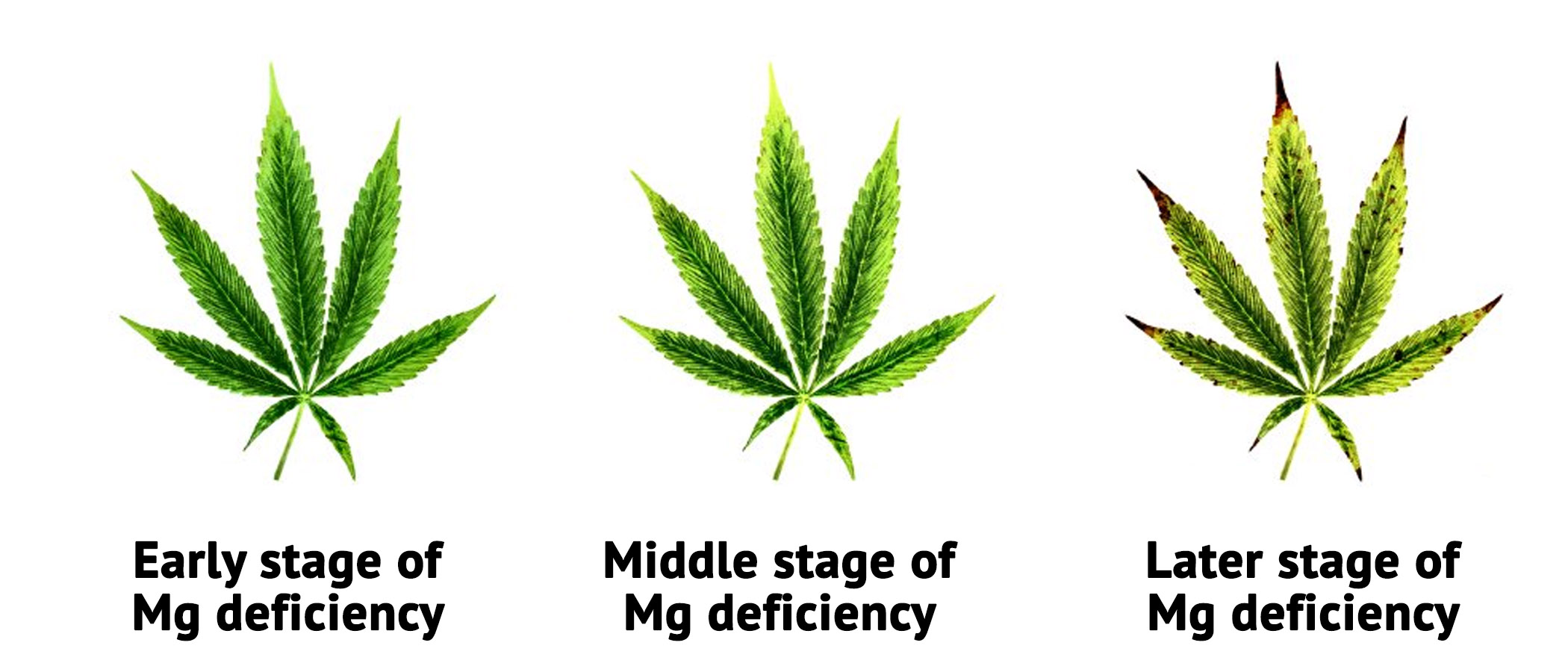
- Rusty or brown spots begin to develop over time
- Leaves may become dry, brittle, or curl upwards
- Issue appears during mid veg or early flowering
- You are growing in coco coir or using soft water
- Your pH may be below 5.5 (coco/hydro) or 6.0 (soill)
If most of these signs match your plant, it is quite likely you are dealing with a magnesium deficiency.
Why Do Marijuana Plants Need Magnesium?
Magnesium is a mobile nutrient in cannabis plants. This means the plant can move it from older leaves to newer growth when supplies are limited. Because of this, deficiencies almost always appear on older, lower leaves first.
Magnesium plays several key roles in plant health:
- It helps regulate the uptake of other nutrients, including phosphorus
- It is a core component of chlorophyll, which drives photosynthesis
- It supports enzyme function and nutrient transport
- It improves resilience to environmental stress, such as drought
Cannabis plants require magnesium throughout their lifecycle, but demand often increases during the flowering stage, when plants are producing larger buds and require more energy for development
Magnesium Deficiency in Coco Coir
Magnesium deficiency is more common when growing in coco coir. This is because coco does not naturally retain calcium and magnesium well, and can bind to these nutrients, making them unavailable to the plant.
For this reason, growers using coco should:
- Ensure nutrients are properly balanced
- Use a Cal-Mag supplement regularly
- Monitor pH closely
What Are the Signs of Magnesium Deficiency?
Magnesium deficiency does not appear overnight. It typically develops gradually, often becoming visible during mid to late veg or early flowering.
Common Symptoms
- Yellowing between the veins of older leaves (interveinal chlorosis)
- Rusty or brown spots developing on affected leaves
- Leaves becoming dry, brittle, or curling upward
- Older leaves dropping off
- Overall plant looking weak or “washed out”
Once visible, the deficiency has already been affecting the plant for some time, so early action is important.
What Causes Magnesium Deficiency?
There are several common causes:
pH Imbalance (Most Common Cause)
If the pH is too low or too high, the plant cannot absorb magnesium — even if it is present. This is known as nutrient lockout.
- Soil: optimal pH 6.0–7.0
- Hydro/coco: optimal pH 5.5–6.5
Lack of Magnesium in Nutrients
Some feeding schedules may not provide enough magnesium, especially in fast-growing plants or heavy feeders.
Overwatering
Excess watering can flush nutrients from the root zone and reduce oxygen availability, limiting nutrient uptake.
Coco Coir Without Supplementation
As mentioned, coco requires additional calcium and magnesium to avoid deficiencies.
Magnesium vs Calcium vs Nitrogen Deficiency
Magnesium deficiency is often confused with other nutrient issues. Correct diagnosis is key.
| Deficiency | Where It Appears | Key Symptoms |
| Magnesium | Older leaves | Yellowing between veins, rust spots |
| Calcium | New growth | Twisted leaves, brown spots, stunted growth |
| Nitrogen | Older leaves | Uniform yellowing (not between veins) |
Magnesium affects older leaves first, while calcium affects new growth — this is one of the easiest ways to tell them apart.
How to Fix Magnesium Deficiency in Cannabis
Luckily, magnesium deficiency is straightforward to treat when addressed early.
Step 1: Check and Correct pH
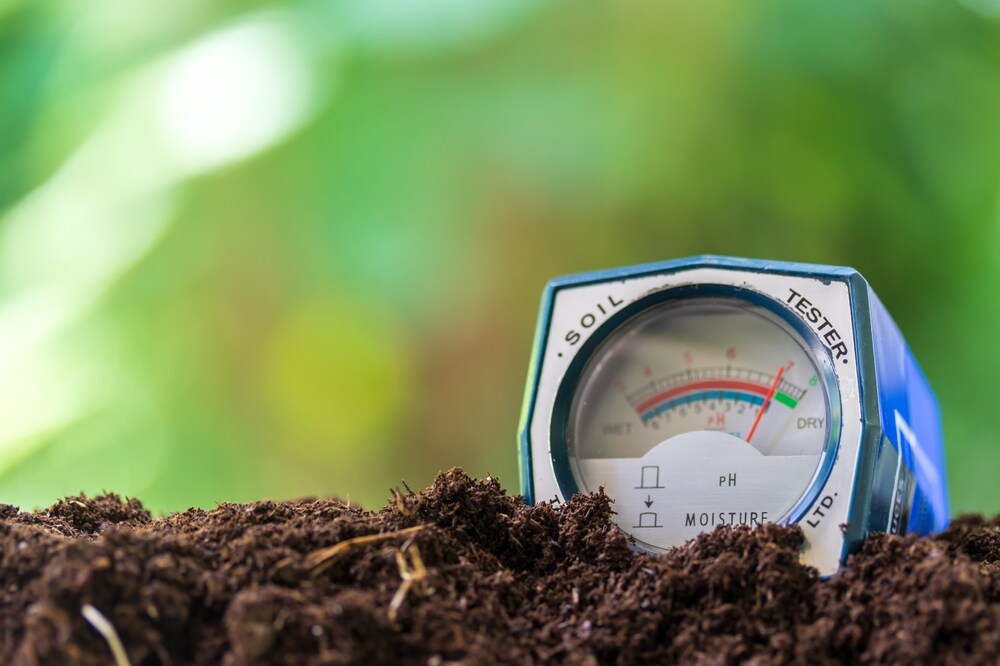
Before adding nutrients, always correct the pH:
- Soil: adjust to 6.0–7.0
- Hydro/coco: adjust to 5.5–6.5
If pH is off, adding more nutrients will not solve the issue.
Step 2: Add Magnesium
The most common and effective solution is Epsom salts (magnesium sulfate).
Recommended Dosage:
- Soil / watering: 1 teaspoon per litre of water
- Foliar spray: 0.5 teaspoon per litre (spray leaves lightly)
- Hydro: add to reservoir and monitor EC
Epsom salts dissolve easily and provide a fast-acting magnesium source.
Step 3: Flush (If Needed)
If nutrient buildup or lockout is suspected:
- Flush the growing medium with pH-balanced water
- Then reintroduce nutrients at the correct levels
Check runoff pH to ensure the medium is stable.
Step 4: Monitor Recovery
After treatment:
- New growth should appear healthy within 3–7 days
- Damaged leaves may not fully recover but should stop worsening
Once the issue is resolved, you can remove heavily damaged leaves if necessary.
Growing in Hydroponics
For hydro growers:
- Check reservoir pH and EC levels
- Replace the nutrient solution if imbalanced
- Add magnesium (Epsom salts or Cal-Mag) as needed
Maintaining a stable reservoir is key to preventing recurring issues.
Magnesium When Growing Autoflowers
Magnesium plays a central role in photosynthesis by forming part of chlorophyll molecules. Without enough magnesium, autoflowers cannot efficiently convert light into energy.
However, autoflowers require lower nutrient levels overall due to:
- Smaller size
- Faster lifecycle
- Reduced root mass
Overfeeding magnesium can lead to nutrient imbalances and reduced growth.
The key is to provide a balanced, reduced-strength feed and monitor plants closely rather than overcorrecting.
Preventing Magnesium Deficiency
Preventing magnesium deficiency is always easier than treating it so to avoid future issues make sure you properly organise your grows, test soil, and get your nutrients calculated before you plant your seeds.
Here are 5 key practices you can put into place to prevent magnesium deficiency:
- Use a pH meter and maintain correct pH levels at all times (ideal pH level varies depending on if you are growing in soil, hydro, coco so be sure to check before you start)
- Use a balanced nutrient schedule
- Add Cal-Mag when growing in coco
- Avoid overwatering
- Regularly inspect older leaves for early signs
Cal-Mag: Should You Use It?
Many growers treat magnesium deficiency using Cal-Mag supplements. While this can be effective, it is not always necessary.
Magnesium and calcium deficiencies are different:
- Magnesium → affects older leaves
- Calcium → affects new growth
Some growers see great results using Cal-Mag, while others find it can lead to excess nutrients if not needed.
The best approach is to diagnose correctly before treating.
FAQs
How long does it take to fix magnesium deficiency?
Most plants show improvement within 3–7 days, although damaged leaves may not fully recover.
Can plants fully recover from magnesium deficiency?
Yes, if treated early. Severe cases may reduce yield, but plants can still finish successfully.
Should I remove affected leaves?
Not immediately. Wait until the deficiency is resolved, then remove leaves if they are heavily damaged.
Is magnesium deficiency common?
Yes — especially in coco coir grows and when pH is not properly controlled.
Final Thoughts
Magnesium deficiency is one of the more common issues cannabis growers face, but it is also one of the easiest to fix with the right approach.
By understanding how magnesium works in the plant, monitoring pH closely, and responding quickly to early symptoms, growers can prevent long-term damage and keep plants healthy throughout their lifecycle.


