




Growing cannabis successfully starts with proper watering, but many growers struggle to find the right balance between too much and too little. Overwatering can lead to slow growth, drooping leaves, and root problems, while underwatering often causes dry soil and wilting plants. The ideal watering schedule depends on factors like plant size, pot size, growing medium, and environmental conditions. In this guide, we’ll explain how often to water cannabis plants, how to recognize common watering issues, and the best techniques to support healthy root development and steady growth from seedling to harvest.
Key Takeaways
- Young cannabis plants typically need watering every 2–3 days, while mature plants often require water every 3–4 days depending on pot size and environment.
- A simple way to check soil moisture is by lifting the pot or inserting a finger 1–2 inches into the soil to test for dryness.
- Overwatering commonly causes drooping leaves, yellowing, and soggy soil, while underwatering often leads to dry soil and brittle, wilted leaves.
- Most soil-grown cannabis plants perform best with a water pH between 6.3–6.8, while coco coir and hydro systems typically prefer 5.5–6.1.
- Watering slowly and allowing 10–20% runoff helps reduce salt buildup and supports more even nutrient absorption.
- Fabric pots and airy growing mediums with perlite or coco coir generally dry out faster and improve root-zone oxygen levels.
- Key Takeaways
- Watering Schedules & Timing: How Often Should You Water Your Cannabis Plants?
- Soil Type and Pot Size Matter
- Signs of Overwatering and Underwatering Marijuana Plants
- Properly Watering Cannabis Plants: Techniques for Best Results
- What About pH? The Role of pH in Watering Cannabis Plants
- Quick Checklist: How to Properly Water Your Cannabis Plants
- In Closing: Water Carefully and Monitor Your Plants Regularly
Watering Schedules & Timing: How Often Should You Water Your Cannabis Plants?
The timing and frequency of watering depend on a variety of factors, including your grow setup, the age and size of your plants, growing medium, and temperature. Here’s how to determine the best watering schedule for your plants:
Watering Schedule Based on Plant Size and Age
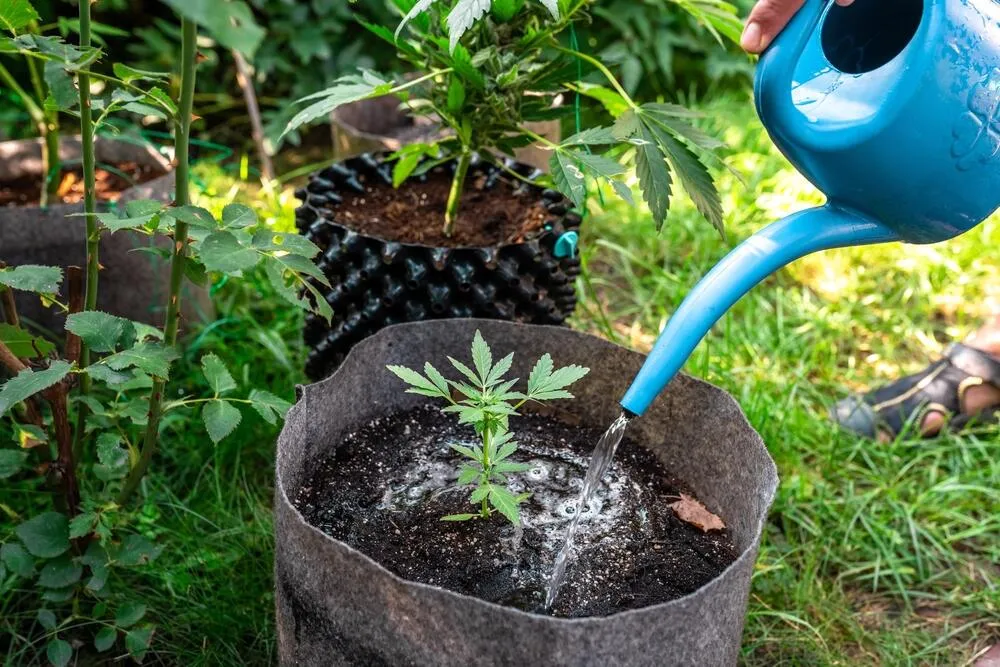
- Young plants: Small, younger plants need less water because their root systems are less complex. Typically, they need watering every 2-3 days.
- Mature plants: Larger plants with more developed roots may require more water, but less frequently, around every 3-4 days.
How to Check When Your Cannabis Plant Needs Water
- Lift the pot: A simple way to gauge if it’s time to water is by lifting the pot. If it feels light, your plant likely needs watering.
- Soil test: Stick your finger into the soil about 1-2 inches deep. If it feels dry, it’s time to water. If it still feels moist, wait another day.
- Wilting leaves: If you notice the leaves of your plants are wilting, this will be an indicator the plant needs watering, and will perk back up almost immediately.
Soil Type and Pot Size Matter
The type of soil and pot size significantly influence how often you need to water. Airy soils with good drainage need to be watered more frequently due to the fact they will dry out faster, while denser, compact soils retain water longer.
Ensure proper drainage: Make sure pots have holes at the bottom to allow water to drain. This prevents overwatering and nutrient lockout. Using a growing medium that contains perlite, compost, soil and coco coir will provide an airy, spongy and water retentive and creates an ideal substrate. Picking the best type of pot for growing cannabis is important.
- Fabric pots are also advantageous for allowing the growing medium to dry out faster
- Fabric pots help maintain an oxygen rich environment for the roots.
- Small pots only require a small amount of water and dry soil promotes root growth
- Large pots can become very heavy when the soil is fully saturated
Signs of Overwatering and Underwatering Marijuana Plants
We have all been there when we have over watered our pots and noticed pools of water or nutrient solution on the grow room floor. Or the scenario when you forgot to water the pot and the next day your plants are wilting and looking tired and weak.
It’s important to recognize the signs of both overwatering and underwatering to keep your cannabis plants healthy. Here’s how to spot the problem, so you will know if you have given too little or too much to your plants.
Underwatered Plants
- Signs: Brittle, dry leaves, wilting, and dry soil.
- Solution: Increase the frequency of watering. Ensure soil isn’t too compact to retain moisture.
Overwatered Plants
- Signs: Yellowing leaves, drooping, slow growth, soggy soil and root rot.
- Solution: Allow soil to dry out between waterings. Ensure proper drainage to avoid waterlogged roots.
Actionable Tip: Use one quarter of the pot’s capacity when watering. For example, if you have a 6L pot, use 1.5L of water to avoid overwatering.
Properly Watering Cannabis Plants: Techniques for Best Results
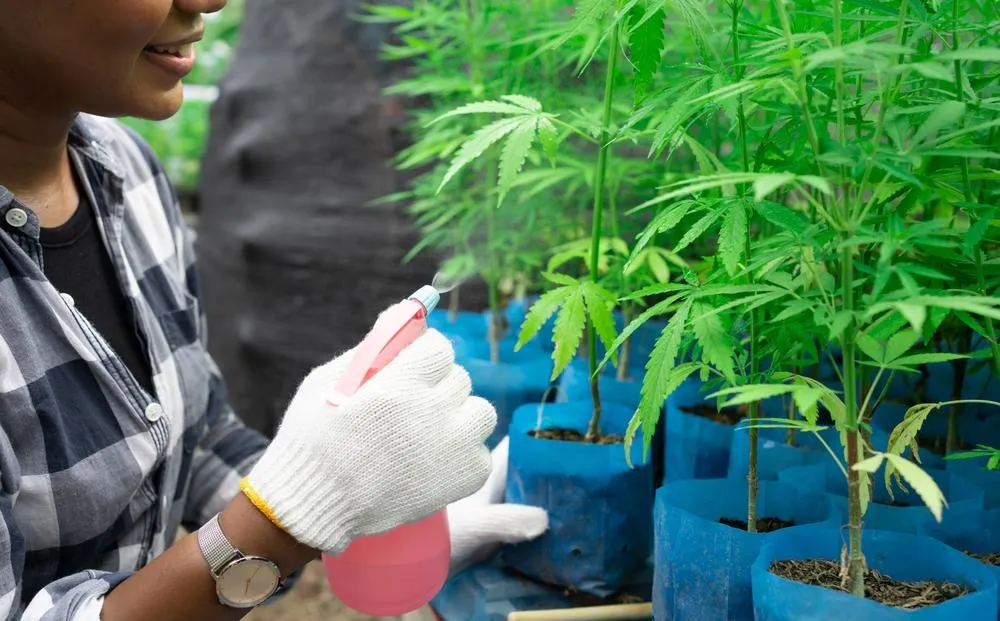
When it comes to actually watering your plants, there are a few key things to keep in mind to ensure proper absorption of water and nutrients.
1. Slow, Steady Watering
Watering is not a race. Avoid flooding your plants with too much water at once. Instead, water them slowly to allow the roots to absorb nutrients evenly. This helps prevent channels from forming, which can drain water too quickly and reduce absorption.
If you are growing with soil, then you do not need to give a large volume of water. Especially with seedlings and freshly rooted clones. Use a plastic measuring jug to allow you to consistently feed the same amount of water or nutrient solution.
2. Runoff Is Key
Run off refers to the water that runs out of the bottom of the pots, usually 20-30 seconds after pouring it in from the top. When watering, ensure that you allow 10-20% extra runoff to wash away excess salts and minerals. This helps prevent nutrient buildup, pH problems, and nutrient lockouts.
Actionable Tip: If you’re using trays to catch runoff, be sure to empty them regularly to avoid mold, bacteria, or pests.
What About pH? The Role of pH in Watering Cannabis Plants
pH is one of the most important factors for healthy cannabis growth. If your water’s pH levels are off, your plants can’t absorb nutrients properly, which can stunt growth. It is like someone putting a padlock on your fridge and you can’t do anything about it. Below lists the optimal pH levels for soil and hydroponics to ensure you are within the perfect pH range for nutrient absorption.
- Soil: pH should be between 6.3 – 6.8.
- Coco Coir & Hydroponics: pH should be between 5.5 – 6.1.
To measure pH levels, invest in a pH meter or pH test drops to ensure your water is within the correct range. If the pH is too high or low, you can use pH Up or pH Down solutions to adjust accordingly.
Quick Checklist: How to Properly Water Your Cannabis Plants
- Check soil moisture: Use the finger test or lift the pot to check if it feels light.
- Water slowly: Water the plants slowly and around the edge of the pot to ensure proper absorption of water and nutrients.
- Ensure runoff: Let 10-20% of the water drain out of the pot to avoid nutrient buildup.
- Check pH: Make sure your water’s pH is in the correct range for your growing medium (soil or hydro).
- Empty runoff trays: Prevent mold, bacteria, or pests from developing.
In Closing: Water Carefully and Monitor Your Plants Regularly
Watering marijuana plants might seem simple, but it requires careful attention. The right amount of water, combined with the correct pH levels, ensures your plants receive the nutrients they need to thrive. By following this guide, you’ll set yourself up for success and see your cannabis crop flourish.
Remember, just like every other factor in growing cannabis, watering requires attention. Overwatering, underwatering, and pH issues can all hinder growth, so be sure to monitor your plants carefully to ensure a healthy harvest.


