




Aphids are one of the most common pests cannabis growers encounter, and small infestations can quickly turn into a serious problem if left untreated. These tiny sap-sucking insects gather on leaves and stems, weakening plants by draining nutrients and moisture while multiplying rapidly. Because aphids often hide on the underside of leaves, many growers do not notice them until plant health has already started to decline. The good news is that aphid infestations can usually be controlled with early detection, physical removal, and carefully chosen organic treatments. This guide explains how to identify aphids on cannabis plants and the most effective ways to remove and prevent them.
Key Takeaways
- Aphids are small sap-sucking insects (around 2–4 mm long) that cluster on the undersides of cannabis leaves and reproduce rapidly in warm conditions.
- Female aphids can reproduce without mating and may produce dozens of offspring within weeks, allowing infestations to expand quickly.
- Early detection is important, so inspect the undersides of leaves regularly and use yellow sticky traps to monitor pest activity.
- Aphids can often be reduced by spraying plants with water, manually removing insects, or applying insecticidal soaps or neem oil during early growth stages.
- Beneficial insects such as ladybugs and lacewings can help control aphid populations in outdoor or biological pest management systems.
- Consistent monitoring and repeated treatments are usually required, as infestations often return if remaining aphids or eggs are left behind.
Understanding the aphid threat
You may have heard about spider mites and how destructive they can be to a cannabis plant, but did you know that aphids can also cause a massive threat? Not only are aphids one of the most problematic pests in the cannabis world, they can leave behind a trail of plant damage that is detrimental, in most cases irreversible and send a grower into a state of panic and turmoil.
Aphids are similar to mosquitoes and have a needle-like nose that they use to attack leaf tissue and plant matter. They suck out the phloem sap from the plant for nutrients and moisture. Not only are they asexual insects, meaning they can reproduce without the need for a male, but they are also capable of laying up to 60-80 eggs at a time. Below are some facts about aphids.
- Aphids typically grow as long as 4 millimeters.
- They can cause stunted growth and significantly affect cannabis yields.
- It can have wings or no wings, depending on the generation.
- Aphids transmit viruses, which can potentially lead to plant death.
- They can exist in various colors, such as yellow, green, black, red, or grey.
- Their lifecycle is less than 2 weeks under optimal conditions.
- Aphids live in large colonies on the underside of the cannabis leaves.
- High amounts of aphid damage can cause the leaves to wilt and turn yellow.
What aphids look like on cannabis
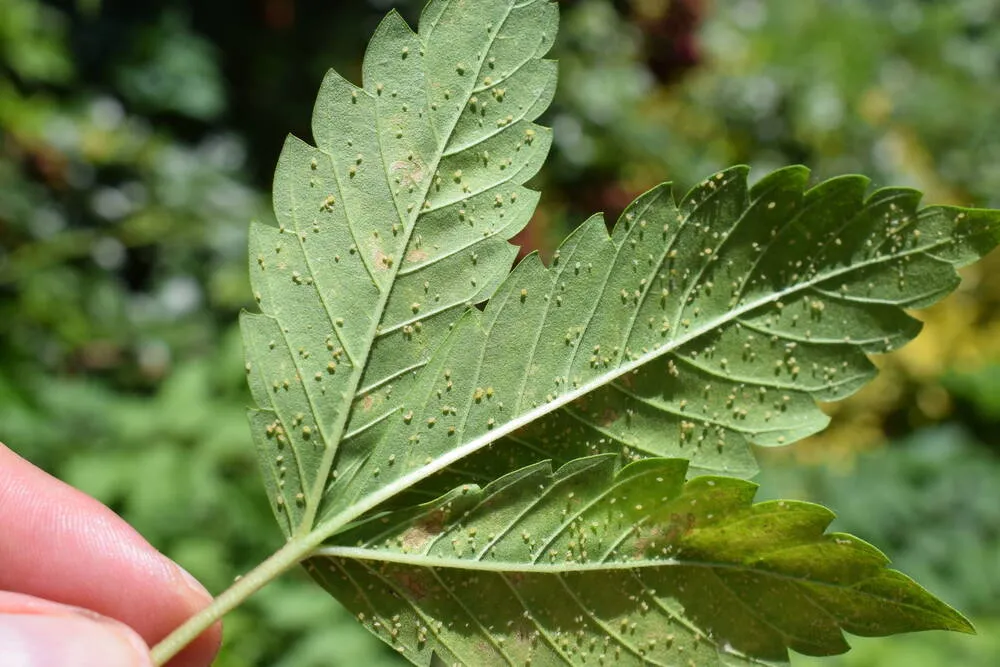
You would actually be surprised how hard it can be to spot aphids growing on a cannabis plant (especially the green ones). The reason is that they congregate under the leaves. However, once you do spot them, it can send you into panic mode and for good reason!
Aphids are tiny, soft-bodied insects that range in size from 2-4 mm, making them difficult to spot, and come in various colors, including green, yellow, black, brown, or white. They prefer to cluster together on new, healthy growth, such as the undersides of fan leaves, smaller leaves, or on the stems and internodes of cannabis.
- Aphids can vary in color.
- Aphids will often appear in large groups.
- They will appear as winged or unwinged.
- The underside of the leaf is where aphids are commonly found.
How aphid infestations develop so fast and damage plant vigour
Female aphids have a short life cycle of 25 days when the environment is in their favour, so to complete the circle of life, they quickly produce as many as 80 eggs at one time. So if you thought you had a problem when you spotted a small cluster, within the space of a week or two, your aphid infestation can multiply by 80!
Due to the vast population, thrips can quickly spread in your grow space, and it does not take long before these little critters are penetrating the leaf tissue and sucking the sap and life force from your plants. To stay hydrated, aphids will suck moisture from the leaves, ultimately affecting plant health and vigour, causing leaves to turn yellow, brown, and begin to wilt. This can lead to growth and development ceasing, resulting in the plant becoming stunted.
- Aphids remove phloem sap from plants during feeding.
- Leaves will appear twisted, and in some cases, they will die off.
- Aphids can spread diseases and introduce toxins into plants.
Early detection & monitoring
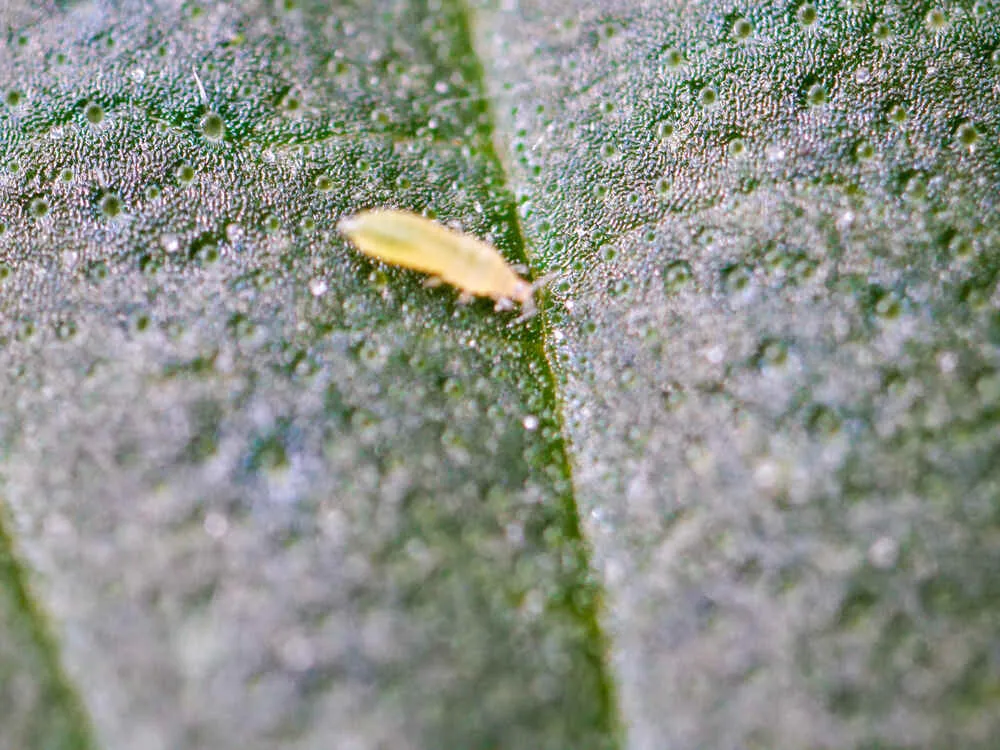
During my career as a cannabis grower, I have seen fully mature plants that were covered from top to bottom in aphids. However, you are lucky enough to catch them early and carefully monitor their progress. In that case, you have a very good chance of addressing the problem before it escalates. Below are two methods to help eradicate the harmful spread of thrips early on.
Regular inspections of buds and the undersides of leaves
Prevention can often be the cure, and this statement rings true when it comes to thrips. One advantageous way to keep the thrip population and damage down to a minimum is to frequently check the undersides of your cannabis plant's leaves and inspect the buds. This means using a magnifying glass, or you can take a photo with your phone and zoom in to see if you can spot any clusters of green or dark colored aphids, eggs, or leaf damage.
- Buds and leaves should be checked every 24 hours.
- Check on the stem, side branches and between internodes.
- Examine both large and small fan leaves.
- Check for crowds of thrips, which appear as small dots.
- Thrip damage will be clearly visible using magnification tools.
Using sticky traps and recognizing aphids
Yellow sticky paper hanging from the ceiling in your grow room may not be the prettiest sight; however, it works wonderfully well. Aphids will become stuck to the yellow sticky paper, and using sticky traps is a low-cost and highly effective way to reduce the number of pests that your plants have to deal with. You will know if you have aphids based on their size and color. Remember, some aphids have wings, while others do not.
- Yellow sticky traps are made from cardboard and covered in a layer of glue.
- These traps are used in grow rooms to combat aphids, whiteflies and leafminers.
- Plant pests are attracted to yellow, which is why the traps are also this color.
Physical and manual control methods

The upside to discovering an aphid infestation is the fact that they typically stay in the same place. This makes physical and manual control methods slightly easier compared to other pests, such as thrips, springtail tails, or spider mites. Spraying your plants or washing and rinsing the leaves are two simple and effective ways to deter the spread of aphids, as covered below.
Spraying with moderate water pressure to dislodge aphids
Blasting aphids with a high-pressure water nozzle serves as a short-term deterrent; however, it will not kill them instantly. However, using a 3% food-grade hydrogen peroxide solution will kill aphids without harming your plants.
Hand removal and rinsing
If you only have a few small-sized cannabis plants, then removing aphids by hand and rinsing the leaves can act as another short-term solution. Doing so on a large scale could be a laborious and almost impossible task, depending on the severity of the infestation and the number of plants. Removing aphids by hand may not be the most strategic way to prevent them from spreading.
Safe organic treatments

One thing that every cannabis grower loves to hear is the term' organic,' especially when it comes to chemical-free methods for pest control. Using harmful chemicals on cannabis plants can cause more trouble than it's worth, so below are the safest organic solutions and protocols to defend against aphids.
Applying insecticidal soaps or homemade soap sprays
Insecticidal soaps are made from fatty acid salts and work effectively as a deterrent to fight off aphids. The way that they work is by attacking the aphid's soft body, without leaving much residue on your plant's foliage. It is advised to not get the soap on the buds, so be very delicate during the application of homemade soap sprays and insecticidal soaps.
Using neem oil—risks near buds, timing, and thorough coverage
Neem oil has a distinctive garlic and sulphur smell and a dense texture, making it an excellent way to combat a heavy aphid infestation. There are pros and cons to using neem oil as your weapon of choice in the grow room, as covered below.
- Neem oil can easily block spray nozzles due to its oily and thick consistency.
- Never spray neem oil on your buds during the flowering stage.
- Neem oil can be harmful to growers, so wear eye protection when using it.
Spinosad as an organic option
If you're interested in biological warfare, consider using Spinosad to control aphids. This is a type of naturally derived bacteria that is produced during the fermentation of soil. It works by targeting the nervous system of insects, such as aphids, thrips, caterpillars, and beetles. The advantage of using Spinosad is that it is considered safe for humans, pets, and the beneficial insects inside the grow room, which helps the plants.
Biological and preventive strategies

Whilst there are a handful of insects that we do not want anywhere near our healthy and flourishing cannabis plants, such as aphids, thrips, caterpillars and spider mites, there are some which are beneficial. Not all insects are detrimental to plants, and, surprisingly, beneficial insects can be the ideal choice for combating and eliminating a population of unwelcome pests, as discussed below.
Attracting or introducing beneficial insects
As soon as you notice that there is an aphid problem inside your grow room, it is time to get some extra help! If you prefer to let Mother Nature do her thing, then below is a list of all the predatory insects you can introduce into your grow space that will use aphids as a food source and eliminate them.
- Green Lacewings
- Ladybirds
- Soldier Beetles
- Ground Beetles
- Mantis
- Mini Pirate Bugs
- Damsel Bugs
- Aphid Midges
Companion planting or trap crops to divert aphids away from cannabis
Aphids are a problem for any gardener, and one way to keep them away from your cannabis plants is to give them another type of plant to feed on. Think of a trap crop as a sacrificial plant to keep the aphids and any other pests well clear from your precious cannabis plants. The most commonly used trap plant to deter aphids is called Nasturtium and originates from South America.
Companion plants are named so because they can be planted close to cannabis and act as a form of protection. The way companion plants work is by repelling aphids and attracting the predators listed above, which use them as a source of food. Below is a short list of easy-to-source companion plants that can be placed inside a grow room and work exceptionally well for outdoor growers.
- Garlic
- Chives
- Mint
- Rosemary
- Marigolds
- Nasturtiums
- Sunflowers
- Dill
- Yarrow
- Calendula
Reducing ant activity to prevent aphid protection and spread
Now, whilst you may be thinking that ants are the enemy of aphids, you may be pleasantly surprised to learn that ants and aphids actually work together. Well, the ants use the sweet sap produced by aphids and essentially farm them. In return, the ants protect the aphids from ladybugs and parasitic wasps.
This information is beneficial for outdoor cannabis growers who may notice ants infesting their plants. Indoor growers will not even need to be concerned; however, outdoor growers can take the following steps to reduce ant activity and prevent aphid protection, as well as the long-term spread and threat.
- Spray the ants with insecticidal soap.
- Spray the ants with a neem oil solution.
- Use diatomaceous earth dust on the soil or foliage.
Post-Treatment care & long-term management

Watching your cannabis crop grow whilst hundreds or thousands of aphids continue to feed and suck the life out of your plants can be a frustrating experience. There is no guarantee that the aphid population will reduce to controllable levels. To be extra sure, you must provide as much protection as possible, ranging from hands-on protocols to using predators, companion plants, and trap plants.
Repeat treatments and continued monitoring
Be sure to repeat the following treatments, combined with careful monitoring every 24 hours.
- Using yellow sticky trap paper.
- Spraying aphids with a pressure nozzle.
- Hand removal and rinsing methods.
- The application of insecticidal soaps.
- Using a neem oil solution.
- Introducing beneficial predators.
- Introducing companion plants
- Using Nasturtiums.
- Diatomaceous earth dust
Improving environmental factors
Aphids can come from anywhere, especially outdoors, and it only takes moments for them to land, lay eggs, and the rest is history. There isn't much you can do to prevent that from happening; however, as an indoor grower, you will have more leverage in the situation.
- Aphids will typically attack stressed and unhealthy plants.
- Aphids thrive in warm, wet conditions, such as those found in damp soil.
- High temperatures and low humidity cause dry conditions for aphids.


