




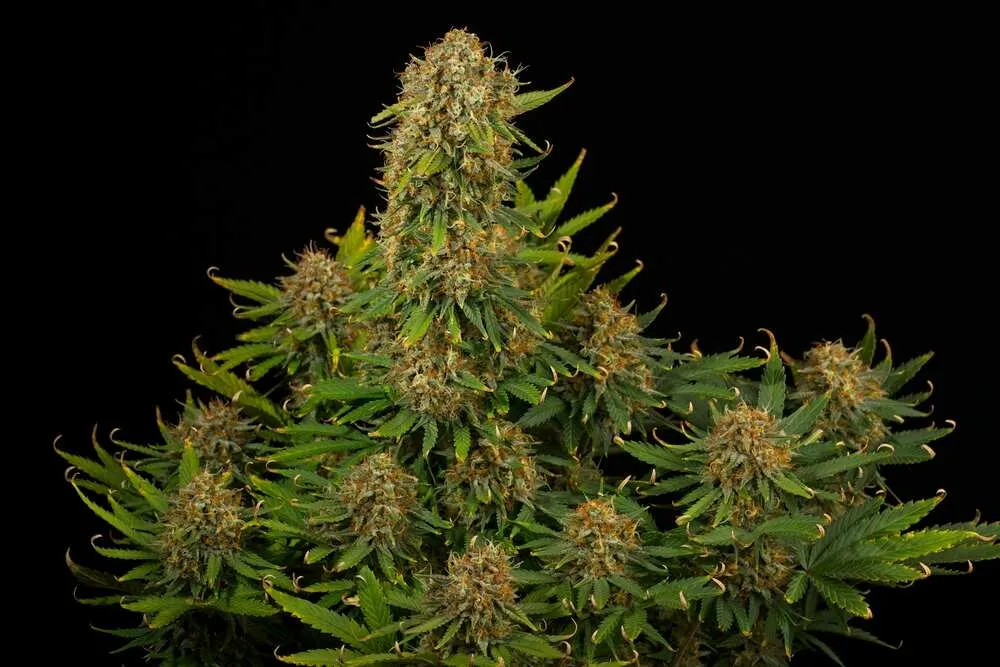
How many Bruce Banner strains are there? The answer depends on whether you mean the original Bruce Banner phenotypes or the newer versions developed from the same genetic line. The original Bruce Banner weed strain came from OG Kush and Strawberry Diesel, with Bruce Banner #3 becoming the best-known selection. Today, growers can also choose between regular, feminized, Bruce Banner Autoflower, and Bruce Banner Fast Flowering seeds.
In this guide, I’ll break down the main Bruce Banner strains, explain how they differ, and cover their THC potential, terpenes, flowering time, height, and growing characteristics.
Key Takeaways
- Bruce Banner was originally bred from OG Kush and Strawberry Diesel, producing several numbered Bruce Banner phenotypes.
- Bruce Banner #3 is the most famous Bruce Banner strain, known for high THC potential, heavy resin production, and a diesel-fruit aroma.
- Modern Bruce Banner strains include regular, feminized, autoflowering, and fast-flowering versions, each with different growing characteristics.
- Bruce Banner flowering time usually falls around 8–10 weeks, although Bruce Banner Fast Flowering can finish sooner.
- THC levels, terpenes, height, and plant structure vary between Bruce Banner varieties, so growers should check the specific genetics rather than treating every version as identical.
- How Many Original Bruce Banner Phenotypes Were There?
- Which Bruce Banner Strain Is the Strongest?
- What Terpenes Does Bruce Banner Have?
- Is Bruce Banner Hard to Grow?
- How Tall Does Bruce Banner Grow?
- How Long Does Bruce Banner Take to Flower?
- When Should You Harvest Bruce Banner?
- Bruce Banner FAQs
- Conclusion
How Many Original Bruce Banner Phenotypes Were There?
Older strain histories refer to Bruce Banner #1 through #5, although not every numbered phenotype became widely available.
A phenotype is one expression of the same genetic line. Plants from the same parents can still differ in height, structure, aroma, flowering behavior, and resin production.
For most growers today, #3 is the one that matters most.
Our Bruce Banner #3 Feminized Seeds provide that well-known BB3 style in a feminized photoperiod format. If that's the type of seed you normally grow, you can also compare it with our wider range of Feminized Cannabis Seeds.
What Is Bruce Banner #3?
Bruce Banner #3 is the phenotype that made the Bruce Banner name famous.
At the 2013 Denver Cannabis Cup, High Times recorded a BB3 sample at 28.35% THC, which was the highest result the publication had recorded at one of its Cannabis Cup events at that point. High Times later included the strain in its list of the 25 Greatest Strains of All Time. (hightimes.com)
Potency was a big part of its reputation, but growers also came to know BB3 for its sativa-leaning growth, strong stretch, resin production, and mix of diesel, earth, and fruit.
Our version has an 8–10 week flowering period and is better suited to grow spaces where taller plants can be managed properly.
What Bruce Banner Strains Are Available Today?
The current Bruce Banner family includes several seed types, but these shouldn't be confused with the original numbered phenotypes.
| Bruce Banner Version | Seed Type | Flowering Time | Best Suited To |
| Bruce Banner #3 Feminized | Feminized photoperiod | 8–10 weeks | Growers wanting the classic BB3 style |
| Bruce Banner Regular | Regular photoperiod | 8–10 weeks | Breeding and phenotype selection |
| Bruce Banner Autoflower | Feminized autoflower | Around 8–10 weeks | Simple light management and quicker cycles |
| Bruce Banner Fast Flowering | Feminized photoperiod | 6–8 weeks | Shorter flowering periods |
Bruce Banner Regular
Bruce Banner Regular is the better fit if you're interested in breeding or selecting your own plants.
Regular seeds can produce males or females, giving growers access to pollen-producing plants as well as a wider selection process. Our version typically finishes between 100–180 cm and flowers in around 8–10 weeks.
Bruce Banner Autoflower
Bruce Banner Autoflower adds Ruderalis genetics, allowing the plant to begin flowering according to age rather than a change in the light schedule.
That makes it useful for growers who prefer a more straightforward cycle. You can compare it with our full range of Autoflowering Cannabis Seeds.
Training should stay fairly light. Autoflowers have less time to recover from setbacks, so gentle bending is usually more suitable than repeated high-stress work. Our guide to low-stress training cannabis covers the method in more detail.
Bruce Banner Fast Flowering
Bruce Banner Fast Flowering stays photoperiod but cuts the flowering period to around 6–8 weeks.
That can be useful indoors when turnaround matters, or outdoors where the growing season starts to become less predictable later in the year.
This version also leans more toward the indica side than BB3, so expect a different growth pattern from the taller, sativa-dominant original.
Which Bruce Banner Strain Is the Strongest?
Bruce Banner has always had a reputation for high cannabinoid levels, but there isn't one THC figure that applies to every version.
Our current Bruce Banner lineup includes strains with breeder-listed THC potential of around 30% or higher under suitable conditions, with Bruce Banner Fast Flowering listed at up to 32%.
Treat these figures as potential rather than a guaranteed result.
Potency can change between individual plants and harvests depending on phenotype, light intensity, plant health, growing conditions, harvest timing, and laboratory testing.
If cannabinoid strength is your main priority, our High THC Cannabis Seeds category gives you more strains to compare. You can also see other examples in our guide to high THC cannabis strains.
Is Bruce Banner Indica or Sativa?
Classic Bruce Banner #3 is generally described as a sativa-dominant hybrid, but that description doesn't apply to every version using the Bruce Banner name.
| Version | General Growth Type |
| Bruce Banner #3 Feminized | Sativa-dominant |
| Bruce Banner Regular | Sativa-dominant |
| Bruce Banner Autoflower | Sativa-dominant autoflower |
| Bruce Banner Fast Flowering | Indica-dominant |
I wouldn't read too much into exact 60/40 or 65/35 percentages. They are useful as a rough guide to the plant's expected characteristics, but they aren't a precise measurement of how every seed will grow.
Our guide to Indica, Sativa, hybrid, and Ruderalis cannabis explains these classifications in more detail.
Is Bruce Banner a Purple Strain?
Bruce Banner isn't usually classed as a true purple strain, although some plants can show red, purple, or magenta shades as flowering progresses.
Genetics determine whether a plant has the potential to express these colors. Cooler nighttime temperatures can sometimes make them more noticeable, but I wouldn't deliberately push a healthy plant into cold conditions just for appearance.
Our guide to why cannabis turns purple looks at the pigments and environmental factors behind the color change.
What Terpenes Does Bruce Banner Have?
There is no single terpene profile that applies to every Bruce Banner plant.
Different phenotypes, breeder versions, environments, and harvests can all change the concentration of the aromatic compounds found in the flowers.
Commonly associated terpenes include:
| Terpene | Common Aroma |
| Caryophyllene | Peppery, spicy |
| Humulene | Earthy, woody |
| Linalool | Floral |
| Myrcene | Herbal, earthy |
| Limonene | Citrus |
In practical terms, Bruce Banner usually sits in the diesel, earthy, fruity, and slightly sweet end of the spectrum. Some plants show more fuel and Kush character, while others bring stronger fruit notes forward.
Unless you're looking at a batch-specific lab report, exact terpene percentages aren't particularly useful.
Is Bruce Banner Hard to Grow?
Bruce Banner is manageable if you stay ahead of its growth rather than trying to correct problems late.
BB3 can stretch noticeably once flowering starts, so indoor growers should shape the plant during vegetative growth and leave enough vertical room above the canopy.
A few basic jobs make the biggest difference:
- Train taller plants before flowering.
- Keep the center of the canopy open.
- Maintain steady airflow around developing buds.
- Add branch support if flowers become heavy.
- Avoid crowding plants late in flower.
- Keep humidity under control as buds thicken.
You don't need to constantly work the plant. Get its structure right early and keep the environment stable.
The autoflowering version deserves a lighter touch because it has less time to recover from aggressive training.
How Tall Does Bruce Banner Grow?
Height depends on the version, vegetative period, environment, and training.
Bruce Banner Regular typically reaches around 100–180 cm, while BB3 can become taller if left untrained.
Indoors, you have much more control. Shorter vegetative periods, topping, LST, and canopy management can all keep the plant within the available space.
Outdoor plants can become considerably larger where root space, light, weather, and growing season allow it.
The main point is to plan for stretch before flowering begins rather than waiting until the canopy is already too close to the lights.
How Long Does Bruce Banner Take to Flower?
Most Bruce Banner photoperiod versions finish within 8–10 weeks of flowering, although the fast-flowering version shortens that considerably.
| Bruce Banner Type | Typical Flowering Period |
| Bruce Banner #3 Feminized | 8–10 weeks |
| Bruce Banner Regular | 8–10 weeks |
| Bruce Banner Fast Flowering | 6–8 weeks |
| Bruce Banner Autoflower | Around 8–10 weeks* |
*Autoflower schedules are usually measured differently from photoperiod flowering times, so check the timing supplied for the specific seeds you're growing.
Treat these figures as a guide. Environment, phenotype, and plant health can all move the finish date slightly.
When Should You Harvest Bruce Banner?
Use the breeder's flowering time as a signal to start checking the plant rather than a fixed harvest date.
As maturity approaches, bud growth slows, many pistils darken and pull inward, and resin production becomes easier to see.
The most useful check is the trichomes on the flowers themselves.
| Trichome Appearance | What It Usually Means |
| Mostly clear | The flowers are still immature |
| Mostly cloudy | The main harvest window is approaching |
| Cloudy with some amber | The plant has reached a later stage of maturity |
| Mostly amber | The flowers have moved further beyond peak maturity |
Use a jeweler's loupe or small microscope and inspect trichomes on the flower bracts rather than relying on sugar leaves, which often mature earlier.
Our guide to cannabis trichomes explains what to look for in more detail.
Bruce Banner FAQs
Are Bruce Banner and Bruce Banner #3 the Same Strain?
Bruce Banner refers to the wider genetic line, while Bruce Banner #3 is one selected phenotype from it. Because BB3 became the most famous version, the two names are often used interchangeably.
What Strains Were Crossed to Make Bruce Banner?
The original strain was created from OG Kush and Strawberry Diesel. Newer versions may contain additional genetics to introduce traits such as autoflowering or faster finishing.
Why Is Bruce Banner #3 So Famous?
BB3 became well known for its combination of high potency, heavy resin production, productive growth, and diesel-fruit aroma. Its performance in early cannabis competitions helped spread its reputation well beyond Colorado.
Is Bruce Banner #3 Easy to Grow?
It is manageable once you understand basic canopy control. Its main challenge indoors is stretch, so early training and enough vertical space make a noticeable difference.
What Is the Difference Between Bruce Banner #3 and Bruce Banner Autoflower?
BB3 is a photoperiod plant, so the grower controls when flowering begins through the light schedule. The autoflowering version starts flowering according to age and is better suited to growers who want a more fixed growing cycle.
Conclusion
Bruce Banner began as a single breeding project, but the name now covers several different seed types and selections.
Bruce Banner #3 remains the best-known phenotype, while modern regular, autoflowering, and fast-flowering versions give growers different ways to work with the same genetic family.
The right one comes down to what matters most in your grow. Look at seed type, flowering time, expected structure, and available space rather than choosing on the Bruce Banner name alone.


