




Headband OG is a sativa-dominant cannabis strain known for its Sour Diesel and OG Kush genetics, high THC potential, and distinctive diesel, citrus, and earthy aroma. For growers, the Headband OG strain offers a useful balance between sativa-style branching and a more manageable plant structure, with flowering usually finishing in around 8–10 weeks. In this guide, you will learn about Headband OG genetics, potency, terpenes, aroma, effects, and how to grow it successfully indoors or outdoors, including plant height, training, flowering time, yield potential, and the main points to watch during cultivation.
Key Takeaways
- Early canopy training works well, with LST and SCROG helping to control stretch, improve light coverage, and keep the plant easier to manage during flowering.
- Headband OG is a sativa-dominant hybrid created from Sour Diesel and OG Kush genetics.
- THC levels can reach up to 24%, although actual potency varies between plants, phenotypes, and growing conditions.
- Diesel, lemon, earth, and spice are the main aroma and flavour notes, with caryophyllene, limonene, and myrcene commonly associated with the strain.
- Headband OG usually flowers in 8–10 weeks and grows to around 100–180 cm, making it manageable for many indoor setups.
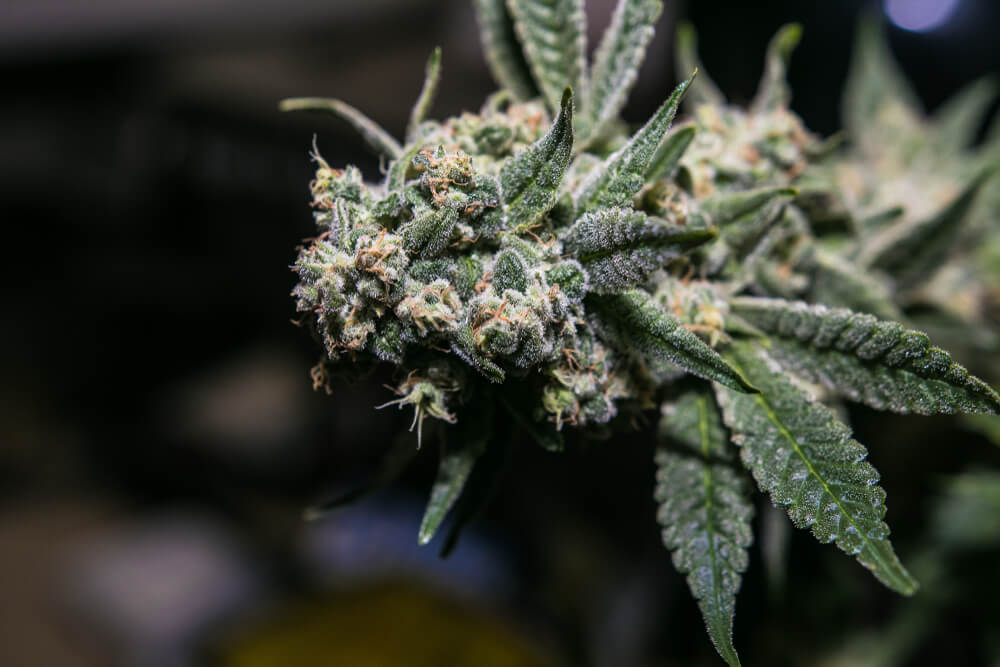
What is the Headband OG Strain?
Headband OG is a feminized photoperiod hybrid with approximately 60% sativa and 40% indica genetics. The Headband OG Feminized line comes from Sour Diesel crossed with OG Kush and can reach up to 24% THC, with CBD below 1%.
Plants normally reach around 100–180 cm and develop useful side branching. This makes Headband OG easier to shape than sativas that concentrate most of their growth into tall vertical stems.
It sits comfortably among sativa cannabis strains, although its OG Kush influence gives the plant a somewhat broader, more compact structure.
Headband OG Strain at a Glance
| Characteristic | Headband OG |
| Genetics | Sour Diesel x OG Kush |
| Type | 60% Sativa / 40% Indica |
| THC | Up to 24% |
| CBD | Less than 1% |
| Terpenes | Caryophyllene, limonene, myrcene |
| Flavor | Diesel, lemon, earth |
| Flowering | 8–10 weeks |
| Height | 100–180 cm |
| Indoor Yield | 400–500 g/m² |
| Difficulty | Easy |
| Outdoor Harvest | Around late September |
These figures relate to this Headband OG line. Other plants carrying the Headband name can have different genetics and growing characteristics.


Headband OG Genetics, Origins and History
The Headband name has been used for several related cultivars, which makes its history less tidy than some strain descriptions suggest.
Sour Diesel x OG Kush Genetics
The best-known Headband OG combination is Sour Diesel x OG Kush.
Sour Diesel is associated with sharp fuel and citrus aromas alongside more sativa-like growth. OG Kush contributes earthy, fuel-heavy characteristics and usually a more compact plant structure.
You can see this balance in Headband OG. Plants have enough lateral growth to respond well to training without normally developing the extreme height you might expect from some sativas. The OG Kush strain guide explains the other side of its parentage in more detail.
Who Created Headband OG?
There is no single origin story that accounts for every cultivar sold as Headband.
Several Headband lines have circulated over the years, including versions based around Sour Diesel and OG Kush genetics as well as related selections such as 818 Headband and 707 Headband. These are not necessarily genetically identical, even when they share similar names.
This distinction matters. Scientific research examining commercial cannabis has found that strain names do not always correspond neatly with cannabinoid, terpene, or genetic profiles. (pmc.ncbi.nlm.nih.gov)
For growers, the sensible approach is to follow information supplied for the specific seed line you are growing instead of assuming every Headband behaves the same way.

Headband OG THC, Terpenes, Aroma and Effects
Headband OG is a high-THC strain with a distinctive mix of diesel, citrus and earthy aromas. Its potency is one of its main characteristics, but THC percentage alone does not tell you exactly how a plant will smell, taste or feel.
How Potent is Headband OG?
Headband OG can reach up to 24% THC, placing it among modern high THC cannabis seeds.
The important part is “up to”. A plant is not guaranteed to reach 24% THC simply because the genetics have that potential. Cannabinoid levels can change with phenotype, growing conditions, plant health, harvest timing and the way the finished flowers are tested.
Scientific research has also found chemical differences between cannabis samples sold under the same cultivar name. This is one reason THC figures are better treated as a range or potential rather than a fixed result. (pmc.ncbi.nlm.nih.gov)
For less experienced consumers, Headband OG can feel strong. High THC content is worth considering, although percentage alone cannot predict how intense the experience will be. Amount consumed, tolerance and individual response also play a part.
What Does Headband OG Smell and Taste Like?
Headband OG has a strong diesel aroma backed by lemon, earth and a light peppery note. The fuel character is usually the most noticeable, while citrus gives the profile a sharper edge.
Three terpenes commonly associated with Headband OG are:
- Caryophyllene: pepper, spice and dry woody notes
- Limonene: lemon and other citrus aromas
- Myrcene: earthy, herbal and slightly musky notes
These compounds help shape the overall aroma of the flowers, but the exact terpene balance can differ from one plant to another. Research into cannabis terpene production has found considerable variation within and between genetic populations. (pmc.ncbi.nlm.nih.gov)
The aroma also becomes much stronger as flowering progresses. Indoors, I would have carbon filtration in place before late flowering rather than waiting until the diesel scent has already spread beyond the grow space.
When consumed, the taste generally follows the aroma. Expect diesel and sour lemon first, followed by earthy and peppery notes on the finish.
What Are the Effects of Headband OG?
Headband OG is commonly described as producing an uplifting start that gradually develops into a more relaxed experience.
Commonly reported effects include:
- Uplifting
- Euphoric
- Relaxed
- Tingly
- Mentally stimulating
The strain gets its name from reports of a pressure or tingling sensation around the forehead that some consumers compare with wearing a headband.
That effect is not something everyone will experience. Cannabis responses vary with THC tolerance, the amount consumed, individual body chemistry and the setting in which it is used.
Headband OG is therefore better described by its commonly reported effects rather than treated as a strain that will produce the same experience every time.

How to Grow Headband OG
Headband OG is relatively easy to manage when you control its shape before flowering. The plant develops useful side branches and normally finishes around 100–180 cm, so the main jobs are leaving enough room for stretch, keeping the canopy open and maintaining good airflow as the flowers develop.
I would approach Headband OG in five stages.
1. Give the Plant Time to Establish
Start by allowing the young plant to develop a healthy root system and several sets of leaves before doing any serious training.
During early vegetative growth:
- Keep the environment stable
- Avoid heavy pruning
- Watch how quickly the main stem and side branches develop
- Leave enough room around each plant for later growth
Headband OG can produce a good amount of lateral branching, so do not crowd plants together at the start.
Indoors, also consider your available height. Plants generally finish around 100–180 cm, and some additional stretch can occur after flowering begins.
2. Shape the Plant During Vegetative Growth
Once the plant is established, start spreading the branches outward.
Headband OG responds well to low-stress training because the side branches can be guided away from the main stem without repeatedly cutting the plant.
I would:
- Identify the tallest branches.
- Bend them gently away from the centre.
- Secure them in position.
- Allow the lower branches to catch up.
- Adjust the ties as new growth develops.
The aim is to create a wide, level canopy with several strong flowering sites instead of one tall central stem.
Healthy plants can also be topped during vegetative growth. If you use topping, give the plant enough time to recover before switching to flowering.
For a larger indoor canopy, SCROG training is another useful option. Spread the branches across the screen as they grow rather than allowing them to rise through one section.
3. Prepare the Canopy Before Flowering
Before changing the light cycle, check the entire plant.
Look for branches that are:
- Crowded together
- Growing directly into each other
- Heavily shaded
- Weak or unlikely to reach useful light
Remove only what is necessary. The goal is an open canopy, not a bare plant.
I would also make sure there is enough unused vertical space above the canopy before flowering begins. Headband OG is manageable, but allowing it to completely fill the grow space during vegetative growth leaves little room for the flowering stretch.
This is also the time to make sure your ventilation and odour control are ready. Headband OG becomes considerably more pungent later in bloom.
4. Control Stretch and Airflow During Early Flowering
During the first part of flowering, continue guiding taller branches into open spaces while the stems are still flexible.
Keep the canopy as even as possible so the upper flowering sites receive similar light exposure.
At the same time, pay attention to airflow. Headband OG prefers warm conditions but should not be left in still, humid air.
Indoors, I would maintain:
- Steady air exchange
- Gentle circulation through and above the canopy
- Enough space between dense branches
- Controlled humidity
Outdoors, choose a position with good sunlight and natural airflow. A relatively dry finish to the season is useful because the flowers become denser as harvest approaches.
5. Let the Flowers Finish Before Harvesting
Headband OG normally needs around 8–10 weeks of flowering.
Do not harvest simply because the calendar reaches week eight. Different plants can mature at slightly different speeds.
As harvest approaches:
- Check flower development across the whole plant.
- Inspect trichome maturity rather than relying only on the stated flowering time.
- Watch for differences between individual phenotypes.
- Keep airflow moving around the flowers.
- Reduce unnecessary handling of mature flowers.
Outdoor plants are generally ready around late September, although local weather and phenotype can move that date.
Indoor yield potential is around 400–500 g/m² under suitable conditions, but this should be treated as a guide rather than an expected result. Light, root space, plant size, environment and training all influence the final harvest.
Headband OG can also vary slightly from plant to plant. One may stretch more, another may finish sooner, while another may produce a stronger diesel aroma. I would treat each plant according to its development rather than forcing the entire crop onto exactly the same schedule.


| THC % | Up to 24% |
|---|---|
| Flowering Time | 8-10 Weeks |
| Outdoor harvest | End Of September |
| Yield | 400-500gr/m² |
| Indica/Sativa | Sativa Dominant |
| Height | Medium: 100cm-180cm |
| Difficulty | Easy |
| CBD Content | <1% |
| Climate | Arid, Warm |
| Seed Type | Feminized |
| Genetics | Sour Diesel x OG Kush |
| Effects | Uplifting |
| Taste | Diesel, Lemon, Pungent |
| Terpene | Caryophyllene, Limonene, Myrcene |
Is Headband OG Worth Growing?
Headband OG makes sense if you want Sour Diesel and OG Kush genetics in a plant that remains reasonably manageable indoors.
Its strengths are its 8–10 week flowering period, useful side branching, and distinctive diesel-lemon profile. Its weaker points are the strong odor, high THC potential for inexperienced consumers, and the variation that can occur between different Headband lines.
For growers willing to train early and manage airflow properly, those drawbacks are fairly easy to plan around.
Frequently Asked Questions About Headband OG
Is Headband OG indica or sativa?
Headband OG is a sativa-dominant hybrid. This line is approximately 60% sativa and 40% indica, although individual plants can show traits associated with both sides of the cross.
How tall does Headband OG grow?
Plants usually reach around 100–180 cm. Vegetative time, container size, training, and environment all influence final height.
How long does Headband OG take to flower?
Headband OG normally flowers for around 8–10 weeks. Check actual flower maturity rather than harvesting by the calendar alone.
Is Headband OG easy to grow?
Yes. Headband OG is considered relatively easy to grow, although early training, good airflow, humidity control, and odor management make the flowering stage easier to handle.
How much does Headband OG yield?
Indoor yield potential is around 400–500 g/m² under suitable conditions. Actual production depends on lighting, plant size, root space, environment, nutrition, and grower technique.
Conclusion
Headband OG combines Sour Diesel's sharp fuel and citrus character with the heavier structure and earthy qualities associated with OG Kush. It normally grows to around 100–180 cm, flowers in 8–10 weeks, and responds well to basic canopy training.
There are a few trade-offs. The aroma becomes strong during flowering, THC levels may be high for less experienced consumers, and individual Headband plants can differ in structure and finishing time. Give the plants enough room, shape the branches before flowering, and keep air moving through the canopy. For growers who enjoy fuel-heavy cannabis genetics, Headband OG offers an appealing balance between classic flavor and manageable growth.
References
- Reimann-Philipp U, Speck M, Orser C, et al. Cannabis Chemovar Nomenclature Misrepresents Chemical and Genetic Diversity; Survey of Variations in Chemical Profiles and Genetic Markers in Nevada Medical Cannabis Samples. Cannabis and Cannabinoid Research. 2020;5(3):215–230. doi:10.1089/can.2018.0063.
https://pubmed.ncbi.nlm.nih.gov/32923659/ PubMed - Monti MC, Frei P, Weber S, Scheurer E, Mercer-Chalmers-Bender K. Beyond Δ9-tetrahydrocannabinol and cannabidiol: chemical differentiation of cannabis varieties applying targeted and untargeted analysis. Analytical and Bioanalytical Chemistry. 2022;414(13):3847–3862. doi:10.1007/s00216-022-04026-2.
https://pubmed.ncbi.nlm.nih.gov/35380230/ PubMed - Booth JK, Yuen MMS, Jancsik S, Madilao LL, Page JE, Bohlmann J. Terpene Synthases and Terpene Variation in Cannabis sativa. Plant Physiology. 2020. doi:10.1104/pp.20.00593.
https://pmc.ncbi.nlm.nih.gov/articles/PMC7479917/


