




Can you clone autoflowers? Yes, you can take cuttings from autoflowering cannabis plants and encourage them to develop roots. However, cloning autoflowers is rarely as productive as growing new plants from seed. Autoflower clones retain much of their parent plant's developmental maturity, leaving limited time to establish roots and produce new growth before flowering.
Although some autoflower cuttings survive and produce buds, their final size and yield are often restricted. The age of the parent plant, the condition of the cutting and the strain's natural flowering time all influence the outcome.
In this guide, I'll explain why cloning autoflower plants is difficult, how to attempt it, what results you can expect and which alternatives offer greater reliability.
Key Takeaways
- Autoflowers can be cloned: Healthy cuttings may develop roots and produce flowers, although successful propagation is not guaranteed.
- Clones have limited growing time: An autoflower cutting retains its developmental progress rather than starting a new life cycle.
- Plant age affects cloning success: Cuttings taken during early growth generally have more time to establish themselves before flowering.
- Taking cuttings can affect the parent plant: Removing healthy shoots reduces available foliage and potential bud sites, which may affect growth and yield.
- Growing from seed is usually more practical: Starting fresh autoflower seeds provides a complete development period and offers greater potential for consistent harvests.
- Can You Clone Autoflowering Plants?
- Why is Cloning Autoflowers So Difficult?
- What Happens When You Clone an Autoflower?
- How to Clone an Autoflower Plant: An Experimental Approach
- Autoflower Clones vs Seed-Grown Autoflowers
- Can You Keep an Autoflower Mother Plant or Re-Veg an Auto?
- Better Alternatives to Cloning Autoflowers
- Conclusion
- Frequently Asked Questions
- References
Can You Clone Autoflowering Plants?
Yes, you can clone autoflowering cannabis plants by taking a healthy cutting and encouraging it to develop roots. This process, known as vegetative propagation, produces a plant with the same genetic makeup as its parent. However, successfully rooting an autoflower clone does not guarantee a productive plant.
Unlike an autoflower grown from seed, a cutting does not begin a new growth cycle. It retains much of the parent plant's developmental maturity, meaning it may begin flowering before developing enough roots, leaves and branches to support substantial growth.
As a result, autoflower clones can survive and produce flowers, but they typically remain smaller and have lower yield potential than healthy seed-grown plants. The outcome depends on the parent plant's age, the cutting's condition and how quickly it establishes roots.
Grower tip: When assessing an autoflower clone, look for healthy root development and fresh leaf growth rather than survival alone. A cutting that remains green has not necessarily established the root system needed to support further development.

Why is Cloning Autoflowers So Difficult?
Cloning autoflowers presents three main challenges: genetically controlled flowering, the demands of root formation and differences in plant maturity. Together, these factors make successful propagation less predictable.
Autoflowers Flower Independently of Light Changes
Autoflowering cannabis plants begin flowering according to their genetics and developmental maturity, without requiring shorter daylight hours. Many strains show early flowering signs within three to five weeks of germination, although timing varies.
A 2022 study published in Frontiers in Plant Science identified the Autoflower1 locus associated with automatic flowering and Early1, which influences flowering time.
Because flowering is genetically controlled, changing the light schedule for autoflowers cannot reliably keep a cutting in vegetative growth.
Root Development Uses Valuable Growing Time
A newly removed cutting has no independent root system to replace moisture lost through its leaves. Until new roots develop, water uptake is restricted, and leaf expansion may slow.
The cutting must also direct resources towards root formation rather than producing additional stems and foliage. If reproductive development advances during this period, the plant may struggle to establish sufficient growth to support flower production.
Genetics and Plant Age Affect the Outcome
Autoflower cultivars differ in when flowering begins and how long the autoflower flowering stage lasts. Early-flowering varieties generally provide less time to take cuttings before reproductive growth advances.
Plant maturity creates another challenge. Very young autoflowers may lack suitable side shoots, while older plants may already show pre-flowers, indicating sexual maturity.
Grower tip: I recommend checking the strain's expected flowering time and the parent plant's stage of development before considering a cutting. Count plant age from germination rather than the day you take the clone. This provides a more useful indication of its remaining growth potential.

What Happens When You Clone an Autoflower?
The results of cloning an autoflower vary between plants. Some cuttings fail to survive, while others establish themselves and develop flowers. Observing each stage helps you assess whether the clone is progressing normally or showing signs of poor development.
From Cutting to Flowering: What to Expect
The table below outlines the visible changes you may notice as an autoflower clone develops.
| Growth Stage | What to Expect |
| Cutting taken | Leaves may temporarily droop following separation from the parent plant. |
| Root establishment | New roots may become visible, while the upper growth remains relatively unchanged. |
| New growth | Fresh leaves and shoots indicate that the cutting is continuing to develop. |
| Flowering | Pistils appear at flowering sites, followed by developing buds. |
| Maturity | Flowers may reach maturity even when the plant remains relatively small. |
These stages provide a general guide rather than a fixed timeline. Monitor the clone's condition throughout development to identify signs of healthy growth or decline.
What Happens to the Original Autoflower Plant?
Taking cuttings changes the parent plant's structure by removing leaves, nodes and potential flowering sites.
Removing the main growing tip may encourage lower branches to develop, while taking several side shoots reduces the number of remaining bud sites.
Healthy autoflowers may recover from minor pruning, but removing excessive foliage can restrict development and affect final yields.
Grower tip: I recommend keeping healthy branches intact if your main goal is a productive harvest. If you want to experiment with cloning, take only a small amount of growth from a healthy plant and monitor how the parent responds before making further cuts.

How to Clone an Autoflower Plant: An Experimental Approach
Cloning an autoflower involves taking a healthy shoot from a parent plant and encouraging it to develop its own roots. Although the process is possible, results vary, and a rooted cutting may produce very little flower.
The following guide explains the main stages, what each involves and how to assess the outcome.
When Should You Take an Autoflower Cutting?
Early vegetative growth is generally the most suitable stage to consider cloning autoflowering plants. The parent should have several established nodes, healthy side branches and no visible signs of pests, disease or nutrient problems.
Avoid taking cuttings from plants that have already developed substantial flower clusters. At this stage, the remaining opportunity for new growth is particularly limited.
There is no guaranteed age for successful cloning, so assess the parent plant's condition and development rather than relying on a fixed number of days after germination.
How to Take and Root an Autoflower Cutting
The process involves six main stages, from preparing the cutting to assessing root development.
Step 1: Prepare Your Equipment and Rooting Medium
Before handling the plant, gather clean cutting equipment, a suitable rooting medium, a propagation tray and any rooting product you intend to use.
The rooting medium should retain enough moisture to support root development without becoming saturated. Clean equipment helps reduce the transfer of pathogens between plants.
Step 2: Select a Healthy Side Shoot
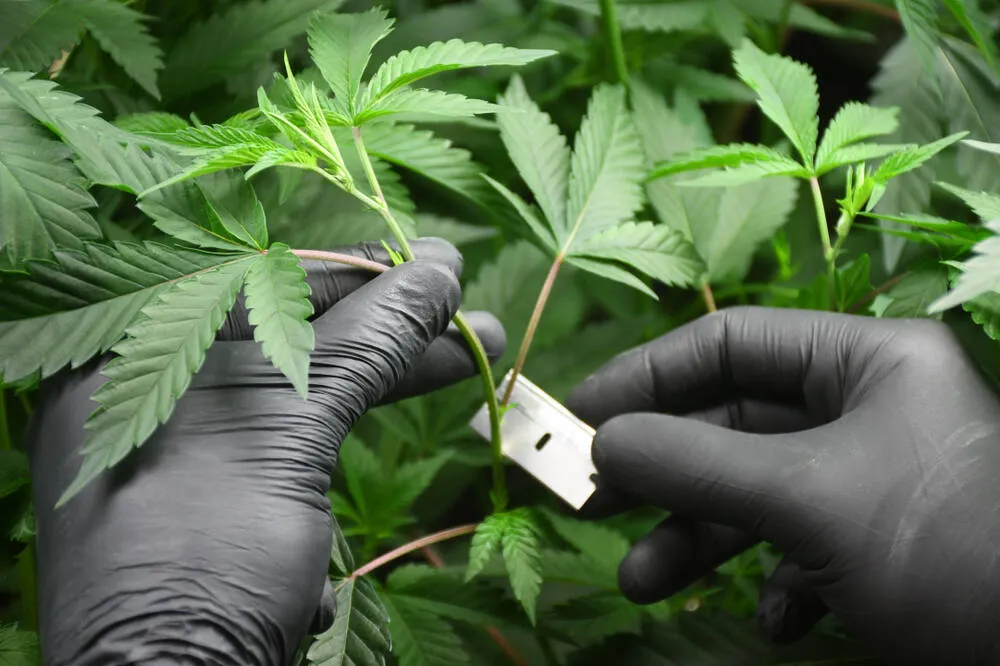
Look for a young, healthy branch with firm stem tissue, established nodes and undamaged leaves.
Avoid weak, diseased or heavily flowering shoots. Removing several branches from a small autoflower may also affect the parent plant's development.
Step 3: Take the Cutting
A cutting is a section of stem containing leaves and nodes that is separated from the parent plant.
The condition of the stem matters because new roots must develop from its living tissues. Excessive tissue damage or prolonged exposure to dry air can reduce the cutting's chance of survival.
Step 4: Place the Cutting in the Rooting Medium
The base of the cutting needs contact with a suitable rooting medium, while its leaves remain exposed to light.
At this stage, the cutting has no independent root system and is particularly sensitive to moisture loss.
Step 5: Maintain a Suitable Rooting Environment
A stable environment helps protect the cutting while roots develop.
| Factor | What to Consider |
| Temperature | Avoid excessive heat and sudden changes |
| Humidity | Limit moisture loss without encouraging persistent condensation |
| Lighting | Avoid intense light that increases moisture demand |
| Rooting medium | Keep moisture levels suitable without waterlogging |
| Airflow | Prevent stagnant, excessively damp conditions |
Step 6: Check for Root Establishment
New roots may develop within approximately 7–14 days, although some cuttings take longer or fail to root.
Look for roots becoming visible near the base of the growing medium and the appearance of fresh leaves.
Avoid repeatedly disturbing the cutting to inspect its roots, as delicate new growth can be damaged.
How to Assess the Results
Assess the clone's roots, leaf condition and new growth rather than survival alone. If development stops unexpectedly, check for the signs of a stunted autoflower to help identify potential problems.
| What to Check | Healthy Signs | Potential Problems |
| Leaves | Firm leaves and fresh growth | Persistent wilting or yellowing |
| Stem | Firm tissue without decay | Soft or collapsing tissue |
| Roots | Healthy new root development | Brown, slimy or decaying roots |
| New growth | Expanding leaves and shoots | Growth remains restricted |
| Flowering | Healthy developing flowers | Very limited growth before flowering |
Keep in mind that root establishment does not guarantee a productive harvest. An autoflower cutting may survive and flower without developing substantial branches or bud sites.
Grower tip: I recommend keeping a simple cloning record that includes the parent's age, the cutting date, when roots first appear and when flowering begins. This helps you distinguish successful rooting from meaningful plant development and assess whether the experiment was worthwhile.

Autoflower Clones vs Seed-Grown Autoflowers
Autoflower clones and seed-grown autoflowers differ in how they establish roots, develop and reach maturity. Understanding these differences helps you choose the most suitable method for your grow.
| Characteristic | Autoflower Clone | Seed-Grown Autoflower |
| Starting point | Cutting from an existing plant | Newly germinated seed |
| Root development | Must establish new roots | Develops roots from germination |
| Genetics | Genetic copy of the parent | Unique genetic combination |
| Growing period | Inherits the parent's developmental progress | Begins a complete life cycle |
| Yield potential | Often limited by reduced growing time | Greater opportunity for full development |
| Reliability | Mainly suitable for experiments | More practical for regular harvests |
For most growers, starting autoflowers from seed offers more predictable development. Cloning remains an option for experimenting with propagation, but the results are less consistent.
Can You Keep an Autoflower Mother Plant or Re-Veg an Auto?
Can You Keep an Autoflower Mother Plant?
A mother plant is maintained to provide cuttings for future crops. However, autoflowers are unsuitable for long-term mother plant maintenance because they naturally progress towards flowering.
Even under extended daylight hours, an autoflower cannot reliably remain in vegetative growth indefinitely. This limits its ability to provide a continuous supply of healthy cuttings.
Can You Re-Veg an Autoflower After Harvest?
Revegetation, or re-vegging, involves encouraging a flowering plant to develop new leaves and shoots after harvest.
Autoflowers generally cannot be relied upon to re-veg successfully. Leaving some foliage and lower buds intact may occasionally produce new growth, but this rarely develops into another productive growing cycle.
Grower tip: I recommend treating each autoflower harvest as the end of that plant's natural life cycle. If you want to grow the same strain again, keep a record of its genetics and obtain fresh seeds rather than relying on post-harvest regrowth.

Better Alternatives to Cloning Autoflowers
Starting autoflowers from seed is generally more reliable than cloning, particularly if your goal is consistent growth and regular harvests.
Start New Autoflower Plants From Seed
Growing autoflower seeds gives each plant its full natural development period. For beginners, following a reliable autoflower seed germination guide is a useful starting point for establishing healthy seedlings.
For beginners, I recommend following a week-by-week autoflower growing guide to understand each growth stage.
Choose Autoflower Seeds for Repeatable Harvests
Starting new seeds at planned intervals allows you to maintain successive crops without relying on clones.
Choose varieties with similar expected flowering times to simplify planning, but allow for differences in maturity between individual plants.
Focus on Consistency Rather Than Identical Plants
Seeds from the same strain may produce differences in height, branching, aroma and flowering time.
To improve consistency, select suitable genetics and record your growing conditions and harvest results. For further advice on improving plant performance, see our guide to increasing autoflower yields.
Grower tip: I recommend recording each plant's flowering and harvest dates rather than relying entirely on breeder estimates. This helps you plan future crops more accurately.
Conclusion
Cloning autoflowers is possible, but it rarely offers the same benefits as growing fresh plants from seed. Although cuttings can develop roots and produce flowers, their limited growth period often restricts plant size and yield potential.
For growers interested in experimenting with propagation, autoflower cloning can provide insight into plant development. However, if your priority is healthy growth and predictable harvests, I recommend starting with quality autoflower seeds.
The key is understanding the limitations before attempting to clone an autoflower, so you can choose the approach that best suits your growing goals.
Frequently Asked Questions
Can You Clone a Female Autoflower?
Yes, you can take cuttings from a female autoflowering plant. The clone retains the parent's genetic characteristics, including its sex. However, producing roots does not guarantee substantial growth or a worthwhile harvest.
Can Autoflower Cuttings Develop Roots in Water?
Yes, autoflower cuttings may develop roots in water, although results vary. Poor water quality and inadequate oxygen can increase the risk of stem decay. Even when roots develop successfully, the cutting may have limited time remaining before maturity.
Can Autoflower Clones Grow Outdoors?
Yes, rooted autoflower clones can grow outdoors when conditions are suitable. However, sudden changes in temperature, sunlight and humidity may place additional stress on young cuttings. A sheltered environment can help them adjust before exposure to stronger outdoor conditions.
Can You Buy Autoflower Clones Near Me?
Autoflower clones are less commonly available than seeds because their short development period limits their commercial appeal. If you find autoflower clones for sale, ask about their age, health and flowering stage. Check local laws before purchasing cannabis plants.
Can Autoflower Clones Be Used for Breeding?
Yes, autoflower clones may have a role in experimental breeding, particularly when examining selected genetic traits. However, most breeding projects focus on selecting suitable parent plants and understanding how autoflowering plants produce seeds through pollination.
References
- Dowling, C. A., et al. (2024). The Plant Journal, 119(1), 383–403. Research identifying a FLOWERING LOCUS T-related gene associated with autoflowering in hemp. https://doi.org/10.1111/tpj.16769
- Toth, J. A., et al. (2022). Frontiers in Plant Science, 13, 991680. Research identifying genetic loci associated with autoflowering and variation in flowering time in cannabis. https://doi.org/10.3389/fpls.2022.991680
- Transmission, Spread, Longevity and Management of Hop Latent Viroid (2025). Plants, 14(5), 830. Research examining how plant pathogens can spread through cannabis propagation, including rooted cuttings. https://doi.org/10.3390/plants14050830

