




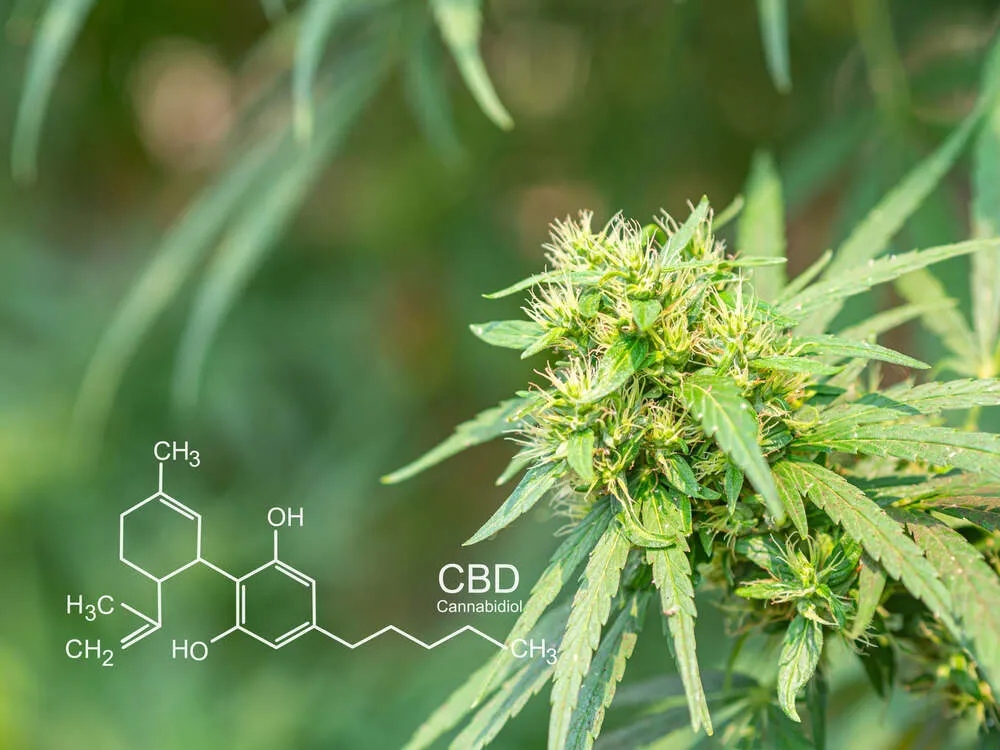
CBD hemp flower comes from cannabis plants selected for high cannabidiol (CBD) and low THC concentrations. Also known as CBD herb or hemp with CBD, these flowers look similar to THC-dominant cannabis but have a different cannabinoid profile. Genetics, growing conditions and harvest maturity all influence the final CBD content.
Understanding the difference between CBD hemp and THC-rich cannabis is important for new growers, particularly when comparing strains and checking legal requirements. This guide explains what CBD hemp flower contains, how it develops, what makes a quality flower and what scientific research tells us about CBD.
Key Takeaways
- CBD hemp flower comes from cannabis plants selected for CBD-rich, low-THC cannabinoid profiles.
- CBD vs THC: CBD does not produce the characteristic THC high, although hemp flower may still contain THC.
- Cannabinoid development: Genetics and flower maturity influence CBD, CBDA and THC concentrations.
- Flower quality: Laboratory testing provides more reliable information about cannabinoid content than appearance or aroma.
- Legal requirements: CBD-rich cannabis is not automatically legal hemp. Classification depends on THC levels and local regulations.
- What is CBD Hemp Flower?
- Where Does CBD Hemp Flower Come From?
- What Does CBD Hemp Flower Contain?
- How Does CBD Change During Flowering?
- CBD Hemp Flower vs THC Cannabis
- Does CBD Hemp Flower Get You High?
- What Does Research Say About CBD Safety?
- CBD Flower vs CBD Oil
- How is CBD Flower Used?
- How Can You Identify Quality CBD Hemp Flower?
- Is CBD Hemp Flower Legal?
- CBD-Rich Cannabis Strains Worth Exploring
- Conclusion
- Frequently Asked Questions
- References
What is CBD Hemp Flower?
CBD hemp flower is the flowering material from Cannabis sativa L. that contains CBD and meets the applicable legal hemp limits. Hemp and THC-dominant cannabis are the same species, with similar plant structures.
The key difference is their cannabinoid profiles. Some varieties are selected for substantial CBD production, while others are selected for THC. Hemp grown for seed or industrial stalk production may contain relatively little CBD, so not all hemp is CBD-rich.
Equally, a plant containing more CBD than THC is not automatically legal hemp. Hemp status depends on the rules and testing requirements in the place concerned.
Where Does CBD Hemp Flower Come From?
Female cannabis flowers develop small glandular structures called trichomes. These are the main sites where cannabinoids and many terpenes are produced. Breeders select parent plants with useful chemical characteristics, then assess offspring to develop more consistent varieties.
A study by Allen et al. (2026) in Plant Direct examined the genetic region governing cannabis cannabinoid profiles. It describes closely linked genes involved in the production of CBDA and THCA, helping explain why varieties develop different CBD-to-THC ratios. The findings do not guarantee identical results from every seed.
Grower Tip: Check breeder information and any available batch test results before selecting CBD-rich seeds. Treat advertised percentages as potential values, not a guarantee of the composition or legal status of your harvest.
What Does CBD Hemp Flower Contain?
Cannabis flowers contain cannabinoids, terpenes and other plant compounds. In living plants, many cannabinoids occur predominantly in their acidic forms. For example, CBDA can convert into CBD when heated, while THCA can convert into intoxicating THC.
| Compound | Role in the flower |
| CBD | Non-intoxicating cannabinoid associated with CBD-rich varieties |
| CBDA | Acidic precursor of CBD |
| THC | Principal intoxicating cannabinoid in cannabis |
| THCA | Acidic precursor that can convert into THC |
| CBG and CBGA | Additional cannabinoids involved in the plant's chemical profile |
A laboratory report may list measured CBD and CBDA separately, alongside total CBD potential. THC and THCA may also appear as separate results. Check the actual figures and testing method rather than relying on a headline percentage.
Terpenes and Aroma
Terpenes help give CBD herb its scent. Myrcene can contribute earthy notes, limonene citrus notes, pinene pine-like notes and caryophyllene peppery notes. Similar CBD levels do not guarantee similar aromas.
Aroma can tell you something about a flower's terpene profile, but it cannot establish CBD concentration, confirm legal compliance or predict a medical outcome.
How Does CBD Change During Flowering?
Cannabinoid concentrations change as flowers develop. Yang et al. (2020) monitored five industrial hemp varieties and found that total CBD, THC and CBG generally increased during flowering, often peaking around six to seven weeks after flowering began before declining later. The timing varied between varieties, and some samples exceeded the study's THC threshold.
The practical lesson is that CBD development does not happen independently of THC. A flower can gain CBD while also moving beyond the applicable THC limit. Bud appearance cannot establish the chemical result.
Grower Tip: Where growing is permitted, follow local sampling requirements and use suitable laboratory testing during flower development. Record test dates so you can compare results with the crop's stage of maturity.

CBD Hemp Flower vs THC Cannabis
Both can produce aromatic, resin-covered buds; chemical testing establishes the difference.
| Feature | CBD hemp flower | THC-dominant cannabis |
| Typical breeding objective | CBD-rich, restricted THC | Higher THC concentration |
| Intoxicating potential | Usually lower, but not always absent | Usually greater |
| Plant appearance | Cannabis flowers and trichomes | Cannabis flowers and trichomes |
| Legal classification | Subject to hemp testing rules | Subject to applicable cannabis laws |
For example, a variety advertised as 15% CBD and 5% THC may be CBD-rich but would not meet ordinary hemp limits. Keep that distinction in mind when comparing high-CBD cannabis seeds.
Does CBD Hemp Flower Get You High?
CBD does not produce the characteristic intoxication associated with THC. However, dried CBD flower may contain THC and THCA, so describing every CBD product as incapable of causing impairment would be inaccurate. Exposure depends on the product's composition and how it is used.
CBD also interacts with biological pathways associated with the endocannabinoid system. This system includes cannabinoid receptors, natural chemical messengers and enzymes. THC produces many of its characteristic effects through CB1 receptors. CBD acts differently, with relatively low direct affinity for the main cannabinoid receptors and more complex interactions elsewhere.
These mechanisms do not demonstrate that CBD hemp flower treats anxiety, pain, sleep problems or other conditions.
What Does Research Say About CBD Safety?
Research on pharmaceutical CBD cannot be treated as proof that commercial hemp flower has the same effects or safety profile. Approved prescription cannabidiol is used for certain seizure disorders, but ordinary CBD buds have not been established as equivalent medicines.
Chesney et al. (2020) reviewed clinical trials involving CBD and reported increased risks of digestive upset, reduced appetite and sleepiness. Some findings were associated with particular epilepsy treatments and possible medication interactions. The authors cautioned that further evidence was needed for CBD products used outside those clinical settings.
Additional considerations include unexpected THC or contaminants in commercial products and respiratory risks from smoking or vaping. Anyone taking medication or considering CBD for a health condition should seek advice from a qualified healthcare professional.
CBD Flower vs CBD Oil
CBD flower is dried plant material. CBD oil is a manufactured preparation containing extracted CBD, often combined with a carrier oil. Extraction initially produces a mixture; making purified CBD isolate requires additional processing.
| Feature | CBD flower | CBD oil |
| Form | Dried buds | Liquid preparation |
| Cannabinoid profile | Naturally occurring plant compounds | Depends on extraction and formulation |
| Terpenes | Present in varying amounts | May be retained, reduced or added |
| Quality evidence | Flower and contaminant reports | Ingredient and finished-product testing |
Hemp seed oil is different from CBD oil. Oil pressed from hemp seeds ordinarily contains little or no CBD unless cannabinoid extract has been added.

How is CBD Flower Used?
Where permitted, hemp flowers may be processed into extracts or supplied as dried plant material. CBD extracted from hemp is also used in various formulated products, subject to local product rules.
Absorption and safety depend on the method of exposure. Smoking involves combustion products, and vaping is not risk-free. Avoid assuming that onset times, strength or duration will be the same across products or people. Claims that topical CBD products reliably relieve pain or inflammation also require suitable clinical evidence.
How Can You Identify Quality CBD Hemp Flower?
I would assess the condition of the flowers alongside the paperwork. Healthy-looking buds should show no obvious fungal growth, pests or excess moisture. None of those visual checks, however, can reveal THC concentration or hidden contaminants.
| What to check | Why it matters |
| Genetics | Indicates the intended cannabinoid profile |
| Certificate of analysis | Reports CBD, CBDA, THC and THCA concentrations |
| Batch details | Connects test results to the actual flower |
| Contaminant screening | Checks for relevant pesticides, metals and microbes |
| Storage conditions | Helps limit moisture damage and deterioration |
Look for a certificate of analysis from a suitable laboratory with a sample identifier, test date and clear measurements. A report from another batch may not describe the flower in front of you.
Grower Tip: Keep a record of genetics, flowering dates and laboratory results. Compare CBD with total THC potential, rather than selecting plants on CBD percentage alone.

Is CBD Hemp Flower Legal?
CBD content does not settle a flower's legal status. Cultivation, possession, processing and sale may be governed by different rules.
United States: Federal law currently defines hemp using a delta-9 THC limit of 0.3% by dry weight, although regulated hemp cultivation uses testing that accounts for THCA conversion. State and product rules may be stricter. Changes scheduled for 12 November 2026 exclude certain non-naturally produced cannabinoids, while further hemp-definition changes, including total-THC provisions, are scheduled for 11 December 2026. See the Congressional Research Service review.
United Kingdom: Low-THC industrial hemp licences do not permit unrestricted use of flowers and leaves, which remain controlled material. The agricultural THC threshold does not make CBD buds generally lawful. See Home Office guidance.
European Union: Agricultural hemp rules do not create a single retail rule for CBD flowers. Individual countries regulate these products differently.
Always check the rules for your location before cultivating or purchasing CBD flower.
CBD-Rich Cannabis Strains Worth Exploring
CBD-focused breeding has produced varieties with different cannabinoid balances, growing patterns and aromas. The following examples are CBD-rich cannabis varieties, not guaranteed legal hemp:
- ACDC Feminized: A CBD-dominant variety associated with Cannatonic genetics, selected for CBD-focused flower production.
- Harle-Tsu Feminized: A CBD-focused variety illustrating selective breeding for a different cannabinoid balance from conventional THC-rich cannabis.
- CBD Queen Feminized: Advertised with substantial CBD and meaningful THC potential, demonstrating a more mixed profile.
- Mandarin CBD Feminized: A CBD-rich variety associated with citrus aromas and potentially significant THC content.
- Ringo's Gift Autoflower: An autoflowering CBD-dominant option with a different flowering pattern from the other examples.
Compare the current product details and laboratory evidence before drawing conclusions about cannabinoid levels. For additional variety comparisons, see the high-CBD cannabis strains guide.
Conclusion
CBD hemp flower is cannabis selected for a CBD-rich, low-THC profile. Genetics and flower maturity influence cannabinoid levels, while laboratory testing provides the most reliable information about composition. For new growers, understanding these differences is essential when comparing varieties and checking legal requirements.
Frequently Asked Questions
Can CBD Hemp Flower Contain Seeds?
Yes. Female hemp flowers can develop seeds when pollinated. Seed production does not determine CBD strength.
Can CBD Flower Become THC-Dominant Cannabis?
No. A plant's genetics determine its general cannabinoid profile. THC levels can change during flowering, but this does not change the plant's inherited genetics.
Why Do CBD Percentages Vary Between Laboratory Reports?
Differences can result from genetics, harvest maturity, sampling methods and whether results show measured CBD or calculated total CBD.
Can CBD Hemp Flower Cause a Positive Drug Test?
Yes. CBD flower may contain THC, which can result in a positive drug test, particularly with repeated exposure.
How Should CBD Hemp Flower Be Stored?
Keep dried flowers in a sealed container away from heat, direct light and excess moisture. Proper storage helps preserve quality and reduces deterioration.
References
- Allen, K., Torres, A., & Gaudino, R. (2026). The Structure of the Chemotype Determining Locus in Cannabis sativa. Plant Direct, 10(5), e70166. https://doi.org/10.1002/pld3.70166
- Yang, R., et al. (2020). Development of Cannabinoids in Flowers of Industrial Hemp (Cannabis sativa L.): A Pilot Study. Journal of Agricultural and Food Chemistry, 68(22), 6058–6064. https://doi.org/10.1021/acs.jafc.0c01211
- Chesney, E., et al. (2020). Adverse Effects of Cannabidiol: A Systematic Review and Meta-analysis of Randomized Clinical Trials. Neuropsychopharmacology, 45, 1799–1806. https://doi.org/10.1038/s41386-020-0667-2

