




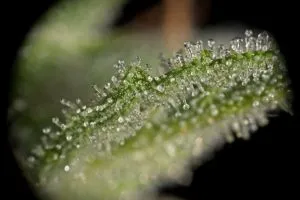
There is nothing better than growing frosty, sticky and resinous plants. If you are a smoker, hash maker or extract artist, then the more trichomes your plants produce, the better! If you are new to growing cannabis, you may not be fully aware of what trichomes are, what they do and why they are so important.
In this article, I will explain everything you need to know about cannabis trichomes: the different types, their development stages, their role in determining potency, flavor, and yield, and how to use trichomes as a guide to decide when to harvest.
- What Are Cannabis Trichomes? Understanding the Plant’s Resin Glands
- The Different Types of Trichomes on Cannabis Plants
- Trichome Development Stages and What They Mean for Growers
- How Trichomes Impact Potency, Aroma, and Final Yield
- How Growers Can Protect and Enhance Trichome Production
- Using Trichomes to Know When to Harvest Cannabis
What Are Cannabis Trichomes? Understanding the Plant’s Resin Glands
Trichomes are those tiny silver resin glands that a cannabis plant produces during flowering. Without trichomes, cannabis buds would have no aroma, cannabinoids or flavonoids. Below is a breakdown of what they are, where they form, how they produce their essential oils and the key differences between glandular and non-glandular.
What trichomes are and where they form on cannabis plants
Trichomes have many roles when it comes to determining how a cannabis plant smells, how the buds taste and the associated effect when consuming. Trichomes are miniature crystal glands that are produced on the buds and leaves of flowering cannabis plants. They are shaped like mushrooms, with a neck and head. Inside the trichomes are the essential oils that give buds their sticky characteristic.
How trichomes produce cannabinoids, terpenes and flavonoids
Inside the trichome head is a resinous sap rich in cannabinoids, terpenes, and flavonoids. These three elements work in harmony to create the flavor, aroma, and experience a smoker will have.
Cannabinoids are responsible for the physical and psychoactive effects that cannabis is known for. Every strain will have a different cannabinoid ratio depending on its lineage and genetic makeup. There are over 100 cannabinoids found within cannabis, and the most common are THC (tetrahydrocannabinol) and CBD (cannabidiol). Below is a list of other cannabinoids that have been discovered.
- Tetrahydrocannabinolic Acid (THCA)
- Cannabidiolic Acid (CBDA)
- Cannabinol (CBN)
- Cannabigerol (CBG)
- Cannabichromene (CBC)
- Tetrahydrocannabivarin (THCV)
- Cannabidivarin (CBDV)
- Cannabigerolic Acid (CBGa)
Terpenes are found in fruits and vegetables and are what give them their distinct aroma and taste. There are over 200 different known terpenes within cannabis, which is why every plant is unique and will range from fruity, floral, spicy, earthy and gassy.
- Myrcene (earthy/musky)
- Limonene (citrus)
- Pinene (pine)
- Linalool (floral/lavender)
- Caryophyllene (spicy/peppery)
- Humulene (earthy/hoppy)
- Terpinolene (floral/herbal)
Flavonoids are responsible for the buds' color, as well as their flavor and aroma. They interact with terpenes and cannabinoids and are an essential part of the entourage effect.
Key differences between glandular and non-glandular trichomes
There are two classes of trichomes produced by cannabis plants: glandular and non-glandular. You would need to use a magnification tool to see them up close, as they are almost impossible to see with the naked eye.
Glandular trichomes
- These are the trichomes that contain the round head at the top
- Contain the cannabinoids, terpenes and flavonoids
- They help protect the plants from pests and insects
- Responsible for protection against UV light rays
- Help plants with heat stress and drought conditions
Non-glandular trichomes
- These are plant hairs that help protect the plant from animals and insects
- They contain phenolic compounds, which act as optical filters for UV light
- They do not contain any of the cannabinoids or terpenes
- They are found on the stem, leaves and buds during the flowering period
The Different Types of Trichomes on Cannabis Plants
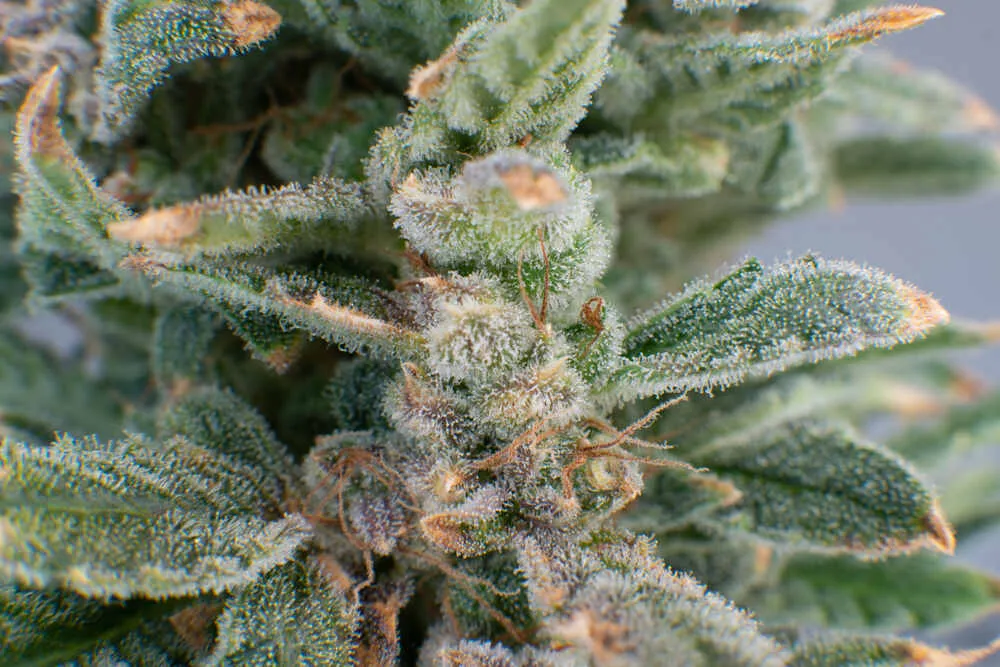
From a distance, a mature flowering cannabis plant will have a frosty, silver crystalline appearance. However, you may not be aware that cannabis plants contain three different types of trichomes, with each responsible for various roles.
Bulbous trichomes – structure, size and role
Of the three trichome types, bulbous trichomes are the smallest and require magnification to be seen. Their size ranges from 10 to 30 micrometers, and they appear on the stems, leaves, and buds. A tiny, thin stalk supports a round, bulbous head. They will contain the lowest levels of cannabinoids and terpenes. Bulbous trichomes help protect flowering plants from UV light, retain water during drought, and repel insects.
Capitate-sessile vs capitate-stalked trichomes
Compared to bulbous trichomes, these are slightly larger, ranging from 25 to 100 micrometers, and require magnification. The structure comprises a small stalk with a rounded top. It can be found developing on the stem, leaves and calyx of a flowering cannabis plant. Capitate-sessile trichomes will contain cannabinoids and terpenes
Capitate-stalked trichomes are the largest of the three different trichomes. They are the most abundant on cannabis plants during flowering. They will contain the highest levels of cannabinoids, terpenes, and flavonoids compared to capitate-sessile varieties. They will range in size from 150 to 500 micrometers when fully developed.
Why capitate-stalked trichomes the most important for potency
When it comes to harvesting your cannabis plants, the more trichomes, the more essential oils, and capitate-stalked trichomes are the most important because cannabis plants produce so many of them. Given that they are also the largest of the three types, capitate-stalked trichomes will contain the highest levels of cannabinoids, terpenes, and flavonoids.
Trichome Development Stages and What They Mean for Growers
Once your plants transition from the vegetative stage to flower production, they will begin producing trichomes. It is only from the third to fourth week of 12/12 that you may notice the trichomes forming on the stem, leaves and buds. Several factors determine trichome development, as covered below.
How trichomes form during early growth and ramp up in flowering
Cannabis plants produce trichomes during the vegetative stage to enhance resistance to environmental conditions and to insects and pests. At this stage, they will be present on the plant; however, they cannot be seen with the naked eye. Once flowering is induced, the trichomes increase in size to protect the plant from UV light.
This is also why cannabis plants begin to exhibit high levels of resin production during the 3rd week onwards of the flowering stage, as they develop into terpene, cannabinoid and flavonoid-rich compounds.
Clear vs milky vs amber trichomes and how they affect effects/potency
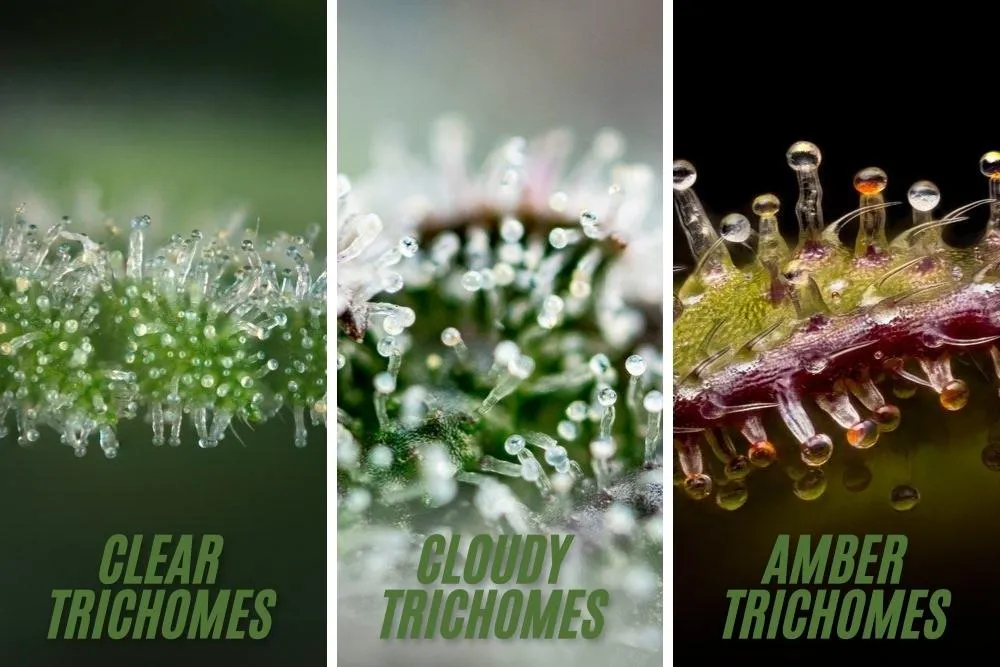
I remember the first time I ever used a magnification tool on my flowering plants to see the trichomes up close. I was amazed by the structure and shape of the trichomes and by their different colors, ranging from clear to milky to amber. The color of the trichome head can be used as a guide to how potent, aromatic and flavorsome the buds will be when consuming.
Clear trichomes
- The trichome head will be clear and have a translucent appearance
- Clear trichomes are classed as immature and not fully developed
- They will contain the lowest levels of cannabinoids, terpenes and flavonoids
- The effect of clear trichomes will lack physical potency
- Clear trichomes should be left for 7-14 days to mature fully
Milky trichomes
- Milky or cloudy trichomes represent that cannabinoids are at maximum development
- The effect will be potent and produce a psychoactive and cerebral effect
- Most growers will harvest their plants when the majority of trichomes are milky
- They can be left for 5-7 days longer to mature into amber colored trichomes
Amber trichomes
- Represents when the trichomes have reached the latest stage of development
- THC has started to degrade into CBN, producing a physical sedative effect
- Amber trichomes will produce the most potent physical effects possible
- 25% amber trichomes can be a good indicator of the optimal harvest window
How genetics, stress, nutrients and light intensity influence trichome production
We all love to grow frosty, resinous buds; however, many factors will determine how high or low the resin levels are by harvest time.
Genetics
The seedbank or breeder behind the genetics you grow will play a massive role in how resinous your plants will become. In recent years, with the rise in American-based cannabis genetics, there has been a significant increase in how frosty plants have evolved.
Old school genetics will typically have the fewest trichomes, whilst the more modern hybrids from the states will be the go-to choice for growers, hash makers, and extractors who demand the frostiest, trichome-rich plants possible.
Stress
Environmental stress caused by cold or hot temperatures has an effect on how resinous a mature cannabis plant will become. Heat stress will harm trichome production, whilst colder nighttime temperatures can have a positive impact. Hop Latent Viroid (HLVd) and insect damage can also have a significant effect on resin production.
Nutrients
Providing your flowering cannabis plants with the perfect balance of Nitrogen, Phosphorus, Calcium, Magnesium, Potassium and trace elements is essential to achieving the pinnacle levels of trichomes. Malnourished cannabis plants will produce lower yields, combined with less resin. This is due to the correlation between metabolic processes and trichome development.
Light intensity
Cannabis plants require intense lighting that is also high in photosynthetically active radiation (PAR). The more intense the lighting a cannabis plant receives and the higher the PPFD levels of your grow room, the higher the ratio of cannabinoid and terpene-rich trichomes. Low light intensity is one of the leading causes of low levels of resin production, and why indoor-grown cannabis is always superior compared to outdoor-grown cannabis.
How Trichomes Impact Potency, Aroma, and Final Yield
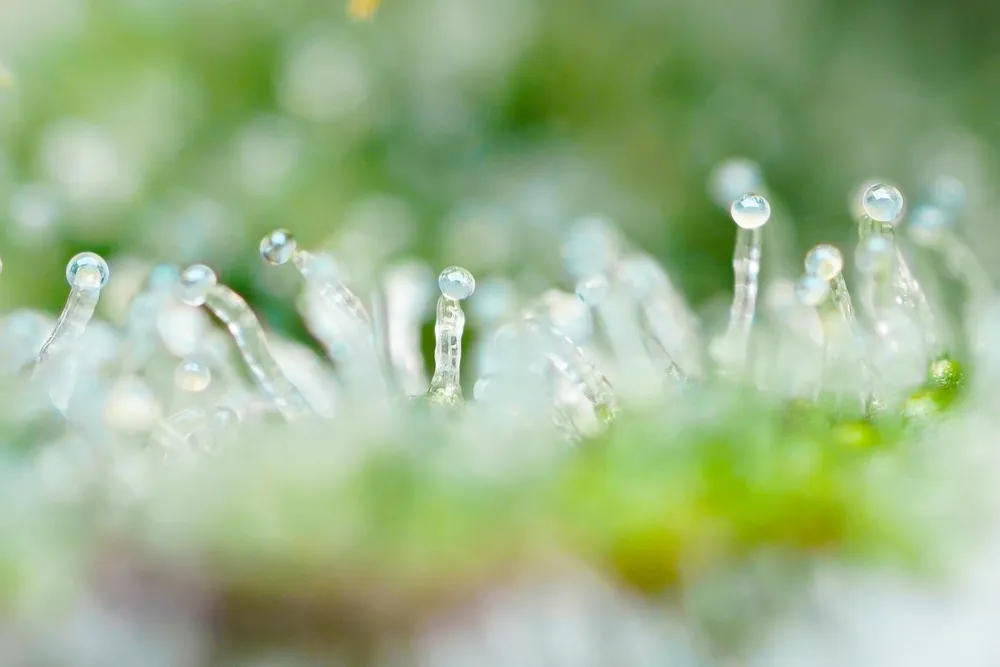
Now that you are aware that trichomes contain cannabinoids, terpenes, and flavonoids, you will be able to understand the correlation between low and high potency and aroma and flavor production. Cannabinoids and terpenes are synthesised together, so the more trichomes present, the higher the levels of essential oils, which in turn affect potency and aroma.
The relationship between trichomes and THC, CBD and minor cannabinoids
Tetrahydrocannabinol (THC) is the most common cannabinoid within the cannabis plant. It is responsible for producing a psychoactive effect and inducing hunger and appetite. Cannabidiol (CBD) is commercially popular for its non-psychoactive and therapeutic effects.
When separated and isolated, these cannabinoids exhibit distinct properties and applications. When combined and synthesised with other cannabinoids such as THCA, CBDA, CBN, CBG, CBC, THCV, CBDV, and CBG, they work harmoniously to produce a combined effect. This is what smokers will refer to as feeling stoned, and what causes the sensation of couch lock or tiredness.
How terpenes inside trichomes shape aroma, flavor and entourage effects
Cannabis plants are incredibly unique for several reasons, and one of those is that they contain a high amount of naturally derived terpenes. As a grower, there is nothing more exciting than growing out a new strain with its own unique aroma, flavor, and effect. In the same way, you can smell 50 different bottles of perfume, and each has its own specific profile; cannabis plants are precisely the same.
The entourage effect refers to how terpenes and cannabinoids interact synergistically, creating a harmonious relationship. As terpenes and cannabinoids interact, they intensify aroma, taste, and effect, allowing each plant to have its own unique profile and characteristics.
How Growers Can Protect and Enhance Trichome Production
The final 4 weeks of the flowering period are easily the most exciting and anticipated time for a home grower. With practice, you can actually enhance trichome production by ensuring your environmental conditions are as optimal as possible, as covered below.
Best grow-room conditions for maximizing resin production (light, VPD, temps)
- Using a VPD chart will explain the ideal temperature and humidity levels
- Grow lights during 12/12 should have a PPFD range between 900 and 1200
- The grow room temperature should be between 22 and 24 degrees Celsius
- Humidity levels should be around 40-50% to encourage a dry environment
- Using a digital hygrometer will allow you to monitor the grow room space
- Lighting distance plays a significant role in light intensity and penetration
Common mistakes that cause trichome damage or degradation
- High temperatures above 24 degrees can damage trichome heads
- UV light can cause trichomes to degrade, known as photodegradation
- Over-mature trichomes are prone to oxidation and will be higher in CBN
- Dry conditions will cause trichomes to become brittle and weak
- Touching the trichomes whilst the plants are flowering will damage them
How to handle, trim and store buds to preserve trichomes post-harvest
Trichomes are delicate, and when handling dry buds during the harvest stage, you should always be as careful as possible. It doesn't take much force for trichomes to break off the leaves or the calyxes of your buds, and anyone who has ever made dry-sift hash will tell you the same!
- Hold the buds by the bottom of the twig when trimming with scissors
- Do not cut the buds when trimming; carefully cut the leaf away
- Buds should be stored in an air-tight tub to prevent oxidation
- Tubs or curing jars should be 75% full and never compacted
- Cured cannabis starts to degrade from THC to CBD after 6 months
- Curing buds for 2-12 weeks will produce the best flavor, aroma and effect
Using Trichomes to Know When to Harvest Cannabis
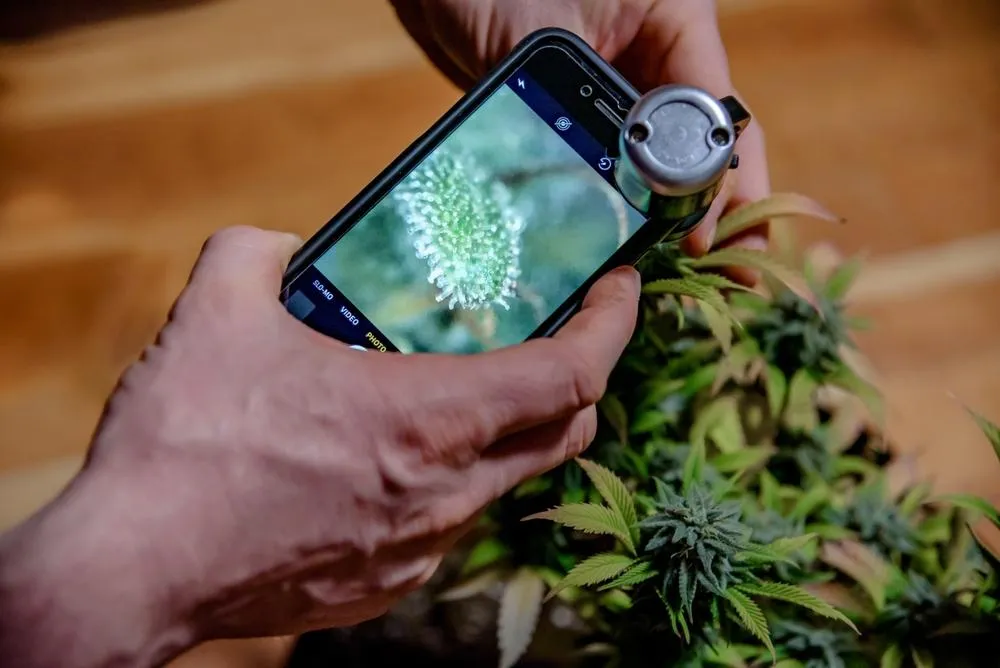
Whilst you may have a harvest date set in your mind based on the flowering time provided by the seed bank or breeder, you should actually base the harvest window on trichome development and maturity. Below is a guide on what to look out for to achieve the ultimate harvest.
How to inspect trichomes with magnifiers, microscopes or macro lenses
Whilst you can see trichomes growing on your plants during the flowering period, if you want to get up close and personal, you will need to use a magnification tool. The options range from handheld magnifiers designed explicitly for cannabis to microscopes and macro lenses. Magnification tools can be set to 30x, 60x, or even 500x, allowing you to see in great detail the color, size, and shape of each trichome.
Harvest timing based on trichome color changes and desired effects
Clear trichomes indicate your plant needs more time to mature, but determining the harvest window based on the milky-to-amber trichome ratio is a matter of personal preference. For growers who prefer a less physical and cerebral dominant effect, they should harvest when 90-100% of the trichomes are milky or cloudy.
Those who prefer a heavy-hitting effect that will leave them glued to their sofa can enjoy a more sedative effect when the trichome ratio is 75% milky and 25% amber. You should also note that exposure to oxygen during curing causes oxidation and the conversion of THC into CBD and CBN.


