




Purple Kush is a classic indica cannabis strain known for its deep purple flowers, sweet grape aroma and relaxing effects. Developed from Hindu Kush and Purple Afghani genetics, it combines traditional Kush characteristics with a distinctive appearance and relatively high THC potential. But there is more to Purple Kush than its color. Its dense flowers, earthy flavor and compact growth make it an interesting variety, although its potency and moderate growing difficulty may not suit everyone. In this Purple Kush strain review, I'll cover its genetics, effects, taste, THC content and growing characteristics to help you decide whether it is the right choice for you.
Key Takeaways
- Genetics: Purple Kush is traditionally classified as a pure indica, developed from Hindu Kush and Purple Afghani.
- Effects: Commonly associated with physical relaxation, a calmer mood and sleepiness, although individual experiences vary.
- Taste and aroma: Sweet grape and berry notes combine with floral, earthy and herbal characteristics.
- THC content: Advertised THC levels reach up to 24%, making potency an important consideration for inexperienced consumers.
- Growing characteristics: Purple Kush flowers in approximately 8–10 weeks and develops dense foliage that can make moisture management more demanding.

What is Purple Kush?
Purple Kush is a traditionally classified pure indica strain developed from Hindu Kush and Purple Afghani. It is known for broad leaves, compact branching, dense flowers and a sweet, earthy aroma.
The Purple Kush Feminized Seeds variety has an advertised THC content of up to 24%, with flowering taking approximately 8–10 weeks.
| Characteristic | Purple Kush |
| Genetics | Hindu Kush × Purple Afghani |
| Strain type | Pure indica classification |
| THC content | Up to 24% |
| CBD content | Less than 1% |
| Main terpenes | Myrcene, pinene, caryophyllene |
| Aroma | Grape, earth, floral notes |
| Taste | Grape, violet, lavender |
| Reported effects | Relaxing, calming, sleepy |
| Flowering time | 8–10 weeks |
| Plant height | 100–180 cm |
| Indoor yield | 400–500 g/m² |
| Difficulty | Moderate |
These are advertised characteristics rather than guaranteed results. Individual plants and harvested batches can differ.

| THC % | Up to 24% |
|---|---|
| Flowering Time | 8–10 Weeks |
| Outdoor harvest | End Of September |
| Yield | 400–500 g/m² |
| Indica/Sativa | Pure Indica |
| Height | Medium: 100–180 cm |
| Difficulty | Medium |
| CBD Content | Less than 1% |
| Climate | Sub Tropical, Temperate, Warm |
| Seed Type | Feminized |
| Genetics | Hindu Kush x Purple Afghani |
| Effects | Relaxing |
| Taste | Grape, Violet, Lavender |
| Terpene | Myrcene, Pinene, Caryophyllene |
{{block class="FishPigExtend\Wordpress\Block\Product\Related" sku="PUK-F010"}}
Purple Kush Genetics and Origins
Purple Kush is commonly associated with Oakland, California, particularly the Oaksterdam area, which developed a reputation for its cannabis culture.
Its precise breeding history is not fully documented, although Hindu Kush and Purple Afghani are widely accepted as its parent strains.
Hindu Kush originates from the mountainous region between Afghanistan and Pakistan. It contributes traditional indica characteristics, including broad foliage, substantial resin production and dense flowers.
Purple Afghani is associated with deeper pigmentation and sweet, earthy aromas.
The combination gives Purple Kush its recognisable appearance and traditional Kush character.
One distinction worth understanding is that indica classification does not guarantee a specific experience. Research by Smith et al. (2022) found that commercial cannabis strain labels do not consistently reflect chemical differences between products.
You should therefore consider cannabinoid and terpene information alongside the strain's genetic background.
What Does Purple Kush Smell Like?
Purple Kush has a sweet grape aroma supported by earthy, herbal and floral notes.
The fruity scent is usually its most recognisable characteristic, although some descriptions include dark berries, pine and mild spice.
Its advertised terpene profile includes three compounds:
- Myrcene: Produces earthy, herbal and musky aromas.
- Pinene: Has a fresh, pine-like scent.
- Caryophyllene: Contributes peppery and spicy notes.
These compounds help explain the types of aromas associated with cannabis, but their concentrations vary between samples.
I would not assume that a strong grape scent means a flower contains a particular terpene concentration. The smell gives you useful clues, but only laboratory analysis can establish its chemical composition.
What Does Purple Kush Taste Like?
Purple Kush is commonly described as having a sweet grape taste with floral and earthy undertones.
The initial impression is often fruity, resembling grapes or dark berries. Violet and lavender notes may follow, while an earthy finish provides the familiar character of traditional Kush varieties.
What makes Purple Kush interesting is the contrast between its sweeter fruit characteristics and its herbal background.
However, the advertised taste is a general description, not a promise. Flower quality, storage conditions and differences between individual plants can all influence the experience.
Purple Kush Effects and THC Content
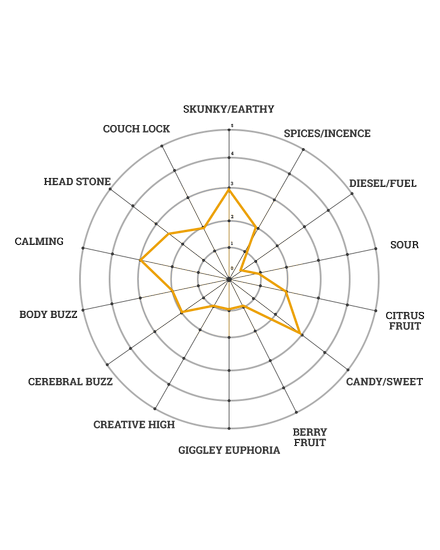
Purple Kush is best known for its relaxing effects, with consumers frequently reporting physical calm, happiness and sleepiness.
The experience is commonly described as beginning with a calmer mood before developing into heavier physical relaxation.
Some people also report an increased appetite.
These effects are subjective, and Purple Kush does not produce identical results for everyone.
How Strong Is Purple Kush?
Purple Kush is a relatively potent variety, with advertised THC levels reaching 24%.
That figure represents an upper estimate rather than a minimum concentration. Actual THC levels may differ between harvested batches.
Its potency is one potential drawback for inexperienced consumers. Higher THC exposure may increase the likelihood of anxiety, dizziness, impaired coordination and other unwanted effects.
The National Academies of Sciences, Engineering, and Medicine (2017) reviewed evidence concerning cannabis effects and health risks, highlighting the importance of distinguishing reported experiences from established medical findings.
Is Purple Kush Relaxing?
Relaxation is one of Purple Kush's most frequently reported effects.
Its reputation for calmness and sleepiness may appeal to people interested in traditional indica-style cannabis.
However, there is an important difference between feeling relaxed and treating a medical condition.
Claims that Purple Kush cures insomnia, depression or chronic pain are not supported by strain-specific clinical evidence.
Why Is Purple Kush Purple?
Purple Kush develops its distinctive pigmentation through compounds called anthocyanins.
These natural pigments also produce red, blue and purple shades in many fruits and flowers.
The ability to develop purple foliage is influenced by genetics, while temperature, plant maturity and other environmental conditions can affect the intensity.
A 2025 study published in the Journal of Cannabis Research investigated how temperature influences anthocyanin accumulation in cannabis. The findings showed that pigmentation responds to temperature, but extremely low temperatures did not produce the greatest accumulation.
This matters because purple coloration should not be treated as evidence of greater potency or quality.
Not every Purple Kush plant develops identical pigmentation. Some display purple across leaves and flowers, while others retain considerable green coloration.
If appearance is important to your selection, comparing different purple cannabis strains can help you understand the range of naturally occurring pigmentation.
How to Grow Purple Kush Step by Step
Purple Kush is a moderately difficult strain to grow, mainly because of its bushy structure and dense flowers. It typically reaches 100–180 cm and has an advertised flowering period of 8–10 weeks.
Its compact branching can be an advantage in limited spaces, but crowded foliage and excess moisture can become problems. Understanding these characteristics will help you decide whether Purple Kush suits your growing experience.
Step 1: Understand Purple Kush's Growing Requirements
Purple Kush is a photoperiod variety, meaning its flowering cycle responds to changes in day length.
Before choosing this strain, consider its mature height, available space and environmental requirements. Although Purple Kush generally develops a compact shape, some plants can reach 180 cm.
If you are choosing between seed types, feminized cannabis seeds are bred to produce predominantly female plants, reducing the uncertainty associated with regular seeds.
Step 2: Assess the Plant's Natural Structure
Purple Kush typically develops broad leaves, a strong central stem and several lateral branches.
This bushy structure is characteristic of traditional indica varieties. However, branches can grow close together, creating areas where leaves overlap and restrict airflow.
The cannabis plant training guide explains how different plant structures influence canopy development and light exposure.
Step 3: Watch for Crowded Foliage
One of Purple Kush's main characteristics is its dense leaf growth.
As the plant matures, overlapping leaves can reduce airflow around its interior branches. This becomes particularly important in environments where moisture accumulates.
Pay attention to signs of poor plant health, including persistent leaf moisture, discoloration and damaged tissue.
Step 4: Understand the Flowering Stage
Purple Kush has an advertised flowering period of approximately 8–10 weeks, although individual plants may develop at different rates.
During flowering, the variety is known for producing closely packed flowers with a resinous appearance.
Its dense flowers are attractive, but they can also be vulnerable to fungal problems when environmental conditions are unsuitable.
The guide to identifying and preventing cannabis bud rot provides useful information about recognising common warning signs.
Step 5: Evaluate Flower Maturity and Expected Yield
Purple Kush has an advertised indoor yield of approximately 400–500 g/m².
This figure is an estimate rather than a guaranteed result. Actual production depends on genetics, plant health and environmental conditions.
Flower maturity can also vary between individual plants, so the advertised flowering period should be treated as a general guide rather than an exact harvest date.
Step 6: Understand the Main Growing Challenges
Purple Kush is not necessarily unsuitable for beginners, but it requires greater awareness of its natural growth characteristics than some less demanding varieties.
The main considerations are:
- Dense foliage: Broad, overlapping leaves can restrict airflow.
- Compact branching: Closely spaced stems can produce crowded growth.
- Moisture sensitivity: Dense flowers may be vulnerable to fungal disease.
- Variable height: Plants can reach 100–180 cm depending on genetics and conditions.
- Variable performance: Flowering estimates and advertised yields are not guaranteed.
For these reasons, Purple Kush is generally better suited to growers who already understand basic plant care and can recognise changes in plant health.
Its manageable structure and distinctive flowers remain appealing characteristics, but choosing it solely for its purple coloration overlooks the additional care associated with dense-flowering cannabis varieties.
Conclusion
Purple Kush is a classic indica strain that combines Hindu Kush and Purple Afghani genetics with distinctive purple flowers, sweet grape aromas and relaxing effects. Its rich flavor and traditional Kush characteristics make it an appealing choice for those who appreciate established cannabis varieties.
However, Purple Kush has a few drawbacks worth considering. Its relatively high THC content may be too strong for inexperienced consumers, while its dense foliage and flowers can present challenges for new growers.
Overall, Purple Kush is worth considering if you enjoy traditional indica strains with fruity, earthy characteristics. Its appearance is certainly attractive, but its genetics, aroma and overall quality matter far more than how purple the flowers become.
Frequently Asked Questions
Is Purple Kush a Good Strain for Beginners?
Purple Kush has a moderate growing difficulty rating, so it may not be the easiest choice for your first cannabis plant. Its compact structure is manageable, but dense foliage and flowers can make moisture-related problems more likely. Beginners should understand basic plant care before choosing this variety.
How Long Does Purple Kush Take to Flower?
Purple Kush has an advertised flowering period of approximately 8–10 weeks. As a photoperiod strain, its flowering development responds to changes in day length. The actual flowering period can vary depending on genetics and environmental conditions.
Does Purple Kush Always Turn Purple?
No, Purple Kush does not always develop deep purple flowers. Its coloration comes from natural pigments called anthocyanins, with genetics and environmental conditions influencing their appearance. Some plants develop rich purple shades, while others retain more green foliage. Purple coloration does not indicate higher THC content.
What Are the Main Effects of Purple Kush?
Purple Kush is commonly associated with physical relaxation, a calmer mood and sleepiness. Some consumers also report happiness and an increased appetite. However, effects differ between individuals, and its relatively high THC potential can produce unwanted experiences, particularly for people with low tolerance.
Is Purple Kush Better Suited to Indoor or Outdoor Growing?
Purple Kush can be suitable for both indoor and outdoor environments where cultivation is legal and conditions are appropriate. Its relatively compact branching can appeal to indoor growers, while outdoor suitability depends on the local climate. Dense foliage and flowers mean that moisture and fungal disease are important considerations in either environment.

