




The GG4 cannabis strain, also known as Gorilla Glue #4 or Original Glue, is a high-THC hybrid known for sticky flowers, strong branching, and a pungent mix of diesel, pine, and earthy aromas. It has remained popular with growers because it combines strong resin production with a plant structure that responds well to training.
For new growers, GG4 is relatively manageable, but it does need some planning. Plants can grow tall, stretch during early flowering, and develop dense buds that benefit from good airflow and humidity control. If you give it enough space, train it early, and avoid overfeeding, GG4 can be a rewarding strain to learn with indoors or outdoors.
Key Takeaways
- GG4 is a hybrid strain bred from Chem's Sis, Sour Dubb, and Chocolate Diesel.
- Plants can reach around 180–220 cm, so topping and LST are useful when indoor height is limited.
- Flowering takes roughly 8–10 weeks, with outdoor harvest generally falling around late September in suitable climates.
- THC can reach up to 28%, although actual potency varies between plants, phenotypes, and growing conditions.
- GG4 suits beginners who are willing to manage the canopy, with airflow, stretch, strong odor, and branch support being the main points to watch.
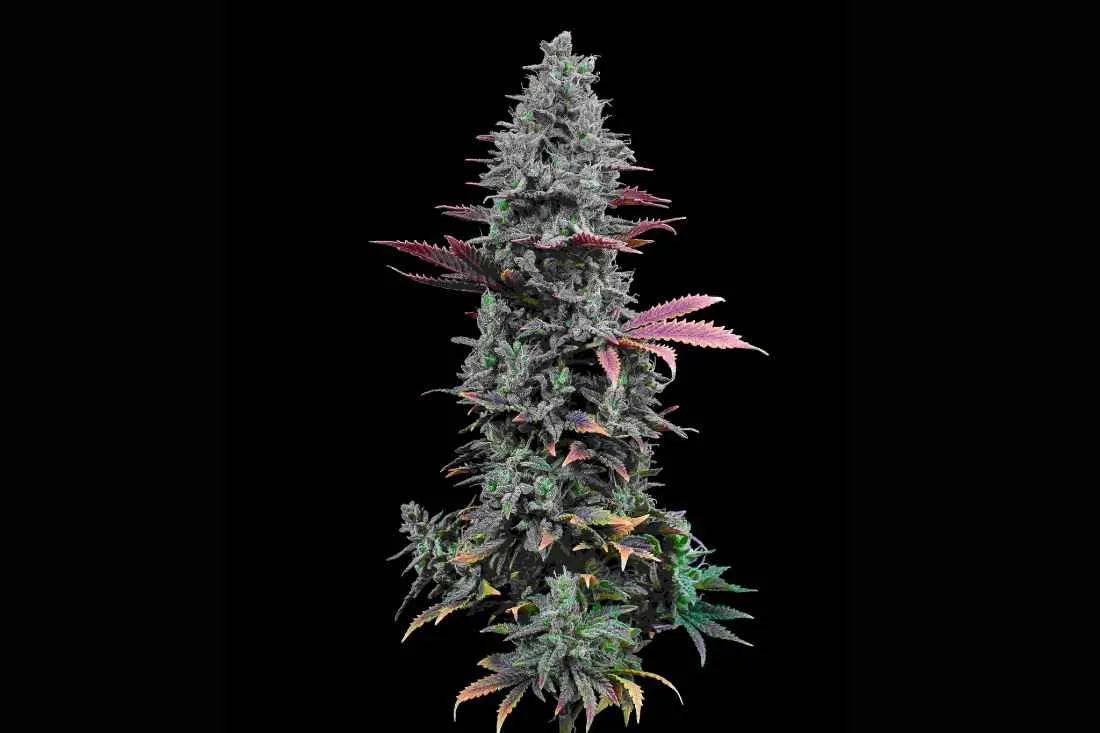
What is the GG4 Cannabis Strain?
GG4 is a photoperiod hybrid bred from Chem's Sis, Sour Dubb, and Chocolate Diesel. These genetics are associated with the fuel-heavy aroma, resin production, and branching growth that helped make the strain popular.
The current GG4 Feminized seeds line removes the need to identify and remove male plants, which makes it a practical choice for most first-time growers.
GG4 is best described as a hybrid rather than trying to pin it to a strict indica or sativa percentage. The current line is listed as a 50/50 split, although classifications can vary between sources.
Research published in Nature Plants also found that commercial indica and sativa labels do not neatly reflect genome-wide genetic differences.1 For you as a grower, height, branching, stretch, flowering time, and plant response are more useful.
GG4 Strain at a Glance
| Trait | GG4 |
| Genetics | Chem's Sis × Sour Dubb × Chocolate Diesel |
| Type | Hybrid |
| THC | Up to 28% |
| CBD | Low |
| Main terpenes | Caryophyllene, myrcene, limonene |
| Flavor | Diesel, pine, earth, pungent |
| Flowering time | 8–10 weeks |
| Height | Around 180–220 cm |
| Indoor yield | 600+ g/m² possible |
| Outdoor harvest | Around late September |
| Difficulty | Beginner-friendly with training |
| Best training | Topping, LST, SCROG |
{{block class="FishPigExtend\Wordpress\Block\Product\Related" sku="GGF-010"}}
Is GG4 a Good Strain for New Growers?
Yes. GG4 is a reasonable choice for beginners, but it suits growers who are prepared to do some canopy management.
The plant is not especially difficult to handle, and you do not need complicated techniques to get a good result. The biggest issue indoors is usually size. GG4 can grow tall and continue stretching after flowering begins.
That means a small tent can become crowded quickly if you allow the main stem to grow straight upward without training.
GG4 fits well alongside other beginner cannabis seeds, although I would recommend learning one simple training method before flowering.
Its main advantages for newer growers are:
- Strong lateral branching
- Good response to training
- High yield potential
- Indoor and outdoor suitability
- Manageable flowering period
Its main drawbacks are:
- Tall growth
- Strong flowering odor
- Dense flowers that need airflow
- Branches may need support late in bloom
How to Grow the GG4 Cannabis Strain
I would start thinking about GG4's final shape while the plant is still young.
Do not wait until flowering before trying to control the canopy. Use vegetative growth to build several strong branches, keep the plant low enough for your available space, and leave gaps for air to move between growth sites.
The cannabis vegetative stage is when most of this structure should be established.
Step 1: Give GG4 Enough Space
The current GG4 line can reach around 180–220 cm, so height is the first thing I would plan for indoors.
Remember that the distance between the top of the canopy and your grow light also takes up room. A 180 cm tent does not give you 180 cm of usable plant height.
If headroom is limited, begin shaping the plant early instead of waiting for stretch to become a problem.
Step 2: Train the Plant During Vegetative Growth
GG4 develops enough side branching to respond well to topping and LST.
Topping cannabis removes dominance from the main growing tip and encourages several leaders to develop.
Low-stress training lets you pull those branches outward, producing a flatter canopy without removing additional plant material.
SCROG can also work well in larger indoor setups because the branches can be spread across the net before flowering.
For your first GG4 grow, I would keep things simple. One topping followed by steady LST is usually enough to control height and learn how the plant responds.
Step 3: Manage the Flowering Stretch
GG4 can stretch once you change the light cycle to 12/12.
This is why I would switch to flowering before the plants have filled all your available vertical space.
Continue guiding branches during the early stretch where needed, but avoid heavy structural pruning once flower development is well underway.
Step 4: Keep Air Moving Through the Canopy
GG4 can produce thick foliage and dense flowers.
As the canopy fills out, remove weak or unproductive growth and maintain enough spacing between branches for air to circulate. There is no need to strip the plant heavily.
The aim is to give productive flower sites good light while preventing humid air from becoming trapped inside the canopy.
Humidity becomes more important later in flowering because dense buds are less forgiving of damp, stagnant conditions.
Step 5: Feed According to the Plant
GG4 is sometimes described as a heavy feeder, but that does not mean you should automatically use strong nutrient concentrations.
I prefer to increase feeding gradually while watching the leaves and overall growth.
Very dark foliage, burnt tips, or clawed leaves can indicate excessive feeding. Pale growth may suggest the opposite, although you should check root-zone pH and watering before assuming more nutrients are needed.
Small adjustments are usually easier to correct than large ones.
Step 6: Support the Branches
Heavy flower development can place extra weight on GG4's branches toward the end of bloom.
Use stakes, plant ties, or a SCROG net if branches begin to lean. I prefer to put support in place before the weight becomes a problem rather than trying to rescue bent stems later.
{{block class="FishPigExtend\Wordpress\Block\Product\Related" sku="AGG-F005"}}
GG4 Flowering Time and Yield
GG4 usually flowers for around 8–10 weeks indoors.
Do not harvest simply because week eight has arrived. Flowering times are estimates, and individual plants or phenotypes can finish at slightly different speeds.
The cannabis flowering stage guide explains the changes you can expect as flowers mature.
Indoor yields can exceed 600 g/m² in good conditions, but this figure should be treated as potential rather than a promise.
Final yield depends on:
- Light coverage
- Plant size
- Root space
- Vegetative time
- Training
- Temperature
- Humidity
- Nutrition
- Phenotype
Research also shows that THC concentration can vary within and between cannabis plants.2 This is a useful reminder that genetics provide a range of potential rather than an identical result from every seed.
Can You Grow GG4 Outdoors?
Yes. GG4 can perform well outdoors where the growing season is warm and sunny.
The main concern is moisture late in flowering.
Dense flowers can hold water, so I would choose an open position with good airflow rather than a sheltered corner where damp air remains around the plant.
The current line is listed for harvest around the end of September, although actual timing depends on latitude, weather, phenotype, and seasonal conditions.
Check developing flowers regularly as harvest approaches, particularly after periods of rain.
How Strong Is GG4?
The current line is rated at up to 28% THC, placing GG4 among high THC cannabis seeds.
The words up to are important.
THC levels are influenced by genetics, phenotype, environment, flower position, harvest timing, drying, storage, and laboratory sampling.
Research into commercial cannabis has also found considerable chemical variation between products sold under familiar strain labels.3
For a new grower, healthy plant development is a much better target than trying to chase the largest THC number attached to the strain.
What Does GG4 Smell and Taste Like?
GG4 has a strong aroma that becomes increasingly noticeable during flowering.
Expect a mixture of:
- Diesel
- Pine
- Earth
- Sour notes
- Spice
The current line lists caryophyllene, myrcene, and limonene among its main terpenes.
These aromatic compounds contribute to the smell and flavor of cannabis. The cannabis terpene guide explains how terpenes work and why profiles can differ from one plant to another.
Odor is worth considering before you grow GG4 indoors. During late flowering, the smell can travel well beyond the grow area without suitable ventilation and odor control.
What Effects Are Commonly Reported from GG4?
GG4 is commonly described as starting with a more uplifting or euphoric feeling before developing into heavier physical relaxation.
That experience is not guaranteed.
THC level, dose, tolerance, consumption method, and individual response all influence how cannabis feels. Some consumers also report increased appetite or tiredness at higher doses.
For that reason, effect descriptions should be treated as common user reports rather than promises about how GG4 will affect every person.
GG4 vs Autoflower and Fast Flowering Versions
The standard GG4 Feminized line is photoperiod, which means you control how long the plant remains in vegetative growth before switching the light cycle to flower.
This is useful when you want time to train a plant and develop a larger canopy.
If space or speed is more important, GG4 Autoflower begins flowering according to age rather than a 12/12 light change.
GG4 Fast Flowering keeps photoperiod control while offering a shorter flowering period.
The best option depends on your setup rather than one being better across the board.

What Are the Different Types of Gorilla Glue?
The Gorilla Glue name can be confusing because it is used for both the original Glue family and newer seed versions based on GG4 genetics.
The original family is best documented around GG1, GG4, and GG5. You will also see GG2 and GG3 mentioned online, but there is far less reliable information showing that they were established public releases from the original breeding program. I would therefore avoid treating every numbered Gorilla Glue as an equally well-documented strain.
For growers, there is another distinction to make: GG4 Feminized, Regular, Autoflower, and Fast Flowering are different seed formats or breeding versions built around GG4 genetics. They are not simply GG1 through GG5 under different names.
Gorilla Glue #1 – GG1 or Sister Glue
GG1 is also known as Sister Glue.
It comes from the same general genetic family associated with Chem's Sis, Sour Dubb, and Chocolate Diesel. GG1 is much less common than GG4 and never achieved the same level of commercial popularity.
For a new grower, the important point is availability. If a seed seller offers GG1, check the stated lineage carefully rather than assuming the name alone confirms that it comes from the original Sister Glue selection.
Gorilla Glue #4 – GG4 or Original Glue
GG4 is the best-known member of the Glue family and the strain most people mean when they talk about Gorilla Glue cannabis.
It became popular for its high resin production, strong branching, pungent fuel-like aroma, and high THC potential. It is also the version most widely available to home growers.
If you are growing Gorilla Glue for the first time, GG4 is generally the most useful reference point because far more cultivation information is available for it than for the rarer Glue selections.
Gorilla Glue #5 – GG5 or New Glue
GG5 is also known as New Glue.
It is associated with a cross between GG4 and GG1/Sister Glue, keeping the resin-heavy character of the family while producing a distinct selection.
GG5 is much less common than GG4, particularly as seed. As with GG1, I would check the breeder and lineage before assuming that every product carrying the GG5 name represents the same genetics.
What About Gorilla Glue #2 and #3?
You will sometimes see GG2 and GG3 listed in older strain guides, but their history is much less clear.
Unlike GG1, GG4, and GG5, they are not as well documented as official public releases from the original GG Strains lineup. For that reason, I would not give them fixed THC levels, effects, or growing traits without evidence tied to a specific genetic line.
This is important for new growers because cannabis names are not always standardized. If you come across GG2 or GG3 seeds, judge them by the breeder's listed parentage and specifications rather than the number alone.
GG4 Feminized
Feminized GG4 is the simplest photoperiod option for most home growers.
The seeds are bred to produce female plants, so you do not normally need to identify and remove males before flowering. You still control when flowering begins by changing the indoor light cycle, giving you time to train and shape the plant.
This makes feminized GG4 particularly useful if you want to practice topping, LST, or SCROG.
GG4 Regular
GG4 Regular seeds can produce male and female plants.
They are more relevant if you want to make crosses, collect pollen, or select breeding plants. If your only aim is producing flowers, feminized seeds are usually more straightforward because you do not need to identify males.
GG4 Autoflower
GG4 Autoflower combines GG4 characteristics with autoflowering genetics.
Instead of waiting for a change to a 12/12 light cycle, the plant begins flowering according to age. This gives you a faster and generally more compact crop, which can make it useful for smaller grow spaces.
The trade-off is that you have less vegetative time to correct early mistakes, so I prefer gentle LST rather than heavy pruning on young autos.
GG4 Fast Flowering
GG4 Fast Flowering sits between a standard photoperiod and an autoflower.
You still control flowering through the light cycle, but the flowering period is shorter than the standard version. This can be useful if you want photoperiod training flexibility but need to shorten the overall crop time.
For most beginners, the choice comes down to your setup: standard feminized GG4 gives you the most time to train, autoflower suits tighter spaces and shorter cycles, while fast flowering offers a middle ground.

Conclusion
GG4 is a good strain for a new grower who has enough room to manage its height.
Its strong branching makes topping and LST straightforward, while an 8–10 week flowering period keeps the indoor cycle manageable. The main areas to watch are stretch, canopy density, humidity, flowering odor, and branch support.
I would not choose GG4 for a very small grow space unless you are prepared to train it early. Give the plant enough room, keep the canopy open, and adjust feeding according to what you see rather than pushing nutrients unnecessarily.
Get those basics right and GG4 gives you a practical introduction to growing a high-THC, resin-heavy hybrid without requiring complicated cultivation techniques.
GG4 Cannabis Strain FAQs
How tall does GG4 grow?
The current GG4 Feminized line can reach around 180–220 cm. Pot size, vegetative time, training, light, and environment can all affect final height.
How long does GG4 take to flower?
GG4 normally flowers for around 8–10 weeks indoors. Some plants may finish slightly earlier or later.
Is GG4 easy to grow?
Yes. GG4 is suitable for newer growers if you manage its height, airflow, humidity, and flowering stretch.
How much does GG4 yield?
Indoor yields can exceed 600 g/m² under good conditions. This is potential rather than a guaranteed result.
What is the best training method for GG4?
Topping followed by LST is a straightforward combination for new growers. SCROG is another useful option when you want to spread several branches across a larger canopy.
References
- Watts S, McElroy M, Migicovsky Z, et al. Cannabis labelling is associated with genetic variation in terpene synthase genes. Nature Plants. 2021;7:1330–1334. Full study
- Cleary B, Maloney K, Toor A, et al. Variability of total THC in greenhouse cultivated dried Cannabis. Scientific Reports. 2025. Full study
- Smith CJ, Vergara D, Keegan B, Jikomes N. The phytochemical diversity of commercial Cannabis in the United States. PLOS ONE. 2022;17(5). Full study

