




Northern Lights is one of the most famous cannabis strains, known for its relaxing effects, earthy taste and long history in cannabis breeding. With ancestry commonly traced to Afghani and Thai varieties, this indica-dominant strain has earned its reputation through dense, resin-covered flowers and a distinctive pine aroma.
But is Northern Lights still worth choosing when so many modern strains are available? In this Northern Lights strain review, I'll explain its genetics, aroma, taste, effects and growing characteristics, including where this classic performs well and where it has limitations.
Key Takeaways
- Northern Lights is an indica-dominant cannabis strain with Afghani and Thai ancestry.
- Its aroma combines earth, pine and spice, sometimes accompanied by sweeter notes.
- Consumers commonly report relaxing effects, although individual experiences vary.
- Northern Lights typically produces dense flowers covered in resin-rich trichomes.
- Its manageable height and relatively short flowering period appeal to growers, although thick foliage can present challenges.
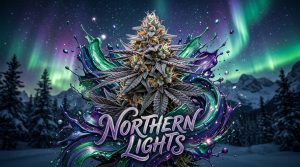
What is the Northern Lights Strain?
Northern Lights is a classic indica cannabis strain that has influenced cannabis breeding for decades.
It's commonly described as 95% indica and 5% sativa. However, research by Watts et al. (2021) found that commercial indica and sativa labels don't reliably describe overall genetic differences.
Northern Lights is known for broad leaves, compact branching and tightly packed flowers. Mature buds often develop orange pistils and a thick coating of trichomes, which produce cannabinoids and aromatic compounds.
The following specifications describe a commercially available Northern Lights seed line.
| Characteristic | Northern Lights |
| Genetics | Afghani × Thai |
| Strain type | Indica-dominant |
| THC | Up to 18% |
| CBD | Below 1% |
| Flowering time | 8–10 weeks |
| Plant height | 100–180 cm |
| Advertised indoor yield | 400–500 g/m² |
| Growing difficulty | Medium |
| Aroma | Earthy, pine, spicy |
| Reported effects | Relaxing, calming, sleepy |
These figures aren't universal. Different Northern Lights selections may have different THC levels, flowering characteristics and plant structures.


| THC % | Up to 18% |
|---|---|
| Flowering Time | 8–10 Weeks |
| Outdoor harvest | End Of September |
| Yield | 400–500 g/m² |
| Indica/Sativa | Indica Dominant |
| Height | Medium: 100–180 cm |
| Difficulty | Medium |
| CBD Content | Less than 1% |
| Climate | Arid, Mould Resistant, Warm |
| Seed Type | Feminized |
| Genetics | Afghani Landrace x Thai Landrace |
| Effects | Relaxing |
| Taste | Pine, Spicy, Earthy |
| Terpene | Myrcene, Caryophyllene, Limonene |
{{block class="FishPigExtend\Wordpress\Block\Product\Related" sku="NL-F010"}}{{block class="FishPigExtend\Wordpress\Block\Product\Related" sku="NSA-F005"}}{{block class="FishPigExtend\Wordpress\Block\Product\Related" sku="NL010"}}
The Origins and Genetics of Northern Lights
Northern Lights has a long history, although its exact beginnings remain uncertain.
Where Did Northern Lights Come From?
Most accounts trace its early development to the United States during the 1970s, particularly the Pacific Northwest.
The genetics later reached the Netherlands, where Dutch breeders helped establish Northern Lights as an internationally known strain.
Several numbered selections appeared, including Northern Lights #1, #2 and #5. Northern Lights #5 became particularly influential in later cannabis breeding.
Because historical records are limited, the exact identity of the original plants remains disputed.
What Are Northern Lights' Parent Strains?
Northern Lights is traditionally associated with Afghani and Thai landrace genetics.
Afghani ancestry is linked with broad foliage, compact growth and dense flowers. Thai genetics are generally associated with narrower leaves and taller plant structures.
Modern Northern Lights varieties may express these inherited characteristics differently, depending on the breeding line.
What Does Northern Lights Smell Like?
Northern Lights has a predominantly earthy aroma with noticeable pine and spice. Some plants also produce sweet, herbal or slightly citrus-like notes.
The aroma comes from terpenes, which are aromatic compounds produced by cannabis and many other plants.
Which Terpenes Are Found in Northern Lights?
Myrcene, caryophyllene and limonene are commonly associated with Northern Lights descriptions.
- Myrcene: Contributes earthy and herbal aromas.
- Caryophyllene: Has peppery and woody characteristics.
- Limonene: Produces citrus-like notes.
However, terpene profiles can differ considerably between cannabis samples.
Research by Smith et al. (2022) found substantial chemical variation across commercial cannabis products, showing why strain names alone cannot establish an exact terpene profile.
What Does Northern Lights Taste Like?
Northern Lights is known for its earthy, pine-like taste, accompanied by mild sweetness and spice.
Some consumers notice herbal or citrus notes, although these aren't present in every sample.
Unlike many modern dessert-style strains, Northern Lights generally has a traditional, woody character rather than an intensely sweet taste.
That can be appealing if you prefer classic cannabis varieties, but less interesting if you're looking for prominent fruit or candy notes.
The final taste also depends on the chemical composition of the flowers, storage conditions and consumption method.
Northern Lights Strain Effects and THC Content
Northern Lights has a longstanding reputation for relaxation and a calmer mood. Consumers also commonly report euphoria and sleepiness.
What Does the Northern Lights High Feel Like?
The Northern Lights high is generally described as relaxing rather than intensely stimulating.
Some consumers report feeling physically at ease, content or drowsy. However, these experiences are personal accounts rather than guaranteed effects.
THC can also cause dry mouth, dizziness, anxiety and impaired coordination.
Research by Bidwell et al. (2020) found that THC exposure and perceived intoxication don't always follow a simple relationship, reinforcing the importance of individual responses.
How Strong Is Northern Lights?
The Northern Lights variety featured here is advertised at up to 18% THC.
This is below the advertised potency of some modern cannabis varieties, but THC percentage alone doesn't determine the intensity of the experience.
Personal tolerance, exposure and the chemical composition of the cannabis all influence its effects.
How to Grow Northern Lights Step by Step
Northern Lights is a relatively manageable indica-dominant strain, making it a popular choice for growers with some basic experience. Plants typically reach 100–180 cm and develop broad leaves, sturdy branches and dense, resin-covered flowers.
The main challenge is managing its thick foliage and flower density, particularly in environments where moisture can become trapped.
Step 1: Choose the Right Northern Lights Seeds
Start by understanding which Northern Lights variety you have.
Northern Lights Feminized is a photoperiod variety, meaning its flowering cycle responds to changes in day length.
Northern Lights Autoflower flowers according to plant maturity rather than relying on a seasonal change in daylight.
Both produce plants associated with Northern Lights genetics, but their growth patterns and flowering characteristics differ.
Step 2: Understand Its Early Growth
Northern Lights generally develops a sturdy central stem, broad leaves and several lateral branches.
Young plants may initially appear compact, with relatively short distances between nodes. As they mature, the side branches become more prominent.
I would pay attention to the spacing between branches and the overall shape of the plant. This gives you a better indication of its mature structure than height alone.
Step 3: Allow for Its Mature Height
Northern Lights typically reaches 100–180 cm, although individual plants can finish outside this range.
Its indica-dominant ancestry is commonly associated with a bushier structure than many tall, narrow-leaf cannabis varieties.
However, Northern Lights can still develop considerable height during its life cycle, so don't assume every plant will remain short.
Step 4: Understand the Flowering Stage
Northern Lights Feminized is a photoperiod cannabis strain, with an advertised flowering period of approximately 8–10 weeks.
During flowering, the plant develops clusters of buds along the main stem and lateral branches. These flowers generally become denser as they mature, while the surface develops a noticeable covering of trichomes.
Flowering time varies between individual plants, so the advertised period should be treated as a guide rather than an exact deadline.
Step 5: Watch for Problems Around Dense Flowers
One characteristic worth understanding is Northern Lights' tendency to produce tightly packed flowers.
Dense buds can retain moisture, creating conditions where fungal disease may develop.
Although Northern Lights is sometimes described as resistant to fungal problems, that doesn't mean it is immune.
Watch for unusual discolouration, soft or decaying flower tissue, and signs of fungal growth. Our guide to fungal growth on cannabis explains what these problems can look like.
Step 6: Know What to Expect at Harvest
Northern Lights Feminized has an advertised indoor yield of approximately 400–500 g/m².
However, that figure represents potential performance, not a guaranteed result.
Individual harvests vary according to genetics, plant development and environmental conditions.
Mature Northern Lights flowers are typically compact, resinous and covered with visible trichomes. Their exact appearance can differ between plants, even when grown from the same seed line.
Is Northern Lights Easy to Grow?
Northern Lights is often considered suitable for beginners with some basic knowledge of cannabis plants.
Its manageable structure and relatively short flowering period are advantages, but its dense foliage and flowers make environmental conditions important.
I'd describe Northern Lights as an approachable strain rather than one that requires no attention. Its natural growth pattern is fairly straightforward, but successful cultivation still depends on understanding the plant's development and recognising potential problems.
Northern Lights Strain Advantages and Drawbacks
Northern Lights has several characteristics that appeal to growers and cannabis enthusiasts, although it also has limitations worth considering.
| Advantages | Drawbacks |
| Manageable, indica-dominant plant structure | Individual plants can grow taller than expected |
| Relatively short flowering period | Flowering times can vary |
| Dense, resin-covered flowers | Thick flowers can retain moisture |
| Distinctive earthy and pine aroma | Less appealing to those who prefer fruity tastes |
| Established breeding history | Original ancestry isn't fully documented |
For me, Northern Lights stands out because of its traditional indica characteristics and long-established reputation. Its compact branching and relatively predictable flowering period make it an interesting variety to understand, while its dense flower structure deserves particular attention.
Conclusion
Northern Lights remains a respected cannabis strain because of its earthy taste, relaxing reputation and influence on modern breeding.
Its manageable structure and relatively short flowering period make it appealing to growers, although dense flowers and natural variation mean it isn't without challenges.
For me, Northern Lights is interesting because it represents an important period in cannabis breeding. It may not have the extreme THC levels or unusual aromas associated with newer varieties, but its established genetics and distinctive character explain its lasting popularity.
Frequently Asked Questions
Is Northern Lights Indica or Sativa?
Northern Lights is an indica-dominant strain, traditionally described as approximately 95% indica and 5% sativa.
Does Northern Lights Make You Sleepy?
Sleepiness is commonly reported, but individual effects vary. Northern Lights shouldn't be considered a guaranteed sleep aid.
What Does Northern Lights Smell Like?
Northern Lights typically smells earthy and pine-like, with spicy, herbal and occasional sweet notes.
How Long Does Northern Lights Take to Flower?
The Northern Lights Feminized variety featured here has an advertised flowering period of approximately 8–10 weeks.
Is Northern Lights a Good Strain for Beginners?
Northern Lights can suit growers with basic experience because of its manageable structure. However, dense flowers can present challenges in damp conditions.
References
- Watts, S., McElroy, M., Migicovsky, Z., et al. (2021). Cannabis labelling is associated with genetic variation in terpene synthase genes. Nature Plants, 7, 1330–1334.
https://doi.org/10.1038/s41477-021-01003-y - Smith, C. J., Vergara, D., Keegan, B., & Jikomes, N. (2022). The phytochemical diversity of commercial Cannabis in the United States. PLOS ONE, 17(5), e0267498.
https://doi.org/10.1371/journal.pone.0267498 - Bidwell, L. C., Ellingson, J. M., Karoly, H. C., et al. (2020). Association of naturalistic administration of cannabis flower and concentrates with intoxication and impairment. JAMA Psychiatry, 77(8), 787–796.
https://doi.org/10.1001/jamapsychiatry.2020.0927

