




Revegging cannabis is a way to return a flowering photoperiod plant to vegetative growth so it can continue producing new shoots and branches. Growers may choose to reveg weed after harvest to preserve a plant that performed well, keep desirable genetics, or avoid starting again from seed or clone.
The process works by placing a flowering plant back under a vegetative light cycle and allowing it time to recover. If you want to know how to reveg a flowering plant, the key is to leave healthy growth in place, maintain stable conditions, and avoid rushing the plant while it transitions back to vegetative development.
A reveg weed plant can look unusual during recovery. Early leaves may appear twisted, narrow, or single-bladed before more typical vegetative growth returns. Some growers also encounter accidental reveg in flower when light exposure changes unexpectedly, while others deliberately use revegging after harvest or through monster cropping.
This guide explains how to reveg cannabis, the main methods available, what to expect during recovery, common problems to watch for, and how to improve your chances of a successful transition.
Key Takeaways
- Revegging only works with photoperiod cannabis plants. Autoflowers cannot be returned to vegetative growth by changing the light schedule.
- Post-harvest reveg and monster cropping are the two main methods. The best choice depends on whether you want to keep the original plant or work from a flowering clone.
- Early reveg growth often looks unusual. Twisted, narrow, or single-bladed leaves can appear before normal vegetative growth resumes.
- Stable conditions matter more than trying to force fast growth. Consistent lighting, careful watering, and gradual feeding changes help reduce unnecessary stress.
- Training should wait until recovery is clear. Resume topping, pruning, or defoliation only once the plant is producing steady vegetative growth.

- What is Re-Vegetation?
- Benefits and Limitations of Revegging Cannabis
- Challenges and Considerations When Revegging Cannabis
- Methods of Re-Vegetating Cannabis Plants
- How to Re-Vegetate a Cannabis Plant After Harvest
- Common Reveg Problems and Troubleshooting
- How to Improve Reveg Success
- Conclusion
- Frequently Asked Questions About Revegging Cannabis
What is Re-Vegetation?
Re-vegetation, often called reveg or revegging, is the process of returning a flowering cannabis plant to vegetative growth. Instead of continuing to develop buds, the plant begins producing new leaves and stems.
This process applies to photoperiod cannabis plants, which respond to changes in light exposure. Returning to a vegetative light schedule, such as 18 hours of light and six hours of darkness (18/6), encourages that shift.
The change is gradual: revegging does not reset a mature plant to the seedling stage. The existing roots and genetics remain, but the plant needs time to stabilise.
Autoflowers are not suitable for revegging because their flowering cycle is controlled by age rather than daylight hours. Changing their light schedule does not return them to vegetative growth.
Benefits and Limitations of Revegging Cannabis
The main reason to reveg cannabis is to keep a plant that has already shown desirable traits, especially when no backup clone or mother plant is available. However, preserving that plant involves trade-offs.
| Potential benefit | Limitation |
| Preserves the original plant and its traits. | Success varies, and some plants never fully recover. |
| Avoids starting with new seeds or clones. | Regrowth may take longer than starting another plant. |
| Retains an established root system. | Mature roots do not eliminate the recovery period. |
| Creates opportunities to reshape the plant. | Pruning and training should wait until recovery. |
Grower tip: Before harvest, decide whether keeping this particular plant is worth the extra time and attention.
Challenges and Considerations When Revegging Cannabis
Unusual Leaf Shapes
Early regrowth may produce twisted, uneven, or single-bladed leaves instead of the usual multi-fingered fan leaves. These changes can be part of the transition, with more familiar leaf shapes returning as growth stabilises.
Stress During Recovery
Fluctuating conditions, aggressive feeding, and heavy pruning can add stress. Signs may include drooping, discolouration, and slower growth.
Plant health also matters. A plant that struggled throughout flowering may be less likely to recover successfully than one that remained healthy.
Grower tip: Keep the light cycle and growing conditions consistent, and avoid unnecessary changes during early regrowth.
Methods of Re-Vegetating Cannabis Plants
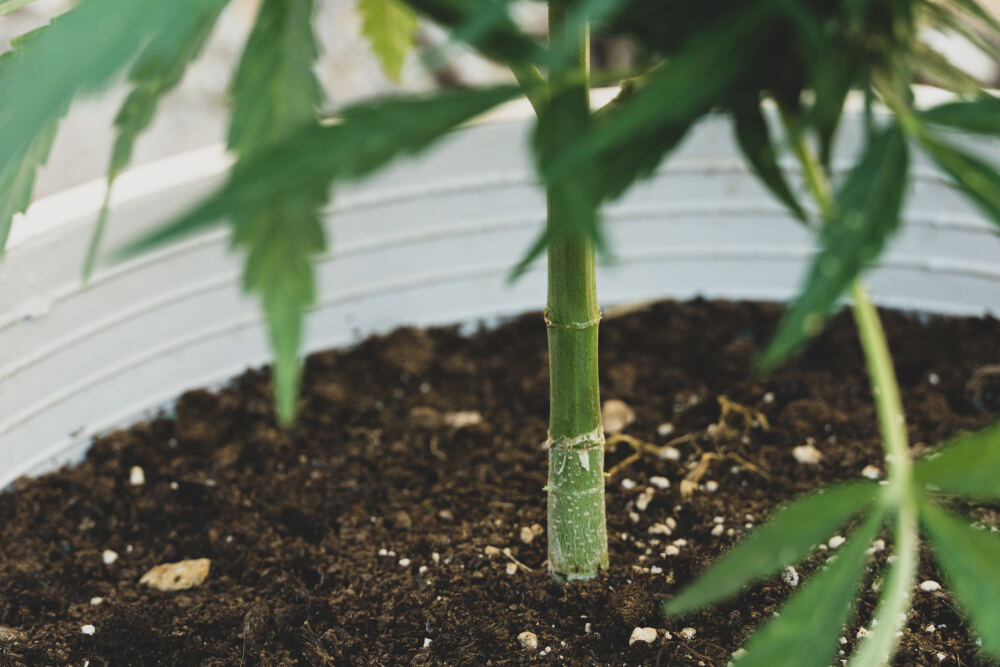
There are two main ways to reveg cannabis: returning the original plant to vegetative growth after harvest, or taking flowering clones and reverting them through a technique known as monster cropping.
Both methods rely on moving photoperiod cannabis back under a vegetative light cycle, but they differ in difficulty, timing, and what you are trying to preserve.
| Method | Best suited to | Main advantage | Main limitation |
| Post-harvest reveg | Growers who want to keep the original plant | Retains the existing root system and plant structure | Recovery can be slow |
| Monster cropping | Growers experienced with cloning | Creates a new plant from flowering material | Clones can take longer to root and stabilise |
Post-Harvest Re-Vegetation
Post-harvest revegging keeps the original cannabis plant alive after the main harvest. Instead of removing every branch and bud, leave several healthy lower branches, leaves, and small flowering sites intact. These remaining growth points are where new shoots can develop once the plant is returned to a vegetative light cycle.
This method is most useful when the original plant has performed well and you want to preserve it without relying on spare seeds or an existing clone.
Plant condition matters. A healthy plant with an established root system is generally a better candidate than one that finished flowering under heavy stress or with ongoing pest, disease, or nutrient problems.
Post-harvest reveg also avoids the extra rooting stage required with clones, although the plant still needs time to transition before normal vegetative growth resumes.
Grower tip: Plan for reveg before harvesting. Leave healthy lower growth in place rather than cutting the plant back to the main stem, as these areas provide the starting points for new shoots.
Monster Cropping
Monster cropping involves taking clones from a cannabis plant while it is flowering and placing those cuttings back under vegetative conditions.
Instead of preserving the entire original plant, this approach preserves the plant through cloned material. Flowering clones can initially produce unusual growth as they revert, but once established they may develop multiple branches and a bushier structure.
Monster cropping requires more experience because the cutting must first root successfully before it can fully transition back to vegetative growth. Environmental stability, humidity management, and basic cloning skills therefore become more important.
For growers who are already comfortable taking clones, monster cropping can provide another way to preserve a flowering plant without keeping the harvested parent alive.
For beginners, post-harvest revegging is usually the simpler of the two methods because it removes the additional challenge of rooting flowering cuttings.
Grower tip: Do not judge a monster-cropped clone by its first leaves. Early growth can look irregular while the cutting transitions away from flowering.
How to Re-Vegetate a Cannabis Plant After Harvest
Revegging after harvest is a gradual process. The aim is to keep enough healthy growth on the plant, return it to vegetative conditions, and allow new shoots to develop before making any major changes.
Step 1: Leave Healthy Growth on the Plant
When harvesting, do not cut the plant back to the main stem.
Leave several healthy lower branches, small buds, and leaves intact. These remaining growth points provide the areas from which new vegetative shoots can develop.
Remove dead or damaged material, but avoid heavy pruning immediately after harvest. The plant is already adjusting to a major change, so unnecessary cutting can slow recovery.
Grower tip: Plan for reveg before you start harvesting. It is much easier to leave suitable lower growth intact than to decide to reveg after the plant has already been cut back heavily.
Step 2: Switch Back to a Vegetative Light Cycle
Once harvesting is complete, return the plant to a vegetative light schedule.
An 18/6 schedule—18 hours of light followed by six hours of darkness—is commonly used to encourage the plant to move away from flowering and begin producing vegetative growth again.
Keep the schedule consistent. During the early transition, avoid sudden changes in lighting that could add unnecessary stress.
Step 3: Reduce Light Stress During Early Recovery
The plant does not need to be pushed hard immediately after harvest.
For the first stage of recovery, avoid excessive light intensity while the plant adjusts. Once healthy new shoots begin developing consistently, lighting can be increased gradually to suit normal vegetative growth.
The goal is steady recovery rather than rapid growth.
Step 4: Return to Vegetative Feeding Gradually
As the plant begins to reveg, transition back toward a nutrient profile suited to vegetative growth.
Avoid heavy feeding straight after harvest. The plant may initially grow slowly, so increasing nutrients too aggressively can create additional problems.
Monitor the new growth instead. Pale foliage, unusually dark leaves, or clawing can all indicate that feeding or other conditions need reviewing.
Grower tip: Make nutrient changes gradually. Give the plant time to respond before increasing or reducing feeding again.
Step 5: Watch for New Shoots
New shoots developing from the remaining buds and nodes are one of the clearest signs that revegging has started.
Do not expect the first leaves to look completely normal. Early growth can appear:
- Single-bladed
- Thin or narrow
- Twisted
- Uneven
This unusual growth is common during the transition back to vegetative development.
As recovery continues, the plant should gradually begin producing more familiar multi-fingered leaf structures.
Step 6: Wait Before Training or Pruning
Avoid topping, heavy pruning, or other plant-training techniques while the plant is still producing irregular early growth.
Wait until new shoots are developing consistently and the plant has returned to a more typical vegetative growth pattern.
Once established, you can begin reshaping the canopy and preparing the plant for its next vegetative or flowering stage.
Typical Reveg Timeline
The exact recovery time varies between plants, so use growth and plant condition as your main guide rather than relying on a fixed date.
| Stage | What You May See |
| Weeks 1–2 | Little visible change, possible yellowing, and unusual leaf shapes |
| Weeks 3–4 | New shoots begin appearing and vegetative growth becomes more noticeable |
| Weeks 5–6 | Leaf structure may become more typical and growth more consistent |
| After recovery | Training and pruning can resume once the plant is clearly growing vegetatively again |
Grower tip: Do not assume reveg has failed because the first few weeks look slow. Focus on whether healthy new shoots continue to appear and whether growth is becoming progressively more consistent.
Once the plant has fully returned to steady vegetative growth, it can be trained, pruned, kept as a mother plant, or eventually returned to flowering.
Common Reveg Problems and Troubleshooting
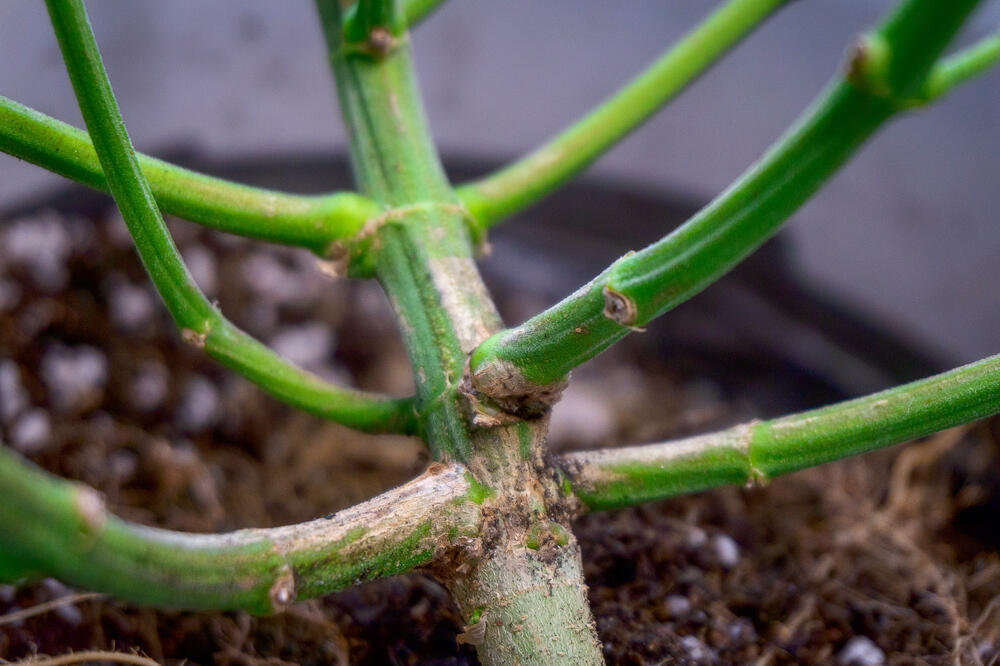
Some unusual growth is normal during revegging, so the key is knowing when to wait and when to make an adjustment.
| Problem | What to Check |
| Drooping leaves | Review watering, light intensity, and recent environmental changes. |
| Yellowing growth | Check feeding before assuming a deficiency. If symptoms point to low nitrogen, review our guide to nitrogen deficiency in cannabis. |
| No new growth | Confirm the light schedule is consistent and look for ongoing stress or poor plant health. |
| Twisted or single-bladed leaves | Usually normal during early reveg if healthy new shoots are still developing. |
| Continued decline | Reassess watering, nutrition, lighting, pests, and environmental stability rather than making several changes at once. |
Avoid Overcorrecting
One of the easiest mistakes during reveg is reacting too quickly to unusual early growth. Thin, twisted, or single-bladed leaves can appear while the plant transitions back to vegetative growth.
If fresh shoots are continuing to develop, avoid unnecessary pruning or sudden increases in nutrients.
Keep Stress Low
Inconsistent lighting, heavy pruning, and sudden environmental changes can add further stress during recovery. Keep conditions as stable as possible and make adjustments gradually.
Grower tip: Change one variable at a time when troubleshooting. This makes it easier to identify what is actually affecting the plant.
How to Improve Reveg Success
Successful revegging depends less on strain type and more on starting with a healthy plant and keeping conditions stable during recovery.
Start With a Healthy Plant
Choose plants that remained healthy through the flowering stage and did not suffer heavily from nutrient deficiencies, pests, or prolonged environmental stress.
A healthy root system and active lower growth give the plant a better foundation for producing new shoots after harvest.
Keep Conditions Stable
Avoid sudden changes in temperature, humidity, lighting, or airflow. Consistency is more important than trying to push fast growth during the first stages of recovery.
Use moderate airflow around the canopy, but avoid directing strong air at a recently harvested plant.
Avoid Overwatering
Reveg plants may use less water while growth is slow. Check the growing medium before watering and avoid keeping the root zone constantly wet.
Delay Training Until Growth Is Stable
Do not rush into topping, heavy pruning, or defoliation.
Wait until the plant is producing steady vegetative growth before reshaping the canopy. Recovery speed varies, so use plant condition rather than a fixed number of weeks to decide when training can resume.
Grower tip: Make changes gradually and monitor the plant’s response before adjusting anything else.
Conclusion
Revegging cannabis can be a useful way to preserve a photoperiod plant that has already shown desirable traits, especially when no backup clone or spare seeds are available.
The process depends on leaving healthy growth after harvest, returning the plant to a vegetative light cycle, and keeping conditions stable while new shoots develop. Early reveg growth can look unusual, so patience is important.
For the best chance of success, start with a healthy plant, avoid overwatering and heavy feeding, and delay pruning or training until consistent vegetative growth has returned.
Reveg is not always the fastest option, but when preserving a particular plant is the priority, it can give growers another way to continue working with the same genetics.
Frequently Asked Questions About Revegging Cannabis
How long does it take to reveg a cannabis plant?
Reveg timing varies between plants. Some begin producing noticeable new shoots within a few weeks, while others take longer to return to consistent vegetative growth. Use healthy new shoots and increasingly normal leaf development as better indicators than relying on a fixed number of weeks.
Can you reveg a cannabis plant while it is still flowering?
Yes. Flowering cannabis can be returned to vegetative conditions by changing the light cycle, although the transition can take time and early growth may appear twisted or single-bladed. This is different from post-harvest revegging, where the original plant is partially harvested first.
Can you reveg a cannabis plant more than once?
A photoperiod cannabis plant can potentially go through reveg more than once, but repeated transitions can place additional stress on the plant. Plant health should be considered before attempting another reveg cycle.
Can autoflowering cannabis plants be revegged?
No. Autoflowering cannabis plants flower according to age rather than changes in daylight hours. Switching an autoflower back to an 18/6 light schedule will not return it to vegetative growth.
When can you start training a revegged cannabis plant?
Wait until the plant is producing steady vegetative growth and its new leaves are becoming more typical in shape. Avoid topping, heavy pruning, or defoliation while growth is still irregular, as additional stress may slow recovery.


