




Granddaddy Purple is an indica-dominant cannabis strain known for deep purple flowers, sweet grape and berry aromas and a compact, bushy growth pattern. Often shortened to GDP or Granddaddy Purps, it has become one of the better-known purple cannabis strains among growers and consumers.
For growers, the Granddaddy Purple strain stands out for its manageable height, strong side branching and suitability for common canopy-training methods. Plants typically flower in around 10–12 weeks and can produce dense, heavy buds, although humidity and airflow need attention later in bloom.
In this Granddaddy Purple strain review, you will learn about its genetics, THC and terpene profile, flavour, commonly reported effects and the main growing characteristics to consider before choosing it for your setup.
Key Takeaways
- Granddaddy Purple is an indica-dominant hybrid commonly associated with Purple Urkle and Big Bud genetics.
- THC can reach up to 24%, while the main listed terpenes include myrcene, pinene and caryophyllene.
- Grape, berry and violet are the most recognizable flavours and aromas, with earthy and spicy notes underneath.
- Plants generally reach around 100–180 cm and flower in approximately 10–12 weeks.
- GDP is relatively easy to manage, but its dense flowers make airflow, humidity control and branch support important during late flowering.
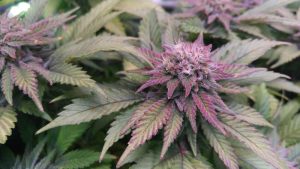
What is the Granddaddy Purple Strain?
Granddaddy Purple is generally described as an indica-dominant hybrid descended from Purple Urkle and Big Bud. You will also see the name written as Grand Daddy Purple, Granddaddy Purps and GDP.
The plant fits naturally among purple cannabis strains because genetically predisposed plants can develop deep violet colouration across the flowers and surrounding leaves.
Its growth is typically bushier than a tall, narrow-leaf cultivar. Plants produce a central stem surrounded by productive side branches, giving you several useful flowering sites rather than a structure dominated entirely by one cola.
If you are looking to grow the cultivar yourself, Granddaddy Purple Feminized Seeds remove the need to identify and remove male plants during a typical photoperiod grow.
Granddaddy Purple Strain at a Glance
| Trait | Granddaddy Purple |
| Genetics | Purple Urkle × Big Bud |
| Type | Indica-dominant hybrid |
| THC | Up to 24% |
| CBD | Under 1% |
| Main terpenes | Myrcene, pinene, caryophyllene |
| Flavor | Grape, berry, violet |
| Flowering time | 10–12 weeks |
| Height | Around 100–180 cm |
| Indoor yield | Around 400–500 g/m² |
| Outdoor harvest | Early October |
| Difficulty | Easy |
The figures above apply to the seed line reviewed here. They should not be treated as universal specifications for every plant sold under the Granddaddy Purple name.
Research into commercial cannabis has found significant chemical variation between samples, including plants sold under identical or similar strain names. A large study of almost 90,000 commercial cannabis samples also found considerable variation in cannabinoid and terpene profiles.
{{block class="FishPigExtend\Wordpress\Block\Product\Related" sku="GDP-F010"}}
Granddaddy Purple Genetics, Breeder and Origins
Granddaddy Purple became closely associated with the California cannabis scene in the early 2000s. The cultivar is commonly linked to Ken Estes and is generally dated to around 2003.
Its exact historical background is less tidy than many modern strain descriptions suggest. Older cannabis genetics often passed between growers without the detailed breeding records we expect today, so different accounts of a cultivar can survive for decades.
What Are the Parents of Granddaddy Purple?
The accepted lineage for the version covered here is Purple Urkle × Big Bud.
Purple Urkle brings many of the traits growers associate with GDP, including purple pigmentation, compact growth and a fruit-heavy aroma.
Big Bud contributes larger flower formation and productive branching.
That combination explains much of GDP's appeal. You get a plant with the visual and aromatic traits associated with purple genetics while also retaining useful flower production and an indoor-friendly structure.
Who Created Granddaddy Purple?
Ken Estes is widely associated with introducing and popularizing Granddaddy Purple in California.
You may find different historical pedigrees elsewhere, including accounts involving Mendo Purps, Skunk or Afghan genetics. For that reason, I would avoid presenting every historical detail as settled fact.
There is also a wider problem with relying too heavily on cannabis strain names. Genetic research has found that traditional labels such as indica and sativa do not always match clear genome-wide divisions, while samples sharing the same strain name can show genetic differences.
For growers, the practical lesson is simple: use the specifications of the exact seed line you are growing rather than assuming every GDP plant will behave identically.
Granddaddy Purple THC, Terpenes, flavour and Effects
Granddaddy Purple is a high-THC strain known for sweet grape and berry flavours backed by earth, pine and spice. Its effects are commonly described as relaxing and physically heavy, although potency and individual response can vary.
THC, CBD and Terpene Profile
The Granddaddy Purple line covered here can reach up to 24% THC, with CBD below 1%.
Its main terpenes are:
- Myrcene – earthy and herbal
- Pinene – fresh and pine-like
- Caryophyllene – peppery and spicy
These terpenes help shape the strain's aroma and flavour, but they should not be used to predict specific effects. Research shows that cannabis samples sold under the same strain name can still differ in cannabinoid and terpene content.
What Does Granddaddy Purple Smell and Taste Like?
Granddaddy Purple is best known for a sweet grape and berry aroma.
Depending on the phenotype, you may also notice violet, earth, pine and light peppery notes. The flavour is similar, with fruit coming through first before a more earthy and spicy finish.
Drying and curing also influence the finished profile. A slow, controlled dry helps preserve more of the aroma than rushing the post-harvest stage.
What Are the Effects of Granddaddy Purple?
Granddaddy Purple is commonly associated with a relaxing, body-heavy effect.
Users often report:
- Physical relaxation
- Calmness
- Euphoria
- Increased appetite
- Sleepiness at stronger doses
The experience can vary with THC level, dose, tolerance and individual response. With THC reaching up to 24%, it may feel strong for less experienced consumers, so lower amounts are the more sensible starting point if your tolerance is limited.


| THC % | Up to 24% |
|---|---|
| Flowering Time | 10–12 Weeks |
| Outdoor harvest | April |
| Yield | 400–500 g/m² |
| Indica/Sativa | Indica Dominant |
| Height | Medium: 100–180 cm |
| Difficulty | Easy |
| CBD Content | Less than 1% |
| Climate | Sub Tropical, Temperate, Warm |
| Seed Type | Feminized |
| Genetics | Purple Urkle x Big Bud |
| Effects | Relaxing |
| Taste | Grape, Berry, Violet |
| Terpene | Myrcene, Pinene, Caryophyllene |
How to Grow Granddaddy Purple
Granddaddy Purple is a relatively manageable indica cannabis strain with a broad, bushy structure and strong side branching. As a photoperiod strain, its development and final size depend heavily on how long it remains in vegetative growth before flowering begins.
If you are assessing GDP for your growing space, pay particular attention to canopy density, branch strength and moisture around the flowers. These are the areas most likely to influence how easy the plant is to manage.
Step 1: Allow for Its Bushy Structure
Granddaddy Purple typically reaches around 100–180 cm, although individual plants can finish shorter or taller.
Rather than producing a narrow upright shape, GDP tends to develop strong lateral branches that widen the canopy. This makes available horizontal space just as important as overall height.
Some stretch occurs as flowering begins, but the plant is generally easier to contain than taller, narrow-leaf cultivars.
Step 2: Keep the Canopy Open
One of the main things to watch with Granddaddy Purple is overcrowding.
Indoors, an overly dense canopy can reduce light penetration and restrict air movement around the inner branches. Keeping some separation between the main growth points creates a more open structure and makes the plant easier to inspect.
The main environmental points to monitor are:
- Air exchange
- Humidity
- Light coverage
- Canopy density
- Moisture around developing flowers
Outdoors, GDP is associated with warm, temperate and subtropical conditions. Wet weather becomes more important later in the season because its flowers can become compact and moisture can remain trapped inside larger buds.
The guide to identifying mould on cannabis explains the warning signs worth checking for.
Step 3: Plan Around the Flowering Period
Granddaddy Purple has a flowering period of approximately 10–12 weeks.
Indoor yields can reach around 400–500 g/m² under suitable conditions, although this should be treated as potential rather than a guaranteed result. Plant health, phenotype, growing environment and available space can all affect the final harvest.
Outdoor plants are generally associated with an early October harvest window. The calendar gives you a useful reference point, but individual plants can mature at slightly different rates.
Step 4: Manage the Side Branches
Granddaddy Purple's natural branching is one of its more useful growing characteristics.
It responds well to canopy-management approaches such as LST, topping and SCROG, particularly where the aim is to make better use of its lateral growth.
The general goal is to avoid one crowded central area and maintain a broad canopy with good access to light and air.
As flowering progresses, branch support can become more important because larger buds may add considerable weight to the outer stems.
Step 5: Watch for Phenotype Differences
Not every Granddaddy Purple plant will develop in exactly the same way.
Different phenotypes may vary in:
- Final height
- Branch spacing
- Flower density
- Finishing time
- Aroma
- Purple colouration
This variation is normal. Use the stated specifications as a guide rather than expecting every plant to match them exactly.
Aroma can also become pronounced during flowering, which is worth considering where odor management is important.
Step 6: Understand Why Granddaddy Purple Turns Purple
Granddaddy Purple's violet colouration comes from pigments known as anthocyanins. Research into purple Cannabis sativa tissues has identified these pigments in both leaves and flowers.
The plant's genetics determine whether strong purple expression is possible in the first place. Environmental conditions can influence how visible those colours become, but they cannot create the trait where the genetic potential is absent.
The guide to why cannabis turns purple explains the process in more detail.
Purple colouration should also be treated as an appearance trait rather than a measure of quality. Darker flowers do not automatically contain more THC, produce stronger effects or have a better terpene profile.

Conclusion
Granddaddy Purple remains a popular choice for growers who want a compact, indica-dominant strain with distinctive purple flowers and a sweet grape-and-berry profile.
Its strong lateral branching makes it suitable for LST, topping and SCROG, while its manageable height works well in most indoor spaces. The main point to watch is flower density, particularly when humidity rises late in bloom.
With a flowering time of around 10–12 weeks, THC levels reaching up to 24% and solid yield potential, Granddaddy Purple offers a good balance of appearance, potency and practical growing traits.
Frequently Asked Questions
Is Granddaddy Purple indica or sativa?
Granddaddy Purple is an indica-dominant hybrid. Its growth tends to be bushier and more compact than many sativa-dominant strains, with strong side branching and dense flower development.
How long does Granddaddy Purple take to flower?
Granddaddy Purple typically takes around 10–12 weeks to flower. Actual finishing time can vary slightly between phenotypes and growing conditions.
How tall does Granddaddy Purple grow?
Plants generally reach around 100–180 cm. Indoor height can be controlled through vegetative time and training methods such as LST, topping and SCROG.
Is Granddaddy Purple easy to grow?
Granddaddy Purple is considered relatively easy to grow. Its manageable height and branching make it suitable for newer growers, although dense flowers mean humidity and airflow still need attention during late flowering.
How much does Granddaddy Purple yield?
Indoor plants can produce around 400–500 g/m² under suitable conditions. Actual yield depends on lighting, root space, nutrition, plant health, training and phenotype, so these figures should be treated as potential rather than guaranteed results.
References
Bassolino L, et al. (2023). When Cannabis sativa L. Turns Purple: Biosynthesis and Accumulation of Anthocyanins. Research into anthocyanin production and purple pigmentation in cannabis.
Schwabe AL, McGlaughlin ME. Genetic tools weed out misconceptions of strain reliability in Cannabis sativa. Examines genetic consistency between commercially named cannabis strains and the limitations of indica/sativa classifications.
Smith CJ, et al. The phytochemical diversity of commercial Cannabis in the United States. Large-scale analysis of cannabinoid and terpene profiles across commercial cannabis samples.
Watts S, et al. Cannabis labelling is associated with genetic variation in terpene synthase genes. Examines the relationship between commercial labels, genetics and terpene composition.

