




The Fruity Pebbles Cannabis Strain is an indica-dominant hybrid known for its colourful flowers, sweet tropical flavor and tall growth pattern. Created from Green Ribbon, Granddaddy Purps and Tahoe Alien genetics, it combines fruit-forward aromas with a plant structure that can reach 180–220 cm.
Our Fruity Pebbles Feminized Seeds can produce THC levels of up to 24%, with indoor yields around 400–500 g/m² and a flowering time of approximately 8–10 weeks. For growers, the main points to watch are height, flowering stretch and airflow as the flowers become denser.
This Fruity Pebbles strain review covers its genetics, THC, terpenes, flavor, effects and the main growing traits you should understand before adding it to your grow.
Key Takeaways
- Fruity Pebbles is a 60% indica hybrid created from Green Ribbon, Granddaddy Purps and Tahoe Alien genetics.
- THC levels can reach up to 24%, while CBD remains below 1%.
- Plants can reach 180–220 cm, so indoor growers should plan for height and flowering stretch.
- Flowering takes around 8–10 weeks, with outdoor harvests typically ready toward the end of September.
- Indoor yields can reach around 400–500 g/m², with topping and LST helping growers control height and improve canopy coverage.
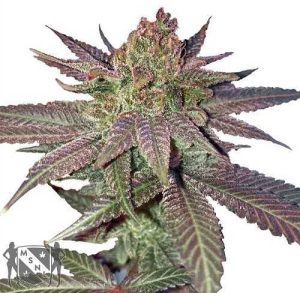
What is the Fruity Pebbles Cannabis Strain?
Fruity Pebbles is a 60% indica and 40% sativa hybrid created from Green Ribbon, Granddaddy Purps and Tahoe Alien.
Despite its indica dominance, this is not a short, compact plant. Fruity Pebbles can reach 180–220 cm and develops several main stems, giving it a taller and more open structure than many traditional indica strains.
The flowers become dense and resin-rich toward harvest, often showing strong colouration alongside a sweet fruit aroma.
Fruity Pebbles Strain at a Glance
| Trait | Fruity Pebbles |
| Genetics | Green Ribbon × Granddaddy Purps × Tahoe Alien |
| Type | 60% Indica / 40% Sativa |
| Seed type | Feminized |
| THC | Up to 24% |
| CBD | Below 1% |
| Flowering time | 8–10 weeks |
| Outdoor harvest | End of September |
| Height | 180–220 cm |
| Indoor yield | 400–500 g/m² |
| Climate | Temperate |
| Difficulty | Medium |
| Terpenes | Myrcene, limonene, pinene |
| Flavor | Tropical, sweet, berry |
| Effects | Uplifting |
Its combination of indica genetics and tall growth also makes Fruity Pebbles a useful example of why indica and sativa classifications should not be used as a simple guide to plant height.
Fruity Pebbles Genetics and Origins
The Fruity Pebbles strain genetics combine three established lines: Green Ribbon, Granddaddy Purps and Tahoe Alien.
Granddaddy Purps brings a strong indica influence along with the berry and fruit characteristics associated with its family. Tahoe Alien contributes another layer of hybrid genetics, while Green Ribbon helps round out the plant's structure and aromatic profile.
The result is a fruit-forward hybrid with enough branching to support multiple flowering sites.
If you enjoy the indica side of this strain, you can also explore other Indica cannabis seeds with similar compact flower formation and resin production.


| THC % | Up to 24% |
|---|---|
| Flowering Time | 8-10 Weeks |
| Outdoor harvest | March |
| Yield | 400-500gr/m² |
| Indica/Sativa | Indica Dominant |
| Height | Tall: 180cm-220cm |
| Difficulty | Medium |
| CBD Content | <1% |
| Climate | Temperate |
| Seed Type | Feminized |
| Genetics | Green Ribbon x Granddaddy Purps x Tahoe Alien |
| Effects | Uplifting |
| Taste | Tropical, Sweet, Berry |
| Terpene | Myrcene, Limonene, Pinene |

Fruity Pebbles THC, Terpenes and Flavor
How Strong Is Fruity Pebbles?
Our Fruity Pebbles can reach up to 24% THC, placing it among the stronger modern hybrids.
CBD remains below 1%, so THC makes up the dominant cannabinoid component. Actual potency can still change from plant to plant depending on phenotype, lighting, plant health and harvest timing.
For that reason, treat 24% as the upper potential rather than assuming every harvest will test at exactly the same strength.
Growers specifically interested in potency can compare Fruity Pebbles with other high THC cannabis seeds.
What Does Fruity Pebbles Taste and Smell Like?
The Fruity Pebbles flavor is built around tropical fruit, sweet berries and citrus.
In the bag, berry sweetness tends to come through first. Breaking apart the flowers can release sharper cherry-like notes, while smoking or vaping brings forward tropical fruit and candy sweetness.
The finish introduces more lemon and orange, preventing the profile from becoming overly sugary.
Three main terpenes support this character:
- Myrcene contributes earthy, musky and fruity notes.
- Limonene adds lemon, orange and fresh citrus.
- Pinene provides a cleaner pine and herbal background.
Depending on the individual plant, you may notice stronger berry, pineapple, guava or citrus notes.
What Are the Effects of Fruity Pebbles?
Fruity Pebbles is generally associated with an uplifting effect backed by the relaxing character expected from an indica-dominant hybrid.
With THC levels reaching 24%, it can be quite strong, particularly if your tolerance is low. Start with a sensible amount and see how you respond rather than judging the experience purely from the indica-to-sativa ratio.
Reported cannabis effects always vary according to tolerance, dose, phenotype and individual response, so no particular feeling should be treated as guaranteed.
How to Grow Fruity Pebbles Cannabis
Fruity Pebbles has a medium growing difficulty. I would recommend it to growers who already understand the basics of photoperiod cannabis and are comfortable controlling plant height.
The main issue is space. At 180–220 cm, this is a tall strain that can stretch noticeably as flowering begins.
Step 1: Give the Plant Enough Vertical Space
Plan for the final height before changing the light cycle.
Indoors, do not allow Fruity Pebbles to fill all available headroom during vegetative growth. You still need room for flowering stretch, your light fixture and a safe distance between the light and canopy.
Outdoor plants are easier to accommodate, especially in open, sunny positions.
Step 2: Train Fruity Pebbles Early
Fruity Pebbles responds well to topping and low-stress training (LST).
Topping reduces dominance from the main stem and encourages several productive branches. LST then lets you spread those branches horizontally, improving light penetration across the canopy.
I prefer doing the main structural work during vegetative growth. Once flowering is established, the priority should shift toward maintaining the canopy rather than repeatedly reshaping it.
Step 3: Control the Flowering Stretch
Expect vertical growth during the transition into bloom.
If height is limited, continue guiding taller branches outward during early flowering. A SCROG setup can also help turn vertical growth into a wider, more evenly lit canopy.
Because Fruity Pebbles naturally develops several main stems, it responds well to this style of training.
Step 4: Keep Feeding Balanced
Avoid assuming a high-THC strain automatically needs heavy feeding.
Increase nutrients gradually and watch the plant. Excess nitrogen can create unnecessarily leafy growth, making an already tall plant harder to manage.
Healthy leaf colour, steady development and clean leaf tips are better guides than simply pushing nutrient strength.
Step 5: Manage Humidity and Airflow
Flowers become increasingly dense and resinous late in bloom.
Keep air moving through the canopy and avoid allowing foliage to become packed around developing buds. This is particularly important as harvest approaches.
Selective removal of crowded leaves can improve airflow, but there is no need to strip the plant heavily.
The aroma also becomes stronger during flowering, so indoor growers should have odor control in place before bloom reaches its peak.
Fruity Pebbles Flowering Time and Yield
Fruity Pebbles has an indoor flowering time of approximately 8–10 weeks.
Under suitable conditions, indoor plants can produce around 400–500 g/m². Topping and LST can help expose more flowering sites to direct light and make better use of the plant's natural side branching.
| Growing Trait | What to Expect |
| Flowering | 8–10 weeks |
| Indoor yield | 400–500 g/m² |
| Height | 180–220 cm |
| Outdoor harvest | End of September |
| Best training | Topping and LST |
| Main challenge | Height and flowering stretch |
| Difficulty | Medium |
Outdoors, Fruity Pebbles prefers a temperate climate with good sun exposure and enough space for its tall frame. Harvest is typically ready around the end of September.
Use the calendar as a guide rather than an automatic harvest date. Check flower development and trichome maturity before cutting.
Is Fruity Pebbles Easy to Grow?
Fruity Pebbles is manageable, but I would not call it completely hands-off.
Its height and stretch require more planning than a compact indica, while dense flowers need good airflow later in bloom. Those points explain its medium difficulty rating.
The important growing traits are straightforward:
- Allow enough vertical space.
- Top or train plants before flowering.
- Expect stretch after the light cycle changes.
- Keep feeding balanced.
- Maintain airflow around dense flowers.
- Support heavy branches if needed.
Get those basics right and Fruity Pebbles is a rewarding strain with good yield potential and plenty of resin production.
Conclusion
The Fruity Pebbles Cannabis Strain stands out for its tropical fruit flavor, colourful flowers and strong growing potential. Its Green Ribbon, Granddaddy Purps and Tahoe Alien genetics produce a 60% indica hybrid that can reach 180–220 cm, with THC levels of up to 24%.
For growers, height management is the main consideration. Fruity Pebbles responds well to topping and LST, while good airflow becomes increasingly important as its dense flowers develop. With an 8–10 week flowering period and indoor yields of around 400–500 g/m², it is a solid choice for growers comfortable managing a taller photoperiod plant.
Fruity Pebbles Cannabis Strain FAQs
Is Fruity Pebbles indica or sativa?
Fruity Pebbles is an indica-dominant hybrid, with a genetic split of approximately 60% indica and 40% sativa. Despite its indica dominance, it grows taller than many traditional indica strains and can reach 180–220 cm under suitable conditions.
How long does Fruity Pebbles take to flower?
The Fruity Pebbles flowering time is around 8–10 weeks indoors. Outdoors, plants are typically ready to harvest around the end of September. Always check flower and trichome maturity rather than relying on the calendar alone.
How tall does Fruity Pebbles grow?
Fruity Pebbles is a tall-growing strain that can reach approximately 180–220 cm. Indoor growers should account for flowering stretch and use topping, LST or SCROG where necessary to keep the canopy at a manageable height.
How much does Fruity Pebbles yield?
Fruity Pebbles can produce approximately 400–500 g/m² indoors when grown under suitable conditions. Final yield depends on lighting, plant health, vegetative time, training and environmental control, so these figures should be treated as expected potential rather than guaranteed results.
Is Fruity Pebbles easy to grow?
Fruity Pebbles has a medium growing difficulty. It is manageable if you understand basic photoperiod cultivation, but its height and flowering stretch require some planning. Early training, balanced feeding and good airflow around the developing flowers can make the plant considerably easier to manage.


