




Topping autoflower plants can increase bud sites and help control height, but timing is critical due to their short life cycle. Unlike photoperiod strains, autoflowers transition to flower based on age, giving growers only a small window to apply high-stress techniques without reducing yield. When done too late or on a weak plant, topping can stunt growth and limit overall performance. In this guide, we explain when topping may be suitable, what risks to consider, and how to approach it carefully to avoid unnecessary stress.
Key Takeaways
- Autoflowers typically complete their full life cycle in 8–12 weeks, leaving limited time to recover from high-stress training.
- Topping is best performed around week 3 when the plant has 4–5 nodes and has not yet entered pre-flower.
- Topping after flowering begins commonly reduces yield due to slowed recovery and limited vegetative growth.
- Only healthy, vigorously growing plants should be topped, as stressed plants may remain stunted.
- Many growers prefer low-stress training (LST) for autoflowers because it reduces recovery time and risk.
- Results vary by genetics and environment, with some autoflower strains tolerating topping better than others.
Understanding autoflowering cannabis plants
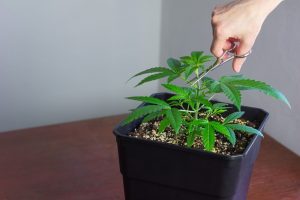
Autoflowering cannabis plants have changed the game for home growers. They don’t rely on light cycles to start flowering, making them easier to grow, especially for beginners.
Instead of needing a change in light schedule to trigger flowering like photoperiod plants, autoflowers transition from veg to flower on their own based on age. That means you don’t have to be concerned about adjusting your light cycle or worrying about seasonal shifts if you’re growing outdoors.
Autoflowers are bred from Cannabis ruderalis, a hardy species that thrives in shorter summers with less light exposure. Because of this, they have a much faster lifecycle compared to photoperiod plants, often going from seed to harvest in just 8-12 weeks. This speed is fantastic for growers looking for quick harvests, but it also means less time for plant training techniques like topping.
What are autoflowering strains?
Autoflowering strains are hybrids that have been bred with Cannabis ruderalis genetics. The key trait of autoflowers is their ability to flower based on age, not changes in light cycles. This makes them great for beginners or those growing in unpredictable environments, ensuring an excellent quality crop regardless.
They come in all sorts of varieties, from high-THC to high-CBD, and can be indica-, sativa-, or hybrid-dominant. Popular autoflowering strains include Northern Lights Auto, Gorilla Glue Auto, and Amnesia Haze Auto.
Growth cycle of autoflower plants
The growth cycle of an autoflower is fast and predictable:
- Week 1-2: Seedling stage – delicate and slower growth
- Week 3-4: Vegetative stage – rapid leaf and root development
- Week 5-6: Flowering begins – pistils appear, stretching starts
- Week 7-12: Buds develop, trichomes mature, and it’s time for harvest
Because of this fast timeline, training techniques like topping need to be done early, if they are to succeed, so below are the pros and cons to consider when growing autoflowers.
Benefits and challenges of growing autoflowers
Pros:
- Shorter growth cycle means quicker harvests
- No need to adjust light schedules
- Compact plants are great for small spaces
- Resilient to environmental changes
Cons:
- Less recovery time for training techniques like topping
- Yields can be smaller than photoperiod plants
- Less control over the vegetative stage
The concept of topping in cannabis cultivation
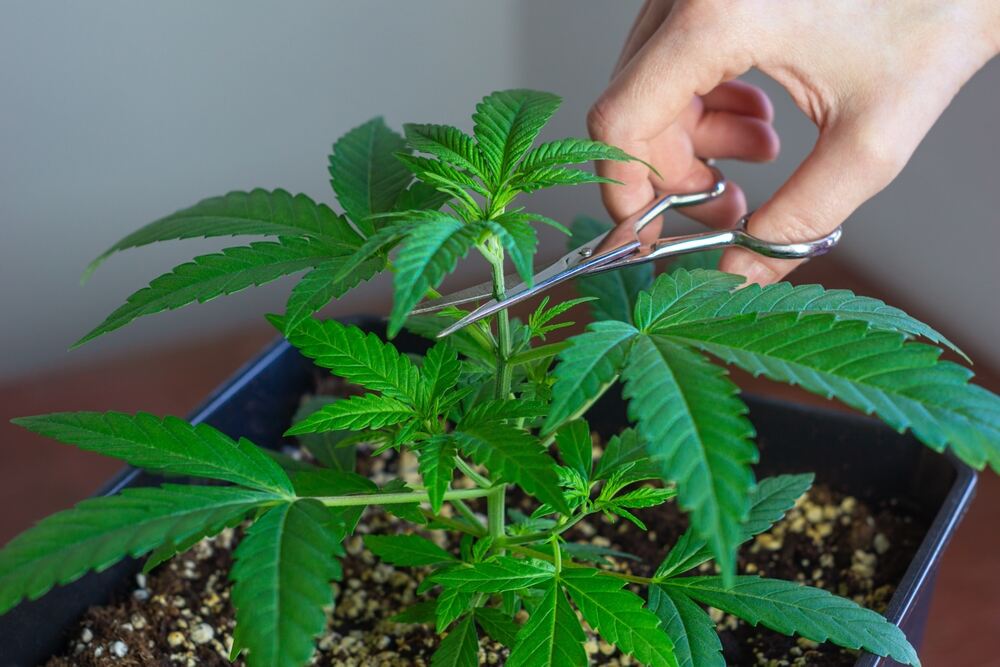
Topping is one of the most well-known high-stress training (HST) techniques used to increase yields. By cutting off the top of the crown shoot, you encourage the plant to grow multiple growth shoots and colas instead of a single dominant one. This redistributes energy and results in a bushier plant with more bud sites, resulting in a far greater yield
Definition and purpose of topping
Topping involves cutting off the main growing tip of the cannabis plant to force it to grow two new branches. This spreads out bud development and also prevents the plant from growing too tall, making this technique well suited for growers with limited height and grow space. The main goal is to maximise light exposure across the canopy and increase overall yields.
How topping affects plant growth and yield
Topping redistributes the plant’s energy, encouraging lateral growth rather than vertical dominance. This leads to:
- More even light exposure
- More bud sites
- A sturdier, bushier plant
- Potentially higher yields if done correctly
However, with autoflowers, the timing of topping is everything. Since these plants don’t have a long veg stage to recover, topping too late can hurt their ability to develop properly due to recovery time.
Differences between topping photoperiod and autoflower plants
Photoperiod plants have a much longer vegetative stage, meaning they have plenty of time to recover from topping. Autoflowers, on the other hand, have a limited growth window, so any stress can reduce yields and may promote small and stunted plants.. This is why many growers avoid topping autoflowers altogether or only do it under very specific conditions.
Is topping suitable for autoflower plants?
Topping autoflowers is controversial. Some growers swear by it, while others avoid it completely. Since autoflowers grow fast, there’s less room for error. Let’s take a look at the risk and benefits associated with topping autoflowering cannabis plants, and why you should consider it or not.
Assessing the risks and benefits
Risks:
- If done too late, it stunts growth
- Can slow down flowering
- Reduces yield if the plant doesn’t recover quickly
Benefits:
- If done early enough, can increase bud sites
- Helps control height in small grow spaces
- Produces a shorter and more discreet plant outdoors.
Factors to consider before topping autoflowers
- Strain choice: Some autoflowers handle stress better than others
- Plant health: Only top healthy, strong plants
- Growth stage: Must be done early (around week 3 at the latest)
- Experience level: Best for more experienced and knowledgeable growers; if you’re new to growing, consider low-stress training (LST) instead
Alternative training methods for autoflower strains
Since topping can be risky for some autoflowers, many growers prefer low-stress training (LST) instead. This involves bending and tying branches to spread out the canopy without cutting the plant. Super cropping and defoliation are also possible but should be used carefully.
Best practices for topping autoflower plants
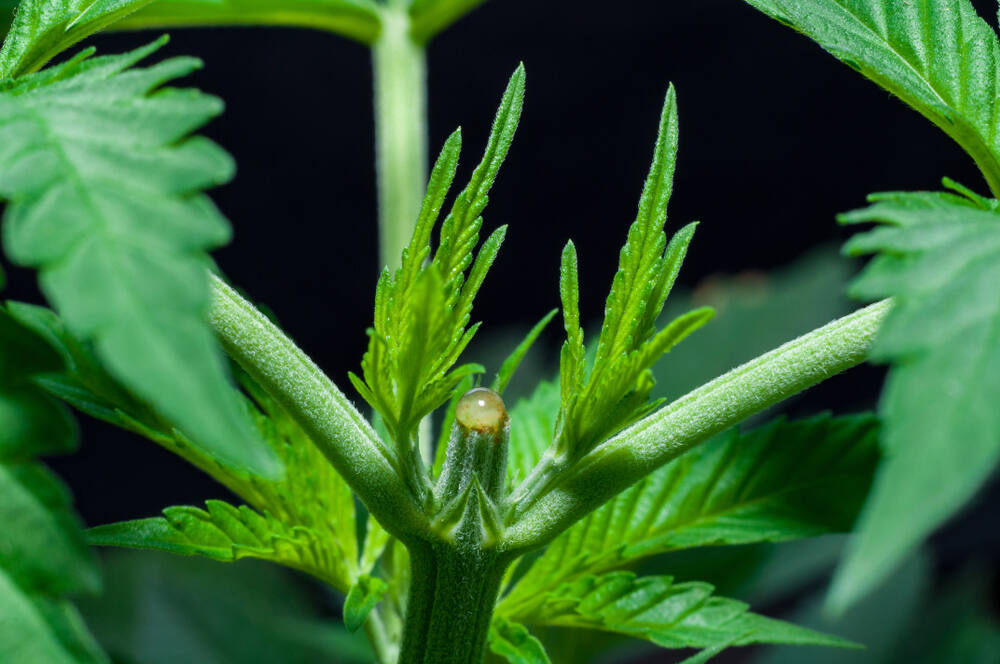
If you decide to top your autoflowers, follow these best practices to maximise success.
Optimal timing for topping autoflowers
The best time to top an autoflower is around week 3, when the plant has at least 4-5 nodes but hasn’t started flowering yet. Topping later than this can stress the plant and reduce yields.
Step-by-step guide to topping autoflower plants
- Choose a healthy plant with strong growth
- Wait until the 5th internode has developed
- Sterilize your scissors or razor to prevent infection
- Cut just above the 3rd or 4th node to create two main colas
- Monitor the plant closely for stress and recovery signs
Post-topping care and recovery tips
- Keep stress to a minimum – no more HST after topping
- Ensure proper watering and nutrients
- Support new branches with LST if needed
Common mistakes to avoid when topping autoflowers
Topping too early or too late
Topping before the plant has enough nodes (under 4) can stunt growth. Topping after the pre-flower stage can cause stress and reduce bud development.
Over-stressing the plant
Avoid combining topping with other stressful techniques like heavy defoliation. Autoflowers need time to recover from training.
Neglecting proper aftercare
After topping, your plant needs time to recover. Make sure it has the right nutrients, good airflow, and stable environmental conditions.
Frequently asked questions about topping autoflower plants
Can all autoflower strains be topped?
Not all autoflowers respond well to topping. Some strains are more resilient, while others will suffer major stress. Research your strain before deciding.
How does topping affect harvest time?
Topping can slightly delay flowering, but this is usually only by a few days. If the plant is healthy and recovers well, it won’t significantly extend your grow time.
What are the signs of a successfully topped plant?
A topped autoflower should show two strong main colas growing in place of the single top. The plant should remain bushy with no signs of stunted growth or stress.
Conclusion
Topping autoflowers is a technique that works very well when performed at the correct time with a healthy plant, but may not always be the best option. If done at the right time, on the right strain, and with proper aftercare, it can significantly increase yields.
However, for most beginners, low-stress training (LST) is a safer plant training technique to choose over topping. Whatever method you choose, the key is to minimize stress and give your plants the best chance to thrive, resulting in the best quality crop and yield possible.


