




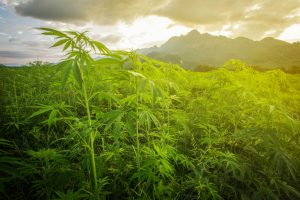
Where does wild weed grow, and where does cannabis naturally grow without human care? Wild cannabis is found across parts of Asia, particularly Central Asia and the Himalayan region, as well as areas of Europe, Africa and North America. Although cannabis originated in Asia, centuries of cultivation have allowed it to spread across the world.
Not every wild cannabis plant is truly wild. Much of the wild marijuana found today is feral, meaning it descends from previously cultivated plants. Understanding where weed originates from, the conditions it survives in and how wild weed differs from cultivated cannabis helps explain why these plants continue to grow independently.
Key Takeaways
- Where does wild weed grow? Wild cannabis occurs in parts of Asia, Europe, Africa and North America, particularly in regions with historical cultivation.
- Where does weed originate from? Cannabis originated in Asia, although its precise evolutionary birthplace remains under scientific investigation.
- Wild vs feral cannabis: Wild cannabis may have naturally occurring ancestry, while feral plants descend from cultivated crops.
- Natural growing conditions: Wild weed can survive in temperate, warm and relatively dry climates where seasonal conditions allow reproduction.
- Wild cannabis plant characteristics: Height, leaf structure, seed production and THC content vary depending on genetics and environmental conditions.
- What is Wild Cannabis?
- Where Does Wild Cannabis Grow Naturally?
- Where Does Weed Originate From?
- Where Does Wild Cannabis Grow in the United States?
- What Does a Wild Cannabis Plant Look Like?
- What Conditions Allow Wild Cannabis to Grow?
- Wild Cannabis vs Cultivated Cannabis
- Is Wild Cannabis the Same as Landrace Cannabis?
- Does Wild Cannabis Contain THC?
- Is Wild Cannabis Safe to Collect?
- Conclusion
- Frequently Asked Questions
- References
What is Wild Cannabis?
In everyday language, wild cannabis means plants growing without anyone planting, watering or managing them. Botanically, it is important to separate genuinely wild ancestry from feral cannabis, which descends from former crops. Seeds can escape agricultural fields or persist around abandoned farms, allowing plants to reproduce for generations.
In the United States, these self-sustaining plants are often called ditch weed, reflecting their presence around roadsides and disturbed ground.
| Term | What it means |
| Wild cannabis | Independently growing plants that may have ancestry in naturally occurring populations. |
| Feral cannabis | Descendants of cultivated plants now reproducing without care. |
| Landrace | A regional population shaped by local conditions and often traditional cultivation. |
| Cultivated cannabis | Plants intentionally managed or selected for particular traits. |
The term Cannabis ruderalis is sometimes applied to wild-growing forms associated with northern Eurasia. Its botanical classification remains debated, and not all feral plants belong to this group.
Where Does Wild Cannabis Grow Naturally?
Asia is central to cannabis history. Royal Botanic Gardens, Kew, records the native range of Cannabis sativa across Central Asia to Xinjiang and Pakistan. Outside that range, centuries of cultivation have produced introduced and sometimes self-sustaining populations. A record of cannabis in a country does not mean it grows everywhere there.
Asia and the Himalayan Region
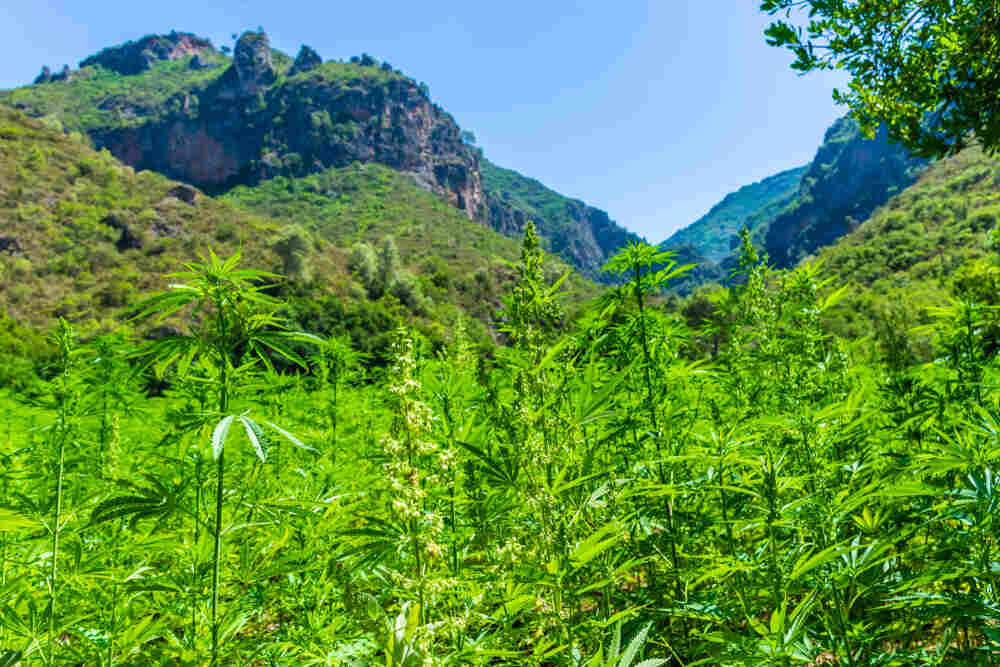
Kazakhstan and nearby Central Asian countries contain grasslands, river valleys and foothills where cannabis has a long history. Afghanistan, Pakistan, northern India and Nepal also have established populations and traditions of cultivation. Some plants grow independently; others descend from nearby farms. Geography alone cannot reveal their ancestry.
These histories help explain why landrace cannabis strains are linked with places such as Afghanistan and Nepal, although a plant found there is not automatically a landrace.
Europe, Africa and the Americas
Hemp cultivation brought cannabis into European agriculture for fibre, rope and seed. Escaped plants can still occur around former farmland and other disturbed sites, especially in parts of central and eastern Europe.
Cannabis also has longstanding cultivation histories in parts of Africa, Mexico and the Caribbean. These are regions of introduced or regionally established plants, not proof that the species evolved there. Whether a population persists without planting depends on local conditions and its history.
| Region | Typical settings | Broad population background |
| Central Asia | Grassland, valleys, foothills | Native-range and longstanding populations |
| China and Himalayan areas | Rural land and mountain valleys | Historical, cultivated and independent populations |
| Europe | Former farms, disturbed ground | Mainly introduced or feral |
| North America | Roadsides and former hemp fields | Mainly feral |
| Africa, Central America and Caribbean | Rural and cultivated landscapes | Introduced and regionally established |
Where Does Weed Originate From?
Cannabis originated in Asia, but where it evolved and where people first domesticated it are separate questions. Its botanical native range is not a precise map of its ancient evolutionary birthplace.
Ren et al. (2021) examined genomes from 110 cannabis accessions and found evidence supporting early domestication in East Asia, potentially during the Neolithic period. Their analysis also linked modern hemp and drug-type cannabis to shared ancestral populations.
Balant et al. (2025) investigated the geographical history of wild-growing and cultivated cannabis, identifying broad genetic groups associated with East Asia, Paleotropis and Boreal regions. The findings show that cultivation, movement and genetic exchange have shaped populations over time; neither study establishes one uncontested birthplace.
How Cannabis Spread
People carried cannabis seeds for food, fibre and other agricultural uses as farming and trade expanded through Asia, Europe and Africa. Cannabis later reached the Americas through human movement. Some seeds escaped cultivation, and their descendants survived independently. That history explains why a plant can grow without care today in a place where cannabis was not originally native.
Where Does Wild Cannabis Grow in the United States?
American wild marijuana is generally feral cannabis, much of it linked to historical industrial hemp. Hemp cultivation expanded during the Second World War to provide fibre for rope and textiles. Although farming later declined, some populations continued producing seeds.
Feral cannabis has been documented in Midwestern states such as Minnesota, Wisconsin, Iowa, Nebraska, Kansas, Indiana, Missouri and South Dakota, often around old fields, field margins and roadsides. That does not mean every roadside plant belongs to an old hemp population.
Aina et al. (2025) studied 760 feral cannabis plants from 12 US states and identified five genetic groups. This shows that ditch weed is not a single uniform type: different populations retain different histories and cannabinoid-related characteristics.
What Does a Wild Cannabis Plant Look Like?
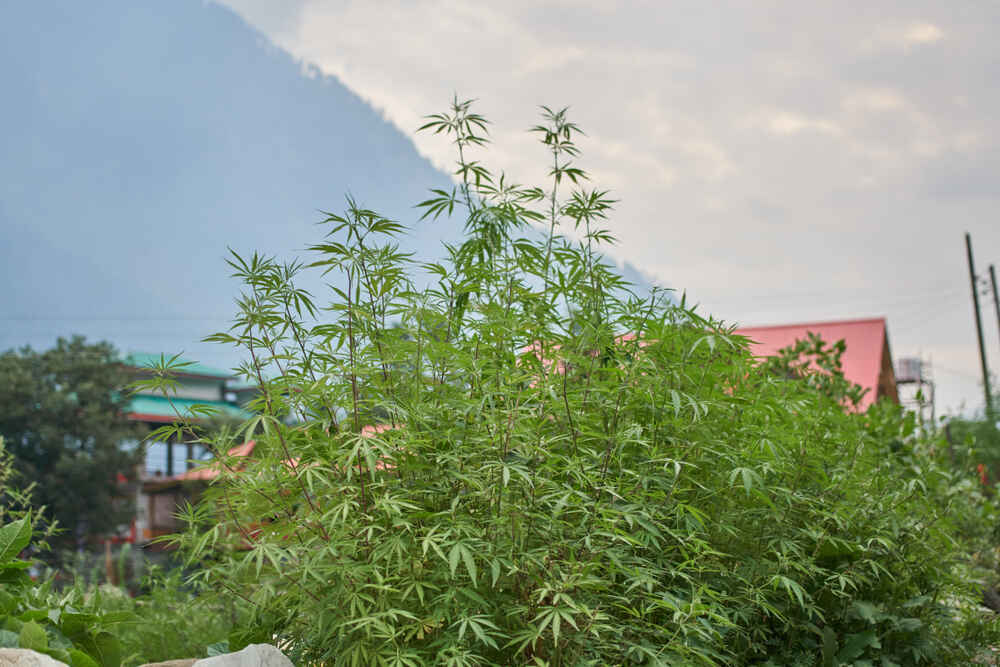
A wild cannabis plant has the familiar upright stem and compound leaves with pointed, toothed leaflets. But there is no reliable wild-plant height or shape. Some specimens grow tall with sparse branches; others stay shorter and spread outward. Genetics, available light, soil and competition with nearby plants all matter.
Flowers and Seeds
Cannabis commonly produces separate male and female plants, though exceptions occur. Male plants develop pollen-bearing flowers; female flowers can form seeds after pollination. Wind moves pollen through unmanaged populations, so seeded female flowers are common. The features used when identifying male and female cannabis plants are the same in cultivated and independently growing cannabis.
| Feature | What you may see |
| Leaves | Several toothed leaflets; width varies |
| Structure | Tall, narrow, compact or branching |
| Male flowers | Clusters that release pollen |
| Female flowers | Reproductive structures that may develop seeds |
Grower Tip: Do not identify a plant as truly wild from its leaf shape or height. The same genetic background can look different under changing light, soil and weather.
What Conditions Allow Wild Cannabis to Grow?
Cannabis can establish itself in temperate areas with warm summers as well as some warmer, drier regions. It is generally an annual plant: seeds carry a population into the next season rather than mature plants surviving a freezing winter.
Sunlight, Soil and Moisture
Open habitats provide light for photosynthesis, while drainage and soil nutrients influence root development. Extended drought can restrict growth, but constantly saturated soil also causes problems. Former farmland can offer disturbed soil and relatively little competition during establishment.
| Factor | Why it matters |
| Sunlight | Supports growth and flowering |
| Temperature and season length | Affect whether plants mature and set seed |
| Water and drainage | Influence root health and growth |
| Soil and competition | Determine access to nutrients, light and space |
Seasonal daylight influences flowering in many populations. This response is familiar in photoperiod cannabis plants, though not all cannabis genetics depend on day length to the same extent.
The same environmental pressures affect outdoor cannabis cultivation, except managed plants may receive irrigation, soil improvements and protection from competition.
Seed Survival and Seasonal Growth
Some cannabis seeds remain dormant until conditions allow germination, but there is no reliable single number of years that applies to every soil and climate. A population persists only when enough plants complete the cannabis growing cycle and produce viable seeds.
Grower Tip: Look at the complete growing season, not just summer heat. Frost dates, rainfall and the time available for seed production help explain whether cannabis can establish itself in a region. Cultivated outdoor cannabis seeds may be selected for different local conditions.
Wild Cannabis vs Cultivated Cannabis
Both are cannabis, but their selection pressures differ. Growers may choose plants for flower production, structure or cannabinoid profiles; unmanaged populations must reproduce under local conditions. Neither group has one fixed appearance or chemical profile.
| Characteristic | Wild or feral | Cultivated |
| Selection | Survival and reproduction | Traits chosen by growers or breeders |
| Pollination | Often uncontrolled | May be managed |
| Plant structure | Depends on ancestry and habitat | May be selected or trained |
| Cannabinoids | Variable | Often selected for a target profile |
Breeding can also influence the sex of offspring. The techniques used in producing seeds intended to grow into female plants illustrate one difference between selected genetics and unmanaged populations.
Is Wild Cannabis the Same as Landrace Cannabis?
No. A landrace is associated with a region and shaped over generations by local conditions, often alongside traditional farming. A feral population may descend from introduced crops and contain genetics from elsewhere. A plant found in Afghanistan, Nepal or Thailand is therefore not necessarily genetically isolated or part of a recognised landrace.
Descriptions of landrace cannabis seeds should be understood as claims about regional ancestry, not guarantees of purity. Likewise, indica and sativa classifications cannot establish where a plant originated or predict its exact chemistry.
Grower Tip: Treat geographical strain names as clues to reported ancestry rather than guarantees. Even plants from the same regional population may differ in structure and development.
Does Wild Cannabis Contain THC?
Yes, but the amount differs between plants and populations. Many feral hemp populations have relatively little THC because their ancestors were grown for agricultural use. Others may have different cannabinoid profiles, so an independent plant should not automatically be considered low-potency.
Aina et al. (2025) found cannabinoid-related genetic variation in American feral cannabis, including types associated with THC-dominant, balanced and CBD-dominant profiles. About 78% of successfully classified samples carried a CBD-dominant-associated genotype; that classification does not give the measured THC level of every plant. Reported total cannabinoid concentrations ranged from 0.21% to 4.73%, not THC alone. Appearance cannot establish potency.
Is Wild Cannabis Safe to Collect?
A plant growing without care may still be on private land or part of a deliberate crop. Cannabis laws differ by location, and plants beside roads or former industrial sites may have been exposed to pollutants or pesticides. Removing plants or scattering seeds can also disturb habitats and introduce unwanted genetics. Observation without collecting or relocating plants avoids these concerns.
Conclusion
Wild weed occurs in parts of Asia and in introduced populations across several continents. Understanding where cannabis originated, where it was cultivated and where feral plants now reproduce provides a clearer picture than treating every outdoor plant as a pure wild strain.
Frequently Asked Questions
Is cannabis native to North America?
No. Cannabis was introduced through human activity. Most self-sustaining populations in North America are feral descendants of cultivated plants.
Can wild cannabis survive winter?
Mature plants generally die after their annual life cycle. Viable seeds may persist through winter and germinate when conditions improve.
Does wild cannabis reproduce without growers?
Yes. Pollen can reach female flowers by wind, allowing plants to produce seeds and establish another generation.
Can wild cannabis grow in tropical climates?
Yes, although frequent heavy rainfall and humidity may increase disease pressure. Its presence varies considerably between locations.
Are wild and cultivated cannabis genetically identical?
No. Their ancestry and selection histories differ, and both groups can contain substantial variation.
References
- Ren, G., et al. (2021). Large-scale whole-genome resequencing unravels the domestication history of Cannabis sativa. Science Advances, 7(29), eabg2286. https://doi.org/10.1126/sciadv.abg2286
- Balant, M., et al. (2025). Integrating target capture with whole genome sequencing of recent and natural history collections to explain the phylogeography of wild-growing and cultivated cannabis. Plants, People, Planet, 7(6), 1771–1788. https://doi.org/10.1002/ppp3.70043
- Aina, A., et al. (2025). Genetic diversity, population structure, and cannabinoid variation in feral Cannabis sativa germplasm from the United States. Scientific Reports, 15, 20423. https://doi.org/10.1038/s41598-025-07912-8

