




Knowing when to flush autoflowers can be confusing, especially when growing guides recommend different schedules. Flushing autoflowers traditionally involves reducing or stopping nutrient feeds before harvest, but is it necessary? Research suggests that flushing does not consistently improve flower quality, and stopping nutrients too early may affect developing buds. The growing medium also matters, as watering autoflowers in soil, coco and hydroponics requires different approaches.
This guide explains the best time to consider flushing, how to manage the process, what mistakes to avoid and what scientific research reveals about its benefits.
Key Takeaways
- Flushing is optional: Research has not established that autoflowers need flushing to produce quality flowers.
- Timing depends on maturity: Growers traditionally flush 7–14 days before harvest, but plant development matters more than a fixed schedule.
- Growing media respond differently: Soil, coco and hydroponic systems retain and supply nutrients in different ways.
- Avoid excessive watering: Flushing should not leave roots saturated or cause unnecessary nutrient stress.
- Research challenges traditional claims: Controlled studies have not demonstrated consistent improvements in THC, terpene content or flower quality from pre-harvest flushing.
What is Flushing Autoflowers?
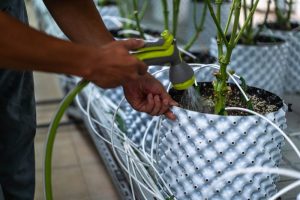
Flushing autoflowers involves reducing or stopping nutrient feeds and supplying plain water during the final stage before harvest. The aim is to lower nutrient availability around the roots, although this does not guarantee better flower quality.
There are two different types of flushing:
| Type | Purpose |
| Pre-harvest flushing | Reducing nutrient inputs as the autoflower approaches harvest |
| Corrective flushing | Removing accumulated salts from the growing medium when excess nutrients cause problems |
Plain water can reduce dissolved salts in the root zone, but it does not directly wash nutrients out of developing buds. The plant can still use minerals stored in its tissues or available in the growing medium.
Corrective flushing is a separate treatment that may be considered when excess nutrients cause plant damage.
Do Autoflowers Need Flushing Before Harvest?
No. Flushing autoflowers before harvest is optional. Healthy plants can reach maturity without switching to nutrient-free water.
Some growers reduce feeding to limit nutrient use during the final stage, while others maintain their normal schedule. Claims that flushing produces smoother smoke, cleaner ash or stronger aromas have not been consistently supported by scientific research.
What Does Scientific Research Say About Flushing?
A 2024 study by Saloner, Sade and Bernstein examined pre-harvest flushing across five cannabis cultivars. Researchers found limited effects on yield, mineral accumulation and most cannabinoid and terpene measurements. They suggested flushing could reduce nutrient inputs without substantially affecting production under the conditions tested.
A separate 2019 controlled industry trial compared flushing periods of 0, 7, 10 and 14 days. It found no statistically significant improvements in yield, THC concentration or terpene content.
Neither study establishes an ideal flushing period specifically for autoflowers.
Grower tip: If your autoflower is developing normally, avoid making unnecessary feeding changes near harvest. Follow an appropriate autoflower nutrient feeding schedule and adjust it according to plant condition.
When to Flush Autoflowers Before Harvest
Growers traditionally begin flushing autoflowers 7–14 days before harvest, although research has not established an ideal flushing period. Timing should depend on flower maturity rather than a fixed schedule.
For example, a 10-week autoflower might approach harvest during weeks 9–10, but individual plants can develop at different rates. Stopping nutrients too early may restrict flower growth.
How to Tell When Your Autoflower Is Approaching Harvest
When checking if your autoflower is ready to harvest, use a magnifying loupe or digital microscope to inspect trichomes on the flower bracts. Avoid relying on sugar leaves, as their trichomes can mature earlier.
| Development stage | Signs to look for | Feeding decision |
| Still developing | Mostly clear trichomes, new pistils and expanding buds | Continue suitable feeding |
| Approaching harvest | Increasing cloudy trichomes, fuller bracts and fewer fresh pistils | Consider whether reducing nutrients is appropriate |
| Harvest-ready | Predominantly cloudy trichomes, sometimes with amber resin heads | Base harvest timing on maturity, not the flushing schedule |
Check flower development alongside trichome appearance, as pistil changes alone cannot reliably confirm maturity.
Why Flushing Times Vary Between Autoflowers
Genetics influence development speed, while temperature, light intensity, nutrient availability and root health can affect the total growth cycle. Even plants started together may reach maturity at different times.
Grower tip: Begin inspecting trichomes before the expected harvest date, checking buds from different areas of the plant. This helps you identify uneven maturity and make feeding decisions based on actual development.
How to Flush Autoflowers Step by Step
If you choose to flush, adjust nutrient delivery while maintaining suitable root conditions. The process should not involve forcing large volumes of water through the growing medium.
Step 1: Adjust Nutrient Strength
Decide whether to gradually reduce nutrient concentration or switch to water without added feed.
A gradual reduction provides a less abrupt change, while supplying plain water removes added nutrients from the irrigation solution.
Step 2: Prepare Your Water
Check the water before irrigation:
- pH: Keep it within the suitable range for your growing medium.
- EC: Measure dissolved mineral content, particularly when using tap water.
- Temperature: Use water close to the normal root-zone temperature to avoid sudden changes.
Step 3: Maintain Suitable Moisture
Continue irrigating according to the growing medium.
For soil-grown autoflowers, check moisture beneath the surface or lift the container to judge its weight. Apply water evenly when needed and allow excess water to drain.
In coco and hydroponic systems, maintain the irrigation approach suited to the system rather than copying a soil watering routine.
Step 4: Check Plant Response
Inspect the leaves and root-zone conditions during the flushing period.
Rapid yellowing, brown leaf edges or wilting may indicate nutrient stress or poor water uptake. If these symptoms develop, investigate the cause before continuing.
Common Autoflower Flushing Mistakes
| Mistake | Potential problem |
| Leaving containers in standing runoff | Can contribute to poor root conditions and root rot |
| Using inaccurate pH or EC meters | Can lead to incorrect decisions about water quality |
| Adding unnecessary flushing products | May alter root-zone conditions without a proven flower-quality benefit |
| Ignoring significant plant stress | Can allow nutrient or root problems to worsen |
Grower tip: Record the date, input EC and any feeding changes. This makes it easier to identify when problems began rather than guessing from leaf symptoms alone.
Flushing Autoflowers in Soil, Coco and Hydroponics
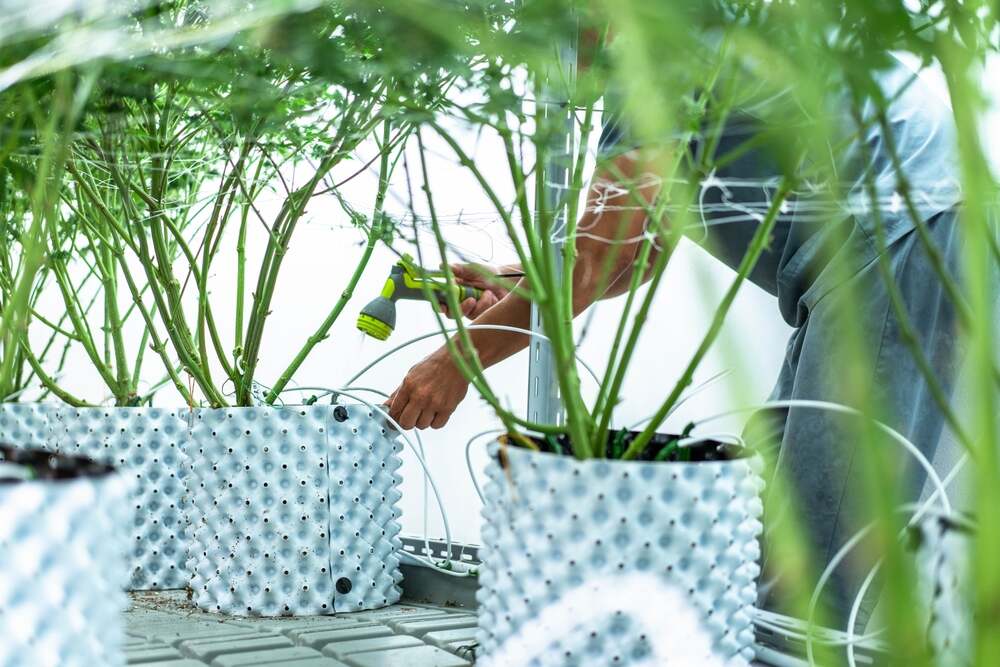
Different growing media retain and supply nutrients in different ways. This affects how quickly nutrient availability changes when feeding is reduced.
| Growing medium | Nutrient behaviour | Flushing consideration |
| Soil | Retained minerals may remain available after feeding stops | Existing nutrient reserves affect how quickly levels decline |
| Living soil | Organic matter and microbial activity continue supplying nutrients | Additional flushing may offer little benefit |
| Coco coir | Depends heavily on nutrients supplied through irrigation | Plain water can alter calcium and magnesium availability |
| Hydroponics | Nutrient concentrations can change quickly | Reservoir EC and pH require close attention |
For growers using hydroponic cannabis systems, nutrient availability can change rapidly when the reservoir solution is replaced. Soil responds more gradually because minerals may remain available within the growing medium.
These differences make it difficult to recommend a single flushing duration that suits every autoflower.
Pre-Harvest Flushing vs Correcting Nutrient Buildup
Excess nutrients can increase the concentration of dissolved salts around roots, potentially affecting water uptake and plant health. Correcting this problem requires a different approach from routine pre-harvest nutrient withdrawal.
Electrical conductivity (EC) indicates the ability of a solution to conduct electricity and provides an estimate of dissolved ion concentration. PPM meters convert EC readings into estimated dissolved solids using a selected conversion scale.
When investigating nutrient buildup, consider:
- Input EC: The concentration of dissolved ions entering the growing medium.
- Runoff EC: The concentration measured in water draining from the container.
- Plant symptoms: Damaged leaf tips, declining growth or other signs that may indicate nutrient stress.
Runoff readings can be affected by moisture levels, growing medium and sampling methods. They cannot identify individual nutrients or establish the mineral content of harvested flowers.
If readings suggest excessive salts, assess nutrient strength and irrigation practices before considering corrective leaching.
Grower tip: Compare input and runoff EC using the same meter and a consistent sampling method. A persistent difference may indicate changing root-zone conditions, but readings should always be assessed alongside plant health.
Conclusion
Knowing when to flush autoflowers comes down to plant maturity, nutrient availability and growing conditions. Although some growers reduce feeding before harvest, research has not established that flushing consistently improves flower quality.
If you choose to flush, maintain suitable root conditions and avoid unnecessary nutrient stress. The priority is healthy development through to harvest, rather than completing a fixed flushing schedule.
Choosing suitable genetics also matters. Explore our range of autoflower cannabis seeds to compare varieties with different growth times and plant characteristics.
Frequently Asked Questions
Can You Use Tap Water to Flush Autoflowers?
Yes, provided the water has suitable pH and mineral content. Check its EC before use, particularly in areas with hard water. Tap water may contain calcium, magnesium and other dissolved minerals.
Do You Need a Commercial Flushing Agent?
No. Commercial flushing agents are not essential for pre-harvest flushing. Some products are intended to remove accumulated salts from growing media, but there is insufficient evidence that they improve finished flower quality.
Should You Stop Watering Autoflowers Before Harvest?
No. Autoflowers still require water during their final development stage. Allowing the growing medium to become excessively dry can cause stress without offering proven benefits to the harvested flowers.
Can Flushing Remove Pesticides or Other Contaminants From Buds?
No. Flushing the growing medium does not reliably remove pesticides, heavy metals or other contaminants already present in plant tissue. Preventing contamination through appropriate growing practices is essential.
What Happens if You Harvest Autoflowers Without Flushing?
Autoflowers can reach maturity without a pre-harvest flush. Controlled research has not demonstrated consistent improvements in cannabinoid content, terpene concentration or sensory quality from withholding nutrients. Harvest decisions should follow flower maturity.
References
- Saloner, A., Sade, Y., & Bernstein, N. (2024). To flush or not to flush: Does flushing the growing media affect cannabinoid and terpenoid production in cannabis? Industrial Crops and Products, 220, 119157. Read research.
- Toth, J. A., Stack, G. M., Carlson, C. H., & Smart, L. B. (2022). Identification and mapping of major-effect flowering time loci Autoflower1 and Early1 in Cannabis sativa L. Frontiers in Plant Science, 13, 991680. Read research.
- Caplan, D., Dixon, M., & Zheng, Y. (2017). HortScience, 52(12), 1796–1803. Research examining nutrient application rates during cannabis flowering in two coir-based growing media. Read research.
- Wedryk, S., Wall, T., & Bennett, R. (2019). Impact of Different Flushing Times on Quality and Taste in Cannabis sativa L. Rx Green Technologies. Read industry trial.


