




Harvesting your cannabis plants is one of the most rewarding parts of the growing process, but producing high-quality buds doesn’t end there. Learning how to trim weed properly is a crucial post-harvest skill that directly affects the appearance, aroma, flavour, and smoothness of your final product.
Whether you're growing indoors or outdoors, proper weed trimming removes excess leaves while preserving the trichomes that contain cannabinoids and terpenes. Done correctly, trimming helps buds dry evenly, improves bag appeal, and reduces the risk of mold.
From experience, patience always leads to better results than rushing. The goal isn’t perfectly smooth buds, but preserving quality while preparing them for drying and curing.
In this guide, we’ll show you how to trim cannabis step by step, compare wet and dry trimming, and help you avoid common mistakes.
Key Takeaways
- Trimming weed improves quality. Removing excess fan leaves and sugar leaves enhances bag appeal, promotes even drying, and creates a smoother smoking or vaping experience.
- Choose the right trimming method for your environment. Wet trimming works well in humid climates and is easier for beginners, while dry trimming slows the drying process and may help preserve more terpenes in drier conditions.
- Preserve your trichomes. Trim only the leaves that extend beyond the buds and avoid over-trimming, as this can remove valuable cannabinoids and terpenes.
- Use clean, sharp trimming tools. Quality scissors, nitrile gloves, and regular blade cleaning make trimming easier and help protect your flowers from unnecessary damage.
- Take your time. Careful, consistent trimming produces better results than rushing through your harvest. Patience is one of the biggest differences between average and premium-quality cannabis.
- Don't throw away your cannabis trim. Resin-rich sugar leaves can be used to make bubble hash, dry sift, cannabutter, tinctures, edibles, and other cannabis extracts.
- Drying and curing are just as important as trimming. Even perfectly trimmed buds won't reach their full potential without proper post-harvest drying and curing.
- Every harvest is a learning experience. As you gain experience, you'll refine your trimming technique and discover whether wet trimming, dry trimming, or a hybrid approach works best for your growing environment.
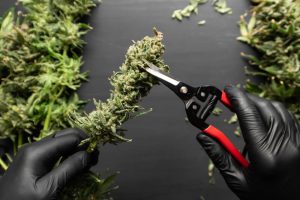
Why Trimming Weed Is Essential for High-Quality Cannabis
Harvest day is one of the most rewarding moments in the cannabis growing cycle, but cutting down your plants is only the beginning of producing top-quality buds. Before you start trimming, it's important to understand when to harvest cannabis to maximise quality. Learning how to trim weed properly is one of the most important post-harvest skills you'll develop, as it directly influences the appearance, aroma, flavor, smoothness, and overall quality of your final harvest.
Whether you're growing a single plant at home or harvesting a larger crop, weed trimming transforms freshly cut cannabis into clean, resin-rich flowers that are ready for drying and curing. Removing excess leaf material not only improves the appearance of your buds but also helps preserve delicate trichomes, promotes more even drying, and creates a cleaner, smoother smoking or vaping experience.
Many first-time growers underestimate how much trimming affects the finished product, especially after successfully completing the cannabis flowering stage. A healthy plant grown with perfect lighting, nutrients, and genetics can still produce an average result if it's rushed through the post-harvest process. Experienced growers know that careful trimming is the bridge between a successful harvest and premium-quality cannabis.
What Is Weed Trimming?
Weed trimming is the process of removing excess plant material from harvested cannabis flowers. This usually begins with removing the large fan leaves before carefully trimming the smaller sugar leaves that extend from the buds. The objective isn't simply to make the buds look attractive—it's to improve quality while preserving as much of the flower and its resin glands as possible.
You may also see this process referred to as trimming cannabis, manicuring cannabis buds, or how to trim a cannabis plant after harvest. Although the terminology varies, they all describe the same essential stage of post-harvest processing.
| Term | Meaning |
| Weed Trimming | Removing excess leaves from harvested cannabis buds. |
| Cannabis Manicuring | A more detailed trim focused on appearance and presentation. |
| Defoliation | Removing fan leaves during growth to improve airflow and light penetration. |
| Harvest Trimming | Preparing harvested buds for drying and curing. |
It's important not to confuse trimming with defoliation. Defoliation is performed while the plant is still growing to improve airflow and light penetration, whereas trimming only takes place after harvest to prepare the buds for drying, curing, and long-term storage.
Why Trimming Cannabis Improves Quality
Properly trimming cannabis does far more than improve appearance. Large fan leaves contain relatively few cannabinoids or terpenes compared to the flowers, but they do contain significant amounts of chlorophyll. Leaving excessive leaf material attached can contribute to a harsher smoke and may slow the drying process in ways that make moisture management more difficult.
Removing unwanted leaves also reveals the dense, resin-covered flowers beneath and makes it easier to inspect the anatomy of a cannabis bud This improves what's commonly known as bag appeal, the visual quality of your buds but it also makes it easier to inspect for mold, dry flowers evenly, and achieve a more consistent cure.
From our experience processing harvests in both dry and humid climates, careful hand trimming consistently produces the best overall results for home growers. While commercial machine trimmers are ideal for processing thousands of plants quickly, hand trimming allows you to preserve more trichomes, inspect every bud individually, and remove only the material that truly needs trimming.
Another often overlooked benefit is improved airflow. Reducing excess foliage allows moisture to escape more evenly during drying, helping minimize the risk of mold developing inside dense flowers.
| Benefit of Trimming | Why It Matters |
| Smoother smoke | Removes chlorophyll-rich leaf material. |
| Better terpene expression | Allows the flower's natural aroma and flavor to stand out. |
| Improved bag appeal | Creates clean, professional-looking buds. |
| More even drying | Improves airflow around dense flowers. |
| Easier curing | Helps moisture equalize more consistently during curing. |
| Better mold detection | Makes it easier to inspect buds before storage. |
Ultimately, trimming protects the months of work you've invested into your grow, from the cannabis seedling stage through to harvest. Genetics, lighting, and nutrients all contribute to producing exceptional cannabis, but the quality of your harvest is equally dependent on how carefully it's handled after it's been cut down. Mastering how to trim cannabis ensures your flowers retain their potency, flavor, and visual appeal, setting the foundation for a successful drying and curing process.
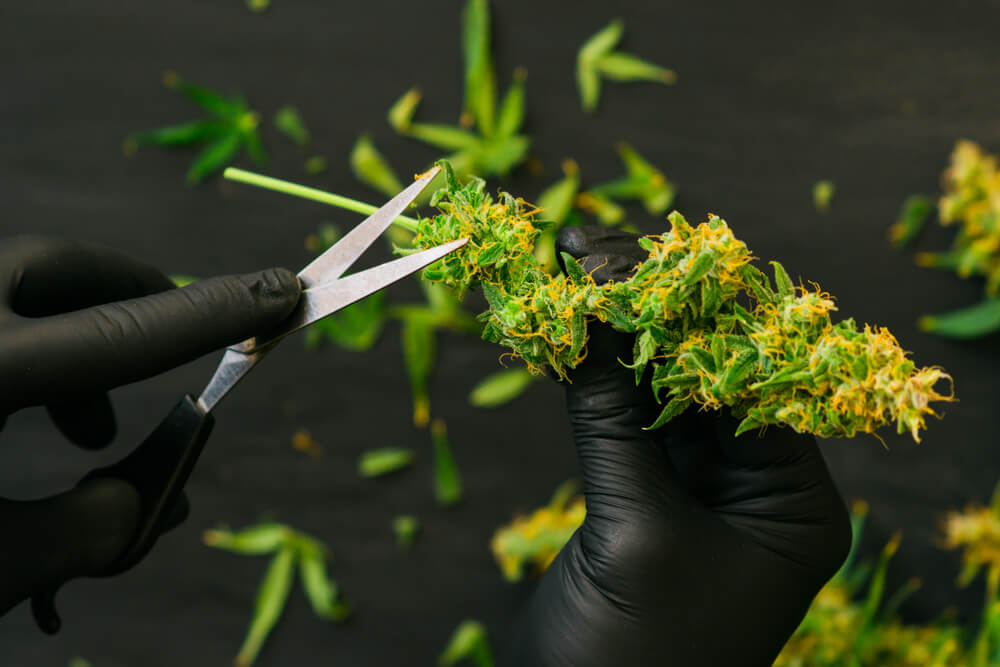
When Should You Trim Weed?
One of the first decisions you'll make after harvesting your cannabis plant is when to trim weed. If you've been preparing your plants for harvest, you should also know how to flush cannabis during the final weeks of flowering. While there are two widely accepted approaches, wet trimming and dry trimming, there isn't a single method that's right for every grower. The best choice depends on your growing environment, drying conditions, harvest size, and personal preference.
Both methods can produce exceptional results when they are paired with proper drying and curing techniques. Instead of asking which method is "best," experienced growers focus on which approach works best for their climate and the type of harvest they are processing.
If this is your first grow, do not worry too much about choosing the "perfect" method. Learning the fundamentals of trimming cannabis is far more important than following one specific technique. As you gain experience, you will naturally discover which approach delivers the best results for your setup.
Wet Trimming vs Dry Trimming Cannabis
The biggest difference between wet and dry trimming is when you remove the leaves from the buds.
Wet trimming takes place immediately after harvest while the plant is still fresh. Both the fan leaves and sugar leaves are removed before the buds are hung to dry. Because the leaves have not curled around the flowers yet, they are easier to identify and remove, making wet trimming an excellent option for beginners.
Dry trimming delays most of the trimming until after the plant has dried. Growers usually remove the larger fan leaves first, then hang the entire plant or individual branches to dry before trimming away the sugar leaves. This slower drying process is often preferred by experienced growers because it may help preserve more terpenes and produce a smoother final product.
| Wet Trimming | Dry Trimming |
| Trim immediately after harvest. | Trim after the buds have dried. |
| Easier for beginners. | Better suited to experienced growers. |
| Faster drying time. | Slower, more controlled drying. |
| Helps reduce mold risk in humid climates. | May improve terpene retention in dry climates. |
| Ideal when drying space is limited. | Ideal for smaller, premium-quality harvests. |
Both methods are used successfully by home growers and commercial cultivators around the world. Neither approach will automatically produce better cannabis. The quality of your drying and curing process has an equally important influence on the finished product.
Which Trimming Method Is Best for Your Growing Environment?
Your local climate should play a much bigger role in this decision than online opinions.
From our experience trimming harvests in a variety of growing environments, humidity is often the deciding factor.
If you are growing in a humid region, wet trimming usually makes the drying process easier by removing excess leaf material before the buds are hung. Better airflow around the flowers reduces the chance of moisture becoming trapped inside dense buds, helping prevent bud rot during drying.
If you live in a dry climate, dry trimming often works better because leaving more plant material attached naturally slows the drying process. This gives the buds more time to dry gradually, which many growers believe helps preserve aroma, flavor, and overall quality.
| Growing Conditions | Recommended Approach |
| High humidity (above 60% RH) | Wet trimming |
| Dry climate (below 50% RH) | Dry trimming |
| First-time grower | Wet trimming |
| Small home harvest | Either method works well |
| Large commercial harvest | Often a combination of machine and hand trimming |
| Maximum terpene preservation | Dry trimming |
These recommendations are not strict rules. Temperature, airflow, bud density, and even the genetics you are growing all influence how quickly cannabis dries. The best growers observe each harvest carefully and adjust their trimming and drying process to suit the conditions rather than relying on the same method every time.
Should Beginners Wet Trim or Dry Trim?
For most first-time growers, wet trimming is the easiest place to start.
Fresh leaves are softer, easier to remove, and less likely to hide inside the buds. This makes it much easier to learn where to cut without accidentally removing parts of the flower. Wet trimming also allows beginners to complete most of the work immediately after harvest rather than returning several days later to trim dried buds.
As your confidence grows, it is worth experimenting with dry trimming to see how it performs in your environment. Many experienced growers eventually develop their own hybrid approach, removing large fan leaves immediately after harvest while leaving the sugar leaves in place until drying is complete.
Ultimately, there is not a universal "best" way to trim cannabis. The right time to trim depends on your climate, your drying environment, and the quality you are trying to achieve. Understanding the strengths of both methods will help you make the right decision before moving on to the step-by-step trimming process.
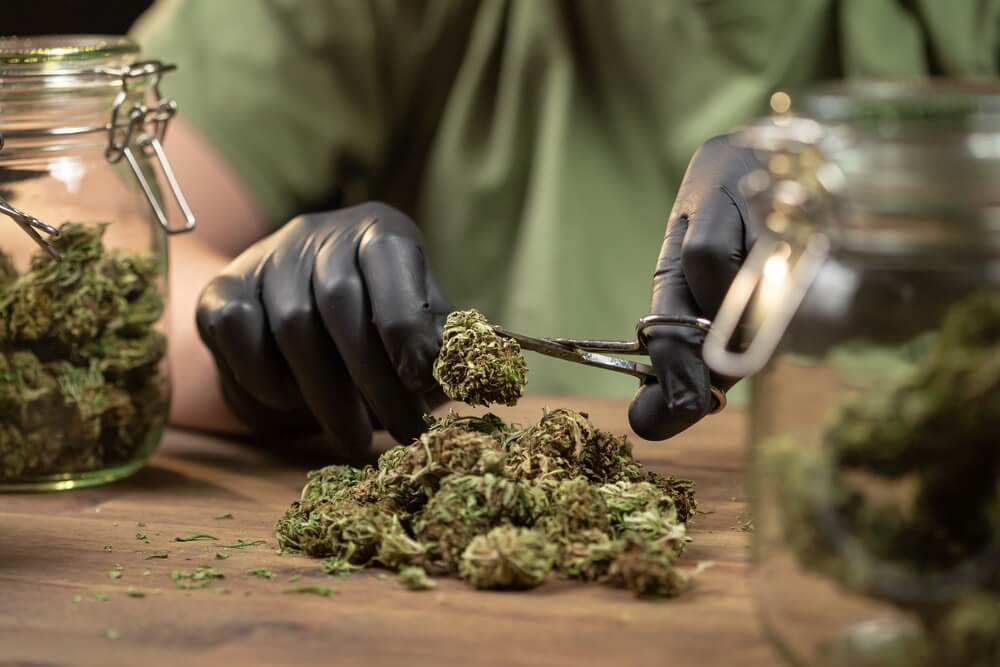
The Best Tools for Trimming Weed
Before you start trimming weed, it's worth taking a few minutes to prepare your workspace and gather the right equipment. Having the proper tools not only makes trimming faster and more comfortable but also helps protect the delicate trichomes that contain the cannabinoids and terpenes you've spent months growing.
For most home growers, a few quality tools are all you need.
| Tool | Why It's Recommended |
| Curved trimming scissors | Make clean, precise cuts around buds without damaging the flowers. |
| Nitrile gloves | Prevent sticky resin from coating your hands while keeping buds clean. |
| Trim tray or trim bin | Collects sugar leaves, loose trim, and valuable kief while keeping your workspace organised. |
| Isopropyl alcohol | Removes resin buildup from scissors, keeping every cut clean and precise. |
| Good lighting | Makes it easier to spot hidden sugar leaves without overhandling the buds. |
We've found that investing in a quality pair of trimming scissors makes the biggest difference. Sharp, spring-loaded scissors reduce hand fatigue during long trimming sessions and allow you to make cleaner cuts, while dull household scissors tend to crush plant material and slow the entire process.
With your tools prepared and your trimming method chosen, you're ready to learn exactly how to trim cannabis step by step while preserving as much flavour, aroma, and potency as possible.
How to Trim Weed Step by Step
Learning how to trim weed is one of the most valuable post-harvest skills you can develop as a grower. Whether you've chosen to wet trim immediately after harvest or dry trim once your buds have dried, the objective is always the same: remove excess leaf material while preserving as many trichomes as possible.
Many new growers assume trimming is simply cutting leaves away from the buds. In reality, it's a balancing act. Remove too little, and your buds can look leafy and smoke harshly. Remove too much, and you'll cut away resin-rich material that contributes to potency, aroma, and flavor.
After trimming hundreds of harvests over the years, we've found that the growers who produce the best results aren't necessarily the fastest, they are the most consistent. Taking a few extra seconds with each bud almost always produces a cleaner, higher-quality harvest than trying to finish as quickly as possible.
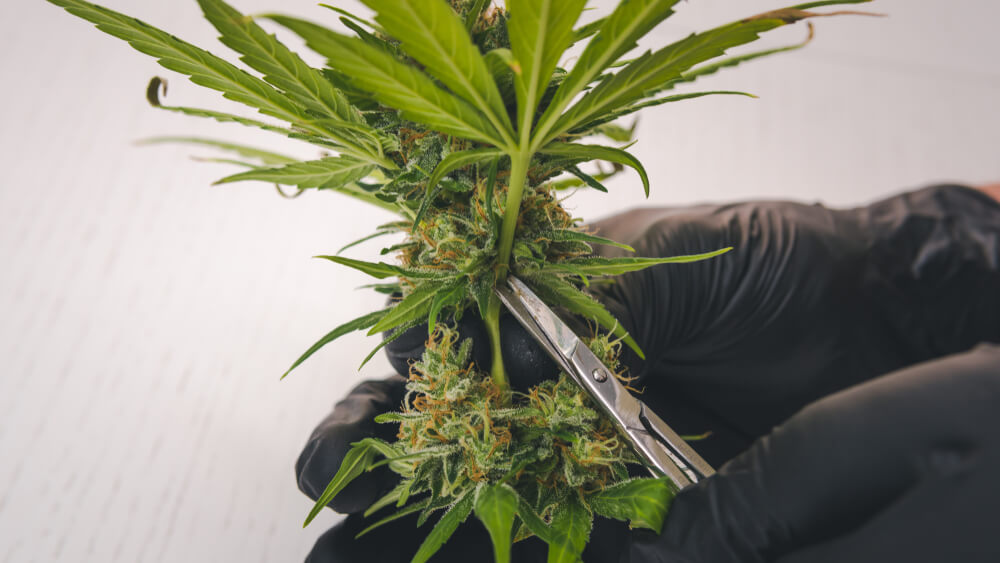
Step 1: Prepare Your Harvest
Before you make the first cut, prepare a clean, organized workspace. Trimming can take several hours depending on the size of your harvest, so being comfortable is just as important as having the right equipment.
Lay your harvested branches on a clean trimming tray or hang them temporarily while you organize your workspace. Good lighting will help you identify sugar leaves hidden deep within the flowers, while nitrile gloves prevent sticky resin from coating your hands and contaminating the buds.
If you're harvesting more than one strain, keep each plant separate. Different genetics often produce different bud structures and drying times, so labeling each harvest now will make drying and curing much easier later.
Step 2: Remove the Fan Leaves
The first step in trimming cannabis is removing the large fan leaves.
These leaves are easy to recognize because they extend well beyond the flowers and contain relatively few trichomes. Use the tips of your trimming scissors to cut each leaf as close to the stem as possible without damaging nearby buds.
Avoid pulling leaves by hand. Even a gentle tug can disturb surrounding flowers and knock resin glands from the surface of the buds.
At this stage, your workflow changes depending on whether you've chosen wet trimming or dry trimming.
| Wet Trimming | Dry Trimming |
| Remove fan leaves immediately after harvest. | Remove only the largest fan leaves before drying. |
| Continue trimming sugar leaves straight away. | Hang branches to dry before trimming sugar leaves. |
Step 3: How to Wet Trim Cannabis
Wet trimming means completing most of the trimming immediately after harvesting the plant while the leaves are still soft and flexible.
Once the fan leaves have been removed, begin trimming the sugar leaves one at a time.
Rather than making long cuts across the surface of the buds, use the very tips of your scissors to carefully snip each leaf where it emerges from the flower. Rotate the branch, not the bud, so you are not constantly touching the resin-covered flowers with your gloves.
One mistake we regularly see is growers trying to make every bud perfectly smooth. In reality, high-quality cannabis should still look natural. If you shave the flowers until every leaf disappears, you will often remove valuable trichomes at the same time.
A simple rule we follow is this:
| If the sugar leaf... | Recommendation |
| Extends beyond the bud | Trim it. |
| Is mostly hidden inside the flower | Usually leave it. |
| Has turned brown or damaged | Remove it completely. |
| Shows signs of mold | Remove the affected bud immediately. |
This approach produces buds that retain their natural shape while preserving as much resin as possible.
Wet trimming is often the easiest technique for beginners because fresh leaves are easier to identify and remove before they curl tightly around the flowers.
Step 4: How to Dry Trim Cannabis
Dry trimming follows a different workflow.
After removing the larger fan leaves, hang the branches or the entire plant in your drying room. Most growers allow the buds to dry for around 7 to 14 days, depending on temperature, humidity, and airflow.
Once the outside of the buds feels dry and the smaller stems begin to snap rather than bend, it is time to trim.
Because the sugar leaves have curled tightly around the flowers during drying, trimming requires a little more patience. Instead of trying to expose every leaf, gently trim only the parts extending beyond the natural shape of the bud.
Many experienced growers prefer dry trimming because the slower drying process can help preserve aroma and produce exceptionally smooth flowers after curing.
From our own harvests, we have noticed that dry trimming rewards patience. It takes longer, but growers who have good control over their drying environment often achieve outstanding terpene retention and beautifully cured buds.
Step 5: Shape the Buds Without Over-Trimming
Regardless of which trimming method you have chosen, the final inspection is where good buds become great buds.
Hold each branch by the stem rather than gripping the flower itself. Slowly rotate it under good lighting and inspect every side.
Look for:
| Check For | Action |
| Hidden sugar leaves | Trim only the exposed tips. |
| Loose stems | Remove them cleanly. |
| Brown or damaged leaves | Trim away completely. |
| Mold or bud rot | Remove the affected flower immediately. |
| Flat spots from handling | Leave them alone, they will recover during curing. |
Remember that not every bud should look identical.
Dense indica flowers naturally produce a tighter shape, while many sativa varieties grow long, airy buds. Trying to force every flower into the same appearance usually leads to over-trimming.
Step 6: Keep Your Scissors Clean
As you work, sticky resin will gradually build up on your scissors.
Once this happens, the blades stop cutting cleanly and begin pulling leaves instead, making precise trimming much harder.
We clean our scissors every 15 to 20 minutes using isopropyl alcohol and a clean cloth. It only takes a few seconds and makes a noticeable difference to both speed and accuracy.
Many growers also collect the resin from their scissors, commonly called scissor hash, which can be enjoyed once the trimming session is finished.
Step 7: Prepare Your Buds for Drying or Curing
Once every bud has been inspected, resist the temptation to keep trimming.
One of the biggest lessons we have learned is that growers almost always remove too much, not too little.
If you have wet trimmed, hang the branches immediately in a controlled drying environment. Space them apart so air can circulate freely around every bud, avoiding direct airflow from fans.
If you have dry trimmed, your flowers are now ready for curing. Place them into airtight glass jars before learning how to keep weed fresh for longer during storage, leaving enough space for air to circulate inside each jar. During the first couple of weeks, open the jars regularly to release excess moisture and create the ideal conditions for long-term storage.
What to Do With Leftover Cannabis Trim
After spending months growing, harvesting, and trimming weed, the last thing you want to do is throw away perfectly usable plant material. While fan leaves contain very little resin, cannabis trim, particularly sugar leaves, is still covered in trichomes that contain cannabinoids, terpenes, and other valuable compounds.
The amount of resin left on your trim will depend on the strain, growing conditions, and how closely you've trimmed your buds. If you've been careful not to over-trim, you'll often end up with a surprising amount of high-quality trim that can be used in a variety of ways.
One of the biggest mistakes we see new growers make is throwing everything into the compost bin. Before you do, separate your trim into two piles: resin-covered sugar leaves and large fan leaves. Sugar leaves are worth saving, while fan leaves are generally better suited for composting.
| Type of Trim | Best Use |
| Sugar leaves | Bubble hash, dry sift, edibles, tinctures, extracts |
| Fan leaves | Compost or organic mulch |
| Scissor hash | Smoke or vaporise immediately |
| Small popcorn buds | Dry and cure alongside your main harvest |
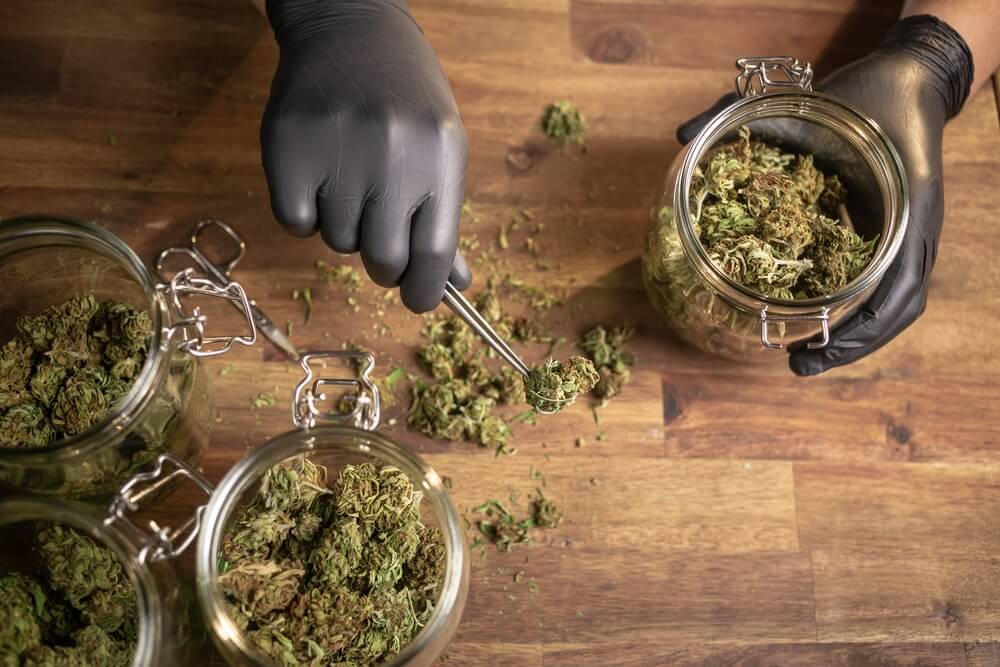
Make Bubble Hash or Dry Sift
For many growers, bubble hash is one of the best ways to use leftover cannabis trim.
Bubble hash uses ice water and fine mesh filter bags to separate trichomes from the plant material, producing a concentrated resin that's prized for its potency and flavour. It's an excellent option if you've accumulated a large amount of sugar leaves over multiple harvests.
Another popular option is dry sift, where dried trim is gently rubbed across fine screens to collect loose trichomes, often referred to as kief. Although the yield is generally lower than bubble hash, the process is simple and requires very little equipment.
From our own experience, we usually save trim from several harvests before making bubble hash. Processing a larger batch is more efficient and often produces a better return than working with only a handful of sugar leaves.
Use Cannabis Trim for Edibles
Cannabis trim is also ideal for making cannabutter, infused oils, and homemade edibles.
Although sugar leaves contain fewer cannabinoids than the flowers themselves, they still produce excellent results when properly decarboxylated before infusion. Brownies, cookies, gummies, chocolates, and infused cooking oils are all popular ways to make use of leftover trim without wasting valuable resin.
If you're making edibles, remember that potency can vary significantly depending on how resinous your trim is. It's always better to start with a small serving and increase the dose gradually once you've tested the finished product.
Collect and Save Your Kief
During trimming, loose trichomes naturally fall away from the buds. If you're using a trim tray with a fine mesh screen, these resin glands collect underneath as kief.
Don't let it go to waste.
Kief can be sprinkled over dried flower, pressed into hash, or saved until you've collected enough to use in future extractions. Even small amounts add up over several harvests, making a trim tray one of the most worthwhile investments for home growers.
Compost the Rest
Once you've separated the resin-rich trim, the remaining fan leaves and stems can be composted.
Cannabis is rich in organic matter, making it an excellent addition to a healthy compost pile where it will eventually break down into nutrient-rich compost for future grows. While fan leaves aren't particularly useful for concentrates or edibles, they can still be returned to your garden rather than ending up in the bin.
Making the most of your leftover cannabis trim is all about reducing waste. Whether you choose to make bubble hash, dry sift, edibles, or simply compost the remaining plant material, every part of the harvest has the potential to serve a purpose. After investing months into growing your plants, it's worth making the most of every trichome you've worked so hard to produce.
Conclusion
Learning how to trim weed improves with each harvest. Although it can feel time-consuming at first, careful trimming has a clear impact on the appearance, aroma, flavor, and overall quality of your buds.
Whether you wet trim straight after harvest or dry trim once the buds have dried, the goal is the same: remove excess leaf material while preserving as many trichomes as possible. There’s no single “best” method your climate, drying setup, and personal preference will all influence what works best.
Don’t worry if your first results aren’t perfect. Every grower develops their own technique over time. Focus on clean cuts, minimal handling, and consistency.
Finally, remember trimming is only one part of the process. Proper drying and curing are just as important for preserving cannabinoids and terpenes. Master all three stages, and you’ll produce high-quality cannabis that looks, smells, and smokes better.
Frequently Asked Questions About Trimming Weed
Can You Smoke Cannabis Trim?
Yes, but the quality depends on the type of trim. Sugar leaves are coated in trichomes and contain cannabinoids, making them suitable for smoking, vaporising, or extracting into concentrates. Fan leaves contain very little resin and are generally better suited for composting than smoking.
Should You Wet Trim or Dry Trim Cannabis?
Both methods produce excellent results when done correctly. Wet trimming is often easier for beginners and works well in humid climates because it speeds up drying. Dry trimming is popular with experienced growers who want a slower drying process that may help preserve more terpenes and aroma.
How Long Does It Take to Trim Weed?
The time required depends on the size of your harvest, the density of the buds, and your experience level. A single plant may take anywhere from 30 minutes to several hours to trim by hand. Larger harvests can take an entire day or more, particularly if you're carefully manicuring every bud.
Should You Remove All the Sugar Leaves?
Not necessarily. Remove sugar leaves that extend beyond the natural shape of the bud, but leaves tucked tightly inside the flower and heavily coated in trichomes are often left in place. Over-trimming can remove valuable resin and reduce both potency and bag appeal.
Can You Over-Trim Cannabis Buds?
Yes. One of the most common mistakes beginners make is removing too much plant material in an attempt to create perfectly smooth buds. Over-trimming removes resin-rich trichomes, damages the flower's natural structure, and can reduce the overall quality of your harvest.
What Happens If You Don't Trim Weed?
Leaving excess fan leaves and sugar leaves attached can result in a harsher smoke, slower and less even drying, and reduced bag appeal. Proper trimming also makes it easier to inspect buds for mould and prepares them for a more consistent curing process.
What Is the Best Temperature and Humidity for Drying Cannabis?
Most growers aim to dry cannabis in a cool, dark room with gentle airflow. A temperature of around 60–70°F (15–21°C) and a relative humidity of 55–60% provides a good starting point for a slow, even drying process. Exact conditions may vary depending on your climate and drying setup.
Can You Use Cannabis Trim for Edibles?
Absolutely. Sugar leaves are an excellent ingredient for making cannabutter, infused oils, tinctures, and other cannabis edibles. Although they're generally less potent than the flowers, they still contain enough cannabinoids to produce effective homemade infusions when properly decarboxylated.
Is Hand Trimming Better Than Machine Trimming?
For most home growers, yes. Hand trimming provides greater control, preserves more trichomes, and allows you to inspect each bud individually. Machine trimmers are ideal for large commercial harvests where speed is a priority, but they can be more aggressive and may reduce the overall finish of the flowers.
How Do You Know When You've Finished Trimming?
A properly trimmed bud should retain its natural shape while having the large fan leaves and protruding sugar leaves removed. The flowers should still appear resinous and full rather than shaved smooth. If you're unsure, it's usually better to leave a little extra leaf than accidentally remove valuable trichomes.


