




Knowing how to store cannabis properly can make a noticeable difference to its aroma, texture, and overall quality over time. The best way to store weed is to protect dried, cured flower from excess heat, light, moisture, and unnecessary air exposure while keeping conditions as stable as possible.
Good storage is not just about choosing a jar. The container, humidity level, storage location, and how often the flower is opened and handled can all affect how well it keeps. If you want to know how to keep weed fresh, how long it can last, or whether refrigeration and freezing are suitable for long-term cannabis storage, each method has advantages and limitations.
This guide explains the best containers for storing weed, the best humidity for storing cannabis, how to recognise when flower has lost quality, and the practical steps to take if you are considering cold storage.
Key Takeaways
- Keep cannabis cool, dark, and well sealed. Heat, light, and repeated air exposure can speed up changes in cannabinoids and aromatic compounds.
- Aim for stable humidity, not maximum moisture. For cured flower, around 58–62% RH is a practical storage target when monitored inside the container.
- Choose containers based on the seal as well as the material. Glass jars, suitable original packaging, and high-barrier pouches can all work when properly closed and protected from light.
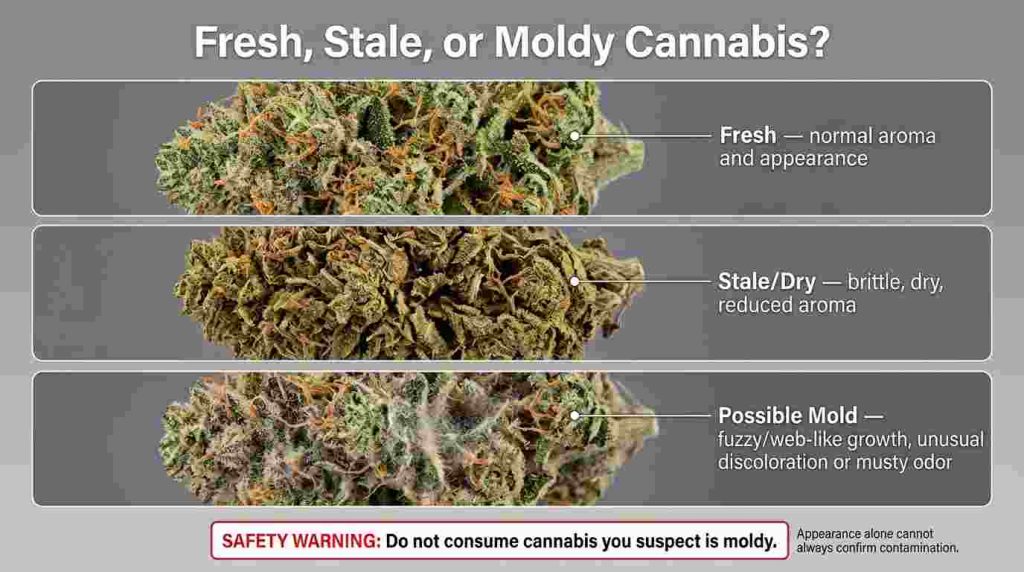
- Weed can lose freshness before it becomes unsafe. Dryness and weaker aroma may indicate aging, while fuzzy growth, unusual discolouration, or a new musty smell can point to possible mould.
- Cold storage requires careful handling. If cannabis is refrigerated or frozen, keep the container sealed until it has returned to room temperature to reduce the risk of condensation.
How to Store Weed and Keep It Fresh
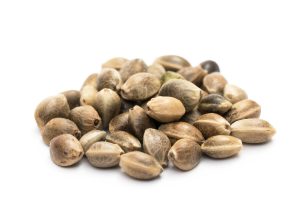
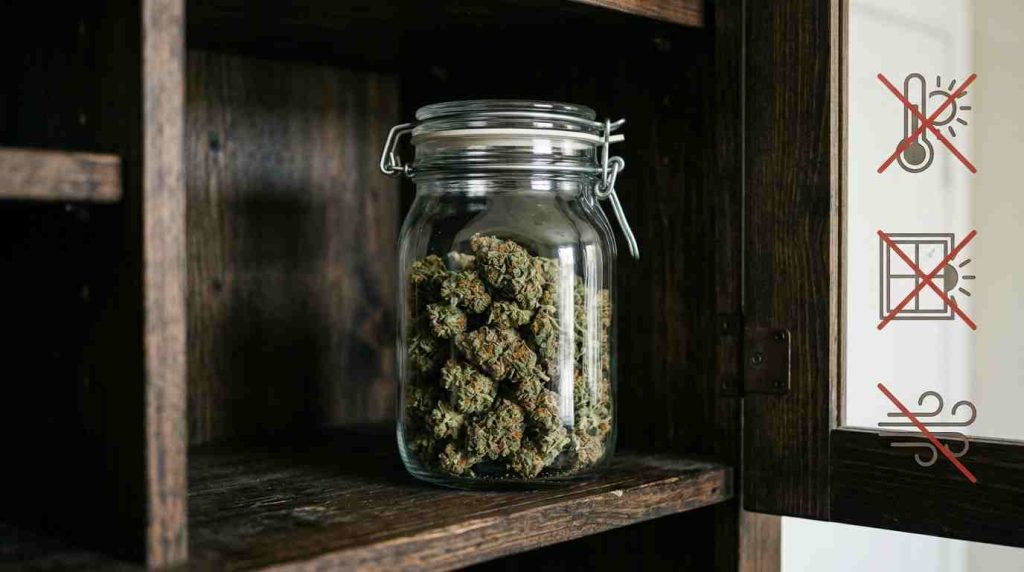
The best way to store weed is to keep dried, cured buds in a tightly sealed container, protected from light and heat. For everyday storage, choose a cool cupboard away from heaters, appliances, and direct sunlight. These recommendations are for finished flower, not freshly harvested buds that still need drying cannabis. If you are storing seeds instead, our guide to how to store marijuana seeds explains the different conditions needed for long-term seed storage.
Why Heat, Light, and Air Affect Cannabis Quality
Heat can speed chemical changes after harvest. Cannabis terpenes, the compounds responsible for much of a bud’s aroma, can evaporate or break down during storage. Cannabinoids, including THC and CBD, also change during storage, which is worth considering when storing flower grown from high THC cannabis seeds where cannabinoid strength is an important part of the strain’s appeal.
Light can degrade cannabinoids, while oxygen contributes to oxidation: chemical reactions that alter compounds in the flower. Airtight does not mean oxygen-free. Closing the lid limits air exchange; it does not remove the air already inside.
A Simple Routine for Everyday Storage
Start with clean, dry packaging and use these checks to make storage straightforward:
| What to check | Practical advice |
| Seal | Replace damaged lids or containers that no longer close securely. |
| Access | Take out what you need, then reseal rather than leaving the container open. |
| Handling | Avoid squeezing or repeatedly shaking buds, which can damage the cannabis trichomes that coat the flower. |
| Identification | Label separate batches with the strain and storage date. This is especially useful when growing several varieties from marijuana seed variety packs, as each harvest can then be stored and tracked separately. This becomes particularly useful if you grow several varieties or create your own cannabis strain, where keeping different harvests clearly identified helps prevent mix-ups. |
Record the date you put the flower away, rather than guessing later. For purchased cannabis, retain the original label and batch details too.
Grower tip: Keep buds whole instead of grinding your entire supply before storage. A controlled study found grinding less favorable for terpene retention than storing whole flower. Grind only what you plan to use.
What is the Best Humidity for Storing Cannabis?
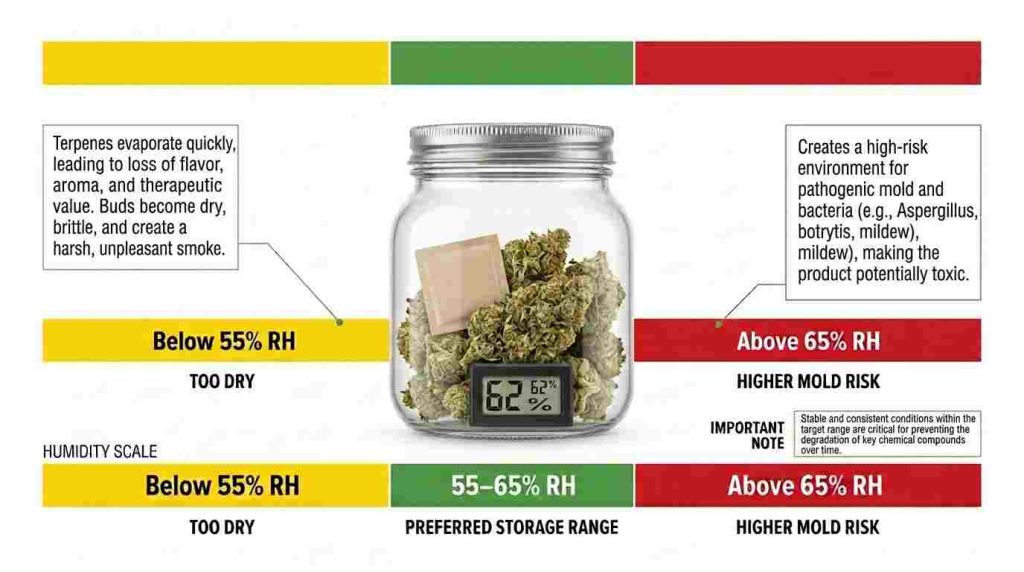
For properly dried and cured flower, 58–62% relative humidity (RH) is a practical target inside the storage container. ASTM specifies a broader water-activity range of 0.55–0.65, corresponding to 55–65% RH at equilibrium: when moisture has balanced between the buds and surrounding air.
How Humidity Affects Dryness and mould Risk
RH measures moisture in the air, not the percentage of water inside your buds. Low moisture makes flower more brittle, while excessive available moisture can encourage mould on cannabis during storage.
Do not treat 65% as a sharp boundary between safe and unsafe cannabis. A hygrometer monitors humidity; it cannot detect mould or tell you what mouldy weed looks like, so stored flower should still be inspected before use. Always check the sealed container’s humidity rather than relying on a room reading.
Using Humidity Packs and a Hygrometer
Use a two-way humidity pack, which releases or absorbs moisture, rather than a drying sachet. Select a 58% or 62% pack and match its capacity to your flower’s weight using the manufacturer’s chart. Keep all packs in one container at the same humidity setting.
| Step | How to do it |
| Check the meter | Test your hygrometer with a humidity calibration kit. Follow the kit’s waiting time, then adjust the meter or record its error. |
| Add the pack | Remove any outer plastic sleeve, but leave the inner sachet intact. Place it beside the buds or in the container’s pack holder. |
| Position and seal | Put the hygrometer inside with its sensor uncovered. Close the lid tightly. |
| Let readings settle | Wait for the reading to stabilize before making adjustments. Check again the following day; settling time varies. |
Keep the jar at a steady temperature while measuring. Check your hygrometer’s stated accuracy: a device rated ±3 percentage points could show 64% when actual humidity is 67%. Avoid aiming for the upper storage limit, especially when using a meter with uncertain accuracy.
Replace packs according to their manufacturer’s indicator or replacement schedule. Do not assume every brand becomes hard when exhausted.
If readings remain outside the target, check the lid seal, meter accuracy, pack rating, and capacity. Do not keep adding different packs to force an immediate change.
Grower tip: Humidity packs are for maintaining already-dried flower, not drying wet buds. A humidity pack cannot make contaminated flower safe.
How Long Does Weed Last, and Does Weed Go Bad?
Weed can lose freshness and develop mould, but it does not have one universal expiration date. Our guide to whether weed expires looks more closely at how cannabis changes with age. Properly prepared cannabis has shown reasonable cannabinoid stability over one to two years in controlled research. That does not mean every batch stays fresh or safe for that long. Aroma can decline earlier, and storage studies do not establish a guaranteed household shelf life.
What Affects Cannabis Shelf Life?
The starting condition matters as much as time. Flower stored with excess moisture or existing contamination can develop problems long before an older, properly dried batch. Putting it into a better jar cannot correct problems already present.
Chemical changes also depend on the variety, storage conditions, and whether buds remain whole. A yearlong study found different changes across storage treatments, so avoid treating online THC-loss percentages as a fixed annual rate for all cannabis.
For purchased flower, follow any product-specific expiration date and storage instructions. Do not read a packaging date as a harvest date: it tells you when the product was packed, not how long the flower existed beforehand.
Stale Cannabis vs. mould: Warning Signs and Limitations
Before using stored flower, inspect it under good lighting. Look for unusual fuzzy growth or discolouration rather than judging age by dryness alone. Stop handling it if you see suspected mould; do not shake it or deliberately sniff it closely.
Use a magnifier if a pale coating is difficult to identify. Glandular trichomes have distinct rounded heads, often on stalks; fungal growth can form threads or fuzzy patches. Look for separate resin glands rather than a tangled network spreading across the bud’s surface.
If no mould is apparent, gently separate a dense bud and inspect around its inner stem with a flashlight. Fungal growth can develop inside flower, not just across the surface.
| Observation | What it may indicate | What it cannot confirm |
| Dry, crumbly texture | Low moisture | Whether the flower is free of contamination |
| Faded aroma | Loss of aromatic compounds | How much THC remains |
| New musty odor | Possible fungal activity | The organism or extent of contamination |
| White or grey fuzzy patches | Suspected fungal growth | Whether nearby buds are unaffected |
An ordinary inspection cannot rule out microscopic contamination. Do not smoke, vape, or cook with suspected mouldy cannabis. Do not try to rescue it by cutting away visible patches or heating the flower. Set the container aside, keep it separate from other batches, and contact the retailer about return or disposal instructions.
Fungal contamination is particularly concerning for people with weakened immune systems, who can develop serious infections. A normal appearance is not a reason to dismiss that risk.
Grower tip: Take a photo of each batch when storage begins. Compare later checks under similar lighting. Use these photos alongside your storage notes, rather than relying on memory when checking an older batch.
Best Containers for Storing Weed
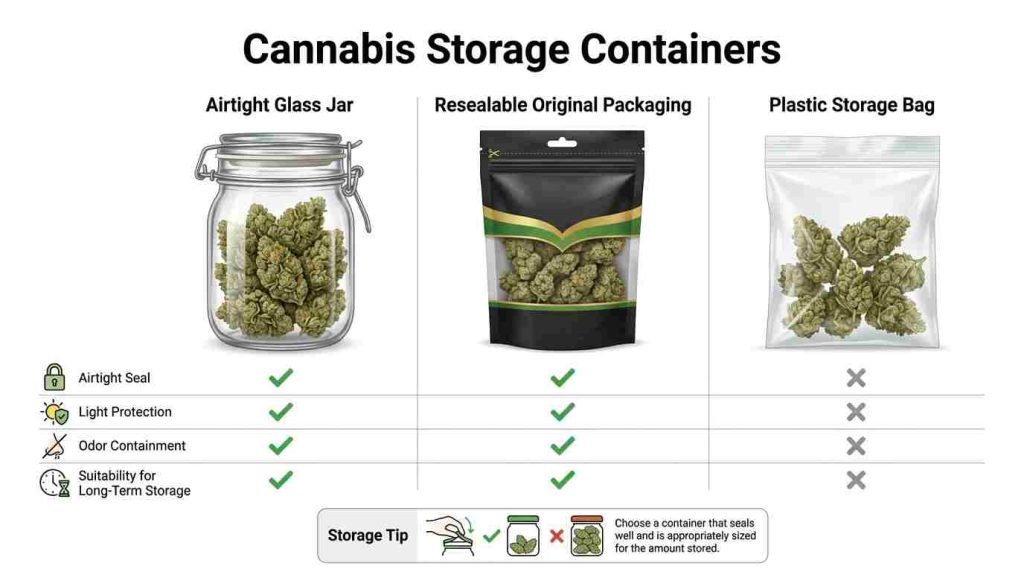
The best containers for storing weed combine a secure seal with protection against crushing and light exposure, helping you keep weed fresh for longer. Choose packaging made for cannabis or food storage, rather than reusing containers that held chemicals.
Glass Jars, Original Packaging, and Storage Bags
A glass jar is a practical option, but the lid matters as much as the jar. Purpose-made barrier pouches can also work: their layered materials reduce moisture and oxygen transfer. Do not assume every plastic bag offers the same protection.
| Container | Main advantages | Limitations | What to check |
| Glass jar | Reusable; protects against crushing | Breakable; clear glass admits light | Lid fit and sealing surface |
| Original packaging | Retains labels and product details | Closures vary | Resealability and opening instructions |
| Barrier pouch | Lightweight; foil layers block light | Can puncture; offers little crush protection | Intact seams and zipper |
| Household sandwich bag | Cheap and convenient | Little crush or light protection | Do not assume it is a high-barrier package |
Keep purchased flower in suitable original packaging. Check whether child resistance remains after opening; some packages provide this protection only until the first opening.
Do not confuse a tamper-evident seal with a reusable closure. Once a factory seal is broken, storage depends on the lid or zipper underneath, so inspect that closure before deciding to keep it.
Choosing the Right Size, Seal, and Light Protection
Choose the smallest container that holds your buds without compression, leaving room for any humidity pack. Place flower inside loosely; the lid should close without pushing against the buds. There is no need to force a fixed weight into a jar.
Before filling, clean reusable jars and lids according to their instructions, then let them dry completely. Inspect the rim for chips and check any gasket for splits or distortion. Wipe loose material from sealing surfaces before closing.
For resealable pouches, clear flower fragments from the zipper, then press it closed along its entire length. Follow any special child-resistant closure instructions.
Store clear jars inside a closed cupboard or opaque box. An opaque container provides light protection itself, but still needs a secure closure.
Grower tip: Choose a wide-mouth jar. You should be able to remove a bud without squeezing it through a narrow opening or tipping everything out.
Long-Term Cannabis Storage: Can You Freeze Weed?
Yes, you can freeze dried, cured weed, but colder storage does not preserve every part of its quality equally. Our guide to freezing weed looks at the method in more detail. Freezing can help protect cannabinoids, while aroma may still decline. Treat it as an option for reserve flower, rather than a container you open daily.
Refrigerator and Freezer Storage: Benefits and Risks
A controlled study favored whole flower stored in darkness at 39°F (4°C). Its much colder treatments were less favorable for terpene retention. This supports refrigeration as an option, not a guarantee that every household refrigerator will preserve every batch equally well.
Other research supports freezing for cannabinoid stability. These findings address different aspects of preservation: maintaining cannabinoid content does not necessarily mean maintaining the original aroma.
For either option, use airtight, moisture-resistant packaging. For freezing, check that the manufacturer rates the container and closure for freezer use. Follow the flower producer’s storage instructions where provided.
Check the actual temperature with an appliance thermometer rather than relying only on the dial, which may show numbered settings instead of degrees.
Avoiding Condensation and Repeated Temperature Changes
The main handling rule is simple: keep cold containers sealed until their contents reach room temperature. Opening them early exposes cold flower to warmer, humid air, which can leave condensation on the buds. University extension guidance recommends the same precaution for frozen dried herbs.
| Stage | What to do |
| Before cooling | Divide flower into small, separately sealed portions so you do not repeatedly open the whole supply. |
| When removing | Take out only the portion you need and leave the others undisturbed. |
| While warming | Keep the package closed and let it warm naturally, away from sunlight or heaters. |
| Before opening | Wait until the container and contents are no longer cold. Wipe exterior moisture from the lid area. |
Do not rely on a fixed thawing time: a large jar warms differently from a small pouch. Avoid checking progress by opening the lid.
Keep your everyday portion in its usual cool, dark storage location instead of repeatedly moving it between the freezer and room temperature.
Grower tip: Label each portion before cold storage and arrange the oldest batches at the front. This lets you find what you need without handling every container.
Conclusion
The best way to store weed is to protect dried, cured flower from excess heat, light, moisture, and unnecessary air exposure. Use a clean, well-sealed container, keep humidity controlled, and store it somewhere cool, dark, and stable.
For longer-term storage, refrigeration or freezing can be considered, but cold flower should stay sealed until it reaches room temperature to reduce condensation risk.
Good storage can slow the loss of aroma and cannabinoid quality, but it cannot stop aging completely. Label your batches, check them periodically, and never use flower that shows signs of possible mould or contamination.
Frequently Asked Questions
Should I Store Weed in the Fridge?
Refrigeration can work for longer-term cannabis storage when the flower is properly dried, sealed in moisture-resistant packaging, and protected from condensation. Avoid repeatedly taking the same container in and out of the refrigerator. Keep it sealed until it reaches room temperature before opening.
Is a Mason Jar Good for Storing Cannabis?
Yes. A clean glass Mason jar with a well-fitting lid can be a practical option for cannabis storage. Keep clear jars inside a dark cupboard or opaque box because glass does not block light on its own. Check the lid and sealing surface for damage before use.
Should Weed Be Stored With a Humidity Pack?
A two-way humidity pack can help maintain a stable environment for already dried and cured flower. Choose a pack designed for cannabis storage, follow the manufacturer’s sizing instructions, and monitor the container with a reliable hygrometer. Humidity packs should not be used to dry freshly harvested buds.
How Can You Tell If Stored Weed Has Gone Bad?
Dryness or fading aroma can indicate declining freshness, but they do not automatically mean the flower is unsafe. Fuzzy white or grey growth, unusual discolouration, or a new musty smell can indicate possible mould. If you suspect contamination, do not smoke, vape, or cook with the flower.
How Often Should You Check Stored Cannabis?
Check long-term storage periodically rather than opening the container every day. Inspect the seal, humidity reading, and condition of the buds. Keeping a storage date on the label makes it easier to track older batches without repeatedly handling or opening every container.


