




Lollipopping autoflowers is a pruning technique used to remove lower growth that is unlikely to produce dense, high-quality buds. While many growers worry about stressing autos because of their short life cycle, careful lollipopping during early flower can improve airflow, light penetration, and overall canopy structure. The biggest mistake growers make is either pruning too aggressively or mistiming the process, which can slow development and reduce flower quality. When done correctly, lollipopping helps autoflowers focus energy on productive top colas rather than shaded lower growth. This guide explains when, why, and how to lollipop autoflowers properly without causing unnecessary stress.
Key Takeaways
- Autoflowers are typically best lollipopped during the first 7–10 days of early flowering once pistils begin forming.
- Removing weak lower bud sites helps redirect energy toward top colas that receive stronger light exposure.
- Most growers remove around 15–25% of lower growth depending on plant size, health, and vigor.
- Over-pruning autoflowers can slow growth or reduce yields because autos have limited recovery time.
- Improved airflow from lollipopping may help reduce humidity-related issues like mold and mildew in dense canopies.
- Results often vary depending on genetics, environment, lighting intensity, and overall plant health.
- Key Takeaways
- What is lollipopping autoflowers?
- Benefits of lollipopping autoflowers
- Should you lollipop autoflowers?
- When to lollipop autoflowers
- Step-by-step guide: how to lollipop autoflowers properly
- Aftercare to support recovery and boost flower development
- Common mistakes to avoid when lollipopping autoflowers
- Should you lollipop autoflowers outdoors?
- FAQs
What is lollipopping autoflowers?
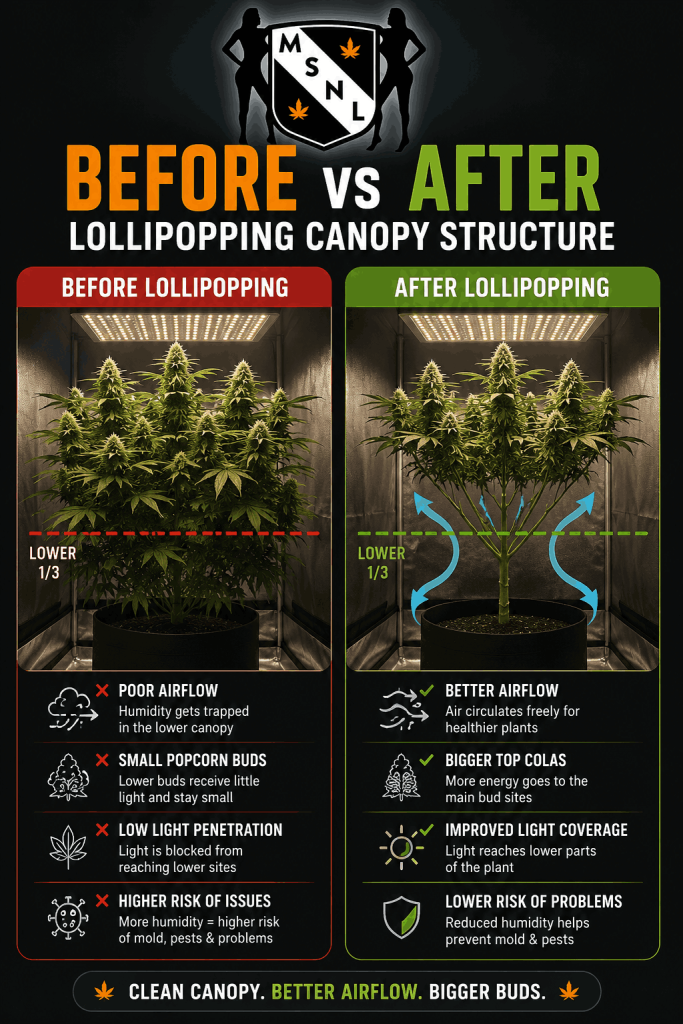
Lollipopping is a pruning method where you remove lower growth from cannabis plants that is unlikely to produce dense, high-quality flowers. This includes small bud sites, weak lower branches, shaded leaves, and interior growth that never reaches the canopy.
The goal is simple:
- Remove unproductive growth
- Improve airflow
- Redirect the plant’s energy toward top colas
Once finished, the plant develops a “lollipop” shape — clean stems underneath with healthy flower development above.
With photoperiod cannabis plants, aggressive pruning and canopy management are common. Autoflowers, however, operate differently. Because autos flower according to age rather than light cycle, they have limited recovery time from stress.
That is exactly why many growers hesitate when it comes to lollipopping autoflowers.
In my experience, though, avoiding all pruning entirely usually leaves growers with excessive popcorn buds, poor airflow, and messy lower canopies. A light, controlled lollipop is often the sweet spot.
Why lower growth becomes a problem
Lower branches often struggle because they receive minimal light penetration. These shaded sites typically produce:
| Lower Growth Issues | Result |
| Weak bud sites | Airy flowers |
| Poor airflow | Higher humidity |
| Crowded foliage | Mold and mildew risk |
| Nutrient competition | Smaller top buds |
By removing this unnecessary growth, your autoflower can focus on producing quality flowers where light intensity is strongest.
Benefits of lollipopping autoflowers
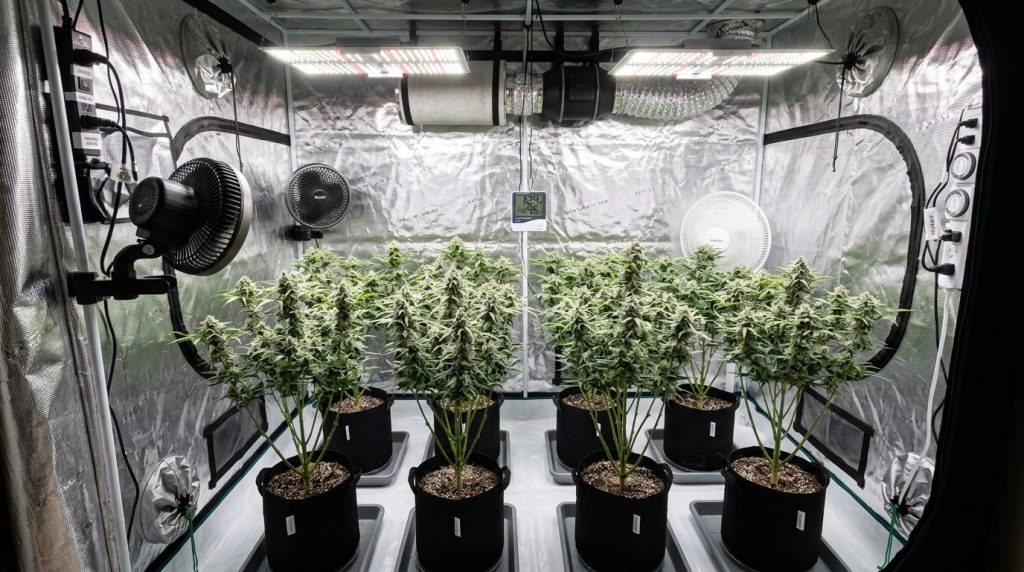
There are several major advantages to pruning autoflowers carefully during early bloom.
This is also where strain structure starts to matter. Some autoflowers naturally produce tighter internodal spacing and denser lower growth, which can quickly restrict airflow beneath the canopy. More vigorous plants with stronger branching often respond particularly well to light lollipopping because they can redirect energy efficiently toward the upper flower sites without slowing down development too heavily. If you are growing dense indoor autos or heavy-yielding hybrids, selecting genetics bred for strong canopy development can make pruning much easier to manage.
Improved bud development
The biggest benefit is improved flower quality. Instead of wasting energy producing fluffy lower buds, the plant redirects nutrients toward the upper canopy where the strongest flowers form.
This often results in:
- Denser colas
- Better resin production
- Larger top buds
- Improved potency
Better airflow and humidity control
Dense lower foliage traps moisture. In packed grow tents or humid climates, stagnant air quickly becomes a problem.
Lollipopping opens the lower canopy and improves air circulation around the base of the plant.
This also helps reduce:
- Powdery mildew
- Bud rot
- Mold issues
- Pest hiding spots
Personally, I notice the biggest difference in smaller indoor setups where airflow and light penetration are limited.
Easier plant maintenance
A cleaned-up lower canopy makes life easier.
You can:
- Water more efficiently
- Inspect stems for pests
- Improve drainage airflow
- Clean your grow space more effectively
This also makes harvest trimming significantly easier later on.
Benefits at a glance
| Benefit | Result |
| Better light penetration | Larger upper buds |
| Improved airflow | Reduced humidity issues |
| Less wasted energy | More productive flowering |
| Cleaner structure | Easier maintenance |
| Better flower quality | Denser, frostier buds |
Should you lollipop autoflowers?
In most indoor growing situations, yes — but carefully.
I rarely recommend leaving autos completely untouched unless the strain is naturally very open and airy. Modern autoflower genetics have improved dramatically over the years, and many strains respond extremely well to light structural pruning.
That said, you should never approach autos the same way you would photoperiod plants.
Autoflowers dislike excessive stress. Heavy pruning sessions combined with topping, fimming, and aggressive defoliation can absolutely backfire.
My general rule is simple:
- Choose one major stress technique
- Keep pruning conservative
- Let the plant guide you
Some growers combine topping and lollipopping successfully, but I generally prefer one or the other.
When lollipopping makes the biggest difference
| Growing Situation | Recommended? |
| Small grow tents | Yes |
| High humidity environments | Yes |
| Dense indica autos | Yes |
| Outdoor plants in strong sun | Sometimes |
| Weak or stressed plants | No |
When to lollipop autoflowers
Timing matters more with autoflowers than almost anything else.
Unlike photoperiod plants, you cannot extend veg time if recovery takes longer than expected. That means your pruning window is fairly tight.
I have found that timing often varies slightly depending on the genetics and overall growth speed of the plant. Faster-growing autos with aggressive stretch phases usually tolerate early cleanup better than slower or more compact cultivars. This is why it is always worth watching how each plant develops before making major pruning decisions rather than following a rigid schedule. Some fast-flowering autoflower strains can move through the stretch phase surprisingly quickly, leaving a much smaller pruning window than growers expect.
The best time during the growth cycle
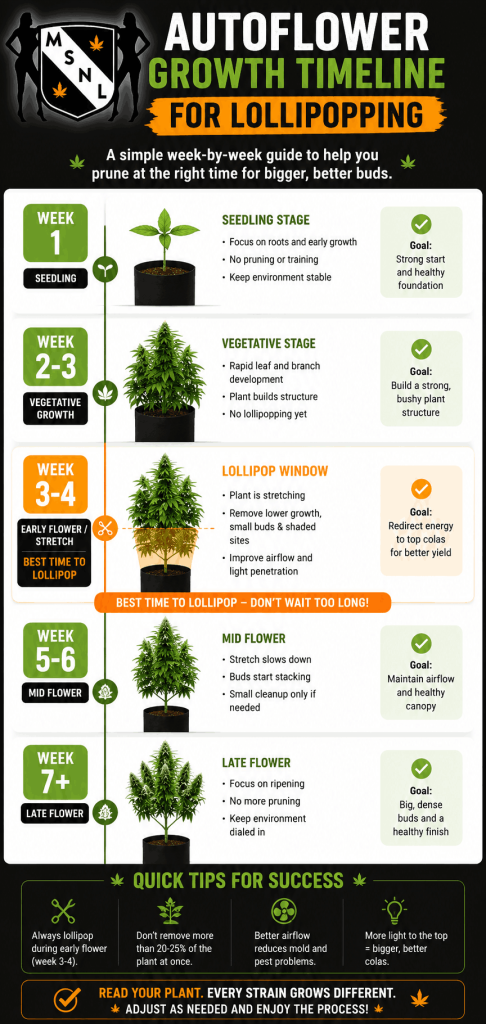
The ideal time to start lollipopping autoflowers is during early flowering — usually around week 3 to 4 from germination.
Specifically, I aim for the first week of the flowering stretch once white pistils begin appearing.
This gives the plant enough structure to recover while still allowing it to redirect energy toward developing flowers.
Ideal autoflower lollipopping timeline
| Growth Stage | Recommendation |
| Seedling stage | Do not prune |
| Early veg | Minimal leaf removal only |
| Late veg | Light cleanup if needed |
| Early flower/stretch | Ideal lollipopping window |
| Mid flower | Avoid heavy pruning |
Signs your plant is ready
Before pruning, your autoflower should:
- Have at least 4–5 nodes
- Be growing vigorously
- Show stable structure
- Display healthy green foliage
- Begin early flower stretch
If your plant is struggling even slightly, leave it alone.
Healthy autos recover quickly. Stressed autos often do not.
Risks of lollipopping too early or too late
Pruning too early can stunt development before the plant establishes itself properly.
Pruning too late can interrupt flower production and reduce yield quality.
I have seen growers strip autos during late flower only to end up with:
- Smaller buds
- Reduced resin
- Slower flowering
- Stress-related hermaphroditism
If you miss the ideal window, it is often better to simply leave the plant alone.
Step-by-step guide: how to lollipop autoflowers properly
If you want to learn how to lollipop autoflowers correctly, the process itself is actually straightforward.
Indoor autoflowers often develop dense lower foliage because of limited light penetration beneath the canopy, especially in smaller grow tents or tightly packed setups. Taller indoor autos with longer side branches usually benefit from a more thorough lower canopy cleanup, while compact bushier strains may only need a handful of shaded bud sites removed. Learning to read the plant’s structure properly is just as important as the pruning itself. Growers working with vigorous indoor autoflower genetics will often notice that selective lollipopping helps improve airflow, canopy management, and light distribution throughout flower.
The challenge is knowing when to stop.
Tools you need
Do yourself a favor and avoid using old household scissors.
Use:
- Sharp trimming scissors
- Sterilized pruning snips
- Isopropyl alcohol for cleaning blades
- Gloves if preferred
- Soft plant ties if branches need support
Clean cuts heal faster and reduce stress.
Step 1: identify weak lower growth
Start by inspecting the bottom third of the plant.
Look for:
- Small shaded bud sites
- Thin lower branches
- Interior growth buried beneath the canopy
- Fan leaves blocking airflow
If a branch is unlikely to reach proper light exposure, it usually is not worth keeping.
Step 2: remove lower bud sites
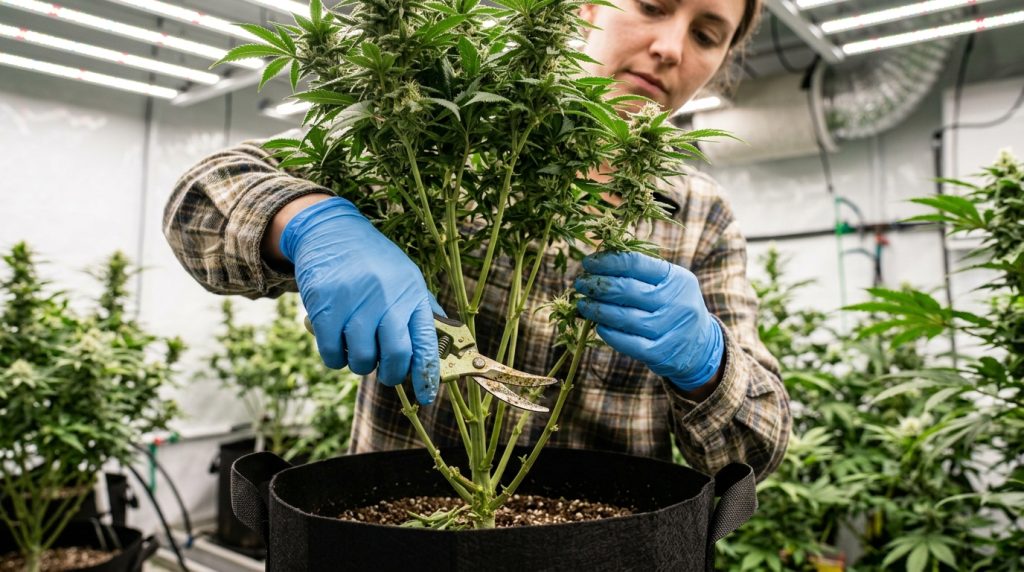
Carefully trim weak flowering sites close to the stem.
Do not rip or tear growth away. Clean cuts reduce recovery time.
Step 3: thin fan leaves carefully
You can also remove selected fan leaves that are:
- Blocking airflow
- Shading top bud sites
- Crowding lower growth
Remember that leaves are still solar panels. Do not go overboard.
Safe defoliation amounts
| Plant Size | Recommended Removal |
| Small auto | 10–15% |
| Medium auto | 15–20% |
| Large vigorous auto | 20–25% maximum |
Personally, I would always rather under-prune than over-prune.
Step 4: monitor recovery
After pruning, watch the plant closely for 24–48 hours.
Healthy recovery signs include:
- Upright leaves
- Continued stretching
- Healthy coloration
- New flower growth
Stress signs include:
- Drooping
- Yellowing
- Stalled growth
- Curling leaves
If stress appears, leave the plant alone and allow recovery.
Aftercare to support recovery and boost flower development
After lollipopping, recovery conditions matter.
I usually lower nutrient strength slightly and focus on keeping environmental conditions stable.
Post-pruning recovery checklist
| Environmental Factor | Recommended Range |
| Relative humidity | 45–55% |
| Airflow | Moderate |
| Nutrient strength | Light feed |
| Temperature | Stable |
| Watering | Avoid overwatering |
I also slightly increase airflow beneath the canopy after pruning. This helps keep humidity down around fresh cut sites.
Some growers use aloe vera spray or aloe gel directly on cuts to help recovery. I have tested this myself with good results on sensitive cultivars.
Common mistakes to avoid when lollipopping autoflowers
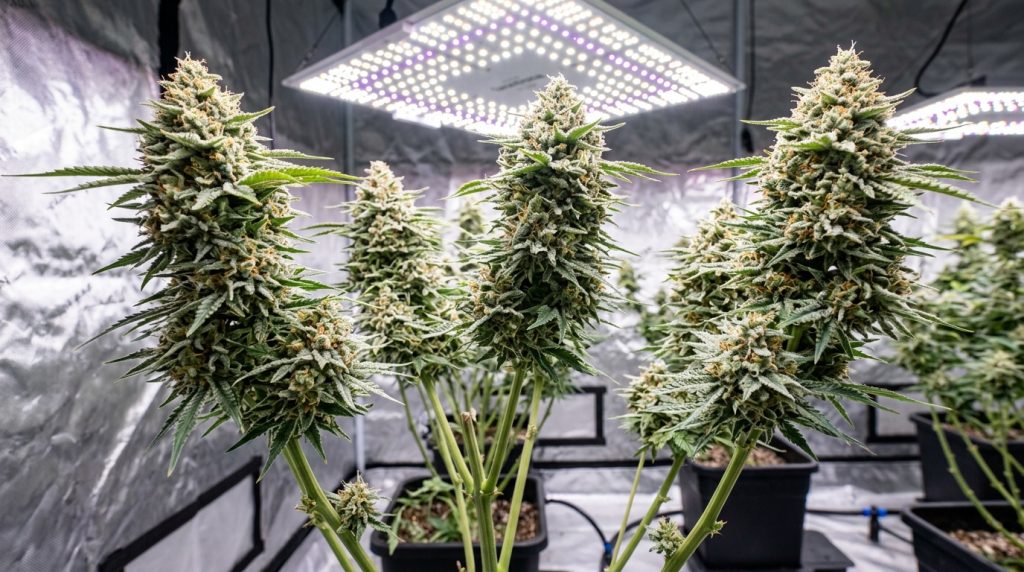
Most problems happen because growers either rush the process or treat every autoflower the same.
One mistake I see quite often is growers treating every autoflower the same. Some strains are naturally vigorous and recover quickly from pruning, while others stay compact and can become stressed far more easily. Understanding the plant’s natural structure, stretch pattern, and growth speed makes a huge difference when deciding how aggressively to lollipop. This is especially noticeable when comparing compact indica-dominant autos to taller sativa-leaning autoflowers with longer internodal spacing.
Every cultivar behaves differently.
Over-defoliating the plant
Removing too many leaves reduces the plant’s ability to photosynthesize efficiently.
I have seen autos sulk for over a week after excessive pruning.
Always remember:
Every fan leaf is a solar panel.
Ignoring genetics and growth structure
Some autos stretch heavily while others stay compact and bushy.
A tall sativa-leaning auto may benefit from heavier lower cleanup. A compact indica auto may only need minimal pruning.
The more strains you grow, the easier it becomes to recognize these differences.
Combining too many stress techniques
This is one of the most common beginner mistakes.
Some growers attempt:
- Topping
- Fimming
- Heavy LST
- Aggressive defoliation
- Lollipopping
…all within the same week.
Photoperiods may recover from that. Autoflowers often will not.
If you want my advice as a long-term grower:
Pick one major high-stress technique and do it properly.
Should you lollipop autoflowers outdoors?
Outdoor autoflowers can still benefit from lollipopping, although usually less aggressively than indoor plants.
Natural sunlight penetrates more effectively than indoor LEDs, meaning lower growth may remain more productive outdoors.
That said, outdoor lollipopping still helps in:
- Humid climates
- Dense gardens
- Tight planting spaces
- Pest-prone environments
Outdoor lollipopping guidelines
| Outdoor Condition | Recommendation |
| Humid climate | Light lollipopping recommended |
| Dry sunny region | Minimal pruning |
| Dense garden spacing | Improve airflow |
| Large outdoor autos | Selective lower cleanup |
As always, let the plant guide you.
FAQs
Can you lollipop autoflowers without stunting growth?
Yes, you can lollipop autoflowers without stunting growth if you prune carefully and time it properly. Most growers see the best results when pruning during early flower while the plant is still stretching. Removing too much foliage at once or pruning unhealthy plants is what usually causes stunting.
Should you lollipop autoflowers indoors?
In most indoor setups, lollipopping autoflowers is often beneficial because artificial lighting does not penetrate deep into the lower canopy. Removing shaded lower growth helps direct energy toward the upper bud sites that receive the strongest light.
When should you lollipop autoflowers?
The best time to lollipop autoflowers is typically during the first 7–10 days after flowering begins. Once white pistils start appearing and the plant enters the stretch phase, you can safely remove lower branches and weak bud sites before heavy flower production starts.
How much should you remove when lollipopping autoflowers?
Most growers remove around 15–25% of the lower growth depending on the plant’s size, vigor, and structure. It is generally better to under-prune than over-prune, especially with autoflowers that have limited recovery time.
Does lollipopping autoflowers increase yield?
Lollipopping does not always dramatically increase total harvest weight, but it commonly improves bud quality and density. Many growers notice fewer airy popcorn buds and better development in the top colas after pruning lower growth.
Can you lollipop autoflowers outdoors?
Yes, outdoor autoflowers can still benefit from lollipopping, especially in humid climates or crowded gardens where airflow is limited. However, outdoor plants often receive better natural light penetration, so pruning is usually less aggressive than with indoor grows.
What happens if you lollipop autoflowers too late?
Pruning too late into flowering can stress the plant during bud production and may reduce flower quality or slow development. If your autoflower is already well into bloom, it is usually safer to leave the plant alone rather than perform heavy pruning.
Is lollipopping better than defoliation for autoflowers?
Lollipopping and defoliation serve different purposes. Lollipopping focuses on removing lower growth and weak bud sites, while defoliation removes fan leaves to improve airflow and light exposure. Many growers use a light combination of both techniques, but excessive pruning can stress autoflowers.
Do all autoflower strains respond well to lollipopping?
Not always. Some tall, vigorous autoflower strains respond very well to lower canopy pruning, while smaller or compact genetics may require little to no lollipopping. Results often vary depending on strain genetics, environment, lighting, and overall plant health.
Can lollipopping help reduce mold and mildew?
Yes, improving airflow around the lower canopy may help reduce humidity buildup, which is commonly associated with mold and mildew problems. This is especially useful in crowded grow tents or humid outdoor environments.


