




If you’re new to growing cannabis, one of the first things you’ll want to know is how long the process actually takes from seed to harvest. The short answer is that it depends, mainly on whether you’re growing autoflowering or photoperiod plants, and how you choose to grow them. Some cannabis plants can be ready in just over two months, while others take half a year or more to fully mature. Understanding the typical timelines for each growth stage helps set realistic expectations, avoid common mistakes, and plan your grow more confidently from day one.
Key Takeaways
- Autoflowering cannabis plants typically take 8–12 weeks from seed to harvest, with some larger or sativa-leaning varieties running closer to 14 weeks.
- Photoperiod cannabis plants usually take 4–5 months indoors and up to 6–7 months outdoors, depending on veg time and flowering genetics.
- Germination and seedling stages together last about 1–3 weeks before vegetative growth begins.
- The flowering stage ranges from 5–8 weeks for most autoflowers and 8–12+ weeks for photoperiod strains.
- Drying takes around 7–14 days, while curing commonly lasts 4 weeks or longer for optimal quality.
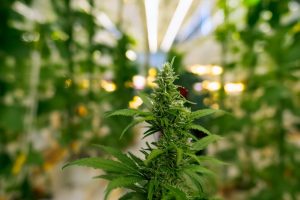
The average timeline to grow cannabis from seed to harvest
If you want a general idea of how long it takes to grow cannabis, first thing you need to decide on is whether you're growing autoflowers or photoperiods.
The full process usually takes anywhere from 8 weeks (for the fastest autos) to 6 to 7 months (for outdoor photoperiod strains). That includes everything from germination through to harvest, but not drying and curing, which can take a good few more months if you are wanting to do it properly.
And even that can vary depending on how you grow, where you're growing, and what kind of yield or quality you're aiming for.
Total time required for different types of cannabis seeds (photoperiod vs autoflower)
Autoflowers generally take 8 to 12 weeks from seed to harvest, but some of the more Sativa heavy options can go longer. I’ve had a few push close to 14 weeks, which was a bit of a surprise when I first started growing Sativa dominant autos.
Photoperiod plants are (usually) a longer commitment. Most indoor growers run them for about 4 to 5 months total, depending on how long they choose to keep them in the vegetative stage. Again, Indica strains will finish faster than Sativa heavy genetics.
What's the main difference between autos and photos?
Autoflowers are pre-programmed to start flowering after two or three weeks, no matter what light cycle they’re on. Photoperiods don’t start flowering until you manually switch the lights to a 12 hours on / 12 hours off schedule, or as summer wanes and the days begin to shorten.
I usually tell first timers this:
- Autos are faster, easier to manage, and a whole lot of fun.
- Photos are more flexible and better if you want to train your plants or push for big yields - still great fun, just a little more of a commitment and a bit more to understand.
Timelines for each stage: germination, vegetative, flowering, and drying/curing
While total grow time depends on the type of seed you’re using, all grows follow the same basic structure: First germination, then into the seedling stage, vegetative growth, flower production, harvesting, drying, and finally curing.
Each stage has its own timeline and role to play.
- Germination usually takes between 1 and 3 days, though I’ve had some stubborn seeds take up to 7. Once that taproot pops, you're good to plant.
- Seedling stage lasts around 1 to 2 weeks. It finishes when the first set of true leaves appear, and the plant starts to put out more rapid growth.
- Vegetative stage is where things vary the most. Autoflowers tend to veg for 2 to 4 weeks before shifting into flower automatically. Photoperiods start vegging in week 2 and can be kept there for as long as you want. I rarely veg mine for less than 5 weeks if I want a decent yield, but the choice is yours.
- Flowering also depends on the plant type. Most autos finish flowering within 5 to 8 weeks. Photoperiod strains need anywhere from 7 to 12+ weeks, depending on genetics and conditions.
- Drying typically takes 7 to 14 days if you're keeping temps and humidity stable.
- Curing is where the final quality really develops. I’d say 4 weeks minimum, but most strains don’t hit their peak until after a 2-to-3-month cure.
Factors that can extend or reduce the overall grow time
Even if you start with a reliable strain and a solid plan, there are a few things that can stretch or shorten the overall grow. Genetics is the big one. Fast-flowering Indicas and autoflowers tend to finish up quicker. Long-running Sativas can take two or three longer weeks during the flowering stage compared to their Indica sisters.
Your growing method also plays a part. Hydroponically grown plants will usually finish slightly faster than plants grown in soil or coco. The faster nutrient uptake and oxygen availability really do shave time off the veg phase, if your setup is dialled in.
High stress training techniques like topping will slow things down slightly, as the plants always need a few days to recover. It is worth it in most cases for photoperiods, especially if you’re aiming for a bigger yield or better canopy structure. But I don't suggest high-stress training for autoflowers, especially for new growers. They just don’t bounce back as easily, and it’s easy to stunt them early on.
The caveat to this is if you have a really solid understanding of a certain auto cultivar, and you're sure she can handle the stress and bounce back in time,
And then there’s all the other types of stress. In my experience, poor transplanting, pH swings, or overwatering/underwatering can set a grow back by a week or more, particularly during early veg.
When people contact us about slow growth, the first assumption is often that the genetics are the problem. More often, the delay comes from the setup: cold roots, inconsistent wet/dry cycles, weak light, or pH drifting out of range. Those issues can make a fast strain look slow, especially before the plant has built a strong root system.
The cannabis growth stages explained
Each stage of the cannabis lifecycle brings something different to the table, and understanding the timing will help you plan your grow more confidently. From that first sign of a taproot to the final few weeks in the curing jar, here’s what to expect at each step.
Germination stage: how long it lasts and what to expect
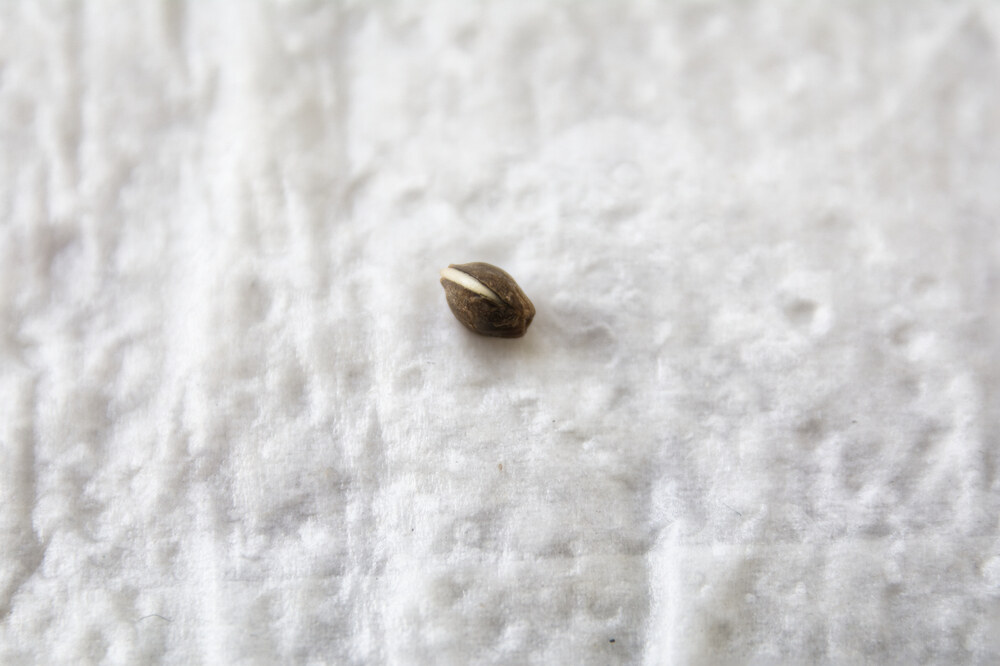
Taproot emergence usually takes one to three days, depending on the seed and conditions. Some can take a little longer, but most will crack within that window if kept warm and moist.
My go-to method is the paper towel technique. I soak the seed in water for about six hours first, then place it between damp paper towels in a plastic container with the lid loosely on. It lets you see exactly what’s happening with the seed so you can get it into the ground at the ideal time.
Keep your germination spot warm, ideally between 75 and 80 degrees Fahrenheit, with a bit of humidity. You want the seed to feel like it’s in a dark, spring-like environment.
There are other ways to germinate, like starting directly in soil or using Rock wool cubes. They work fine, but if you want the most visibility and control, the good old paper towel method is hard to beat.
Seedling stage: identifying healthy growth and timing
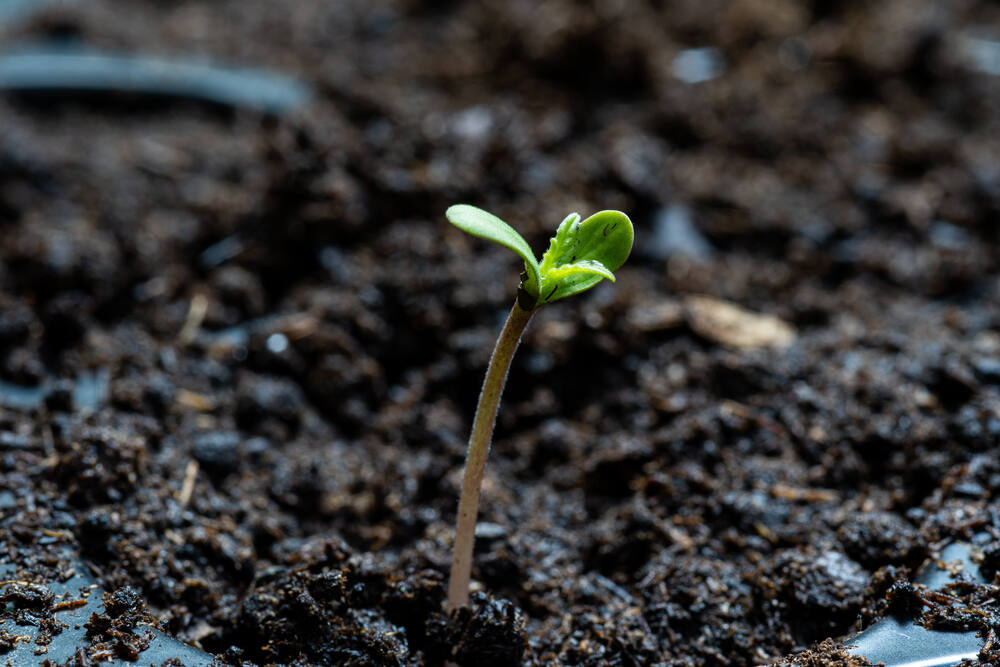
The seedling stage lasts one to two weeks. It ends once the plant pushes out its first set of true leaves and starts developing a stronger stem.
Healthy seedlings should stay compact and sturdy, with short spacing between nodes and leaves that are a rich green. Stretching, yellowing, or drooping are all signs something is off.
This is a delicate stage, so keep humidity fairly high (around 70%) and stick with low-intensity lighting. A lot of new growers overdo it with watering here. I avoid that completely. Damp soil is fine, but soaking wet roots will stall a plant before it even gets going.
Vegetative stage: when growth accelerates
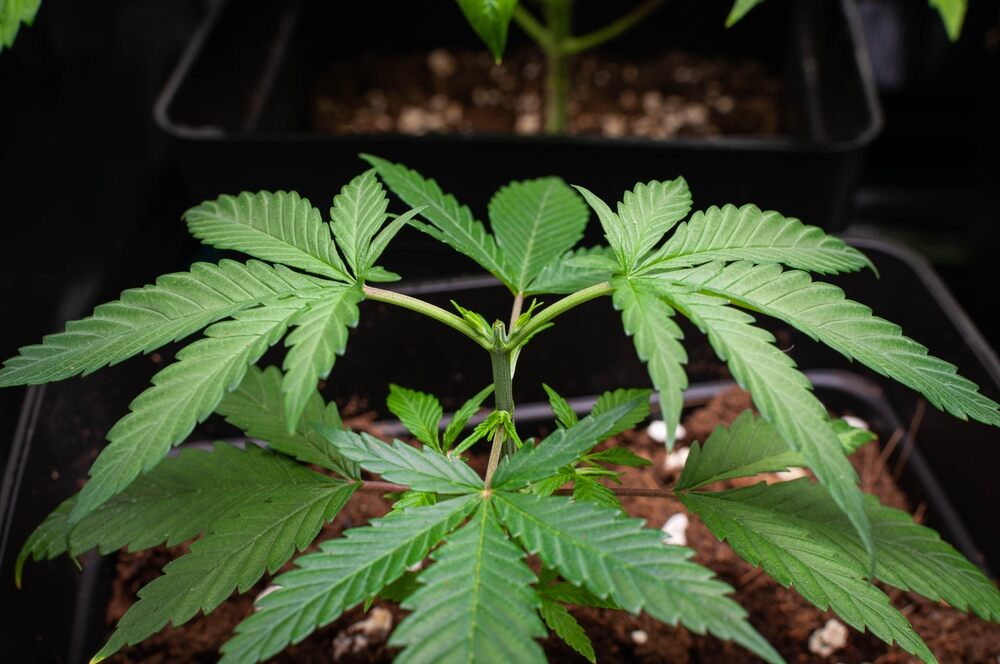
This is where things start moving fast, and the whole growing weed malarkey start becoming fun. The plant begins putting out thos huge fan leaves, strengthening its main stem, and building a bunch of side branches. The root ball expands quickly, and growth above the soil starts to accelerate.
- Autoflowers typically veg for around two to four weeks before transitioning into flower on their own. You don’t control it, so it’s important to avoid stress during this window.
- Photoperiods give you much more freedom. I usually veg mine for at least five to six weeks. That gives them time to build a strong base before switching to 12/12.
You’ll also shift into veg nutrients here, which means higher nitrogen, moderate phosphorus and potassium (if you’re growing in coco-coir or hydro). This is a good stage to start low-stress training, but higher stress techniques need to wait - topping, lollipopping, mainlining, defoliating, whatever takes your fancy.
Just make sure the plant is strong before you top. I always wait until I see four nodes minimum before I go near it with scissors.
Flowering stage: how long it takes for buds to mature
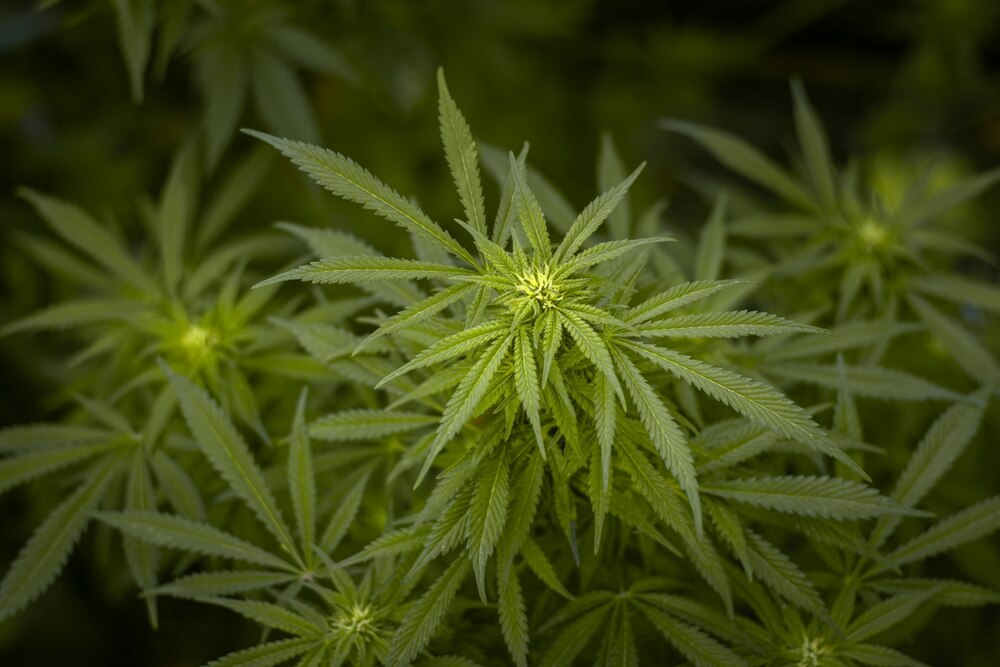
Flowering kicks off once you see pistils forming at the nodes. That’s your sign the plant is shifting from leaf growth into bud production.
Once you start seeing those pre-flower pistils develop, it means you’re about to hit the stretch. Over the next ten days or so, your plants can almost double in size. Once the stretch is done, vertical growth stops and all the plant’s energy moves into building buds.
At that point, I usually drop humidity to around 50 percent and hold it there for the first couple of weeks of flower. Once the buds start fattening up, I gradually bring it down closer to 45 percent. In the final two weeks, I aim for 40 percent or just under, especially for dense strains that are prone to mould.
Most autoflowers will stay in flower for five to eight weeks. Photoperiods can take anywhere from eight to twelve weeks (or more) to finish the flower cycle, depending on genetics.
Flower nutrients are typically higher in phosphorus and potassium and lower in nitrogen. That matters more if you're growing in coco or hydro. If you're growing in soil, it’s not something you usually need to stress about. Most good-quality soil mixes carry you through without much input, though I sometimes use organic bloom boosters like compost tea, fish hydrolysate, or liquid kelp to give them a little push.
If you are growing in hydro or coco, make sure you're using the right nutrients for your setup. Hydro nutrients for hydro systems, and coco-specific nutrients for coco coir. You can’t switch between the two, they’re formulated differently and it does matter.
Harvest, drying, and curing: the final (but critical) phase
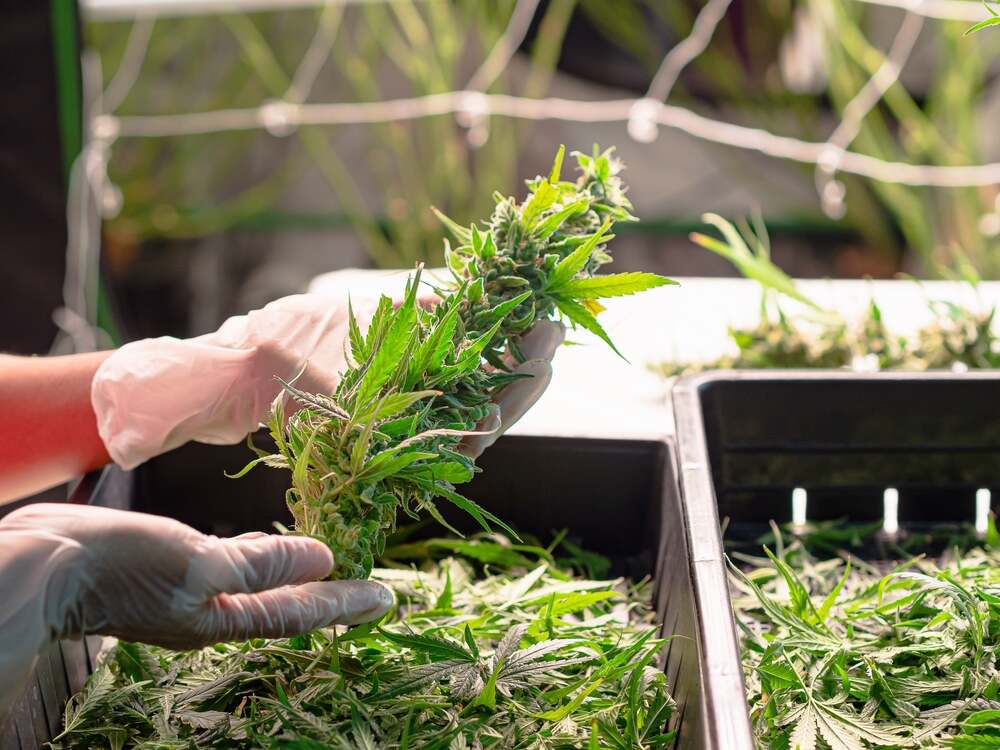
A lot of people harvest based on pistil colour, but that’s not reliable. I always check trichomes using a USB microscope. For a balanced effect, I usually wait until around 30% of the trichomes have turned amber, with the rest cloudy.
Once I’ve harvested, I hang the plants or branches in a room kept at 65 to 70 degrees Fahrenheit and 50 to 55% humidity. Stability is absolutely key here. You don't want big temp or humidity swings. If you get it right, your buds should slowly dry over 7 to 10 days.
Curing comes next. I use glass jars, opened daily for the first couple of weeks to release moisture. After the two-week mark, I only burp the jars maybe every second or third day, im not overly strict with it.
I cure for at least a month, but most strains really start hitting their stride after two or three months. The flavour, potency, and smoothness just keep improving. Patience is key here.
This is the stage most new growers rush, and fair enough. The idea of waiting a whole 3 more months to enjoy the hard work is tough. If it’s your first grow, do your thing, and get grinding. But if you can wait, it’s worth it. And save some from your last grow to tide you over for the next, so you can always have cured buds on hand.
What affects how fast cannabis grows?
There’s no single timeline that fits every grow. Even if you’re using the same strain and setup, one plant might take a week longer than the next. That’s because several core factors affect how fast a cannabis plant develops, especially genetics (which we refer to as phenotype variation), the environment, whether it is grown hydroponically or not, and light schedules/intensity.
Genetics and seed type: why some strains grow faster than others
Strain selection is the one biggest influence on how long a grow takes. Fast-finishing strains are usually indica-leaning or autoflower crosses. Sativa-dominant plants often take much longer in flower, especially if they have haze or landrace genetics in the mix.
Some of the autos I’ve grown have finished in just over eight weeks. Others, particularly the big-yielding or sativa-heavy ones, have taken closer to fourteen. It really comes down to the cultivar and what it was bred for.
Indoor vs outdoor growing times
Indoor growing gives you total control over your environment. That means faster turnaround, especially if you’re running multiple light cycles a year. With good conditions, you can finish a photoperiod grow in three to four months indoors, and autos even faster.
Outdoors, it’s a different game. Photoperiods are tied to the seasons and usually germinated around April or May. They’re harvested in late September through October, depending on climate and strain.
Autoflowers give you more flexibility outdoors. Because they don’t rely on day length, it’s possible to fit in two or even three outdoor harvests per season in some regions. Where I live, though, I can usually only squeeze in one good photoperiod grow outdoors per year, with a few autos running alongside for a bit of fun (usually two auto harvests outdoor per year for me).
How light cycles influence plant speed (autoflowers vs photoperiod)
Photoperiod plants won’t flower until you switch to a 12/12 light schedule. That gives you more control over veg length but also adds time to the overall grow.
Autoflowers grow under a consistent 18/6 or even my preferred 20/4 cycle from seed to harvest. No flipping required. Shorter veg means a quicker finish, but at the cost of size. You can easily set up an indoor perpetual harvest routine in a single room or tent though, which can actually boost the overall yearly output of a grow space.
I’ve had good luck running autos 20/4 all the way through indoors. It keeps things simple and lets them do their thing without interruption.
How long does it take to grow autoflowers vs photoperiod plants?
Autoflowers and photoperiods follow different grow timelines, and so they with their own trade-offs. If you're choosing between them, it's worth knowing how their timeframes compare, and how much control you'll have over the grow from start to finish.
Timeframes for autoflowering cannabis plants
Most autoflowers take around 8 to 12 weeks from seed to harvest. Some of the larger or more sativa-leaning strains, often called “super autos,” can go as long as 13 or 14 weeks, especially outdoors.
Autos transition naturally from veg into flower without needing any light schedule change. That makes them ideal for quick, low-maintenance harvests or small indoor setups where simplicity matters.
I like autos for summer outdoor grows. They’re compact, easy to tuck away, and usually finish before the worst of the autumn weather hits.
In general, plan for 10 to 11 weeks, even if the packet says 8 to 9.
This is one of the most common timing questions we see with autos. Breeder estimates are based on healthy plants grown in good conditions, so early stress can shift the whole schedule. If an autoflower is overwatered, transplanted roughly, or kept too cold in the first couple of weeks, it may still finish well, but it often needs longer than the packet suggests.
Grow time for photoperiod cannabis indoors and outdoors
Indoors, you have full control. The vegetative stage can run anywhere from 3 to 20 weeks, depending on how long you choose to keep it going. Flowering usually takes another 8 to 12 weeks.
Outdoors, photoperiods follow the seasons. Most growers germinate in April or May and harvest in late September or early October (Northern hemisphere). That’s a five-to-six-month cycle, give or take.
You choose when to flip to flower indoors. I’ve pushed it past 8 weeks before when I wanted taller plants or bigger yields. If you’ve got the space, photos will fill it. After years of growing, and now usually just keeping my personal grows to two 4x4 tents, I like to have 3 photos in each and veg then until week 5 or 6.
Pros and cons of each in terms of speed and yield
Autoflowers are fast, discreet, and easy for beginners. They don’t need a light flip, and most finish up before any major problems develop. But they usually yield less, have a narrow training window, and don’t bounce back well from stress.
Photoperiods are slower, but you get more control. You can train them aggressively, time your flip, and grow bigger plants overall. They take more time and gear, but the payoff is worth it.
I run both indoors and out, depending on what I’ve got going on and what the weather is looking like. Autos for speed and discretion, photos when I want to go bigger and experiment with new training techniques.
Can you speed up or slow down the cannabis growth cycle?
Every grower, at some point, wonders if they can shave a week or two off a grow or hold things in place just a little longer to get more from their plants.
The short answer is yes, but the trade-offs are real.
Whether you’re pushing for speed or aiming to max out your yield, the decisions you make during veg and flower will directly shape the outcome.
Techniques to shorten the vegetative stage
The most common way to shorten veg on photoperiod plants is to flip to 12/12 early, but I really don’t suggest it.
Lighting is key. A strong, high-DLI setup gives you faster root and leaf development, which helps speed the whole stage along. Good airflow and dialled-in VPD also play a part.
If I’m trying to move fast, I avoid transplanting and skip topping. Both of those slow the plant down while it recovers. It’s not my preferred approach, but if I’m on a tight schedule, I keep things simple and let the plant grow naturally.
One lesson from testing different feeding programs is that more nutrients do not usually mean a faster harvest. Pushing feed strength too hard can cause tip burn, lockout, or stalled growth, which costs more time than it saves. A steady, healthy plant almost always finishes better than one that has been forced along too aggressively.
Methods to prolong flowering for better yields
Some plants look ready on the surface before they’re actually done. Letting buds finish properly (cloudy trichomes turning amber, pistils pulling back) makes a noticeable difference.
If you remove the small larfy growth in early flower (lollypopping), the plant redirects more energy to the top sites. I also like to use bloom boosters or organic PK inputs in weeks five to seven to support late-stage density.
I’ve seen much better trichome coverage and flavour by letting plants go that extra week. As long as the trichomes aren’t turning too far past amber, it’s usually worth the wait.
The trade-off between speed and quality in fast grows
The faster you push your grow, the more you sacrifice in terms of size, flavour, and potency. Plants that are rushed through veg stay smaller. Plants that are harvested early tend to have underdeveloped terpene profiles, and more of a Sativa-like effect.
Quick drying is simply out of the question. I have seen so many new growers ruin all their hard work by rushing the drying. Never have fans or AC units pointed directly at the buds. Take your time. Don’t let all that hard work go to waste.


