



Choosing between hydroponics and soil growing usually comes down to one thing: control versus simplicity. Hydroponic systems can produce faster growth, shorter veg times, and potentially larger yields by delivering nutrients directly to the roots, but they also require closer monitoring and respond quickly when problems occur. Soil grows are slower by comparison, yet they are generally more forgiving, lower cost, and easier for beginners to manage consistently. Both methods can produce high-quality cannabis when the environment, genetics, lighting, and post-harvest process are handled correctly. Understanding the strengths and limitations of each setup will help you decide which approach best suits your experience level, budget, and growing goals.
Key Takeaways
- Hydroponic systems typically grow cannabis faster and can produce higher yields, but they require regular monitoring of pH, EC/TDS, water temperature, and equipment.
- Soil grows are generally cheaper to start, easier to maintain, and more forgiving of small feeding or watering mistakes.
- DWC (Deep Water Culture) is commonly considered one of the simplest hydro systems for beginners who want faster growth without excessive complexity.
- Soil-grown cannabis often requires longer vegetative periods to match the yield potential of hydroponic setups.
- Potency and flavor are influenced more by genetics, lighting, environmental control, and curing than by whether plants are grown in hydro or soil.
- Hydroponics performs best in stable indoor environments, while soil is usually the preferred option for outdoor growing due to lower costs and simpler management.
What are the pros and cons of hydro and soil growing?
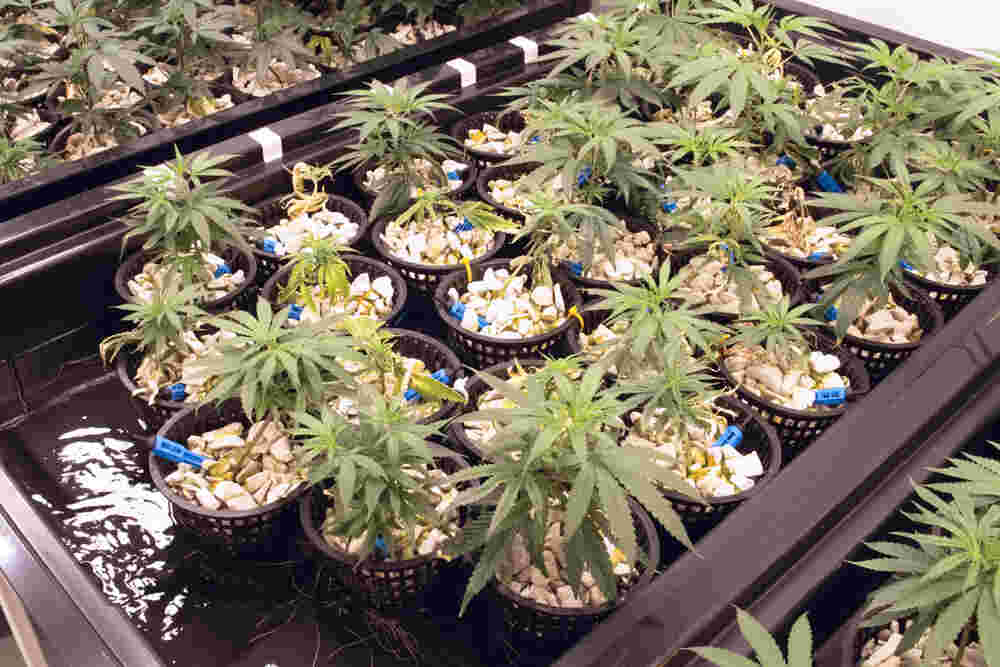
You may be reading this thinking, “If plants can grow faster and yield more in hydro, why isn’t everybody using it?” The short answer is that hydroponics can be highly efficient, but it’s less forgiving when something goes wrong. Soil tends to be far easier to manage day to day, but it usually produces much slower growth rates and can be more variable depending on what you’re growing in.
Below is a practical breakdown of what growers usually like (and dislike) about each method.
Actionable Tip: Pick hydro for faster growth and tighter nutrient control, but choose soil if you want a more forgiving setup that is easier to manage day to day.
Pros of hydroponic growing
- Faster growth and strong yields (when dialed in): In a well-run hydroponic system, roots get water, oxygen, and nutrients with less resistance than in soil. That often translates to quicker vegetative growth, fast flowering times, and the potential for heavier harvests, especially in controlled indoor setups.
- More control over feeding: Because you’re mixing a nutrient solution, you can adjust what the plant receives as it moves through veg and flower using an EC meter or pen. That level of control is a big reason experienced growers like hydro, as the plants are consistently fed the perfect amount.
- Cleaner root zone and fewer soil-related issues: No soil means fewer problems tied to soil quality, drainage, or soil-borne pests. Hydroponics is a sterile and bacteria free way to cultivate cannabis. Many hydro growers also find it easier to spot and correct problems early because changes show up quickly compared to soil.
- Better for low plant counts: One of the best reasons for switching to hydro is the fact if you are only growing a small number of plants (1-4), then you will be able to produce great yields, whilst sticking to the legal limit. You only need a few plants in hydro to achieve superb yields and be as efficient as possible with your grow space.
- Hydroponic system diversity: Unlike using pots and soil, hydroponic growing is vastly different due to the wide range of systems available to a grower. No, hydroponic system is the same and some are better suited for grow sets than others
- However this also depends on the grower, room space and their preference. Systems range from deep water culture (DWC), reverse deep water culture (RDWC), ebb and flow, nutrient film technique (NFT), aeroponics and aquaponics.
Actionable Tip: Use hydroponics when you can regularly monitor nutrient strength, pH, and equipment to take full advantage of faster growth and heavier harvests.
Cons of hydroponic growing
- Higher setup cost: Even a basic deep water culture setup needs buckets, air pumps, air stones, and nutrients. More advanced systems like drip irrigation, nutrient film technique, and ebb and flow add reservoirs, pumps, timers, lines, and fittings, so the initial set up costs are significantly higher than sourcing pots and soil.
- Less forgiving for beginners: Hydro systems can swing fast. If pH or EC/TDS drifts, or your reservoir warms up, plants can react quickly. New growers sometimes feel like they’re “chasing numbers” until they get a routine.
- More electricity and more points of failure: Pumps, air stones, lights, and extraction all draw power. If a pump fails, or you get a power outage,some systems can dry out the root zone quickly. This can also leave you with your back against the wall in response time and resolving the issue or replacing pumps. Anything with moving parts has the chance of failing.
- Requires consistent monitoring: Hydroponics can be a full time job whilst you are learning the ropes. To keep a hydroponic system stable, you’ll typically need to keep an eye on many different factors as explained below.
- pH (how acidic the nutrient solution is)
- EC/TDS (how strong the nutrient solution is)
- Reservoir temperature (warm water can reduce dissolved oxygen and increase risk of root issues)
- Water level and flow (especially in NFT, drip, and ebb and flow systems)
- Higher contamination risk if hygiene slips: A reservoir is a shared water source. If bacteria, algae, or mould gets into the system, it can spread quickly. This means that you may need to clean equipment and light-proof reservoirs. Doing so will make a bigger difference than most people expect.
Actionable Tip: Start with a simple hydro system like DWC if you want to reduce complexity and lower the risk of equipment or monitoring issues.
With so many hydroponic system types out there, it’s also worth thinking about complexity before you buy anything. A wick system can be simple and cheap to run but usually won’t match the performance of more active systems.
DWC is often the simplest “high-performance” option for beginners, while drip irrigation and ebb and flow can be excellent once you’re comfortable managing pumps, timers, and a stable nutrient solution. The most unique thing about growing hydro is the fact you can achieve unbelievable yields.
Pros of growing weed in soil:
Soil is mother nature’s growing medium and is teeming with millions of beneficial bacteria, and microorganisms. The soil food web is what allows nutrients to be broken down and fed back to the plants. This is why soil is an excellent starting point for a first time grower, and very little maintenance is required. Below are the pros of growing cannabis plants in soil.
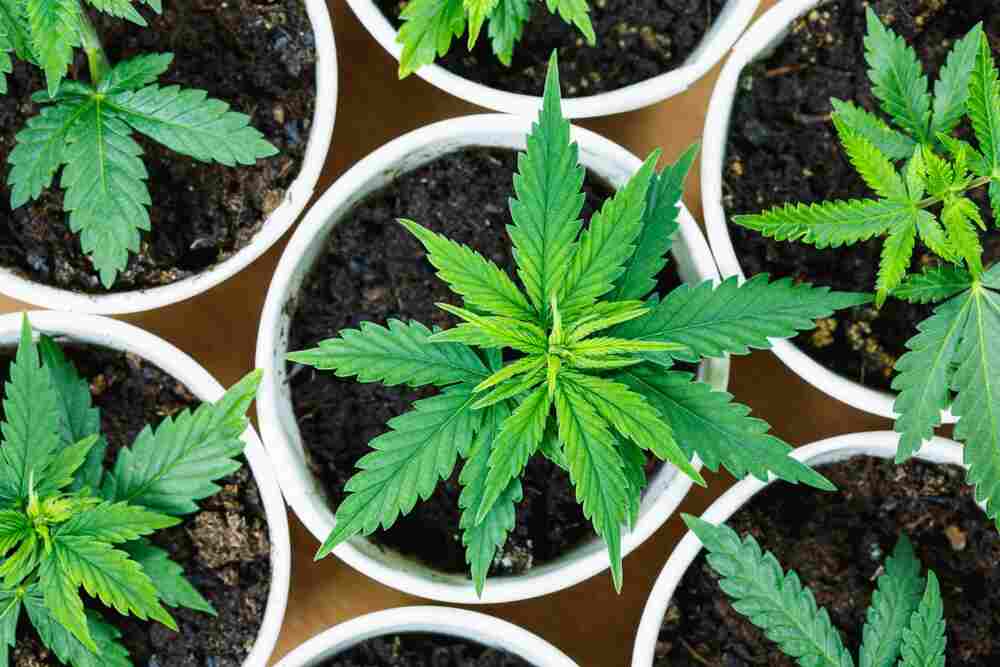
- More forgiving day to day: Soil can smooth out small mistakes, especially with feeding and watering. If you slightly overdo nutrients, the root zone usually doesn’t swing as fast as hydro, and takes 72 hours to buffer before any major changes occur.
- Lower startup cost: A soil grow can be as simple as a good-quality soil mix, fabric pots, and basic nutrients (or even just water if you’re using a richer “super soil” style mix). Growers who are working with a limited budget will find a soil grown project to be highly practical and low cost.
- Simpler routine: For many growers, soil is easier to run consistently because you’re not managing a reservoir, pumps, and a recirculating nutrient solution. All you really need to do is make sure you water the soil once it begins to dry out which can be every 24-72 hours.
- More flexibility with organic growing: Soil is often the preferred route for growers who want to use organic inputs and build a living root zone with microbes. Inoculating the soil with aerobic bacteria and fungi, and using organic compost teas and top dressing with worm castings and compost allows a grower more flexibility with organic inputs.
- Re-using the same soil after harvesting: Well maintained soil can be re-sused and recycled after every harvest. You must make sure that there is a fine balance of organic inputs and carbon rich liquid feeds for the bacteria, and the soil has an airy and spongy quality with good drainage. Recycling soil saves spending money every grow and supports the idea that soil is the cheap and easy way to kick start a cannabis grow.
Cons of growing weed in soil:
- Lower growth: In soil, roots need to work harder to find water, oxygen, and nutrients,especially if the soil is dense or stays wet for too long. This means that whilst cannabis plants grow extremely well in soil, vegetative growth is slow compared to hydroponics.
- Higher pest pressure: Soil can attract pests like fungus gnats and can carry unwanted hitchhikers if the mix or environment isn’t clean. Pests will live inside the soil and on your plants, which if left untreated and spiral into a serious problem.
- Inconsistency (if the soil isn’t right): Not all soil mixes are equal. Poor drainage, low aeration, or uneven nutrient content can lead to slower growth and uneven results. The most important factors when buying soil are drainage, water retention, quality of the organic inputs and a spongy consistency when squeezing together.
You cannot go wrong when using top quality soil and growing cannabis. If you do decide on soil, one of the best tips we can give is choosing a proper cannabis-friendly soil mix from a well known and reputable industry brand. Using pots that encourage airflow to the root zone (many growers like fabric pots for this reason), and improve drainage.Is hydroponic weed better than soil?
Whether hydroponic weed is “better” than soil-grown weed mostly comes down to how the plant is grown rather than the growing medium itself. Cannabis quality is influenced by several factors working together, including genetics, skill and experience level, light quality, nutrient management, climate control, and post-harvest handling. The medium is just one part of that equation.
Hydroponic systems can offer tighter control over nutrients and water delivery, which can support faster growth and more consistent development when everything is dialed in correctly. Because nutrients are delivered directly to the root zone, plants don’t need to work as hard to access what they need, and growth can be very uniform in a stable environment. This is one reason hydro is popular in controlled indoor grow rooms and commercial-style setups.
Soil-grown cannabis, on the other hand, relies more on the structure and biology of the growing medium, and the right balance of beneficial microorganisms and bacteria A well-built soil,especially an organic or “super soil” mix,can support steady growth with fewer sudden changes in the root zone. Many growers value this stability, particularly if they prefer a more hands-off approach or are still building experience.
One point that often comes up in this comparison is nutrient type. Hydroponic growing typically uses synthetic mineral nutrients, while soil growers may use organic inputs, or rely on nutrients already present in the soil.
Some growers feel soil-grown plants produce a fuller flavour, but this is subjective and heavily influenced by drying and curing rather than the medium alone. Regardless of method, careful harvest timing and a proper dry and cure have a much bigger impact on aroma and taste than whether the plant was grown in hydro or soil.
In practical terms, neither method guarantees better cannabis on its own. A well-run hydro grow and a well-managed soil grow can both produce high-quality results. The biggest differences tend to show up in growth speed, level of control, and how forgiving the system is when something goes wrong, rather than in outright quality.
Actionable Tip: Use a high-quality, well-draining soil mix if you want a lower-maintenance grow that buffers small mistakes in feeding and watering.
Is hydroponic weed more potent?
Potency isn’t determined by the growing medium alone. While hydroponic systems can support rapid growth and efficient nutrient uptake, the THC and cannabinoid levels a plant ultimately produces are influenced far more by genetics, light intensity, environmental control, and harvest timing than by whether the plant is grown in hydro or soil.
One thing hydro will do is boost yields, however there is no proof it is more potent or has a more enhanced terpene and cannabinoid profile.
Hydroponic growing does give the grower very direct control over the root zone. When pH and nutrient strength are kept within the optimal range, plants can grow without nutrient-related stress, allowing them to reach full maturity efficiently. In that sense, hydroponics can help a plant express its genetic potential more consistently but it does not automatically increase potency on its own.
It’s also worth noting that hydro systems are less forgiving if conditions drift out of range. Sudden pH swings, incorrect nutrient strength, or low oxygen levels in the root zone can stress plants, which may negatively affect cannabinoid development. Soil, by comparison, naturally buffers over a 72 hour period against small errors, which can sometimes make it easier for less experienced growers to maintain stable conditions.
Lighting plays an especially important role here. High-quality grow lights with adequate intensity and proper coverage are one of the biggest drivers of potency, regardless of medium. Temperature, humidity, and airflow during flowering also influence how well buds develop and mature.
In short, hydroponic weed isn’t inherently more potent than soil-grown weed. Hydro can make it easier to maintain precise conditions, but potency still comes down to running a healthy plant from start to finish and harvesting at the right time.
Does hydroponic or soil yield more?
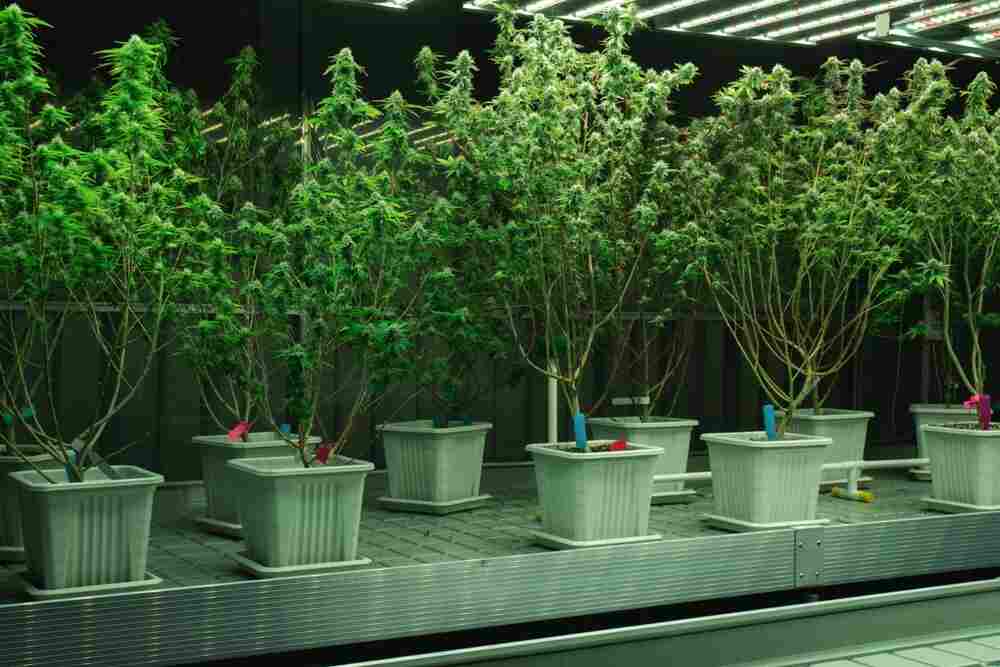
Hydroponic systems are often associated with higher yields because nutrients, water, and oxygen are delivered directly to the root zone in a very efficient way. When a hydro grow is set up and maintained correctly, plants can grow faster and develop more aggressively, which can translate into heavier harvests,particularly in indoor environments where lighting and climate are tightly controlled.
That said, yield isn’t determined by the growing medium alone. Several other variables have a major impact, including light quality and intensity, canopy management, pot size or root space, plant training techniques, and overall environmental stability.
However, on the basis that the growing environment is optimal, yields from hydroponic systems can be twice or three times the size of organic grown crops.
In practice, hydroponic setups often outperform soil when everything else is equal, mainly because nutrients are always readily available and the root zone stays highly oxygenated. Many growers report that a well-run hydro grow can yield far more than a comparable indoor soil grow, but only when feeding, lighting, and climate are properly dialed in. Without that level of control, hydro offers little advantage and can even underperform.
Soil-grown plants can still produce excellent yields, especially when grown in large containers with a high-quality soil mix and trained correctly. Techniques such as topping, low-stress training, and maintaining an even canopy can make a significant difference in soil growth, helping close the yield gap between soil and hydro. You may need to vegetate soil grown plants for much longer than the traditional 2 week veg time associated with hydro, to achieve the biggest yields possible.
Overall, hydroponics tends to offer significantly higher yield potential, but it also demands more attention and consistency. Soil may grow more slowly, but it often rewards growers with steady, reliable results, particularly for those who value simplicity over maximum output.
Soil is much easier, produces flavourful buds and requires very little maintenance., and hydro keeps veg times short, reduces electricity bills and provides a quicker turn around time from start to finish.
Actionable Tip: Use hydro in a stable indoor environment if your priority is maximizing yield and shortening vegetative time.
How much weed does the average hydroponic yield?
Average hydroponic yields are often measured using grams per watt (g/W), which helps standardise expectations across different grow sizes and lighting setups. In most indoor hydroponic grows, yields commonly fall somewhere between 0.5 to 1.5 grams per watt of light, with higher numbers typically achieved by experienced growers running well-optimised environments.
To put that into context, a grow using a 1000-watt grow light could realistically produce anywhere from 500 grams to 1500 grams (roughly 1.1 to 3.3 pounds) of dried cannabis. Yields at the upper end of this range usually require strong lighting, even canopy coverage, stable climate control, and consistent nutrient management throughout the growth cycle.
It’s important to keep expectations realistic, especially for newer growers. While hydroponics can support fast growth, it won’t automatically deliver high yields if other variables aren’t in place. Light quality, plant training, spacing, and environmental stability often matter just as much as the feeding method.
Growers who consistently achieve higher grams per watt usually focus on:
- Even light distribution: Keeping the canopy level so all bud sites receive similar light intensity, with the perfect PPFD levels.
- Healthy root zone: Maintaining proper oxygenation, stable pH, and clean nutrient solutions.
- Controlled environment: Dialling in temperature, humidity, and airflow during both vegetative growth and flowering.
- Good plant structure: Using training techniques to maximise usable canopy space without overcrowding.
Hydroponics can make it easier to push yields once these fundamentals are in place, but it’s the combination of all these factors,rather than the system alone,that determines how much you ultimately harvest.
What is cheaper hydro or soil?
When comparing cost, the biggest difference between hydroponic and soil growing comes down to upfront setup costs versus long-term efficiency. Hydroponics generally requires more equipment to get started, while soil growing can be kept relatively simple and budget-friendly.
A basic hydroponic setup usually includes containers or buckets, air and water pumps, air stones, tubing, a reservoir, nutrients, and monitoring tools such as pH and EC meters. Depending on the system and grow size, startup costs can range from around $300 to well over $2,000. More advanced systems,like multi-site drip irrigation or ebb and flow tables,sit at the higher end of that range, making soil the cheaper alternative.
Soil growing, by contrast, has a much lower barrier to entry. A typical soil setup might only require pots, a quality soil mix, and basic nutrients, making it far cheaper to start. For beginners or small-scale growers, this lower upfront cost is often a major reason soil is the preferred option.
Running costs also differ. Hydroponic systems usually consume more electricity due to pumps, air stones, and additional equipment running continuously. Nutrient costs can also be higher over time, as hydro relies entirely on liquid feeds rather than nutrients already present in the soil.
Soil grows can be more economical to maintain, particularly when using larger containers or enriched soils that reduce the need for frequent feeding. However, due to the short vegetative times of 7-14 days with hydro, electricity bills will be lower in return.
Outdoor growing shifts the comparison even further. Growing cannabis outdoors in soil using natural sunlight is significantly cheaper than any indoor hydroponic setup. Without grow lights, pumps, or climate control equipment, ongoing costs are minimal, making soil the clear winner for budget-conscious growers with suitable outdoor space.
Overall, soil is usually cheaper and simpler, especially for beginners. Hydroponics can become cost-effective over time through faster growth cycles and potentially higher yields, but it requires a larger initial investment and a greater level of day-to-day involvement.
Frequently Asked Questions
Is coco coir considered hydro or soil?
Coco coir sits somewhere between soil and hydroponics. While it looks and feels similar to soil, it contains very few nutrients and behaves more like a hydroponic medium. Plants grown in coco are typically fed with a nutrient solution and require pH and EC monitoring, much like hydroponic systems. Coco coir needs to be buffered using calcium and magnesium before using.
Is hydroponics good for beginners?
Hydroponics can work for beginners, but it comes with a steeper learning curve. Systems like DWC or dripper stake systems are often recommended for first-time hydro growers because they are relatively simple. Soil is generally more forgiving and much easier to manage for those new to growing cannabis.
What pH should hydroponic and soil grows be?
Most hydroponic systems perform best with a pH range of 5.5–6.2, while soil-grown plants usually prefer a slightly higher range of 6.0–7.0. Staying within these ranges helps plants absorb nutrients efficiently and prevents nutrient lockout.
Do you need to measure EC or TDS in soil?
EC and TDS measurements are essential in hydroponics but less critical in soil. Many soil growers feed based on a schedule rather than numbers, though measuring runoff can still help diagnose nutrient issues in more advanced setups. If you are a first time grower, then you do not need to worry about using an EC or TDS meter.
Can you switch from soil to hydro mid-grow?
Hydroponic growing mediums such as rockwool and hydroton clay are inert and contain no nutrients and have excellent drainage and water retaining abilities. You can always insert drip lines and stakes into pots containing soil, however it is not recommended especially mid grow.
Which method is better for outdoor growing?
Soil is almost always the better option for outdoor growing. Hydroponic systems outdoors are harder to control and protect, while soil benefits naturally from the environment and sunlight.
What is the easiest hydroponic system to start with?
A basic DWC system or dripper system is often considered the easiest entry point into hydroponics. They require fewer components than drip or ebb and flow systems and are easier to troubleshoot.
Does hydroponic weed always taste worse than soil-grown weed?
No. Flavour is influenced more by genetics, nutrient management, and drying and curing than by the growing medium. Well-grown, correctly flushed and properly cured hydroponic cannabis can taste just as good as soil-grown cannabis.


