




Can you tell the sex of a cannabis seed just by looking at it? Despite the many charts and online claims about male vs female cannabis seeds, the answer is no. Cannabis seed appearance, including colour, shape, size, mottling, and shell markings, cannot reliably reveal whether a seed will grow into a male or female plant.
Those features can sometimes tell you something about maturity or cannabis seed viability, but they do not indicate sex. A dark, round, heavily striped seed is not automatically female, just as a smaller or plainer seed is not automatically male.
So, if you want to know how to tell if a cannabis seed is male or female, you need to look beyond the seed itself. This guide explains what cannabis seed colour and cannabis seed shape can actually tell you, why common sexing myths are unreliable, and when you can tell the sex of a cannabis plant once it starts to develop.
Key Takeaways
- You cannot reliably tell the sex of a cannabis seed from its colour, size, shape, markings, or shell.
- Male and female cannabis seeds can look almost identical because the differences that determine sex are genetic, not visible on the seed surface.
- Cannabis seed appearance can provide clues about maturity and condition, but it cannot guarantee germination or predict plant quality.
- The most reliable visual way to identify plant sex is to check developing pre-flowers at the nodes as the plant reaches sexual maturity.
- Feminized seeds make female plants far more likely, but growers should still check plants as they develop because sex expression is not always completely predictable.
- What Does a Cannabis Seed Look Like?
- Can You Tell the Sex of a Cannabis Seed?
- How to Tell If a Cannabis Seed Is Male or Female
- What Determines Whether a Cannabis Plant Is Male or Female?
- Common Myths About Male and Female Cannabis Seeds
- When Can You Tell the Sex of a Cannabis Plant?
- Regular, Feminized Seeds and Cannabis Sex Expression
- Conclusion
- Frequently Asked Questions
What Does a Cannabis Seed Look Like?
Cannabis seeds are small, hard-shelled, and usually oval or teardrop-shaped. However, cannabis seed appearance can vary considerably between strains and individual seeds. Differences in colour, markings, size, and shape are normal and should not automatically be treated as signs of poor quality.
Cannabis Seed colour and Markings
Mature cannabis seed colour commonly ranges from tan and light brown to darker brown or gray. Some seeds develop mottled markings or dark tiger-like stripes, while others have a much plainer shell.
These patterns are mostly cosmetic. A seed does not need prominent tiger stripes to be healthy, and darker markings do not mean it will produce a stronger plant.
Pale green or white seeds may have been harvested before fully maturing and can be less likely to germinate. However, colour alone cannot confirm whether a seed is viable.
Cannabis Seed Shape and Size
Cannabis seed shape also varies naturally. Most seeds are oval or rounded with one slightly pointed end, but some are longer, wider, or more compact.
Seed size can differ between cultivars and even among seeds produced by the same plant. A larger seed is not automatically healthier, more likely to germinate, or more likely to produce a female plant.
What Healthy and Mature Cannabis Seeds Usually Look Like
A mature cannabis seed typically has a well-developed outer shell that feels firm rather than soft or easily crushed. The shell may be smooth, mottled, striped, or fairly uniform in colour.
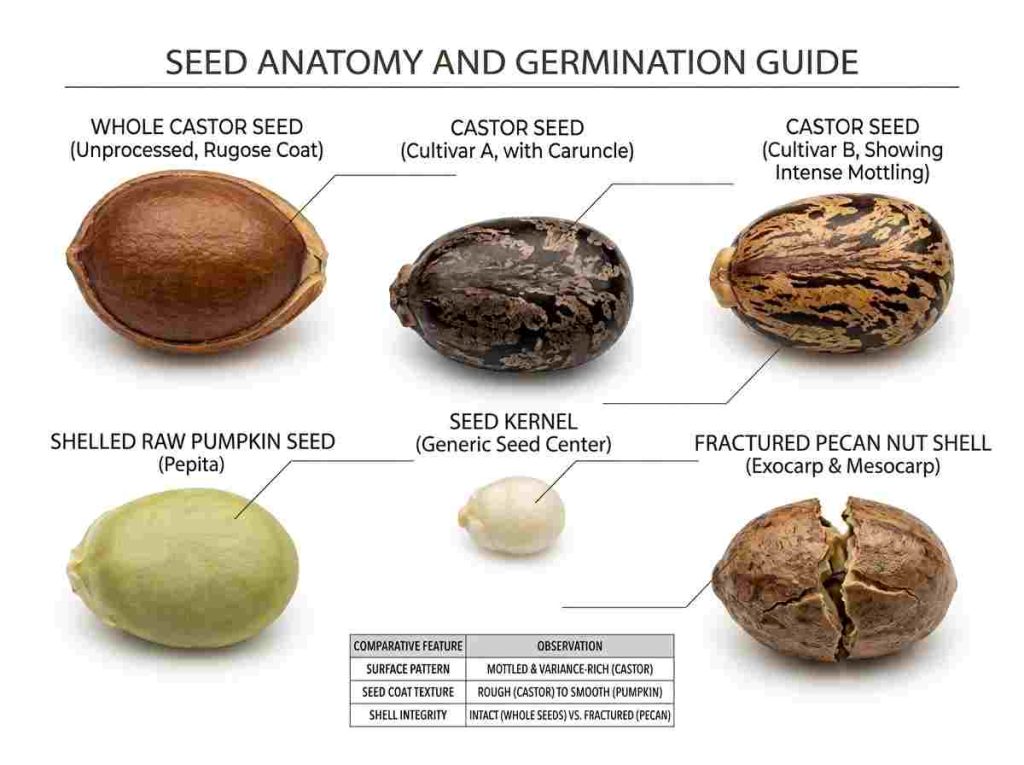
| Seed Feature | What You May See | What It Can Tell You |
| Color | Tan, brown, gray, mottled, or striped | Darker, developed coloration can be associated with maturity, but color does not guarantee viability |
| Pale green or white shell | Light or underdeveloped-looking seed | May indicate an immature seed that is less likely to germinate |
| Shape | Oval, rounded, teardrop-shaped, long, or compact | Natural variation; shape does not reveal sex or plant quality |
| Size | Small to relatively large | Mainly influenced by genetics and development; bigger does not mean better |
| Shell condition | Firm, intact outer shell | A developed, undamaged shell is generally preferable to one that is soft, cracked, or badly damaged |
| Tiger stripes or mottling | Dark lines, spots, or patterns | Normal cosmetic variation and not proof of quality or sex |
Grower Tip: Do not squeeze seeds hard to test them. Even a mature shell can be damaged by unnecessary pressure. Check for an intact shell and obvious physical damage instead.
Can Cannabis Seed Appearance Tell You Anything About Viability?
Appearance can provide useful clues about maturity and condition, but cannabis seed viability cannot be confirmed by sight alone.
A brown, well-formed seed may still fail to germinate, while a seed with less pronounced markings may grow normally. Viability is also affected by seed age, moisture exposure, physical damage, and how cannabis seeds are stored over time.
This is why growers should treat colour, size, shape, and shell markings as indicators rather than guarantees.
Grower Tip: When assessing seeds before germination, look for a mature, intact shell rather than trying to choose the darkest, largest, or most heavily striped seed. Actual germination is a much better test of viability than appearance alone.
Can You Tell the Sex of a Cannabis Seed?
No. There is no reliable way to tell whether a cannabis seed will produce a male or female plant simply by looking at it. The differences that determine sex are genetic and cannot be identified from the seed’s outer shell, colour, markings, size, or shape.
This means two cannabis seeds can look almost identical yet develop into plants of different sexes.
How to Tell If a Cannabis Seed Is Male or Female
There is no visual test that can reliably tell you whether an ungerminated cannabis seed is male or female. Looking at its colour, size, shape, stripes, or the indentation at the base will not give you a dependable answer.
Instead, growers have three practical options.
The most common method is to germinate the seed and identify whether the plant is male or female before flowering by checking the pre-flowers as it matures. These appear around the nodes where branches meet the main stem. Male plants develop pollen-producing structures, while female plants develop female reproductive structures that later show stigmas.
If the sex needs to be known before visible pre-flowers develop, laboratory testing can use a small sample of plant tissue to identify sex-linked genetic markers. This still requires the seed to be germinated and growing; the outside of the seed itself is not being visually sexed.
Growers who want to greatly reduce the likelihood of raising male plants can also start with feminized seeds, which are produced to make female plants overwhelmingly more likely.
Grower Tip: If you are growing regular seeds, label each plant and learn how to sex marijuana plants by checking the nodes carefully as they mature. Do not discard seeds based on their appearance because a supposedly “male-looking” seed could produce a female plant.
Male vs Female Cannabis Seeds: Are There Any Visible Differences?
Despite pictures and charts shared online, there are no dependable visible differences between male vs female cannabis seeds.
| Seed Feature | Can It Reveal Sex? | What It May Tell You |
| Color | No | Can provide clues about maturity and condition |
| Size | No | Varies naturally between cultivars and individual seeds |
| Shape | No | Rounded or pointed seeds can produce either sex |
| Tiger stripes or mottling | No | Normal shell markings |
| Indentation at the seed base | No | Does not reliably distinguish male from female seeds |
| Shell firmness | No | May provide information about maturity or physical condition |
A seed that is large, dark, round, or heavily patterned is therefore no more certain to be female than a smaller or plainer seed.
Why Cannabis Seed Size, colour and Shape Cannot Reveal Sex
Cannabis seed colour and cannabis seed shape are visible characteristics influenced by genetics, development, and seed maturity, but they are not reliable indicators of biological sex.
The same cultivar can produce seeds with slightly different colours, patterns, and dimensions. These differences occur independently of whether the resulting plant develops as male or female.
That is why attempting to identify a “female-looking” seed often leads growers to confuse general seed appearance with sex.
What Determines Whether a Cannabis Plant Is Male or Female?
Cannabis is predominantly dioecious, meaning male and female flowers usually develop on separate plants. In typical dioecious cannabis, females carry XX sex chromosomes and males carry XY chromosomes. Sex determination is primarily genetic, although cannabis can also display more complex forms of sex expression.
Those genetic differences are inside the seed and cannot be identified by looking at its shell. This is the key reason the answer to “can you tell the sex of cannabis seeds?” is no.
Sex expression can also be influenced by hormonal, developmental, and environmental factors, so cannabis biology is more complex than chromosomes alone. However, none of these factors create a reliable visible difference between male and female seeds before germination.
Common Myths About Male and Female Cannabis Seeds
Because male and female cannabis seeds cannot be reliably distinguished by eye, a number of visual “tests” have appeared online over the years. Most rely on normal differences in seed shape, size, markings, or attachment points and then incorrectly link those traits to sex.
The Crater or Volcano Method
One common claim is that the small indentation at the base of a cannabis seed can reveal its sex. According to this method, a perfectly round or volcano-shaped depression supposedly indicates a female seed, while an irregular or misshapen depression suggests a male.
There is no reliable evidence that this works. The shape of the seed’s attachment point can vary naturally and does not provide a dependable way to identify sex.
Are Round Seeds Female and Pointed Seeds Male?
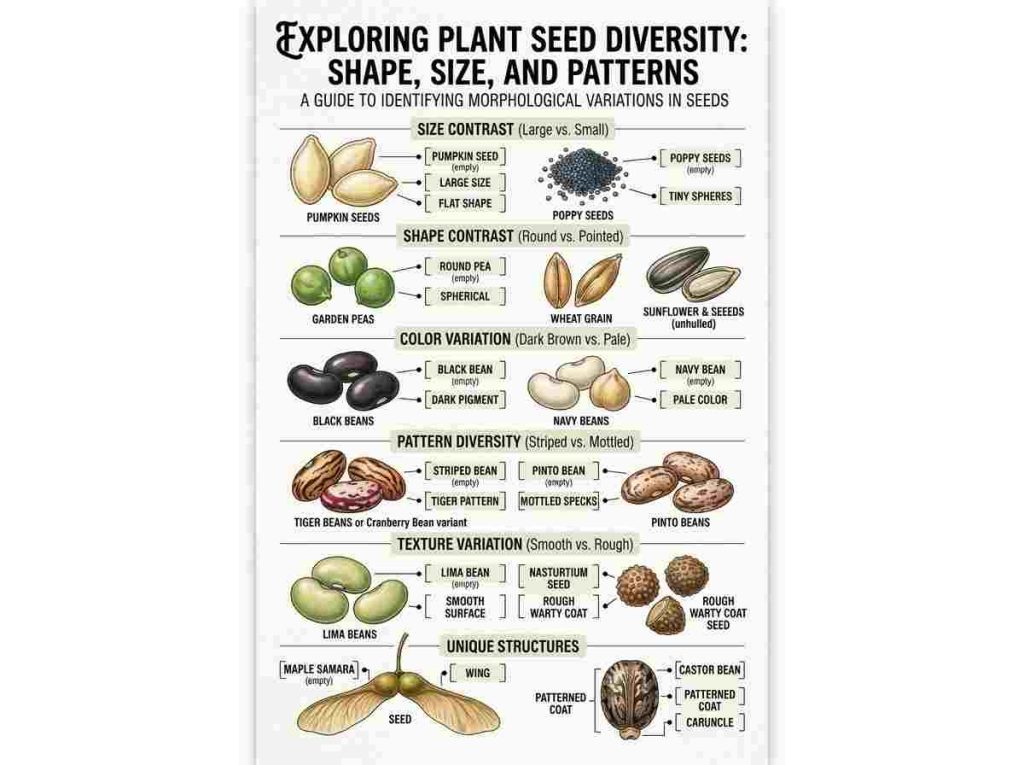
Another myth is that rounder cannabis seeds are female while narrower or more pointed seeds are male.
In reality, cannabis seed shape varies between cultivars and individual seeds. A round, oval, or slightly pointed seed can produce either a male or female plant.
Grower Tip: Do not sort regular seeds by shape. You could easily discard a viable seed that would have developed into a female plant.
Can Seed Size or Weight Reveal Sex?
Larger or heavier seeds are sometimes claimed to be female, while smaller seeds are labeled male. This is also unreliable.
Seed size and weight are influenced by genetics, maturity, growing conditions, and how well the seed developed. These factors can affect seed quality, but they do not provide a visual shortcut for determining sex.
Can You Identify Seed Sex by Rolling It on a Flat Surface?
Some online guides suggest rolling cannabis seeds across a table, claiming female seeds roll more smoothly while male seeds behave differently.
This simply reflects differences in cannabis seed shape, surface texture, and symmetry. A seed that rolls easily is not more likely to produce a female plant.
Can a Magnifying Glass or Microscope Reveal Seed Sex?
Magnification can help you inspect shell condition, markings, cracks, or damage, but it cannot reveal whether a seed is male or female.
A magnifying glass may make differences in mottling, shell texture, or the seed base easier to see, but these are external features and are not reliable indicators of sex.
| Common Seed-Sexing Myth | What It Actually Shows |
| Round crater = female | Natural variation in the seed base |
| Round seed = female | Normal seed shape |
| Large seed = female | Genetics, maturity, and development |
| Smooth rolling = female | Shape and surface texture |
| Magnification reveals sex | Shell condition and markings only |
Grower Tip: Use appearance to check maturity and physical condition, not sex. If you need to know whether a plant is male or female, wait for pre-flowers or use genetic testing once the seed has germinated.
When Can You Tell the Sex of a Cannabis Plant?
Cannabis plants can often be sexed once they reach sexual maturity and begin producing pre-flowers. This may happen before full flowering, although timing varies by cultivar, plant maturity, and growing conditions.
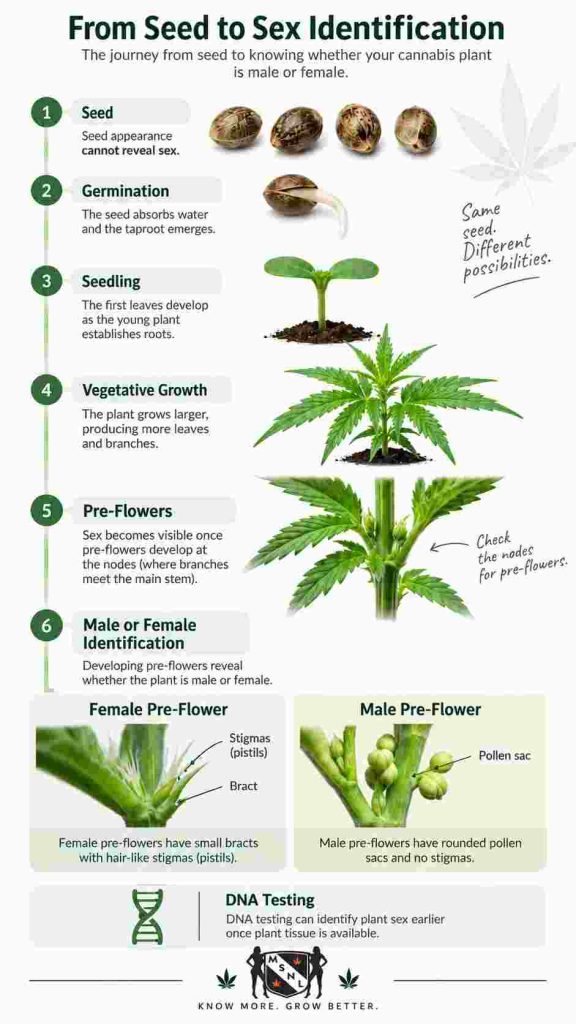
When Do Cannabis Plants Start Showing Their Sex?
There is no exact week when every plant reveals its sex. Some begin showing pre-flowers during later vegetative growth, while others take longer.
Rather than judging by height, leaf shape, or branching, look for reproductive structures as the plant matures.
Where to Look for Cannabis Pre-Flowers
Cannabis pre-flowers develop at the nodes, where branches meet the main stem.
Inspect several nodes in good light, as very young structures can be difficult to identify correctly.
Grower Tip: Wait until the pre-flowers are clearly developed before making a decision based on a single small structure.
Early Signs of a Female Cannabis Plant
Female cannabis pre-flowers form small bracts at the nodes. As they develop, thin hair-like stigmas emerge from the female flower structure.
Visible stigmas are one of the clearest early signs of a female plant.
Early Signs of a Male Cannabis Plant
Male cannabis pre-flowers form small rounded or oval pollen sacs at the nodes and do not develop stigmas.
As they mature, these structures develop into pollen-producing flowers.
| Feature | Female Plant | Male Plant |
| Early structure | Small bract/flower structure | Developing pollen sac |
| Stigmas | Present as the flower develops | Absent |
| Mature role | Receives pollen | Produces pollen |
| Main place to check | Nodes | Nodes |
Can You Tell the Sex of a Cannabis Plant During the Vegetative Stage?
Sometimes. Once a plant reaches sexual maturity, pre-flowers may appear before the main flowering stage.
This means when you can tell the sex of a cannabis plant depends more on maturity than a fixed age.
Avoid relying on overall plant shape, stem thickness, or leaf appearance. Pre-flowers provide the most useful visual signs.
Can DNA Testing Identify Cannabis Sex Earlier?
Yes. Genetic testing can identify cannabis sex before clear male or female flowers appear.
A laboratory can test a small sample of plant tissue for sex-linked genetic markers, allowing earlier identification than visual inspection. If sex needs to be known before visible pre-flowers develop, laboratory testing can use plant tissue to identify sex-linked genetic markers. Practical grower testing normally uses tissue from a young seedling. Although genetic material can also be tested from the seed embryo, doing so would damage or destroy the seed, making it impractical for cultivation.
Grower Tip: For most home growers, checking pre-flowers is the simplest method. DNA testing is more useful when sex needs to be known very early.
Regular, Feminized Seeds and Cannabis Sex Expression
Regular seeds can produce male or female plants, while feminized seeds are bred to make female plants far more likely.
Why Regular Cannabis Seeds Can Produce Male or Female Plants
One of the main characteristics of growing regular cannabis seeds is that individual seeds may develop into either male or female plants.
In typical dioecious cannabis, females carry XX sex chromosomes and males carry XY chromosomes. These differences are genetic and cannot be identified from the outside of the seed.
How Feminized Cannabis Seeds Reduce the Chance of Male Plants
Understanding how feminized cannabis seeds are made helps explain why they are far more likely to produce female plants: pollen is produced from a genetically female plant, so conventional XY male offspring are not expected.
For growers who want female plants, feminized cannabis seeds provide a more predictable option than regular seeds.
They should not be treated as an absolute guarantee, though. Genetics, production quality, and sex-expression stability can still affect the outcome.
Can Environmental Stress Affect Cannabis Sex Expression?
Environmental stress may contribute to unstable sex expression in susceptible plants, which is why understanding what causes a marijuana plant to hermie can help growers reduce avoidable stress during flowering. Factors such as disrupted light cycles or temperature stress may influence floral sex expression, with responses varying between cultivars.
A female plant developing male reproductive structures is better described as showing hermaphroditic or intersex expression rather than simply ‘turning male.’ Growers should know the early signs of a hermie so these structures can be identified quickly. These plants can develop both female flowers and pollen-producing structures.
Genetics, hormones, plant development, and environmental conditions can all play a role.
Conclusion
You cannot reliably tell whether a cannabis seed is male or female by looking at its colour, shape, size, markings, or shell. Those features can sometimes give clues about maturity and physical condition, but they do not reveal sex.
If you are growing regular seeds, the practical way to identify sex is to wait until the plant develops pre-flowers and inspect the nodes for female stigmas or male pollen sacs. Genetic testing can provide an earlier answer once plant tissue is available.
For growers who want to reduce the chance of raising male plants, feminized seeds offer a more predictable option, although plants should still be checked as they mature.
Frequently Asked Questions
Can you tell if a cannabis seed is male or female by looking at it?
No. There are no reliable visible differences between male and female cannabis seeds. Seed colour, size, shape, striping, and the indentation at the base cannot accurately predict whether the plant will be male or female.
What does a female cannabis seed look like?
A female cannabis seed does not have a unique appearance. It can be brown, mottled, striped, round, oval, large, or small, just like a seed that develops into a male plant.
Are male cannabis seeds bigger than female cannabis seeds?
No. Seed size does not reliably indicate sex. Differences in size are influenced by genetics, seed development, and growing conditions rather than whether the resulting plant will be male or female.
When can you tell the sex of a cannabis plant?
Sex can often be identified once the plant reaches sexual maturity and develops pre-flowers at the nodes. Some plants show these during later vegetative growth, while others do not reveal clear male or female characteristics until closer to flowering.
Can feminized cannabis seeds produce male plants?
Feminized seeds are bred to make female plants overwhelmingly more likely, but they should not be treated as an absolute guarantee. Genetics and sex-expression stability can affect the outcome, so growers should still inspect plants for male or intersex reproductive structures as they develop.


